احصل على التطبيق


مؤلف
يُحدث صعود ظاهرة الترحال الرقمي تحولاً في صناعة السفر، مانحاً فرصة رائعة لأولئك الذين يتكيفون. يبحث الرحالة الرقميون عن وجهات مناسبة للعمل وغنية ثقافياً، وتلبية هذه الاحتياجات ستضع عملك كخيار موثوق. الآن هو الوقت المناسب لمواءمة خدماتك مع هذا الاتجاه المتزايد والاستفادة من السوق المتنامي للعاملين عن بعد الشغوفين باستكشاف العالم.

لعب المال، البقاء على المال، الفرار بالمال - طرق مختلفة لتقسيم أموالك
استكشف ثلاثة "دلاء" للمال - اللعب (Play)، والبقاء (Stay)، والهروب (Runaway) - وطرق عملية لتخصيص الأموال، وكبح جماح المشتريات الاندفاعية، وتنمية الثروة مع أمثلة واضحة وخطوات قابلة للتنفيذ.

5 Benefits of Delivering an Omnichannel Customer Service Experience
To deliver an omnichannel customer service experience, unify all touchpoints on a platform that wires together website forms, live chat, social messaging, and phone queues. Using this setup , agents access a complete view of the customer's history so responses stay consistent and faster. This alignment reduces repeats and improves satisfaction across channels. Benefit 1: Higher engagement and faster issue resolution. By aligning workflows across channels, teams cut response times by 20–35% and boost chances of first-contact resolution by 15–30%. Customers gladly stay on track when they can switch from website live chat to email without repeating details, which also strengthens loyalty. This

Starlink and the New Era of Global Logistics Connectivity - Beyond Borders
Deploy Starlink as the backbone for regional hubs and fleets to achieve low-latency, high-quality connectivity that enables todays international logistics to monitor cargo in real time. Across global platforms, Starlink ties together cargowise workflows, ERP feeds, and carrier portals, delivering a full picture of shipments from origin to delivery and making data sharing easier, while strengthening relationships across the network. In each region, this approach keeps connections stable for monitoring container conditions, handling high-value loads, and updating ETA estimates as supply flows shift rapidly. Challenges such as weather, orbital congestion, and regulatory constraints require

AI-Powered Robots Redefining Warehouse Efficiency in 2025 - Automation, Productivity Gains, and Cost Reductions
Recommendation: Start with a 90-day pilot in the high-velocity picking and packing zone, deploying robotics that automate tasks and automating repetitive cycles, connect to your in-house WMS, and synchronize with carrier APIs for outbound shipments. Keep the scope tight to one facility and one shift, then scale toward being fully deployed across sites if targets are met. fresh data from early pilots shows average processing time per order drop by 25-40%, throughput rise of 15-25%, and labor-cost reductions of 12-20%. Robots on the packing line remove travel time, shorten processing cycles, and deliver consistent results even during peak volumes. Use predictive maintenance and AI-enabled

Quality Infrastructure for Development - Building Resilient Economies
Recommendation: roll-out a phased, standards-driven program that ties procurement, production and service delivery to verifiable quality outcomes across three priority sectors: manufacturing, construction and logistics. From the first quarter, establish a single data framework that presents KPI dashboards for conformity, defect rates, on-time delivery, and energy use. These metrics should be published quarterly to build trust among buyers, suppliers, and regulators; theyre easier to compare and drive improvement, particularly for small and medium enterprises. Step 1: audit existing facilities and current quality controls; Step 2: adopt a common set of standards for data exchange and product

Designing User Experience and Usability for Everyday Life Applications and Services
Begin with a concrete goal: map everyday tasks into a focused object-oriented design that mirrors real flows. In interactions with products, translate user goals into discrete steps and verify each step with tests , an evaluation , and early evaluations . In practice, cross-functional teams provide concrete perspectives. For example, gonzalez from tecnol helps align research insights with implementation, ensuring that user tasks stay aligned with processes people perform daily. Run short, live evaluations of prototypes across contexts to detect friction in interactions and reveal where features drive value. Use a compact checklist to govern designs: accessibility, consistency, readability,

Why Technology Is Your Best Asset for Optimized Supply Chain Management
Implement real-time data sharing across suppliers, transport providers, and warehouses to cut stockouts and improve service levels in every link of the chain. Automation and algorithms empower this asset, turning data into actionable insights, and allowing you to include scenario testing and what-if analysis as standard practice, as an aspect of a modern strategy. Adopting modular software and cloud-enabled dashboards opens avenues for collaboration with suppliers, carriers, and customers, and provides additional visibility into stock levels and freight movements. As data streams are evolving, tune algorithms to optimize replenishment, transport routes, and utilization of vehicles , while

Cold Chain Logistics - Protecting Quality and Compliance in Growth Markets
Install a fully automation-enabled system that provides real-time temperature and humidity alerts, reducing losses and enabling corrective action within minutes. Define standard operating procedures for handling, labeling, and transport; classify materials and medicines by types and storage needs, and set acceptable temperature bands for each category, such as between -80°C and -20°C for ultra-cold products and 2°C–8°C for vaccines and most medicines. Leverage multiple data sources –sensors, data loggers, and third-party carriers–to build a unified view, meeting regulatory requirements and providing regular , timely data to stakeholders, from suppliers to customers. Monitor product

Execs In The Know Launches Expert Network to Empower CX Leaders with Trusted Peer Expertise
Join the Expert Network today to tap peer expertise and realize faster, verifiable results. Build your orientation by gathering input from a curated group of senior CX leaders across telecommunications, retail, and services, and translate insights into action for your team’s roadmap. The program offers structured disclosures from peers who navigate CX challenges in telecommunications and broader communications contexts. Their candid input focuses on practical wins, turning lessons learned into repeatable playbooks you can adapt quickly. Through deliberate coordination and a streamlined onboarding, members replace slow-moving decision cycles with faster alignment on priorities. This delicate
Delivering Digital Transformation for Third-Party Logistics
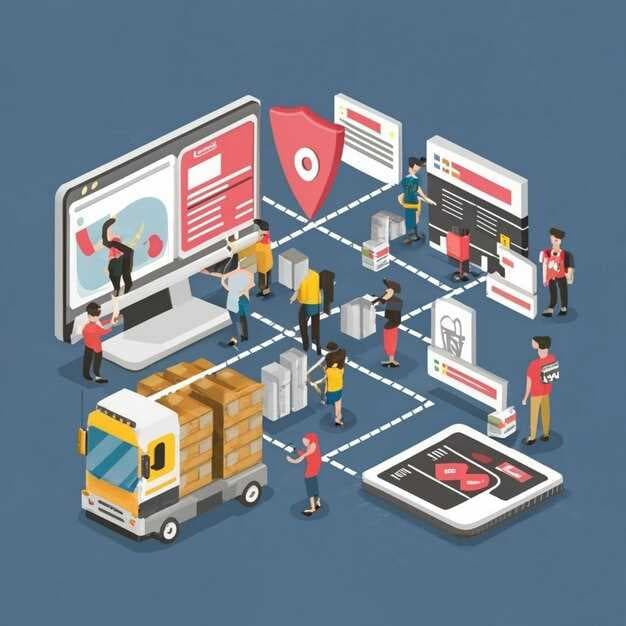
Implement a vendor-neutral data integration layer within 90 days to synchronize WMS, TMS, ERP, and carrier systems. This creates real-time visibility across transport legs, warehouses, and last-mile partners, enabling faster response and reducing stockouts by up to 15%. Leverage digitalization to unify data silos where data flows from suppliers, carriers, and customers into a single analytics layer. A clear API-first strategy lets many partners exchange events without bespoke integrations, shortening onboarding to under four weeks for key vendors and reducing manual touches by greater than 40%. We focus on exploring trends in automation, data sharing, and collaborative planning. By creating

Beyond Rapid Prototyping - 3D Printing for Industrial Production with LFAM
Adopt LFAM on the production floor to scale from prototypes to series, and begin with a defined source of material data and a process window for large-format systems. This also reduces changeover time and ensures consistent output across dozens of parts per batch. Experts point to a compact collections of validated polymers and a controlled trial plan as the fastest path to production readiness. Define the approach by a milestone-driven plan. Start with a pilot run on representative geometry, then widen the set to a collections of parts. The detail in toolpath optimization, orientation, and interlayer cooling drives acceptance criteria. tailor printing parameters for each part family to

Best Procurement Cost Reduction Strategies for 2025
Begin with supplier consolidation across core categories to secure an 8-12% decrease in annual procurement spend by 2025. Build a shortlist of 15-20 suppliers based on benchmarks such as price, reliability, and lead time; compare internal data against external benchmarks to identify underperformers and release budget for strategic investments. Calculate the total cost of ownership (TCO) across categories using internal spend data. Add freight, duties, quality incidents, and obsolescence. Use a number- of adjustments to the supplier base to push performance, ensure contracts reflect realized savings, and set clear renewal windows. This provides the ultimate framework for negotiation.
