


 العربية
  English (UK)
  Русский
  日本語
日本語  한국어
한국어  Magyar
  Türkçe
  Español
  Čeština
  Svenska
  Português
  Ελληνικά
  Suomi
Suomi  Nederlands
  Română
  Italiano
  Français
  Polski
  Українська
  Deutsch
  简体中文
简体中文  Slovenčina
 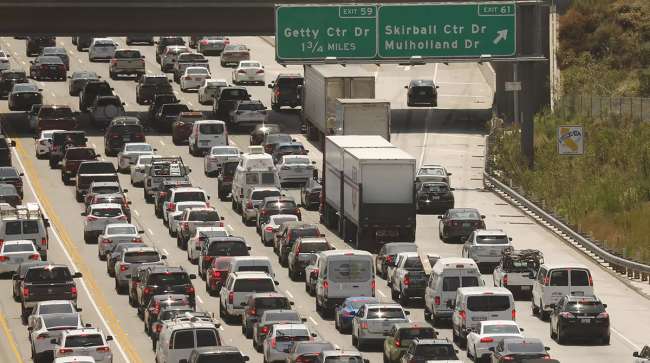 California Moves to Enforce English-Language Proficiency for Commercial Drivers and What It Means for Carriers">

This article reveals the newly adopted California regulations enforcing English-language proficiency (ELP) for commercial drivers and what those rules mean for carriers, drivers, and logistics operations.
Quick overview: why this change matters
California updated rules on Dec. 23 that require California Highway Patrol inspectors to apply a standardized ELP evaluation during commercial vehicle inspections when drivers are suspected of failing verbal or written comprehension checks. The change follows the state’s loss of roughly $40.6 million in federal Motor Carrier Safety Assistance Program funding after a dispute with the U.S. Department of Transportation (USDOT) و الإدارة الفيدرالية لسلامة ناقلات السيارات (FMCSA) over compliance.
What changed in practice
New enforcement tools and criteria
Under the updated rules, trained CHP inspectors may give drivers a standardized ELP evaluation following FMCSA guidance. The state has also adopted revised out-of-service criteria from the تحالف سلامة المركبات التجارية (CVSA), meaning drivers who fail an evaluation may be
- noted with a violation on inspection reports,
- placed out of service until a carrier arranges a qualified replacement or the vehicle is towed to safety,
- and, in the case of California-licensed drivers, face a DMV re-evaluation that could lead to license downgrades.
Table: At-a-glance enforcement changes
| Item | Before | After (Dec. 23 rules) |
|---|---|---|
| Authority to test ELP during inspections | Limited / inconsistent | Standardized test available to CHP inspectors |
| Out-of-service policy | Dormant federal policy; state manual conflicted | Aligned with FMCSA and CVSA out-of-service criteria |
| Consequences for CA-licensed drivers | ELP “shall not be enforced” in some manuals | DMV re-evaluation, possible downgrade or letter of compliance |
| Federal funding | Normal grant access | Loss of $40.6M in MCSP grants until compliance |
Why the federal spat matters
The FMCSA argued that relying solely on California’s licensing laws left thousands of interstate drivers—licensed outside California but operating on its roads—without an enforceable ELP requirement while in the state. USDOT leaders, including Secretary Sean Duffy, framed the issue as one of road safety: the ability of drivers to read signs and communicate with law enforcement. That disagreement culminated in the permanent revocation of federal safety assistance funds last October.
Legal status
Despite the CHP’s regulatory changes, California continues to press a lawsuit seeking the return of the revoked federal funds. The case is active in the U.S. District Court for the Northern District of California, and court deadlines remain set for motions and discovery this winter and spring.
Industry reaction and support
إن California Trucking Association publicly supported the enforcement update. CTA CEO Eric Sauer emphasized that clear communication on highways enhances safety for all road users. CTA also offers English-language training as a compliance resource.
Voices from the field
Many carriers, especially those running interstate routes, are weighing the new enforcement landscape. The swing from a patchwork approach to a formalized testing protocol is likely to produce short-term friction—drivers stopped during inspections, administrative steps to re-qualify, and the operational headache of arranging alternate drivers or tow services when someone is placed out of service.
Practical steps for carriers and shippers
Logistics managers and fleet operators can move from reactive to proactive with a few practical measures:
- Audit driver documentation to ensure licenses and qualifications are current.
- Implement ELP training or partner with organizations that provide language and comprehension courses.
- Create contingency plans for out-of-service drivers—backup drivers, local tow agreements, and rapid communication channels.
- Update carrier compliance manuals to reflect the new inspection and DMV procedures.
- Inform dispatch and customer service so shippers and receivers understand potential delays and steps taken to mitigate them.
What drivers should know
- Inspectors may perform a standardized ELP check during a commercial vehicle inspection.
- Failing an evaluation can lead to an out-of-service order; carriers must then secure a licensed replacement or arrange towing.
- California-licensed drivers who fail an ELP check face DMV re-evaluation, which could include downgrading of the CDL.
Logistics implications: short- and medium-term
The immediate ripple effect is mostly regional: more inspections and potential holds could affect delivery windows within California and cross-border flows into neighboring states. Globally, the change is unlikely to disrupt international freight lanes directly, but it does illustrate how state-level enforcement choices can quickly alter domestic haulage reliability.
Forecast for carriers and shippers
Expect some bumps—delays at inspection points, administrative reprocessing of driver qualifications, and possibly higher compliance costs as carriers invest in training. Over the medium term, consistent enforcement should reduce communication-related incidents and create smoother operations, provided carriers adapt.
Key highlights and a practical note
Important takeaways include the formal alignment of CHP inspections with federal ELP standards, potential out-of-service actions, and the ongoing legal tussle over previously revoked federal funding. Even the best-written regulations and the most candid reviews can’t substitute for hands-on experience at the loading dock or in the cab. On GetTransport.com, you can order your cargo transportation at the best prices globally at reasonable prices. This empowers shippers and carriers to balance compliance costs with efficient routing and affordable service. For your next cargo transportation, consider the convenience and reliability of GetTransport.com. Book now GetTransport.com.com.com
Final summary
California’s decision to enforce ELP during commercial inspections tightens a gap between state practice and federal safety expectations, prompted in part by the loss of federal grant money. Carriers should prepare by bolstering training, tightening documentation, and planning contingencies for out-of-service scenarios. The move will affect الشحنة و الشحن flows inside the state more than international lanes, but it offers an important reminder that clear communication is a safety imperative in النقل و الخدمات اللوجستية. For shippers and carriers alike, this is a nudge to audit compliance, prioritize driver readiness, and work with logistics partners that understand the new landscape. GetTransport.com aligns with these needs by offering an efficient, cost-effective way to arrange transport—whether for الشحن, pallet moves, bulky freight, or housemove relocations—helping keep delivery, forwarding, dispatch, and global haulage running smoothly with reliable, affordable options.