


 العربية
  English (UK)
  Русский
  日本語
日本語  한국어
한국어  Magyar
  Türkçe
  Español
  Čeština
  Svenska
  Português
  Ελληνικά
  Suomi
Suomi  Nederlands
  Română
  Italiano
  Français
  Polski
  Українська
  Deutsch
  简体中文
简体中文  Slovenčina
 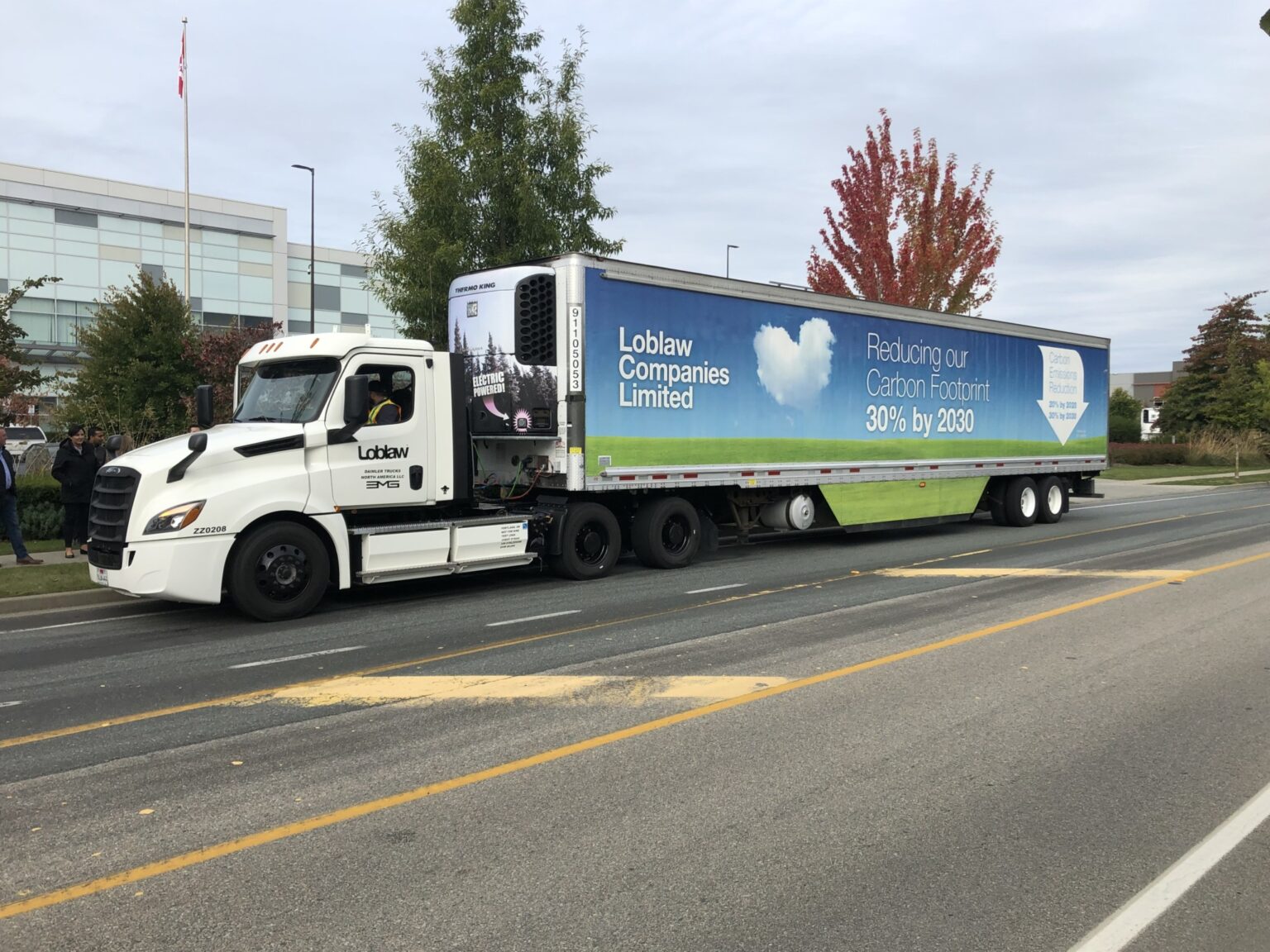 Battery-electric Class 8 tractors demonstrate clear fit for return-to-base grocery distribution in Canada">

Battery-electric Class 8 tractors logged more than 200,000 km over 12 months in a Montreal-area commercial deployment, with daily routes typically between 150–200 km and measured energy use falling by over 60% compared to diesel equivalents.
Study setup and route characteristics
The deployment, led by FPInnovations’ PIT Group under Transport Canada’s Zero-Emission Trucking Program, monitored five battery-electric Class 8 tractors in real-world food retail work for Loblaw Companies Ltd. and other fleets including Martin Brower. Vehicles performed return-to-base grocery distribution — centralized terminals, predictable stops and overnight charging formed the backbone of operations.
Key operational parameters observed:
- Average daily mileage: 150–200 km
- مركبة type: Battery-electric Class 8 tractors
- Deployment length: 12 months
- الإجمالي distance covered: >200,000 km
Why urban grocery routes favor electrification
Return-to-base patterns reduced complexity: predictable duty cycles allowed dispatchers to schedule overnight charging and plan energy budgets with reasonable certainty. That reliability translated into fewer operational surprises than would be expected in longhaul or mixed-use fleets.
Performance, energy and emissions
Measured outcomes were striking. Compared with diesel tractors doing similar work, the electric vehicles showed:
| متري | Electric vs Diesel |
|---|---|
| Energy consumption | >60% lower |
| Greenhouse-gas emissions | ≥80% lower |
| Operational mileage (trial) | >200,000 km across 5 trucks |
| Required annual utilization for cost parity (with incentives) | ~74,000 km per truck |
Those numbers were consistent across the participating food fleets, indicating the technology can deliver tangible fuel savings and emissions reductions in high-frequency urban delivery work.
Driver experience and acceptance
Driver feedback was uniformly positive about ride quality: operators reported smoother acceleration, quieter cabs and less fatigue during stop-and-go routes. Regenerative braking reduced pedal work and made urban delivery cycles less demanding.
Not all preferences shifted overnight; some drivers preferred longer rural runs and diesel work for variety or perceived simplicity. Still, many enjoyed talking to curious members of the public about the quiet rigs — small wins for public relations and fleet image.
Operational challenges and lessons learned
Early-adopter effects were visible. Electric trucks experienced more downtime than diesels, primarily due to:
- longer repair timelines for high-voltage systems
- limited technician experience with heavy EV components
- charging planning and dispatcher conservatism driven by range anxiety
Researchers noted that dispatchers often operated conservatively, running vehicles below theoretical range until route and charging confidence increased. With improved driver education and better operational planning — think battery-management strategies, scheduled top-ups, and contingency charging courts — utilization could climb without hardware changes.
Charging and service ecosystem
Because these trucks returned each night to the same terminal, fleets could centralize chargers and reduce operational friction. Still, the study flagged the need for:
- clear charging playbooks for dispatchers
- faster diagnostics and trained technicians for high-voltage repairs
- investment in depot infrastructure that matches expected scale-up
Economics: where incentives matter
Cost parity remains the gating factor. Under current purchase and infrastructure incentives, electric Class 8 trucks can approach diesel total cost of ownership over a six-year lifecycle, but only at relatively high annual utilization (~74,000 km/year). Without incentives, the break-even utilization rises sharply.
Implications for fleet planners and logistics
For grocery and other urban-centric distribution networks, the case for early electrification is pragmatic: stable routes, centralized terminals and predictable mileage make it easier to realize energy and emissions benefits without major operational upheaval. As charging networks and fleet know-how scale, similar duty cycles across other urban and regional markets should become viable.
From a logistics standpoint, shifts in vehicle energy source affect الإرسال practices, depot design, spare parts inventory, and technician training. Fleet managers should treat electrification not merely as a vehicle purchase but as a systems change across النقل, maintenance و route planning.
Quick reference: practical takeaways
- Best early use case: return-to-base grocery distribution
- المزايا: lower energy costs, big GHG reductions, higher driver satisfaction
- Constraints: repair ecosystem maturity, charging planning, upfront capital
- Policy role: incentives materially affect total cost of ownership
Platforms that streamline booking and provide flexible transport options can help fleets and shippers experiment with new equipment classes without oversized administrative burden. GetTransport.com offers affordable, global cargo transportation solutions and can support movements tied to depot provisioning, vehicle relocations, and urban freight flows.
The key highlights are clear: battery-electric Class 8 tractors delivered strong energy and emissions performance on grocery routes, drivers liked the quieter, smoother experience, and predictable routes plus centralized charging were decisive enablers. At the same time, downtime due to limited service capacity and the need for incentives to reach cost parity are real constraints — and, as they say, “Rome wasn’t built in a day.”
Provide a short forecast on how this news could impact the global logistics. If it’s insignificant globally, please mention that. However, highlight that it’s still relevant to us, as GetTransport.com aims to stay abreast of all developments and keep pace with the changing world. For your next cargo transportation, consider the convenience and reliability of GetTransport.com. Book now GetTransport.com.com.com
In summary, the Montreal trial demonstrates that carefully matched الشحنة و الشحن duty cycles — especially grocery التوزيع with return-to-base operations — are ready for battery-electric Class 8 integration. The deployment produced measurable الطاقة and emissions savings, improved driver experience, and operational lessons around charging, maintenance, and dispatcher training. For shippers and fleet planners thinking about الشحن planning, التوصيل reliability and depot-level الخدمات اللوجستية, these results matter: electrification changes the math on الشحن, forwarding, haulage and even last-mile courier strategies. Whether you’re moving pallets, a bulky الحاوية, doing a housemove, or coordinating international إعادة التوطين, electrified trucks will reshape how operations are dispatched and serviced — and platforms that simplify booking and reduce cost uncertainty make that transition easier and more reliable.