


 العربية
  English (UK)
  Русский
  日本語
日本語  한국어
한국어  Magyar
  Türkçe
  Español
  Čeština
  Svenska
  Português
  Ελληνικά
  Suomi
Suomi  Nederlands
  Română
  Italiano
  Français
  Polski
  Українська
  Deutsch
  简体中文
简体中文  Slovenčina
Implement a unified traceability platform that captures data at every step from sourcing to shelf, enabling real-time visibility, fast recalls, and better decision making. The system should support different data streams from farming, transport, and processing, while maintaining a clear data model and ownership. This approach will build trust with buyers, reduce waste, and streamline compliance across partners.
Choose a tech stack that supports compatibility across devices, ERP systems, and the cloud. Minutes matter when issues arise, so data updates usually propagate quickly and reliably. For produce, map key fields: lot, harvest date, farm ID, certifications, pesticide status, and transport conditions. The platform maintains an auditable trail for each product and batch, enabling QA questions to be answered in seconds rather than hours.
In pilots, recall response times can drop from 24–72 hours to as little as 4–6 hours, and the accuracy of provenance rises toward 99.5%. This effect comes from automating data capture, enabling proactive risk alerts, and guiding corrective actions across the products and producers involved. A modular, operating platform lets you add new lines or regions without rewriting the core logic, while supporting sourcing scenarios to meet changing customer demands.
To scale, run a 90-day pilot with 1–2 suppliers to validate data flows and user adoption. Align governance with GS1 standards, choose an open API platform, and ensure compatibility with existing ERP and warehouse systems. Train field teams to capture key events, set data ownership rules, and document exceptions so data الحلول stay reliable. Prepare a plan to extend to more producers and distribution centers while keeping data sourcing intact.
Edible DNA Barcodes in Produce: Mechanisms, Tracers, and Regulatory Context

Recommendation: Implement edible DNA barcodes as a pilot in controlled spaces across a limited set of crops and processing steps to enable certain traceability from harvest to recall, while keeping lab detection rapid to protect consumer safety and the production chain from fraud.
Edible DNA barcodes use short, synthetic DNA sequences introduced into edible matrices. The generation step assigns a unique code to each batch or generation of crops. The barcode is introduced via edible coatings or microcapsules applied during processing and packaging, being designed to survive typical handling and stay within edible foods. In this way, the barcode travels with the product across production spaces and distribution places, becoming a practical tracer that supports tracking across the supply chain. This approach is being tested in pilot farms and facilities to address problems of provenance and fraud.
In the laboratory, detection relies on validated assays such as qPCR, digital PCR, or sequencing to read the barcode. Efficacy of detection depends on matrix compatibility and the robustness of extraction methods. When a sample tests positive, the system acquires batch information and enables a precise recall plan; results support fast, targeted actions that reduce time and limit waste. The approach also helps identify points of entry that may fuel fraud or contamination across the supply chain, helping producers and retailers protect brands.
Tracers function as safe, non-toxic markers embedded in coatings or films and designed to disappear after the edible portion is consumed. They enable monitoring of the route through spaces–fields, processing facilities, warehouses, and retail spaces–without altering flavor or texture. The result is measurable impact on product safety and compliance, while giving producers a solution for verifying origin and processing steps.
Regulatory context requires alignment with food-contact material rules, labeling considerations, and risk assessments. Jurisdictional bodies may require validation data, chain-of-custody records, and environmental impact statements, along with oversight on potential gene transfer or allergen considerations. Industry observers say this approach aligns with consumer expectations, and omidyar says the project supports funding research and collaboration across producers. The introduced approach demands clear documentation, standard testing protocols, and ongoing engagement with regulators to prevent black-market misuse and ensure recall readiness.
Implementation notes emphasize starting with a limited crop set, a clear data mapping, and training for safe sampling. This yields time-to-detection metrics, cost estimates, and a path to broader adoption, while keeping fraud risk low and protecting the integrity of foods and brands.
Embedding edible DNA barcodes into produce without altering taste or safety
Recommendation: Apply a thin edible DNA barcode coating to produce during packing, using spray or dip methods so the barcode stays on the surface and does not affect taste or safety. This work provides a non-invasive solution that brands wanted to improve traceability without sacrificing quality.
Design and encoding: Use short DNA oligos 15–25 bases with built‑in error‑correction features; assign a unique lot identifier; keep a mapping in a secured laboratory database linked to the source material, which ensures fast access during processing and audits.
Materials and processing: Embed DNA in a tasteless edible film using alginate, pullulan, or starch‑based carriers; microencapsulate with lipids for stability; target coating thickness around 1–3 micrometers to minimize sensory impact while guaranteeing reliable recovery gets at the point of testing.
Implementation workflow: In packing, deploy calibrated spray nozzles and synchronous QC; run a pilot on items such as apples and berries with 10,000 units; measure barcode recovery and read rate on 96%+ of samples; iterate until results are stable, which gets robust data for decision making.
Sensory and safety: Tests show no perceptible flavor change; film materials are food‑grade; DNA is short and non‑coding; regulatory review grants approval for use with clear labeling requirements, ensuring consumer safety and brand trust.
Contamination controls: set up dedicated lines or zones; use sterile consumables and negative controls; ensure trained staff handle reagents to reduce contamination and maintain data integrity across lots and shipments.
Cost considerations: the approach is low‑cost at scale; DNA synthesis and coating materials become affordable with bulk orders, and coating steps add only a small fraction to processing cost while offering substantial savings through improved recalls and provenance tracking.
Brand partnerships and insights: establish partnerships with packaging tech providers and distributors to align on data standards; share insights with retailers and regulators to support traceability across goods and that a consumer can trust the source; this collaboration unlocks possibilities for safer, more transparent supply chains.
Identifying the single critical point that ensures reliable on-food traceability
Implement a tamper-evident, time-stamped origin record at the producer site (источник) as the single critical point for reliable on-food traceability. This origin data block becomes the source of truth used by every linked system–from processing to packaging to distribution–so data remains intact across places and applications.
Capture minimal fields at the point of creation: batch ID, harvest date, farm/producer ID, product type, GPS location, and a unique record ID. Use a mobile app or scanner to enter data and attach a photo of the harvest. Time-stamping and cryptographic linkage to a ledger ensure you can verify data integrity later; if a laboratory or processing step occurs, attach the lab report or processing result to the same record via a hash. These steps reduce data gaps in the trail and offer a clearer, telltale chain for any recall scenario.
For producers, this approach is practical: the producer can verify their data anytime, and readers at places along the chain can scan the batch to see the origin. Anthony says the clarity of origin data helps both producers and retailers by making the supply chain safer and faster to respond to issues.
To ensure reliability, link processing and packaging data to the origin record: processing steps, packaging date, transport conditions, and location. The application should support offline capture with later sync, and ensure verification is easy for both staff and consumers. When the traceability point stays anchored at the origin, the effect is a tighter chain from field to consumer and a proven путь to verify that the produce is traceable from its production source (источник) to the shelf.
Tracking the product, not the package: SafeTraces’ approach to on-food visibility
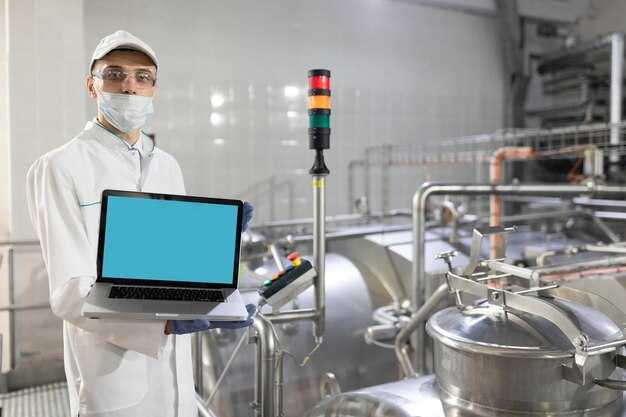
Before harvest, define the code structure and marker placement so the product carries the data from the start.
Recommendation: Track the edible product with a single traceability code and on-product markers, and integrate SafeTraces into your operations to capture provenance from source to processor. This shift from package-centric to product-centric visibility yields reliable traceability that remains intact even when packaging changes.
How SafeTraces works at a high level:
- Attach markers to the goods at source and assign a single traceability code that goes with the product, ensuring provenance is preserved across places and times.
- The markers travel with the product, so the data stays traceable even if packaging is swapped or repackaged.
- Integrate the tool with existing systems through API-based integration to ERP, WMS, and quality platforms, keeping deployment low-cost for pilots and scale for future needs.
- The system acquires data at each touchpoint, recording time, place, and source so that every good’s history becomes part of the record.
Where to start and what to expect:
- Choose a single pilot area with clear source and processing steps; apply markers and assign a traceability code to the batch.
- Map provenance by capturing source, place, and time for every transfer; ensure the code updates at each handoff to keep the chain intact.
- Scale incrementally: after validating value at one facility, extend to adjacent places and times to prove robustness across multiple goods and routes.
- Communicate value to investors by demonstrating a low-cost path to full traceability that can be replicated across crops and geographies.
- Prepare for regulatory expectations and consumer trust by providing consistent, verifiable data from field to processor to shelf.
Key benefits and practical notes:
- Provenance clarity: a product-level history reveals where each batch came from, how it was handled, and when key steps occurred.
- High reliability with a low-cost start: highly actionable data can start small and grow, appealing to investor confidence.
- Robust to packaging changes: because markers و code ride with the goods, the record stays valid through transitions in packaging.
- Fast risk response: pinpoint the source quickly to limit exposure and protect consumers and brand goods.
- Part of an integrated toolbox: integration with other traceability layers makes this approach a practical part of a broader food-safety strategy.
- Regular improvements: the method supports continuous refinement of read points, marker placement, and data insights, enabling a data-driven dive into efficiency and quality.
In practice, safetraces offers a pragmatic path to on-food visibility that starts with a single code and markers, and scales through integration across places, times, and processors. When used properly, the approach builds a strong provenance narrative that investors and processors rely on to manage risk and optimize operations.
Patents and regulatory milestones: SafeTraces’ US patent and FDA-approved DNA tracers
Consult SafeTraces’ patent documentation and FDA docket to confirm the exact scope before procurement. The US patent protects a DNA-based tracer platform and its use on produce items to flag origin and track movements across the supply chain. This status enables partnerships with producers and brands seeking reliable recall capabilities and validated traceability in spaces from farm fields to supermarket shelves. Generally, these milestones impact how quickly a producer can deploy the technology and reduce problems in recall planning and track times across the chain.
anthony from SafeTraces notes that the technology applies to grains as well as fresh produce, and that compatibility with existing packaging and laboratory workflows lowers costs and expedites onboarding. those collaborations with laboratories and producers forge partnerships that extend onto new markets and places, strengthening the brand’s credibility. theres a clear benefit for producers: faster outbreak containment and reduced expensive recalls.
| Milestone | What it covers | Practical impact | Status |
|---|---|---|---|
| US patent granted | DNA tracer platform and use on produce items for origin tagging and track across spaces | Confers exclusive rights, enables partnerships with brand owners and producers, supports consistent recall workflows | Granted |
| FDA-approved DNA tracers | Regulatory backing for validate-use in lab settings and controlled field trials | Increases consumer trust, supports standardized testing, improves compatibility with QA regimes | Active/Approved for trials |
| Pilot partnerships | Real-world validation with labs, growers, and processors | Speeds up times to scale; demonstrates cross-compatibility with grains and other items | Ongoing |
| Recall readiness improvement | Traceable markers enable rapid source identification during an outbreak | Reduces recall scope and cost; limits spread of risk | Operational |
Investor signal and market impact: SafeTraces’ $65M Series A led by Omidyar Network
Recommendation: require interoperability benchmarks and a verifiable safety tool that can perform minutes-level checks across the agrifood chain to capitalize on SafeTraces’ $65M Series A led by Omidyar Network. The round signals investors willing to fund traceability that is applied across grains and other produce, unlocking more value throughout the producer-to-retailer path and enabling verification of safety while reducing contamination risk.
Market impact is tangible: Omidyar Network’s lead signals that capital markets favor scalable traceability that aligns with existing workflows. For producers, this creates a demand curve for compatibility with ERP and WMS tools, and for agrifood brands, it sets a baseline for minutes-level verification that helps verify batch provenance and prevent contamination before it reaches consumers.
Practical adoption hinges on a lightweight toolset that fits harvesting workflows. A producer can wire the system into existing sourcing data, while the platform emphasizes compatibility with sensors and data streams so producers can apply traceability to grains during harvesting and track that lot throughout storage and transport, enabling actions within minutes if a contamination signal appears. This directly reduces contamination risk and improves safety.
Beyond batch-level proof, the model strengthens the источник of truth by recording provenance at each handoff, enabling direct verify of origin and processing steps. By applying the tool across the supply chain, the system builds a traceability spine that producers and retailers can rely on to verify safety and reduce contamination.
Actionable steps for stakeholders include: producers should require API access and open data standards to maintain compatibility across platforms; when pilots show reduced contamination, they can scale with confidence. investors should track minutes-to-verify metrics and demand transparent reporting on safety and carrier performance. such steps maximize more value and safety as the market absorbs SafeTraces’ approach.