


 العربية
  English (UK)
  Русский
  日本語
日本語  한국어
한국어  Magyar
  Türkçe
  Español
  Čeština
  Svenska
  Português
  Ελληνικά
  Suomi
Suomi  Nederlands
  Română
  Italiano
  Français
  Polski
  Українська
  Deutsch
  简体中文
简体中文  Slovenčina
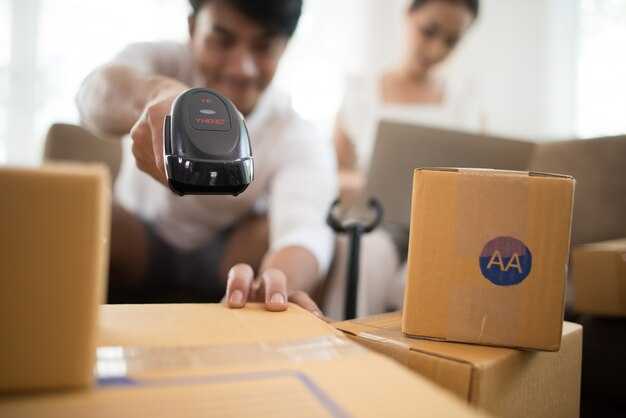
Start tagging every item with a unique RFID tag at receipt to unlock real-time visibility across channels. This will help increase inventory accuracy and lets a retailer break down silos between stores, warehouses, and online, so there is a single truth for stock on hand. When items are tagged, replenishment cycles become data-driven and faster. Lets run a controlled pilot to start showing impact.
Define thresholds for replenishment, aiming for 2–4 hour inventory visibility and a single source of truth across stores and DCs. The first milestone should be 98% item-level accuracy in the pilot, with speed improvements of 3–5x in cycle counts and POS reconciliation.
Enable digital shopping experiences where customers see real-time stock and accurate delivery windows. With tagged products populating a central data model, you avoid mismatches and keep the same data stream for fulfillment, storefront pickup, and online orders. This framework يتطلب cross-functional collaboration.
Lets map data flows across the process to align picking, replenishment, and last-mile delivery in one dashboard. If you want to reduce stockouts and speed up fulfillment, this helps reduce manual counts, accelerate restocking, and improve customer satisfaction, even during peak periods when thresholds matter most and being reliable matters.
Start with a practical rollout plan: tag top 10 SKUs in 5 stores, measure inventory accuracy before and after, and extend to full SKU coverage within 90 days. Integrate RFID data with your ERP and OMS to ensure the digital visibility remains consistent everywhere you work.
RFID for Omnichannel Retail: Real-Time Visibility, Inventory Accuracy, and Lowering Split Orders & Cancellations
Recommendation: implement RFID tagging across brick-and-mortar locations and distribution centers as a single, scalable approach. This tool delivers real-time visibility into stock, wide tracking across channels, and ensures accurate item allocation for omnichannel fulfillment. It enables knowing shelf and transit status, without relying on manual counts, and reduces out-of-stock occurrences by surfacing live data to apps used by sales associates and customers there. These capabilities set the stage for merchandising excellence. Such clarity supports better merchandising decisions.
Recent developments date back to the pandemic era and show that most retailers cut stockouts by 20-45% within 12 months, while inventory accuracy moves from the 85-90% range to 97-99%. Implementation across multiple channels also improves returns processing and reduces negative errors in picking and misrouted orders.
A finding from pilots is that RFID tagging reduces mis-picks and returns misroutes. These outcomes come from tagging at receiving, attaching tags at the single item level, and feeding updates into the OMS. The addition of all-seller apps and store devices contributes to real-time tracking and customer satisfaction. This isnt just a backend upgrade; it changes how brick-and-mortar stores participate in the omnichannel flow.
Implementation plan: start with a phased rollout in brick-and-mortar stores, then extend to distribution centers. Tags are sent to the central system each time stock moves, and the date-driven milestones guide progress. The approach requires training, data hygiene, and cross-functional cooperation to minimize disruption during implementing sprints. The date deadlines should align with seasonal peaks to maximize impact.
ROI and outcomes: real-time visibility reduces split orders and cancellations, improves on-shelf availability, and lowers reverse logistics costs from returns. The addition of RFID data improves merchandising alignment across online and offline channels, and the wide adoption of tracking apps helps staff stay aware of stock levels at a glance. This coordination gives customers confidence and supports further developments in tool-enabled omnichannel strategies. These gains reinforce the date-based planning and make the omnichannel promise a practical reality.
Implement RFID across stores, DCs, and online channels for unified inventory data
Implement RFID across all store formats, DCs, curbside, and ecommerce fulfillment to create a single, real‑time inventory view that makes informed choices possible.
Four practical actions drive the rollout: Only four steps to start: 1) standardize tagging and the data model; 2) select a scalable RFID tool that supports fixed and mobile readers; 3) integrate with ERP, WMS, and ecommerce platforms; 4) run pilots in multiple stores and in DCs, then expand. This approach relies on a common data schema, interoperable interfaces, and a tool set that scales as you grow.
This approach increases inventory visibility and reduces mismatches without frequent manual checks. Real‑time readings from shelves, curbside lockers, and shipments to ecommerce orders feed into a unified data layer, enabling organizations to identify root causes shown in pilots. The gains become evident when data from store and DC readings converge with online orders, reinforcing cross‑channel reliability.
Retailers across organizations gain improved service, faster restocking, and better cross‑channel commitments. This approach supports curbside and store pickup without compromising data quality, extends into DCs for rapid shipments, and scales with developments enabling more precise inventory health beyond store floors. The outcome is a unified feed that supports support teams, store operations, and ecommerce services with enabling visibility across channels.
To sustain momentum, establish a practical plan with measurable KPIs: inventory accuracy, service levels, and order cycle times. Launch a pilot in four stores and one DC to demonstrate increasing accuracy and the ability to fulfill curbside and ecommerce orders in real time. Use the data to inform choices across multiple teams, with ongoing support from RFID technologies and services across organizations. This approach helps curb unnecessary shipments, improves planning, and strengthens omnichannel performance without disrupting daily store activities.
Tag every SKU with item-level RFID to ensure consistent tracking across all channels

Implement tag every SKU with item-level RFID to enable end-to-end visibility from warehouse to storefront and through returns. Once every item carries an RFID tag, you can track its movement across DCs, stores, and e-commerce, aligning inventory data across channels. This reduces discrepancies, speeds up replenishment, and enables more precise operational planning. Expect inventory accuracy to reach 95–98%, increasing efficiency, saving labor in receiving, cycle counts, and store transfers, while improving item-level traceability for audits across items.
Customers and consumers expect a seamless shopping experience. RFID tagging ensures consistent track across store shelves, online carts, and BOPIS workflows. The system surfaces demand signals that support replenishment decisions throughout the season, enabling full visibility for demand management and reducing out-of-stocks. With accurate data, you can handle returns more efficiently and keep items available where customers shop, increasing the number of items sold and boosting satisfaction.
Operational gains include faster receipt handling, fewer misplaced items, and simpler cycle counts. Staff can find items quickly with handheld readers and fixed portals, reducing search time by seconds and saving less time per shift. The technologies stack–tags, fixed readers, and mobile scanners–lets store teams track inventory across shelves, backrooms, and receiving docks, ensuring the full item flow remains transparent throughout the day. They can accept shipments, verify items, and flag discrepancies in real time, supporting that data drives decisions.
From a margin perspective, eliminating stockouts plus lower safety stock reduces markdown risk and raises gross margin. RFID-driven replenishment improves service levels, reducing lost sales by 10–25% in peak seasons for high-demand SKUs. Inventory accuracy gains translate into increased selling opportunities and a higher margin per order, with saving realized in faster checkout and fewer write-offs. This approach is based on data from RFID-enabled inventories, providing reliable guidance for seasonal planning and demand-based adjustments.
Start with the number of top-demand items, tagging inbound shipments and ensuring each item carries a unique tag. Integrate RFID data with ERP/WMS based on your data model. Run a pilot in one store and one DC, then scale to all channels. A key finding guides adjustments and, based on results, extend tagging to replenishment flows and cross-channel fulfillment to streamline operations, according to your rollout plan.
Measure success with KPIs: inventory accuracy, out-of-stock rate, service level, replenishment fill rate, margin changes, number of items scanned per shift, and saving in labor hours. Track customers’ experience across channels to ensure consistency, and compare results season over season to validate improvements, ensuring that the omnichannel experience remains seamless for all consumers.
Automate cycle counting to close on-hand gaps and keep stock records reliable
Deploy RFID-powered cycle counting with automated reconciliation to close on-hand gaps in real time and gain visibility about stock. Compared with traditional manual counts, this tool delivers speed and accuracy with less disruption to store operations.
Implement a simple, repeatable workflow: when a cycle count runs, scan tagged items with handheld readers, and feed results to software that flags variances. Example: target a test batch of 2% of SKUs nightly, verify counts, and automatically adjust stock records in the channel. Making this process part of daily routines helps teams act quickly.
This workflow minimizes discrepancies and losses by linking counts to replenishment rules. Tighten reserve levels where variances recur, and set automatic corrections to safety stock. This approach also supports finding variances quickly and keeps data aligned with actual on-hand levels.
Across channel and returns flows, tagged assets are tracked throughout the network, so data stays consistent from storefront to warehouse and back. This visibility already reduces blind spots and supports understanding of on-hand levels. This framework is becoming a standard practice across channels.
Pandemic disruptions underscored the value of a resilient tool that runs without constant manual input, keeping the cycle count cadence reliable even when staff time is tight. Quite a few sites have moved to continuous checks, improving safety and service levels.
Strategies to scale include tagging critical categories, fitting tags to the right items, scheduling off-peak cycles, and monitoring dashboards that surface finding and actions. This supports an understanding of stock flows and strengthens omnichannel strategies.
Integrate RFID data with ERP/WMS for live stock updates and accurate replenishment
Consolidate RFID data with ERP and WMS to deliver live stock updates and accurate replenishment, elevating service levels across your brick-and-mortar and online channels. This convenient linkage reduces out-of-stock incidents and provides knowing visibility into inventories in real time, with massive impact on customer satisfaction.
- Establish a single inventories view by linking RFID reads to your product master and WMS, ensuring every tagged product contributes to a live count across stores and distribution centers.
- Map each RFID tag to its product and populate a master data map that keeps knowing which tag belongs to which SKU, so you can align readings with the correct product in all systems.
- Enable real-time event streaming to ERP and WMS so each reading updates inventories immediately, minimizes latency, and supports accurate replenishment decisions.
- Define replenishment rules that trigger automatic stock transfers or purchase orders when store stock falls below a threshold, reserve items for existing orders, and minimises stockouts.
- Break down silos by reconciling POS, store operations, and warehouse data with ERP/WMS, giving you a single view of inventories across multiple channels rather than separate datasets.
- Run a fifty-item pilot across five brick-and-mortar stores and one central DC to quantify this approach’s impact year over year, and adjust thresholds based on actual performance.
- Track key metrics: in-stock rate, replenishment cycle time, stock-out duration, and the volume of reading events that led to action, so you can demonstrate the result and plan next steps.
The outcome is a clear increase in accuracy, a drop in out-of-stock events, and a streamlined replenishment cadence that feels convenient for buyers and store teams alike. Since readings occur in near real time, this approach delivers quite rapid visibility across your inventories. If you want to accelerate results, align replenishment with promotions and seasonality, leveraging such data-driven triggers to minimise manual work across multiple channels.
Pinpoint item locations to reduce split orders and improve fulfillment accuracy
Tag high-velocity SKUs with RFID and deploy a live locator to pin exact stock positions across receiving, stores, and warehouses. This approach reduces split shipments and increases pick accuracy.
- Scope: select top 20–30% of SKUs by turnover and label each unit with a durable RFID tag that carries a unique EPC. This yields precise location data at shelf, tote, and dock levels, enabling faster pulls and fewer mis-picks.
- Locator network: install fixed readers at inbound docks, put-away zones, packing stations, and in-store back rooms; equip staff with handheld readers to locate specific goods on the floor within seconds, cutting search time by 70–85% on average.
- Systems integration: feed RFID data into the existing WMS and OMS; align inbound receipts, put-away, and cross-ship processes so that stock counts reconcile in real time without manual scans. This reduces mismatches by double-digit percentages.
- Workflow design: define a single path for each order that spans online and in-store fulfillment; use RFID to validate that the exact goods are allocated before packing, preventing partial fills and backorders.
- Measurement plan: track split shipment rate, pick-to-ship accuracy, and cycle-count frequency; pilots show split orders drop into the 20s to 40s percent range, and pick accuracy approaches 98–99% after two quarters of use.
Implementation tips to accelerate gains:
- Start with a two-venue pilot (one distribution center and a couple of flagship stores) to prove ROI quickly; use this data to scale across the network.
- Coordinate with suppliers so inbound goods arrive already tagged, minimizing re-tagging work and speeding the ramp.
- Ensure label adhesion and read-range fit; select rugged tags for bulk or wrapped goods to avoid read failures.
- Design dashboards that show real-time stock position, order availability, and potential bottlenecks; set alerts for mismatches within a short window to avoid delays.
- Train staff on precise picking methods and the new locator tools, so the experience remains smooth and intuitive across roles.
Reduce order cancellations by improving stock visibility and accurate promise times
Implement RFID-enabled stock visibility across stores and distribution centers to surface near real-time counts across inventories and enable accurate promise times. This requires close coordination between store operations, logistics, and digital systems, underpinned by RFID technology, to prevent incorrect commitments that trigger cancellations. Whether you operate a handful of stores or a national network, this approach helps the retailer improve forecast reliability, boost loyalty, and reduce losses.
With visibility at the shelf edge and in the warehouse, you can confirm exact quantities and offer precise fulfillment options–ship-to-home, store pickup, or curbside–reducing the risk of cancelled purchases. Closer alignment between stock data and shopper expectations streamlines workflows and sends accurate messages to shoppers. The benefits extend beyond a single order, building shopper trust as reliability grows and returns drop after the initial purchase.
Frequency matters: set stock updates to high cadence so online inventories and in-store counts stay aligned. Whether updates occur every 30 seconds or every minute, near real-time data dramatically reduces mismatches between promised times and actual stock, lowering the chance of cancellations.
Examples from pilots show RFID-driven visibility can cut cancellations by double-digit percentages and push stock accuracy into the mid-90s for key inventories. Shoppers experience faster, more reliable fulfillment, which strengthens loyalty and reduces the financial impact of missed promises for organizations. Beyond pilots, extending tagging to core categories yields sustained benefits by enabling better planning, faster decisions, and clearer communication about availability.
| Initiative | Baseline metric | Post-implementation | Delta | الملاحظات |
|---|---|---|---|---|
| Inventory accuracy | 65–85% | 92–97% | +7–12 pts | RFID tagging + frequent recounts |
| Promise accuracy | 65–75% | 90–95% | +15–20 pts | System flags stock gaps before confirmation |
| Cancellation rate | 5–8% of orders | 2–4% | −2–6 pts | Better visibility reduces over-promising |
| Fulfillment options sent to shoppers | one option per SKU | multiple options per availability | expands up-selling; improves reliability | Enhances shopper choice |
Implementation steps for organizations: start with implementing RFID tagging on high-volume items, connect readers at receiving, shelves, and POS, and integrate results with the OMS and ERP. Some retailers begin with a pilot in a few stores, then scale to a broader set of inventories and seasonal lines. Train teams to rely on real-time stock data, monitor metrics monthly, and adjust thresholds for auto-promising. By implementing this approach, you streamline operations, make smarter purchasing decisions, and keep shoppers confident in every purchase.
Streamline returns and reverse logistics with readable tags for faster processing
Tag every returned item with a readable RFID tag that encodes SKU, return ID, and essential routing data; scan at intake to auto-route to the correct center and update stock in real time, enabling same-day visibility.
Deploy kiosk scanners at returns locations and train staff to scan items on arrival; this approach yields more accurate stock updates and reduces handling time over all channels, improving the customer experience.
Choose a range of tag types designed for the environment and packaging, preferably durable UHF tags with a robust read range and high resilience to moisture and abrasion; available options can be compared to pick the best fit for your product mix, about durability and read performance.
Integrate RFID data into a single source of truth (source) and connect it to your WMS or ERP so partners and staff access the same data; this ensures real-time visibility across centers, stores, and warehouses, and supports a unified Returns Strategy. Here, a simple, scalable approach yields measurable gains, as mentioned.
Implementation plan for the year: start with 2-3 high-volume centers, train teams, and align suppliers to deliver tags and readers; implement KPIs and adjust the environment for continuous improvements within the supply network.
Developments in RFID tech continue to improve results; the result is faster intake, lower negative holds, and clearer demand signals. Track stock availability and reallocation to reduce overstock in the range of SKUs, keeping some customers satisfied with faster refunds.