




Launch a 12-month pilot DC microgrid in one flagship facility to quantify energy savings and resilience; use this initial deployment to set the must-have baseline for the company. This approach targets production floors first, reduces dependency on high-carbon AC conversion, and provides concrete data for regulators as you scale.
Direct current distribution minimizes switching losses across high-demand loads in buildings and production lines. In facilities with solar on roofs, DC can feed storage and critical loads with fewer conversion steps. Ensure attention to fault isolation and ring topology in microgrid controllers, so a fault in one branch doesn't cascade.
Officials and regulators increasingly require transparent energy accounting; map your compliance path with traceable meters and ethernet-enabled sensors. Align insulation, dc-rated cable standards, and safe switching practices. Invest in high-quality cable and robust ethernet backbone to support remote monitoring and fault isolation. The data flow supports production planning and sustainability reporting for investors.
Plan a staged rollout that varies load profiles by time of day and season; the architecture must accommodate varying currents from cooling towers to automation rings. Use a ring topology for reliability and implement modular switchgear to support quick switching between sources. Align with existing roof-mounted solar and battery storage to avoid idle generation, and document the effects on buildings energy intensity across times and shifts.
Finally, monitor key metrics: line losses, energy throughput, and uptime; compare DC-fed lines against legacy AC feeders to quantify payback. For facilities already pursuing sustainability, the DC approach can lift overall efficiency by 5–15% depending on load mix, with payback often within 3–5 years. The company should publish results for regulators and customers, reinforcing trust and driving broader adoption across buildings and production sites.
Supply Chain Sustainability and Direct Current Power
Implement direct current power at distribution centers and field networks to cut losses and carbon footprint while improving stability. In the first year, expect 12-18% less energy loss in high-demand nodes and a 15-25% reduction in related carbon emissions when paired with on-site storage.
Actionable steps to realize these gains:
- Audit high-demand nodes and load profiles, including distribution centers, home delivery hubs, commercial facilities, field fleets, telephones, and edge networks. Target 12-18% less energy loss than AC for these loads and aim for a 5-10% drop in total energy intensity in the pilot.
- Install a DC distribution ring/bus topology with distributed batteries to cover 4-6 hours of peak load. Use fast DC-DC converters to support forklifts, refrigeration, and edge servers. Expect 2-4 year ROI depending on scale.
- Define market standards and internal requirements for DC power design, safety, and interoperability. Require suppliers to meet energy performance targets and ensure compatibility with existing chargers and equipment.
- Adopt a management layer that coordinates demand, charging, and energy storage. Use forecasting, real-time monitoring, and fluid automation to reduce peak demand by 15-25% and cut energy charges by 10-20%, even when loads spike, while maintaining power quality and stability.
- Pilot then scale: start with 3-5 facilities, measure energy, carbon, and uptime metrics, and then expand to 10-15 sites in 12-24 months if ROI targets exceed 20%.
One challenge to address early is aligning legacy equipment with DC buses to avoid redundant hardware and ensure smooth transition across distribution paths and home networks.
Metrics to monitor regularly:
- loss: track kWh lost in conversion and distribution paths, compare with AC baseline
- power quality and stability: voltage deviation, outages, and ring bus reliability
- batteries: cycle life, DoD, and charge/discharge efficiency
- carbon: CO2e reductions from energy source use and efficiency gains
- market: alignment with industry standards and customer requirements
- networks: resilience of distributed edge networks and telephones
- demand: peak demand charges and energy cost per unit of output
DC in Home Environments: Wiring, Load Profiles, and Device Compatibility
Install a centralized 48V DC bus in homes with properly rated breakers and DC outlets in key areas to reduce conversion losses and enable seamless operation of DC devices. Use smart load management to shift nonessential loads to off‑peak windows and maintain a steady voltage on the trunk line, even when some branches shift between high and low demand.
The plan hinges on a constant DC rail, provided by a small, integrated energy hub that can accept incoming power from solar, battery storage, or the grid. This hub manages charging, protection, and early fault isolation, allowing the last‑mile wiring to stay simple and reliable. Keep safety clearances and labeling straightforward so telephones, network gear, and appliances remain easy to service around the house.
Wiring and load profiles by areas help keep complexity under control. Consider a mile‑long approach to trunking where a main 48V line runs through living and work zones with shorter branches to rooms and closets. Use copper conductors sized for anticipated current and voltage drop, and protect every route with DC breakers, fuses, and isolation switches. In homes, prefer a dedicated distribution basket for DC circuits that powers lighting, small appliances, and data gear without unnecessary mixing with high‑inrush devices.
- Areas and loads: Living room, Kitchen, Home office, Bedrooms, Remote zones (garage, workshop, outdoor spaces). Each area gets a tailored branch circuit and a local DC‑DC converter to feed 12V or 5V devices as needed.
- Lighting and small loads: LEDs (5–15W per fixture), telephones, modems, cameras, and sensors typically run on 12V or 5V via DC‑DC modules; these are steady customers for a constant rail without frequent recharging losses.
- Appliances: Some appliances stay on DC (refrigeration fans, certain smart devices, portable coolers); others require DC to AC conversion, which adds inefficiencies. For those, plan efficient DC‑AC inverters with smart soft‑start to limit inrush.
Wiring details and data‑driven rules help control costs while keeping reliability high. For a 48V loop carrying 10 A sustained on a 30 ft run, a 6 mm² conductor keeps voltage drop under 2%. For longer runs up to 60 ft, 10 mm² is a safer choice. In areas with multiple high‑demand loads, duplicate trunking or parallel conductors may be required to maintain stability, especially if you anticipate load growth over time. Incoming power from solar or grid should feed through a protected hub that can isolate faults and avoid cascading shutdowns.
Device compatibility and standards shape selection and deployment. Some devices ship with DC input options or internal converters, while many appliances expect AC input. When choosing devices, verify DC input compatibility and ensure the device can tolerate the rail voltage without frequent re‑balancing. For data and telecom gear, maintain clean separation from motorized or heating loads to minimize interference and maintain performance data integrity. Standards dictate safe conductor sizing, insulation, and protection gear; align the entire chain with IEC/UL‑style guidance and regional electrical codes to avoid last‑minute rework.
Example scenarios illustrate practical outcomes. A home office may power a PC, monitor, NAS, and networking gear from a 48V bus via DC‑DC converters, with a small USB‑C charger feeding phones and tablets. A remote workshop could feed a 12V fridge, a drill press, and lighting through dedicated branches; a simple smart hub coordinates shift of nonessential devices to a lower load state during outages or peak usage. In these cases, the data show improved overall efficiency due to reduced conversions, while providing a reliable power backbone that keeps critical devices running around the clock.
However, there are disadvantages to weigh. The mismatch between existing AC appliances and new DC interfaces can raise upfront cost and complexity. Some appliances require an inverter, which adds losses, heat, and potential maintenance. The supply chain across industries varies in how quickly compatible devices enter the market, so homes may rely on adapters or custom modules during a transition. Still, the long‑term gains–lower energy losses, smoother energy management, and better resilience–often offset these initial hurdles.
In summary, a well‑planned 48V DC framework in homes supports seamless operation across areas, simplifies remote device charging, and offers a clear path for future improvements. By focusing on standard‑compliant components, careful wiring, and compatible devices, households can represent a leaner, more resilient energy system without sacrificing comfort or convenience. Data from pilot setups show noticeable reductions in ground‑fault incidents and inrush peaks, while customers report easier maintenance and more predictable energy bills as the system matures across industries and homes alike.
Electricity Supply Chain Demystified: From Generation to DC-Ready Endpoints
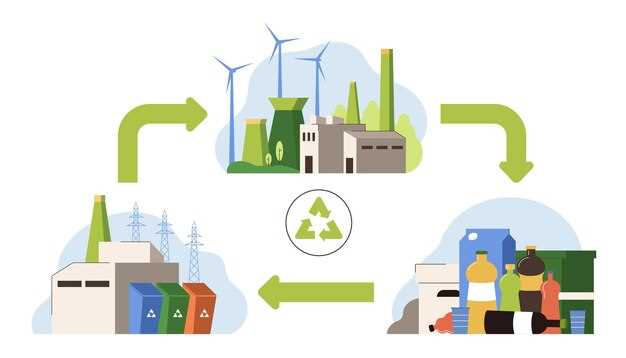
Start with a dc-ready endpoint strategy: deploy lvdc distribution and place conversions at the source or just before loads to minimize loss and simplify appliances; this approach benefits how electricity is managed and has become a reliable path for modern buildings.
From generation to endpoints, the chain spans generation assets (solar, wind, or grid), transmission over cable networks, and step-down paths that prepare power for DC conversion near the endpoint; convert there to support directly powered loads and avoid unnecessary conversions along long feeders, keeping currents predictable for smart buildings and appliances.
Across traditional AC networks, total loss from generation to consumption typically sits around 6-8%. In lvdc-based microgrids for buildings and campuses, line loss can drop to about 1-3% for short urban feeders, while modern inverters and DC-DC converters routinely achieve 95-98% efficiency. The benefits include lower heat, less electricity wasted, and easier integration with lighting and appliances. These gains vary with cable quality, insulation, ambient temperature, and the design choices that have been made there.
Target DC-ready endpoints: lighting, appliances, and network devices that accept lvdc can operate directly, reducing conversions and improving efficiency. A instrumental role of lvdc in modern buildings is to become energy autonomous for critical loads mainly in offices and residential sectors. Use ethernet-connected sensors and DC-powered devices to create a basket of loads with predictable performance. There, DC-powered lighting and appliances cut the internal conversion burden, lowering cable copper needs and heat in cabinets and floors.
Implementation steps for teams: map loads and identify DC-ready endpoints; choose a voltage tier (24 V or 48 V) to balance safety with run length; design a centralized LVDC bus with protections, fault isolation, and redundancy; select high-efficiency converters and low-loss cables; run a 6–12-month pilot on one floor or campus to validate ROI and reliability; then scale across buildings while tracking energy benefits and maintenance costs. Finally, build a maintenance basket of spare parts and implement a quarterly review to catch degraded connections before they cause outages.
IoT Systems Powered by DC: Sizing, Cabling, and Low-Conversion Design
Start with a concrete sizing rule: calculate I_total = sum of each device current at the operating DC voltage, then add 25–30% headroom. Choose a trunk voltage (24 V or 48 V) to keep currents and losses low. For remote stations, 48 V reduces copper and heating; thereafter convert locally to 5–12 V as needed. Gather data from device datasheets and metering blocks to bound worst-case draws, and set a single-line diagram that shows supply, fuses, and point-of-load regulators. once you set the margin, you simplify maintenance and lower total costs, using specifications provided by manufacturers to tighten the design.
Design the cabling to minimize V_drop and simplify maintenance across distributed stations. Use a DC trunk feeding remote stations, with short locally dropped lines to each device. Keep runs under 100 m at 24 V to limit loss, or push to 48 V for longer legs. For worst-case metering pulses, calculate I × R_drop and ensure V_drop stays within 0.5–1 V per leg. That implies conductor cross-sections in the range of AWG 22–AWG 18 for typical field runs; verify with a quick field test. Place metering at the source and at each station locally to capture data on total current, presence of faults, and device health. thomas emphasizes selecting cables with robust insulation and proper shielding in industrial environments, which enhances robustness and reduces maintenance costs over long horizons. Keep the installation tidy: route cables in dedicated trays, use color-coded conductors, and avoid mixing DC with high-frequency lines to prevent interference. The goal is to simplify remote monitoring and ensure the presence of consistent power for owners' devices, hence a lower total cost.
Adopt a low-conversion design: prefer devices that accept a DC input directly or require only a single DC-DC step. Each extra conversion adds losses, heat, and potential failure points, so limit to one central stage near the trunk and a second local stage only where needed. Choose regulators with high efficiency (80–95%) and low quiescent current, and keep the tail of the power path short to reduce cable resistance impact. For sensor nodes, select devices with wide input tolerance so they can run from 24 V and convert to the local rail on the device, avoiding multiple conversions along the route. Choose components whose input range matches 24 V to avoid extra conversion. If a component must be converted, place the conversion at the hand of the station designer and ensure provided documentation describes where conversion happens. Avoid devices that are converted multiple times; once you standardize on a single trunk, you improve reliability and have easier field service. By reducing conversion steps, you minimize heat, extend battery life for back-up, and improve data throughput consistency during peak times. Validate with a thermal model and field tests, using data logs from remote stations to adjust the design. Data and technology clues: use a robust technology baseline, and track data from every device to prove presence of energy efficiency gains.
DC-Based Energy Storage and Microgrids: Battery Architectures, Storage Sizing, and Resilience
Deploy a modular, DC‑coupled energy storage system sized for four hours of autonomy at peak load, with redundant strings to cover equipment failures. This setup reduces energy losses and speeds response to outages. For a microgrid serving 60 homes and several commercial centres, target a storage capacity of 3–6 MWh and a peak discharge of 0.8–1.2 MW; scale up if daily energy needs or outage duration are higher. Connect PV, hydroelectric generation where available, and critical loads on a common DC bus to minimize conversions and improve robustness.
Battery architectures use modular Li‑ion cells arranged in series and parallel strings, tied to a reliable BMS for safety. Choose NMC for higher energy density in commercial systems, or LFP where robustness and longer cycle life matter. For long‑duration needs, consider flow batteries or hybrid options as a future path. The DC‑coupled approach reduces losses and enables fast response to changes in supply or demand; example: a 50 kWh module used in multiple strings provides flexible reconfiguration and fault isolation, improving networks robustness.
Sizing methodology starts with clear autonomy goals, then analyzes the load profile of homes and centres. Compute energy need E = daily load × hours of autonomy, apply a derating factor for efficiency and BMS losses, and select capacity so that drawn energy equals E divided by charge/discharge efficiency. Add 10–20% spare capacity for unforeseen needs. Example: a microgrid serving 60 homes (average 2.5 kW during the day, 0.5 kW at night) and five commercial centres with 0.5 MW daytime demand yields daily energy about 60×2.5×6 h + 0.5 MW×8 h ≈ 4.9 MWh. For six hours of autonomy, E ≈ 4.9 MWh × (6/24) ≈ 1.23 MWh. With a DoD of 0.9 and round‑trip efficiency of 0.9, required storage energy ≈ 1.23/(0.9×0.9) ≈ 1.52 MWh, plus 25% contingency → design about 2.0–2.5 MWh. This leads to a practical target of 2.2–2.5 MWh total storage capacity for this example.
Resilience emerges from fast‑acting storage, smart energy management, and reliable communications. The system should island within seconds and sustain critical loads in homes and centres even if the main grid or remote generation faces issues. Build robustness through redundancy in critical strings, active battery health monitoring, and rapid fault isolation. In networks with hydroelectric or other renewables, coordinate with these sources to maintain frequency and voltage while keeping the peak demand in check.
Implementation emphasizes a consistent DC envelope, with a 400–800 V DC bus as a practical target to minimize conversion losses. Use a robust EMS that harmonizes PV, storage, and local generation, and plan a phased rollout with clear milestones for commissioning and testing. Monitor key metrics such as discharge duration, cycle life, and energy losses to demonstrate the advantages for commercial centres and homes. Keyword: robustness; this focus helps ensure access to power during outages and supports ongoing understanding of how advancements in chemistries and controls translate into real‑world resilience.
Adopting Direct Current: Case Studies, ROI Signals, and Risk Mitigation
Adopt direct current for critical loads in DC-powered equipment, starting with storage systems and motor drives in distribution centers, to gain measurable efficiency and reduce energy waste by up to 15% within 12–18 months. Pair the pilot with on-site generation, including wind, to test transfer efficiency and establish a natural baseline for expansion.
In the thomas case study, a three-site DC microgrid replaces multiple AC-DC conversion stages on high-load conveyors and cold-storage lines. The work yields increased efficiency, lowers energy spend in year one, and improves resilience during utility disturbances. The study begins with a baseline audit and a development plan that favors a modular DC bus and scalable control software.
Across international operations, a targeted study shows DC adoption begins with a focused assessment of storage, transfer points, and fluid loads to build a scalable deployment. The potential benefits grow when the DC architecture aligns with on-site wind and other renewables, reducing dependency on single-technology solutions and enabling more sustainable energy use.
ROI signals point to increased energy efficiency, a leaner inverter footprint, and more predictable energy costs as DC lines consolidate conversion steps. In pilot facilities, increased reliability, better storage utilization, and fewer supplier interruptions translate into a measurable cost gain and a payback horizon of 18–30 months, depending on load mix and generation co-location. The path to ROI starts with specific load profiles, a clear governance plan, and a fluid transition plan that keeps operations uninterrupted while capabilities mature.
To mitigate risk, structure a phased rollout with modular hardware, standardized interfaces, and rigorous testing. Document interconnection requirements, safety procedures, and cyber-resilience measures, then validate performance with limited live loads before broad expansion. Maintain alignment with international standards, cultivate supplier transparency, and use a risk register to track procurement, construction, and operating risks as development scales.
| Case Study | ROI Signals | Risk Mitigation | Key Learnings |
|---|---|---|---|
| thomas Logistics DC cluster | increased efficiency 12–15%; energy spend down in year 1; 18–24 month payback with wind + storage | modular DC bus; standards alignment; cyber and interconnection planning | start with storage and high-load drives; validate control planes across sites |
| International retailer DC network | 8–12% OPEX reduction; 24–30 month payback; improved resilience | vendor diversification; cross-border compliance; data integrity controls | unify DC controls; prioritize interoperable components |
| Cold-chain with wind-assisted DC microgrid | 15–20% energy savings; better storage utilization | safety controls; energy transfer sequencing; redundancy for critical loads | modular rollout; phased deployment with measurable milestones |