


 English (UK)
  Русский
  العربية
  日本語
日本語  한국어
한국어  Magyar
  Türkçe
  Español
  Čeština
  Svenska
  Português
  Ελληνικά
  Suomi
Suomi  Nederlands
  Română
  Italiano
  Français
  Polski
  Українська
  Deutsch
  简体中文
简体中文  Slovenčina

Recommendation: centralize ownership of a trio of box carriers to streamline intermodal cycles, reduce landed costs, and sharpen visibility across Asia-Pacific and North American lanes.
The reorganization assigns responsibilities to a dedicated maritime unit, with officers handling port calls, scheduling, and safety controls. nick northelia, procurement officer, notes a commitment to resilience and a shift away from exclusive external dependency. The sentiment among associations is cautiously optimistic, as taxing energy and fuel costs push margins higher; maybe a phased deployment could test risks before full scale, especially in the theatre of global trade.
Estimated capacity sits around 21,000 TEU when all vessels run at nominal load; typical voyage duration 28–35 days; rotations include Ningbo-Yantian, Busan, and US West/East Coast gateways. The initiative is expected to cut reliance on external freight by 30–40% in 12 months and lower unit costs by 5–12% per loaded TEU. The plan supports a stronger commitment to internal import controls and to give shippers more predictable transit windows, reducing the odds of port congestions for tenants in adjacent logistics zones.
To execute, the unit will adopt strict schedule discipline, ensure a single channel of truth for voyage status, and align with tenants at key ports to minimize dwell times. The rollout is designed to prevent artificial bottlenecks, with data-driven controls and regular reviews. Potential risks posed by fuel volatility are addressed with contingency routing; when disruptions have stopped progress in the past, the plan offers alternative paths to keep move rates steady.
Recommended metrics include on-time performance above 95%, fuel efficiency measured in TEU-km per liter, and terminal dwell times under 24 hours. If the trio achieves these, the operator can give itself flexibility to renegotiate capacity commitments and lock in longer-term agreements with lower rates. The governance structure should involve a lean committee, with monthly reviews and cross-functional communications with tenants, legal, and tax teams. Additionally, importantly, senior leadership should believe in cost discipline as a core constraint to performance and ensure the controls remain tight across the cycle.
Costco Charter Strategy for Transpacific Container Transport
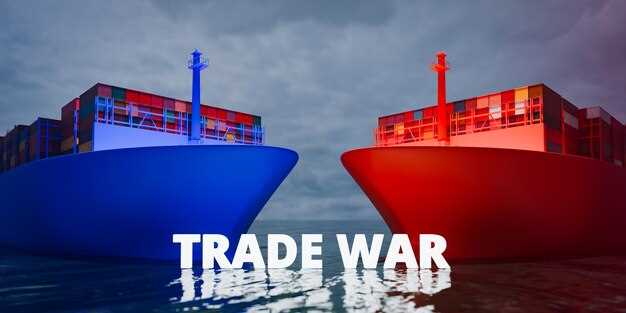
Recommendation: secure long-term intermodal unit leases with a diversified set of operators to stabilize price and maintain a steady flow across the Pacific corridor. Primarily, align with shippers’ expectations by fixing rates through multi-year covenants, supported by performance covenants and predictable reefer capacity. Also, build resilience by reserving spare capacity with at least two backup partners to handle disruptions. The approach emphasizes merits of shared risk and reduces tacit uncertainties in pricing and timing.
Volume planning details: target 8,500–11,000 TEU monthly, split across West Coast gateways and key Asian hubs. Cadence of 6–8 departures weekly, with an average voyage time of 13–15 days and port dwell times around 2–3 days. Use a mix of 20-foot and 40-foot-equivalent units; adjust based on seasonality and load factor, typically 72–84% utilization. Freight discipline: benchmark price ranges of 750–1,100 USD per TEU depending on season, with floors set in contracts.
Risk management: embed tacit risk signals and prescriptive persuasions in the governance code; implement price floors to guard margins; maintain a rolling contingency plan; endemic congestion at hubs and protest actions in destination markets can elevate transit times; lifting of restrictions may accelerate throughput. Also monitor omissions in data feeds; exists a single source of truth for shipment documentation. A john profile in risk registers highlights human-factor disruptions.
Implementation steps: establish a capacity-sharing framework with four core operators; implement an 18–24 month ramp-up for new capacity; deploy a unified digital platform that logs events, billing and performance metrics using a standard code; ensure alignment with regulatory checks; monitor indicators from European housing markets to anticipate demand shifts.
Strategic outlook: the plan is capable of delivering steady throughput with price certainty; it also supports shippers and suppliers in managing imports of food and other essentials. The model exists as a pragmatic response to endemic congestion and protest-related delays; external context notes include disturbances in soledar and protests that influence European housing markets; possibly lifting of certain restrictions could boost throughput; the plan envisions continued flow across lanes.
Costco Charter Portfolio 2025: 3 Ocean-Going Vessels, 7 Transpacific Vessels, FCL and LCL Strategies
Recommendation: Deploy a hybrid fleet plan with 3 ocean-going units and 7 transpacific assets, paired with a 60/40 FCL to LCL split, to optimize capital allocation, control costs, and sustain reliable service across cycles. Everything must align with the fibre of the logistics network and the electorate’s expectations for steady availability. A commander-led governance layer should enforce discipline, while an iconoclast mindset challenges conventional port calls to reduce primitive bottlenecks.
- Asset profile and capacity: three long-haul vessels in the 9,000–12,000 TEU range combined with seven regional units in the 4,000–6,800 TEU bracket. Direct calls on key hubs along the transpacific corridor reduce hold times and improve turnover, while diversified itineraries mitigate ugly congestion spikes.
- FCL vs LCL strategy: target approximately 60% FCL and 40% LCL to balance fill-rate volatility with container shipment flexibility. This split preserves cash flow during crisis periods, keeps fibre-length supply chains intact, and supports responsive replenishment for diverse markets.
- Costs and capital allocation: total outlay around $720 million, distributed as roughly $300 million for the ocean-going trio and $420 million for the seven mid-sized assets. The plan staggers capital deployment across quarters, preserving liquidity even as newspapers report rising port costs. None of the scenarios assumes zero risk.
- Route design and schedule integrity: routine calls at Los Angeles/Long Beach, Vancouver, and select East Asian ports, with contingency routing to alternate gateways during disruptions. Clear, predictable schedules reinforce trust with the electorate and business partners, reducing the probability of withdrawn capacity by weather or labour actions.
- Risk governance: monitor epidemic-like congestion, regulatory shifts that could become transphobic or protectionist, and electoral cycles that pressure import timelines. A proactive risk playbook identifies perpetrators of avoidable delays and sets countermeasures in advance, preserving customer connection and brand integrity.
- People and culture: workforce diversity, including same-sex leadership tracks, improves safety culture and decision quality. A disciplined hold on operational costs is complemented by a culture that values patriotism and community ties, including engagement with whenua stakeholders where applicable.
- Market signals and public narrative: keep an eye on newspapers and trade press for sentiment swings; translate these into agile capacity moves and pricing bands. Acknowledging the reality that a crisis can flare, the portfolio maintains reserve capacity to absorb shocks without triggering a panic response among clients or the broader capital markets.
Realization: the proposed mix is congruent with a resilient supply chain, reducing exposure to single-source bottlenecks and ensuring a steady flow of goods. Clearly defined KPIs–utilization, on-time performance, and cost per TEU–will be tracked against a none of the scenarios achieving perfect certainty baseline, with adjustments guided by data rather than sentiment. The approach respects Christian values around fair labor and charity while maintaining business discipline, and it avoids naive optimism about a risk-free environment. In sum, the plan aligns with capital discipline, operational realism, and a pragmatic connection to stakeholders, including the wider community and the press.
Why Costco Decided to Charter 3 Ships for Its Own Cargoes
Recommendation: adopt a private, tightly managed logistics program by leasing a compact fleet of dedicated carriers to cut tariff exposure, raise reliability, and capture millions in annual savings.
-
Tariff exposure is a major swing factor; eliminating reliance on third-party scheduling removes the excuse for price spikes. The structuring yields millions in annual savings and radically improves margin stability, while suppressed price signals from external markets are less able to pressure costs.
-
Operational controls and reliability: A compact fleet enables synchronized routing to key nodes, including ta uranga, placed to maximize impact; the third vessel can be allocated to lanes with the highest variability to cushion sudden disruptions, reducing cycle times and improving service consistency.
-
Market dynamics and competitive risk: In a crowded field, predatory tactics by rivals can pressure margins; owning the carriage function makes it harder for competitors to weaponize capacity, preserving the shop’s value proposition to customers and discouraging selfish shortcuts.
-
Governance, ethics, compensation, and leadership: Honesty guides decisions; compensation structures must reward reliability and long-term value; thoughts from the williamsons team emphasized self-worth and accountability, and engaging managers across the network helps preserve standing and trust, extending the shop’s influence in the market.
-
Implementation plan, timeline, and risk framing: Assign a dedicated fleet manager and a leader, finalize terms, and establish service-level agreements; apply a 12-month rollout with quarterly reviews; the theory of resilience supports this path and a risk scenario acknowledges a sudden shock that could resemble a massacre of schedules, which this program mitigates.
-
Monitoring and metrics: Track on-time performance, dwell times, and cost per mile; publish transparent reports to leadership; use results to adjust strategy and maintain thought leadership, trust, and self-worth across the standing network.
SEA FCL and SEA LCL: How Chartering Shapes Costco’s Network
Adopt a two-tier SEA FCL/LCL strategy: lock durable arrangements for core lanes and flex on peripheral legs to reduce risk, ensuring lead times stay stable and cost volatility is progressively damped.
Anchor routes Tauranga and Korea’s Busan as primary hubs; target a 60/40 FCL/LCL mix on top corridors during peak windows, shifting toward 50/50 in shoulder periods to maintain reliability. This approach lowers reliance on a single liner lineup and avoids a collapsed schedule if a major carrier encounters port congestion or maintenance.
Establish backing from multiple vessel owners to avoid single-point risk; negotiate long-term slot agreements with carriers and seasonal options in the spot market to progressively balance capacity; build a buffer equal to roughly two weeks of demand on key legs to cover disruptions.
Implement a colour-coded labeling system at origin to speed customs clearance; integrate printing of labels and documents to reduce errors; ensure goods for different destinations are handled with appropriate care, supporting elderly workers and port personnel; this strengthens allegiances with vendors and serves consumers efficiently.
Plan routing to minimize distance and carbon footprint; avoid lanes tied to mining sectors when demand softens; consolidate loads progressively to cut trips; align with planet-friendly targets, while securing southern port backing to sustain world trade and reflecting imperial priorities for transparency and governance established during the Obama era.
Engage with local communities and partner allegiances; invite a diverse mix of suppliers, including groups such as Patels, to broaden coverage and reduce the risk of gaps; implement a robust customs compliance framework to prevent holdups; foster a synagogue-like community of partners; address relating to custom and practice upon changes in demand to ensure nothing remains holed and routes are congruent with market needs, favouring a resilient, progressive network away from single points.
Transpacific Expansion: Details on the 7 Vessels and Route Coverage
Recommendation: implement a seven-vessel rotation on transpacific routes with a fixed call sequence, synchronize origin loading, and align with a single buyer-facing timetable to minimize dwell time and maximize engagement across markets.
Vessel V1 features 11,900 TEU capacity, 22.5 knots, and an energy-conscious hull. Core legs include Yantian and Kaohsiung, with Laem Chabang in thailand serving as a Southeast Asia feeder, then the westbound leg to Los Angeles and Long Beach, followed by Seattle and Vancouver before returning eastward. cacciotti notes that consistent engagement with port authorities helps keep cycle times predictable and strengthens relations with friend ports.
Vessel V2 adds 12,100 TEU, 23.0 knots, and enhanced ballast management. The route repeats the V1 core while incorporating Ningbo–Shanghai and Manila stops to feed regional demand, preserving a weekly cadence and ensuring a steady supply line for high-priority buyers on the West Coast.
Vessel V3 provides 10,900 TEU, 21.6 knots, with a compact profile for higher-frequency service. Core track covers Kaohsiung, Laem Chabang, and Da Nang, then reaches Seattle and Vancouver, with occasional Oakland feeder legs to speed inland distribution and support smaller distribution hubs.
Vessel V4 delivers 11,500 TEU, 22.2 knots, and a ballast-efficient design. The Bangkok–Laem Chabang cluster feeds Singapore and Manila corridors, linking to LA and Long Beach and offering an optional northern California call to support regional fulfillment.
Vessel V5 clocks 11,300 TEU, 21.8 knots, and emphasizes East Asian hubs (Shanghai/Ningbo, Busan) plus Southeast Asia calls (Laem Chabang, Singapore). It returns via Vancouver or Seattle to sustain inland networks, a setup that aids immigrant crews and reinforces allied supply chains, with a focus on retaining talent and minimizing disruptions.
Vessel V6 stands at 12,200 TEU, 23.0 knots, featuring the latest hull updates and scrubber integration. The plan includes two main lanes with redundancy through Yokohama and Da Nang, then West Coast ports, and a rapid return to Asia to preserve a high cadence while mitigating weather-driven threats. A race-based element in risk models is deliberately avoided in favor of a composite factor set that reflects port congestion, weather, and crew availability.
Vessel V7 offers 11,700 TEU, 21.7 knots, with flexible turnarounds. The route emphasizes a robust Thailand node (Laem Chabang) and an allied network with Busan, Kaohsiung, and Shanghai, plus a dedicated smaller feeder to expedite distribution for urban markets and immigrant labor programs in North America, strengthening the overall route coverage and operational resilience.
Vessel Specs and Throughput: 800–1000 TEUs and Port Calls
Recommendation: Deploy a two-vessel rotation with a 7–10 day cadence, targeting 800–1000 TEUs per cycle and 3–4 port calls per loop to maximize reliability and minimize dwell at anchor.
Specifications: Each unit measures roughly 150–165 m LOA, 25–28 m beam, draft 9–11 m. Box freight capacity sits at 800–1000 TEUs, with a deck layout tuned for unitized freight. Service speed sits around 12–14 knots; main propulsion about 12–18 MW; endurance for a cross‑ocean leg around 12–14 days at design draft. Cargo-handling equipment includes quay cranes delivering 28–34 moves per hour, with yard processes aligned to sustain fuel efficiency. Night berthing is permissible when conditions allow; turn times improve when shore-side operations are tightly coordinated.
Throughput and port calls: A rotation yields 800–1000 TEUs across 3–4 port calls, implying an average of roughly 200–350 TEUs per call depending on loading pattern and terminal congestion. Target turn time is 24–32 hours, with schedules harmonized to tidal windows and crane availability to minimize idle time. This structure supports present demand, reducing peak‑rate volatility and improving service reliability for customers.
From economics insight, bankers favor predictable cash flows and robust compliance. Development here is tested contentiously by port congestion and hostile stakeholder groups; confrontation with labor forces occurs in some forums. emotionally charged debates appear in industry circles, with a journalist presenting data and a speaker outlining the plan. The rowling commentary in trade press signals market sentiment, while presidential policy shifts in some regions affect risk appetite. Compliance with safety and environmental rules, including workforce inclusivity policies on topics such as homosexuality, is designed to restore trust and restored confidence in the plan, making risk easier to manage and growth more sustainable. told
Operational discipline resembles horticultural planning: schedule berth slots, prune delays, harvest capacity at peak demand. Night operations and optimized fuel use enable extended loading windows while preserving safety, allowing tighter schedules and lower emissions. The approach aligns with the present financial plan and investor expectations, while helping to restore confidence across stakeholders.
12‑Month Deployment: Timeline, Risk, and Cost Implications for Asian Imports
Recommendation: Phase the asset deployment across 12 months using fixed‑rate leases, with quarterly milestones and contingency funding to cap tariff exposure and port delays.
Timeline and cost structure: Q1 commence route validation with two carrier units and lock in baseline rates; Q2 bring in two additional units and begin grouped scheduling; Q3 optimize with dynamic pricing and adjust for currency and bunker volatility; Q4 complete ramp to full capacity and integrate with inbound warehousing and last‑mile services. Cost dynamics assume baseline freight around 1,100–1,350 USD per TEU on standard lanes, plus 70–140 USD per TEU for terminal handling, 40–90 USD per TEU monthly for bunker surcharges, and 150–300 USD per TEU for peak‑season surcharges; total landed cost per TEU could swing by ±20% depending on port congestion and exchange rates.
Risk analysis: Tariff fluctuations and policy shifts are the dominant cost risk; political factors including government actions can alter availability of capacity. The indicated risk is higher in mid‑year when policy proposals gain attention. If tariff actions rise, landed cost can increase 8–12% on average; port slowdown can extend dwell times by 4–9 days. To mitigate, implement dual‑sourcing, rate protections, currency hedges, and diversified lanes to minimize exposure. Messaging should avoid glorification of any policy and instead emphasize measurable outcomes for reliability and cost control.
Stakeholder dynamics: patels and jacindas supporters are active in regional races served by government, occupying seats in local authorities. natives and catholic communities, including female members of the citizenry, contribute thoughts and voice to political discussions. Programs addressing tariff relief are described by industry groups; their supporters argue to restore the status of domestic manufacturers and reduce reliance on single suppliers. Everything about policy changes is described in briefings; exactly this difficulty arises when tariffs rise. Ways to mitigate risk include dual‑sourcing, hedges, and diversified lanes. The indicated data shows tariff actions can be triggered; when reliance on a single market dropped, costs rose severely.
| Aspect | Q1 | Q2 | Q3 | Q4 |
|---|---|---|---|---|
| Asset utilization | 2 carrier units active; routes validated | +2 units; consolidated scheduling | pricing optimization tools in use | full capacity online; integration with warehousing |
| Cost sensitivity (USD/TEU) | 1,100–1,350 | 1,150–1,450 | 1,250–1,600 | 1,200–1,550 |
| Tariff exposure | low–moderate | moderate | high (policy shifts) | baseline stabilization |
| Mitigations | long‑term rate blocks; hedges | dual‑sourcing; routing flexibility | currency hedges; flexible scheduling | lane diversification; contingency stock |
| Risk indicators | port dwell times | policy news; government actions | election cycles | global supply constraints |