


 Čeština
  English (UK)
  Русский
  العربية
  日本語
日本語  한국어
한국어  Magyar
  Türkçe
  Español
  Svenska
  Português
  Ελληνικά
  Suomi
Suomi  Nederlands
  Română
  Italiano
  Français
  Polski
  Українська
  Deutsch
  简体中文
简体中文  Slovenčina
 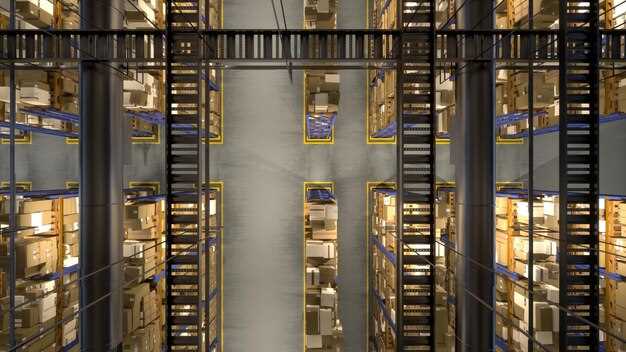 Amazon MQY1 Fulfilment Center – One of the World’s Largest Warehouses">

Recommendation: Invest in end-to-end automation and real-time inventory visibility to slash cycle times. Thats where amazon applies advanced technology to align packaging with demand, and through these steps you reduce manual handling, improve throughput, and shorten time to ship. This approach enhances assets utilization and positions supply chains for scalable execution.
Klíčové komponenty include a network of assets, machinery, and automated workflows that perform core roles across inbound, sorting, and outbound processes. This unique system reduces manual touchpoints, increases accuracy, and enables a resilient response to spikes in demand across world markets including cross-border trade. By integrating sensors, conveyors, and robotic devices, operations can adapt to changing packaging and labeling requirements while maintaining packaging efficiency.
Operational footprint spans millions of square feet with kilometer-scale conveyor networks, thousands of robotic arms, and automated storage and retrieval systems. Inventory holds tens of thousands of SKUs; packaging lines process thousands of units per hour. Analysts looked at these metrics and noted that this configuration increases throughput while preserving accuracy.
To capitalize on opportunities ahead, plan for vertical storage expansion, implement AI-driven routing, and train staff to operate advanced machinery. This effort is a part of companys roadmap to improve reliability, reduce waste, and enhance inventory velocity. Through these exercises, amazon can strengthen partnerships with packaging suppliers and logistics providers, shortening lead times and boosting customer satisfaction across world markets. future growth depends on tighter data integration, continuous learning, and scalable operations that support long-term success.
Amazon MQY1 Fulfilment Center: Robots, Scale, and Parcel Sorting in Action
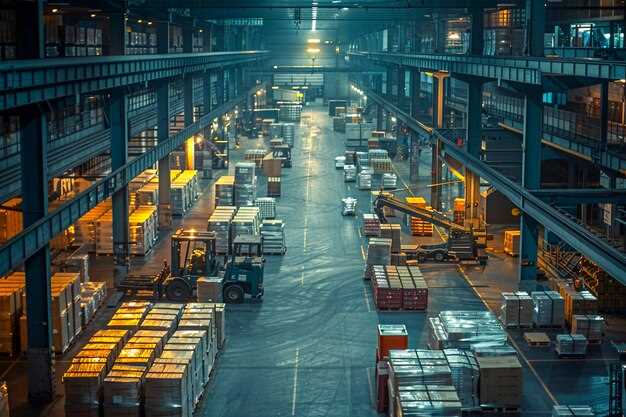
Adopt an autonomous systems rollout across sorting zones to boost throughput and safety, faster than manual methods.
This approach seamlessly integrates with existing workflows, moving items faster than before and reducing touchpoints. A well-coordinated network coordinates scanners, conveyors, and sorters, while within zones intelligent robotics keep movement continuous.
Operational snapshot (October): daily throughput across centres approaches 240,000 items per site, totaling roughly 7.2 million packages monthly. Sorting accuracy tops 99.2%, with cycle times around 7–9 minutes from intake to outbound lane.
- Robotics roster: 32 autonomous shuttles, 14 gantry sorters, 24 fixed pickers; skilled technicians cover maintenance, calibration, and software integration.
- Sorting workflow: packages enter via intake docks, scanned, weighed, and dimensioned; coordinates routes feed into next sort stage; conveyors coordinate with sorters to direct orders toward shipping lanes based on destination codes.
- Packaging and labeling: packaging optimization reduces damages; smart seals track temperature; packaging innovation reduces waste and increases packaging integrity.
- Network and coordination: a well-managed network spans 6 centres; real-time data sharing reduces dock-to-door times; said to improve cross-centre collaboration.
Workforce strategy: this plan expands career options, prioritizes skilled roles, and builds internal mobility. Within this framework, employ training programs that map a clear path from operator to technician to engineer, creating a durable career ladder. Today, this approach boosts retention and adaptability across a fast-moving distribution network. Outside this hub, next expansions plan for additional centres and regional partnerships with companys suppliers and integrators.
- Audit all robotic lines; verify uptime, calibration, and fault-response windows; ensure spare parts readiness.
- Launch upskilling program for workforce; include syllabus, duration, and progress metrics.
- Extend to nearby centres network to balance load and shorten shipping times.
- Establish collaboration with companys peers for co-development of packaging and automation modules.
Robot Fleet Overview: 750,000 Units, Roles, and Deployment Zones
Implement a centralized, real-time monitor coordinating 750,000 mobile units across deployment zones, prioritizing autonomous action and safety, including regular health checks.
Roles span heavy-lift robotic systems, autonomous mobile carriers, order-picking modules, inspection platforms, and equipment maintenance routines, enabling smooth operations across workflows.
Deployment zones include inbound docks, cross-dock corridors, packing areas, outbound docks, high-shelf aisles, and returns loops, each requiring appropriate sensing, control logic, and task orchestration.
Need today: robust charging, scalable firmware updates, and cross-zone interoperability to keep all units productive.
Largest share sits in High-Shelf Aisles, where autonomous modules handle frequent replenishment across routes.
| Zone | Primární role | Fleet Share (units) | Mobilita | Key Systems | Risks / Actions |
|---|---|---|---|---|---|
| Inbound Docks | Heavy-lift, pallet transfer | 120,000 | Mobile | Vision, LIDAR, RFID | Congestion; action: staggered arrivals |
| Cross-dock Corridors | Rapid transfer, sortation | 180 000 | Mobile | Conveyor feedback, AI routing | Collision risk; action: create dedicated lanes |
| Packing Areas | Support packing lines | 150,000 | Mobile | Gripper, tactile sensors | Throughput bottleneck; action: parallel packing |
| Outbound Docks | Final loading, staging | 160,000 | Mobile | Prediction, RFID | Docking delays; action: pre-stage |
| High-Shelf Aisles | Item pick, replenishment | 120,000 | Autonomous robotic arms | 3D mapping, force sensors | Path blockage; action: dynamic routing |
| Returns Loop | Reverse flow, inspection | 20,000 | Mobile | Vision, barcode | Sorting errors; action: automated checks |
In analysis, largest share sits in High-Shelf Aisles, where autonomous modules handle frequent replenishment across routes.
amazons equipment ecosystem enables companys to bring data into a single analytics loop, providing across-systems visibility today.
Next action: look into opportunities to leap autonomy across heavy tasks, including exercises that validate safe operation.
источник
Sorting Workflows: From Incoming Goods to Outgoing Packages
Recommendation: Deploy a rules-based sorter at the inbound dock to cut handling times by up to 30% and route items to lanes that match item type, destination, and priority, with ergonomic stations and robot-assisted picks that perform real-time validation at each action.
Within mqy1, the centre in tennessee operates a suite of conveyors, scanners, and sorters to transform incoming shipments into organized streams. Those streams feed dedicated outbound bays, reducing cross-traffic and improving throughput during peak times. The design provides plenty of capacity to support daily cycles of items a units, and offers several ways to scale these flows as demand spikes.
Receiving and inventory control: Each item is scanned and tagged with a unique unit ID to keep inventory precise within the system. The data feed integrates with e-commerce orders and updates inventory na adrese real time, so staff can locate each item quickly across the centre.
Sorting logic and throughput: The sorter uses configurable features and rules that consider destination, carrier, and priority. With a obr fleet of robots, the system can look ahead at upcoming orders and drive the queues to the right lanes, minimizing cross-store moves. Building layout is optimized to reduce travel distance and to keep times predictable. The deal with conflicting priorities is handled by queue-aware logic.
Workforce and continuous improvement: The setup is supporting operators by providing ergonomic stations and a clear action plan for shifts. john and the inventory team run before-after analyses to quantify those gains, test new configurations, and roll out changes that work across the globe. Tento úvod sets direction, thats how we convert data into practical, repeatable improvements within the centre ecosystem.
Conveyors, Lifts, and Carriers: How Goods Move Across the Floor
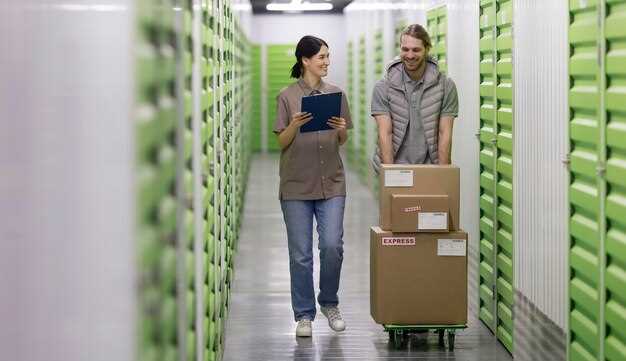
Recommendation: deploy a three-zone floor flow that combines conveyors, vertical lifts, and carrier modules; speeds range 0.6–1.2 m/s for primary runs and slower transfer points, reducing time and bottlenecks. Include modular sections to adapt to site layouts, including heavy pallets and bulk totes, and align with e-commerce demand.
Before choosing lines, map hourly throughput per site and per zone; set target cycle times (60–90 s for fast-moving items; longer for heavy loads); calibrate speeds with real-time data so that action aligns with shipping schedules. Use monitor dashboards to visualize throughput, dwell time, and queue length.
Safety and training: implement professional programs, ensure appropriate PPE, and apply guard rails on lifts and conveyors. Run regular accidents risk reviews and create action plans to reduce incidents across sites. When incidents are avoided, productivity rises.
Robotic solutions: deploy automated carriers and pickers to perform repetitive tasks with high precision; this innovation reduces reliance on manual labor, particularly for heavy items. However, keep human oversight for exceptional cases; sparrow-speed pick stations can support high throughput without sacrificing accuracy.
John, a site lead, notes that a dedicated suite of sensors and control software yields measurable gains. weve observed dwell time drop and throughput improve by 12–18% after implementing synchronized belts and lifts across multiple sites.
Operational guidelines: set a clear schedule for maintenance, including lubrication every 2 weeks, belt tension checks every month, and lift calibration quarterly. This keeps performance steady and reduces risk of unscheduled downtime.
Implementation tips: start with a pilot at a single site, then scale to sites with similar footprints; build a modular suite that can reconfigure lanes quickly; ensure shipping interfaces are compatible with label printers and tote scanners; monitor energy use to improve productivity without increasing cost per unit shipped. Next, adjust lanes based on seasonal demand. thats why teams invest in iterative upgrades.
Conclusion: continuous improvement loop based on real data yields long-term gains; plan for next phase by aligning with e-commerce seasonality and heavy shipping peaks.
Inventory Space and Slotting: Maximizing Storage Density at MQY1
Implement zone-based slotting with velocity-aware rules to boost storage density inside mqy1.
Most high-turnover items should occupy pick faces sized for fast access; cube utilization targets sit around 78-84% with tight totes to reduce wasted space.
ABC analysis guides slotting for slow movers; automated guidance cuts travel times.
october rollout aligns with training for associates inside workplace; however, safety protocols cut injury risk.
tennessee sites benefit from a suite of slotting rules; mqy1 acts as lead in scale tests, garage bays included.
From these exercises, which use ABC classification, what-if analyses, and order profiles, we leap toward a future where capacity expands.
career growth for operators within amazons ecosystem relies on hands-on exercises at scale facilities; provide clear pathways for advancement.
once improvements stabilize, plan expansion into other sites; mqy1 becomes a model for future automation.
introduction to slotting strategy informs training and onboarding programs.
provide data-driven guidance to deal with packages at scale.
Performance Metrics: Throughput, Accuracy, and Downtime Monitoring
Begin by implementing unified KPI dashboard linking throughput, accuracy, uptime to shifts, crews, and machinery. This setup provides fast feedback and actionable next steps.
mqy1 tagging helps correlate data across sites; introduction of mqy1 as an identifier ensures consistent cross-site comparisons across worlds. These measures address many operational realities.
Building blocks for reliable performance include clear targets, robust data pipelines, and disciplined ownership at line level. Weve aligned roles with data streams so drivers, workers, and software coordinates drive productivity forward. These actions help know what to adjust, and what to celebrate, across many jobs.
- Throughput targets: 1,200–1,600 packages per hour per line; 95–99% of cycles within target time; 5‑minute rolling window for real-time visibility.
- Throughput drivers: automation reliability, equipment availability, network latency, dock-to-staging coordination, and worker cadence. Customers benefit when these factors stay in sync.
- Data sources: sensors on machinery, conveyors, scanners; WMS/OMS/TMS integrations; operator inputs; packaging lines; external partners.
- Accuracy targets: picking accuracy 99.5% or higher; track mispicks, labeling errors, carton breaches; implement dual checks at packing and barcode verification.
- Quality controls: error-proofing devices, visual guidance, automated checks, and continuous coaching for workers.
- Impact: reduced rework, lower return rates, smoother packaging flow.
- Downtime targets: uptime above 99.9% for machinery and software; log every incident with duration, root cause, and MTTR.
- Downtime sources: network outages, hardware failures, software glitches, maintenance windows; correlate with workload spikes to plan mitigations.
- Mitigations: redundant network paths, hot-swappable components, proactive maintenance, runbooks, automated alerts, and escalation playbooks.
Coordinate-focused action plan
- Map data flows from docks, conveyors, machines, and software into a single coordinate system on dashboard.
- Adopt standardized data definitions; use mqy1 tag to reconcile across sites and times.
- Set alert thresholds: mispicks >1%, downtime events >2 minutes trigger rapid response; escalate to frontline supervisors.
- Train workers and drivers with quick-reference guides; emphasize what actions improve throughput without sacrificing accuracy.
- Schedule preventive maintenance in garage and service bays during low-volume windows to minimize take down risk.
Monitoring cadence and reporting
- Daily snapshots: throughput, accuracy, uptime; anomaly alerts with corrective actions.
- Weekly trends: by zone, line, and job type; review root causes and corrective plans.
- Monthly comparisons: across worlds; share best practices and updated targets.
Real-world experience underscores practical gains
- Many improvements arise from tightening coordinates between workers and machinery, and from software translating raw data into actionable steps.
- weve observed that customers expect rapid shipments; aligning network, drivers, and workflows reduces take down risks and boosts productivity.
- introduction of cross‑site dashboards and globe‑scale visibility helps teams learn from each other and refine jobs.
Notes on implementation context
garage spaces, maintenance bays, and engineering groups collaborate to provide what operations need. These measures support not only what happens on floors but how teams plan, learn, and improve, fostering a more resilient, higher‑performing environment for all stakeholders.