


 Čeština
  English (UK)
  Русский
  العربية
  日本語
日本語  한국어
한국어  Magyar
  Türkçe
  Español
  Svenska
  Português
  Ελληνικά
  Suomi
Suomi  Nederlands
  Română
  Italiano
  Français
  Polski
  Українська
  Deutsch
  简体中文
简体中文  Slovenčina
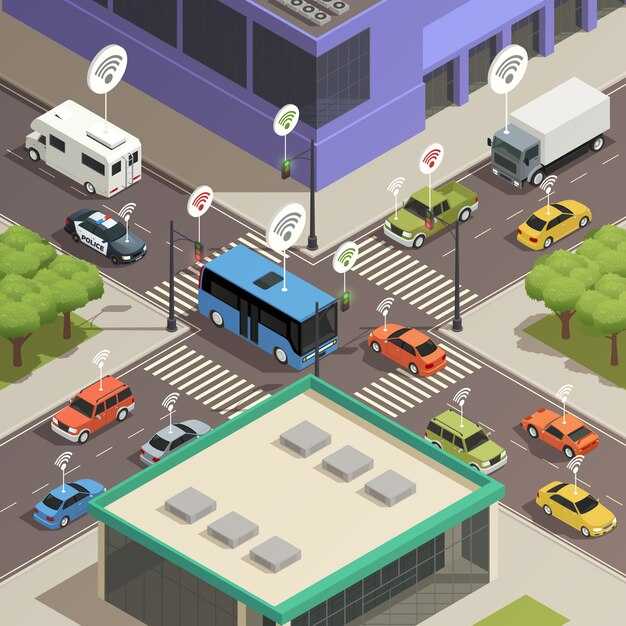
Start with a concrete plan: deploy green, connected hubs that combine bikes, buses, and rail, with pricing harmonized across modes from early stage to board decisions.
In this middle phase, doing work with operators and sharing data helps determine same benefits for customer while reducing cost. case studies show images from trials where bikes, e-scooters, and modes converge at shared transfer points, used to refine layouts and policies.
Customer benefits grow when pricing remains transparent across options. green design reduces car trips, increasing active travel. images from pilot sites illustrate layouts where docking points align with bus stops and rail entrances, reducing wait times and travel overhead.
Heading for smart rollout: begin with a mid-density corridor, then expand across growing neighborhoods. In each case, align bikes, micro-mobility, bus, and rail access with clear pricing, perfect board decisions, and visible wayfinding. Use images from trials to refine space allocation, docking points, pricing rules, and middle-ground policies.
Sales and marketing should emphasize benefits for customer: lower cost, faster travel, green credentials, and improved reliability. Provide early pilots with measurement dashboards showing key metrics: share of trips, cost per trip, average wait, and CO2 reductions. Encourage partners to join, scale models across hubs, building a shared language around pricing, and user experience. heading matters for alignment across partners, guiding which actions come next. When new opportunities come, hubs adapt to demand and continue growing.
Implementation Roadmap for Multimodal Hubs in Urban Centers
Recommendation: launch 18-month pilot in three districts, implement unified access interface, establish governance across departments, and secure private partners aligned to a shared goal.
Costs split into three lines: physical upgrades, digital backbone, service integration. Physical upgrades cover shelters, signage, lighting; digital backbone includes data standards, API access, privacy controls; service integration encompasses timetable alignment, staff training, and maintenance contracts. Global benchmarks show private sources often cover 40–55% of upfront investment; municipal budgets cover core infrastructure; third-party financing can retrieve funds via user fees later.
Phase 1 (months 0–6): map corridors with highest potential; sign data-sharing agreements; select private partner; install prototypes near high-footfall places; September milestones for board review.
Phase 2 (months 7–12): deploy physical nodes and digital interface prototypes; run weekly talks with operators; measure using dimensions: transfer times, queuing, dwell durations, mode-switch rates, user satisfaction; retrieve and analyze data to refine model; evidenced outcomes guide next steps.
Phase 3 (months 13–18): expand to additional districts; integrate with existing ticketing; pilot rebates; publish private-public case study; aim to reduce costs per trip by 15–25%.
Governance and data: create lightweight council including municipal officials, private company representatives, civil society; September review; ensure retrieval of performance metrics; talk with johnsons, white papers by woodford a waldemar provide benchmark lessons; thinking across companys performance tells those ones in place about real benefits.
Global perspective: examples from historic projects show data-driven design plus community engagement as drivers; decades of urban planning experience confirm need for continuous adjustment and shared accountability, not a grand blueprint.
September readiness: schedule cross-city workshops, share a white paper, invite feedback from districts outside main corridor, and lock in next-year budgets to sustain momentum.
Nike Ship-from-Store: Patent Pending, Operational Scenarios, and Fulfillment Flows
Recommendation: implement a patent-pending ship-from-store pilot across three citys, anchored by a mall node and two neighbourhood shops in woodford and johnson, staffed by multiple workers and supported by mini-boutiques. Leverage providers to cap costs and maximize services; document progress in a report and collect a photo library to monitor quality and training. Weve mapped workflows to capitalize on flexible resource deployment and optimize revenue.
Operational scenarios
- Scenario A – in-store to door: orders captured via app, inventory checked across citys, nearest ship-from-store node reserves item, staff pick in-aisle or backroom, pack with simplified packaging, label, and dispatch via local courier; ETA 2–4 hours in urban cores; monitor look and accuracy; report deviations for continuous improvement; steve leads execution in citys with Johnson overseeing store-level disciplines.
- Scenario B – mall-based micro-fulfillment: mini-boutiques within a mall anchor serve spillover demand; flexible staffing and cross-trained workers enable rapid changes in services; items routed through chains to deliver to neighbourhoods; capitalize on golden hours to boost revenue; photo evidence used for training and audits.
- Scenario C – inter-store replenishment: real-time stock balancing across woodford, citys hubs, and surrounding places; use schemes that optimize stock rotation; mitigate risky stockouts by reserving critical SKUs at multiple providers; ensure product availability while maintaining simplified processes.
- Scenario D – returns and exchanges: reverse flow integrated into the same network; convenient drop points at mini-boutiques; reverse logistics tracked in the report; restock and refurbish items for reuse.
Fulfillment flows
- Order capture: customer places an order via app or web; system checks resources across citys and assigns the nearest ship-from-store node; status updates appear in the report.
- Allocation and picking: item reserved at the selected node; staff (multiple workers) locate the product, confirm size/color, and prepare for packing; use standardized, scalable packaging to simplify handling.
- Packing and labeling: items are packed, labels generated, and tracking created; where necessary, goods move through a quick cross-node transfer to balance chains and reduce transit times.
- Dispatch and tracking: courier handoff or in-store pickup option activated; customer receives a photo or QR update; status feeds back into the look and revenue dashboards for real-time oversight.
- Delivery or pickup completion: customer confirms receipt; post-delivery service options offered; data logged into the report for ongoing optimization and governance.
Operational guidance and metrics
- Governance: establish schemes for exception handling (stockouts, delays, returns); define thresholds and escalation paths to maintain service levels.
- People and places: assign a clear leadership line (steve in ops, johnson in store, weve oversight) and ensure local workers are cross-trained to handle both in-store and ship-from-store tasks.
- Resources and flexibility: maintain a consolidated resource pool with shared packs, vans, and temporary staff; use a simplified roster to adapt to demand spikes across neighbourhoods.
- Data and reporting: build a live report with KPIs such as fill rate, delivery window adherence, average cost per order, return rate, and customer satisfaction; include a golden photo log for QA and training reference.
- Customer experience: provide clear options for delivery speed and pickup windows; offer proactive notifications and transparent tracking to increase loyalty and revenue capture across citys.
Walmart’s Autonomous Locker: Design, Accessibility, and Customer Journey
Deploy a modular locker array with adjustable physical heights, a front-facing touchscreen, and clear icons to deliver a consistent look and a fast customer journey. The look and feel should enable pickup in under 60 seconds, using a single code or app verification. This approach gives the store flexibility for freight handoffs and third-party deliveries, while preserving privacy for customers. The johnsons and emma examples in berlin and neighbourhoods show that when lockers are placed near entrances and major aisles, theres fewer mistakes and faster retrieval, reducing problems for customers. The selection can be tuned to childhood purchases, and this wont create a challenge for first-time users. It also helps shops themselves become more efficient throughout the network; the system describes how to create a scalable model, which also ensures the journey becomes smooth and never disappointing. There remains room to expand selection over time.
Accessibility is essential: lockers must be reachable by all customers, including wheelchair users, with two accessible columns and a lower panel for small items. Each station gets a simple selection screen with tactile keys and audio prompts. Signage should be placed at eye level across streets and within neighbourhoods. A physical map in the app helps with navigation. Berlin pilots show where demand concentrates; in those zones, more lockers are added to front corridors, which cut queues and improve flow throughout stores. This setup also supports families making quick neighbourhood runs and helps parents with childhood needs; it boosts the overall feel of the front area.
The customer journey describes steps: online order, arrival, verification, access, and confirmation. For the johnsons, online purchases trigger locker pickup; Devon receives a mobile alert and code, and Emma’s family uses a locker near the front for convenience. The front panel describes prompts in the local language, which reduces confusion and helps the experience feel reliable. The approach to routing the steps should describe a frictionless flow, which becomes easier across shops themselves, while avoiding problems and never creating a challenge for first-time users.
| Aspekt | Design Choice | Dopad |
|---|---|---|
| Přístupnost | Adjustable heights, two accessible columns, lower panel | Inclusive pickup, higher completion rates |
| Trvanlivost | Weatherproof shell, vandal-resistant locks | Lower maintenance, longer life |
| Logistika | Varied locker sizes, freight-handling zone, quick restock | Handles fluctuating volumes efficiently |
| Placement | Placed near entrances and main aisles across stores | Increased visibility and selection uptake |
| Verification | Barcode/app verification or PIN | Faster, secure access |
Intermodal Connectivity: Integrating Rail, Bus, Bike, and Micro-Delivery

Recommendation: deploy a unified, real-time timetable and fare feed across rail, bus, bike-share, and micro-delivery networks, anchored by a common source of truth and a coordinating word: interoperability. This guarantees seamless cross-service planning, reduces wrong transfer points, and increases reliability at critical locations.
Locations should be selected by demand density and interchange potential, prioritizing areas with multi-operator access. Build at least two nodes per district, with sheltered waiting, secure parcel lockers, and clear wayfinding to support different weather conditions for citys and visitors alike.
Charging infrastructure: at each node install 8-12 charging points for bikes and e-cargo bikes, with 25 kW AC or 50 kW DC fast options; pair with solar canopies and battery storage to reduce grid demand. Provide durable facilities, signage, and weather protection to improve user experience.
Plans and governance: establish cross-operator agreements with accreditation standards, service-level metrics, and data-sharing obligations. Define key dimensions such as reliability, speed, safety, accessibility. Create a single source data feed for providers and planners to support trends analysis and future investments.
Providers should integrate services from different suppliers and trade partners, with interoperable interfaces for tickets and journey planning. Implement accreditation processes for safety and privacy, and pilot programs in global cities to learn what works across decades of practice. Design facilities that accommodate clothes for all climates, watch for misalignment with user needs, and avoid ambiguity in worded instructions.
Transforming the landscape, initiatives like concerto programs–led by ackman and forde–began to show how rail, bus, bike, and micro-delivery can accelerate speed and reliability. Although challenges remain, scalable models fit diverse geographies when data-sharing and modular facilities align with trends observed over global decades.
Metrics to watch: locations served, charging utilization, service density, and user satisfaction; monitor on-time performance, transfer speed, and micro-delivery throughput. Use these indicators to refine plans and investment choices, ensuring citys stay connected through dependable, high-quality services across different providers for something customers value.
Smart Infrastructure and Data Standards: Sensors, Privacy, and Interoperability
Recommendation: implement a shared data backbone with open APIs and common models; begin immediately, with june milestone to reach eighty percent sensor coverage and ninety percent data quality across access points, enabling partners and customers to tap into real-time insights.
Build a live inventories map for devices and signal types: occupancy, location, temperature, vibration, and freight movement; align this data with a single event stream that supports planning for pick, pack, and shipment within warehouse and locker ecosystems to support growing demand.
Privacy-first controls: anonymize personal identifiers, minimize data collection, implement consent management, and set time-bounded retention; apply differential privacy for analytics while keeping value for operators and customers.
Interoperability is achieved through open standards and shared ontologies: define a core data model for sensor readings, packages, images, and events; require vendors to expose compliant APIs; publish metadata where partners can trust data, including freshness, accuracy, provenance where partners can trust data; approach centers on minimizing vendor lock-in where possible.
Execution plan includes governance, funding, and training: appoint lauren as interoperability lead; develop a five-phase plan with milestones; invest in edge analytics, secure storage, and access controls; deliver accessible dashboards for clients and staff; tell stakeholders which metrics matter and how to learn from early pilots.
Ambitious targets: piloting a 100,000-square-foot space with a smart loading area in june; measure improvements in space utilization and order accuracy; extend learnings to larger facilities over years; quantify money saved and identify a favorite reason to scale.
Outcome: shared data services reduce wrong deliveries, improve access to images, freight status, and packages; jobs growing in operations; customers receive more accessible services; apples drive test pipelines to validate plan; lauren coordinates cross-functional teams to tackle challenges; data assets for your teams gain value as standards mature; locker data supports pickup points; dream of seamless, responsive logistics architecture begins.
yours remain core assets as standards mature.
Deployment Playbook: ROI, Partnerships, Regulations, and Pilot Design
Recommendation: implement a 12-week, two-site prototype with three transfer nodes to quantify ROI via apples-to-apples comparisons, track loading times, passenger flow, and visit counts at anchor spots such as a mall with Penneys; use that evidence to justify scale.
ROI framing
- Capex and OpEx budgeting: quantify upfront gear costs for platforms, sensors, chargers, and loading equipment; annualize figures to support apples-to-apples comparison and ROI estimates.
- Value streams: energy savings from electric charging, smart load shifting, better asset utilization, and higher footfall in anchor venues; express as annualized dollars and as payback period, with relatively quick results in greenfield contexts.
- User metrics: monitor visit frequency, transfer times, and modal share; set targets for green multi-modal flow; use that data to answer questions about user experience and service reliability.
- Data plan: establish sources (sensors, vehicle telemetry, occupancy detectors); ensure privacy, define retention window, and simplify loading into dashboards for quick interpretation.
- Risk and adaptation: identify bottlenecks in loading, safety, and reliability; plan mitigation steps with contingency budgets; publish progress every sprint.
Partnerství
- Public sector and transit authorities: align on regulatory milestones, data sharing rules, and joint funding; ensure approvals move at pace with project milestones.
- Retail anchors: mall management teams and brand partners (including Penneys) gain footfall insights and co-market opportunities; define revenue-sharing or in-kind support for pilots.
- Technology suppliers: vendors for sensors, charging, and signaling; establish clear SLAs, data formats, and interoperability standards; require pilots to include a simplified data bridge for rapid learning.
- Local contractors and installers: create large-scale job opportunities; use a local hiring plan to maximize community impact and shorten loading timelines during rollout; someone on site can coordinate schedules and safety checks.
Předpisy
- Data governance: implement anonymization, access controls, and retention policies; ensure compliance with applicable privacy laws and cross-entity sharing agreements.
- Safety and accessibility: certify installations meet safety codes and accessibility standards; ensure physical layouts do not impede pedestrian movement or emergency routes.
- Procurement and accountability: set terms for RFPs, vendor audits, and milestone-based payments; require open interfaces to enable future expansions without lock-in.
- Environmental and energy standards: verify charging systems comply with environmental rules and grid interconnection requirements, including load-management signals from electric sources.
Pilot design blueprint
- Site selection: pick two districts with strong pedestrian density, power access, and visible transfer points; concentrate around anchors like Penneys and nearby entrances; define baseline visit metrics from prior published studies.
- Modal mix: integrate electric buses or shuttles, micro-mobility options, and on-demand services; ensure multi-modal uses a cohesive routing logic and clear wayfinding.
- Physical layout: place three transfer nodes with safe queuing, loading zones, and sensor-rich markers; implement simplified wayfinding and loading indicators on customer screens.
- Technology stack: deploy sensors for occupancy, flow, and charging status; feed data into a unified dashboard with lightweight analytics for rapid answers; ensure data from devices is cleansed before use.
- Governance and roles: assign Richard as a point of contact for cross-team alignment; define roles for operations, safety, and data science; include a childhood-education angle in community outreach to explain benefits to residents and students.
- Measurement plan: track apples-to-apples ROI, visit frequency, average transfer time, and energy use; publish weekly highlights to maintain momentum and adjust tactics.
- Timeline and milestones: readiness checks in week 1, go-live in week 3, mid-point review at week 6, scale decision by week 12; set clear go/no-go criteria based on predefined KPIs.
Case notes
Published insights show that a strong alignment across a multi-modal approach gives faster adoption; someone on richard’s team documented how childhood memories of city travel shaped safer, more intuitive layouts; this case grew local jobs and boosted shopper visit frequency around mall anchors, creating a practical dream scenario for scalable expansions.