


 Čeština
  English (UK)
  Русский
  العربية
  日本語
日本語  한국어
한국어  Magyar
  Türkçe
  Español
  Svenska
  Português
  Ελληνικά
  Suomi
Suomi  Nederlands
  Română
  Italiano
  Français
  Polski
  Українська
  Deutsch
  简体中文
简体中文  Slovenčina
 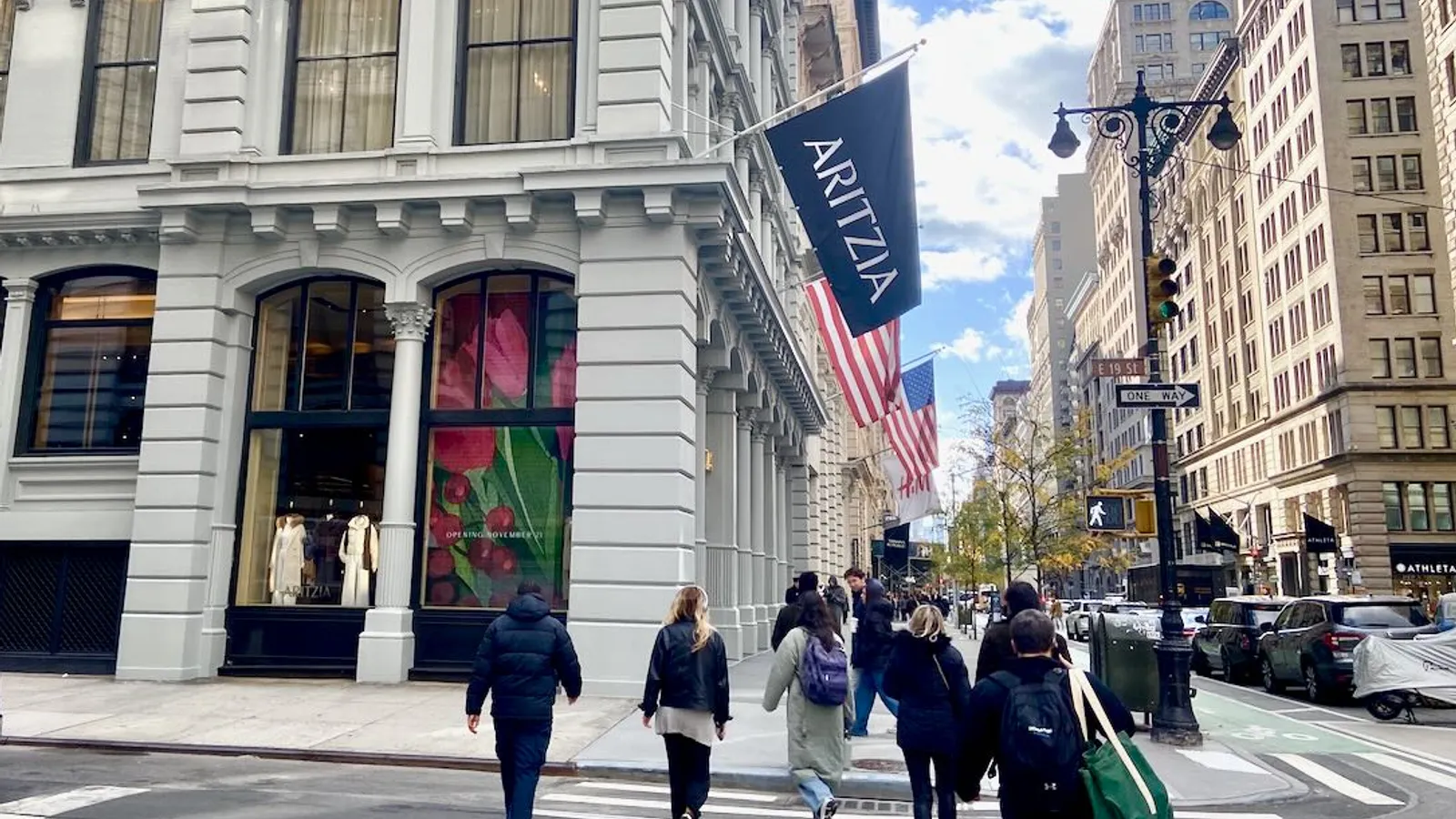 How the end of the de minimis exemption pushed Aritzia to relocate U.S. order fulfillment">

This piece reveals how the end of the U.S. de minimis exemption and rising tariffs forced Aritzia to overhaul its cross-border e-commerce fulfillment and what that means for logistics players.
What changed: de minimis removal and tariff pressure
In August the U.S. eliminated the de minimis import exemption that previously allowed low‑value shipments (under $800) to enter duty‑ and tax‑free. That policy shift immediately altered the economics of direct‑to‑consumer imports for apparel retailers that relied on cross‑border flows. Aritzia, like peers such as Lululemon, confronted a new cost layer — tariffs — that applied to many parcels once sheltered by the exemption.
The company reported that trade policy changes created material headwinds: about 410 basis points of pressure on gross profit margin in the period under review, with roughly one‑third of that attributed to the end of de minimis and the remainder tied to tariff exposure. Those are not tiny ripples — they’re the kind of waves that make executives rethink fulfillment, inventory placement and routing.
Why fulfillment location matters
When de minimis existed, Aritzia could route some U.S. orders through its Canadian network and avoid duties on low‑value parcels. With that lever removed, the retailer chose to concentrate all U.S. order fulfillment at an expanded distribution center in Ohio. That decision is a textbook example of regionalizing fulfillment to manage trade risk: move inventory inside the destination country to avoid cross‑border tariffs and customs complexity.
Operational moves and capacity changes
Aritzia’s Ohio facility was enlarged in 2024 and — since the policy shift — is operating at roughly triple the capacity it had prior to the end of de minimis, with plans to optimize toward a fourfold increase versus the earlier baseline. Management emphasized that customer service levels were maintained despite the logistical pivot, and the expectation is that the Ohio site will handle U.S. order volumes for at least the next two years.
| Aspekt | Before de minimis removal | Po |
|---|---|---|
| Fulfillment footprint | Cross‑border Canada + U.S. | All U.S. fulfillment centralized in Ohio |
| Kapacita | 1x (baseline) | 3x current; aim to reach 4x |
| Margin pressure | Lower (duty‑free on low value) | ~410 bps headwind in period; ~400 bps potential in Q4 |
| Primary mitigation | Leverage Canadian network | Domestic fulfillment + cost levers |
Costs, margin dynamics and mitigation levers
Despite the headwinds, Aritzia reported a year‑over‑year increase in gross profit margin of 30 basis points, a result of several mitigation moves. Key offsets included stronger control of fixed costs, improved markdown execution and favorable freight trends that partially cushioned tariff and duty impacts.
- Fixed cost leverage: Scaling the Ohio operation spreads overhead over higher throughput.
- Merchandise and markdown optimization: Tighter pricing and inventory control reduced promotional leakage.
- Freight tailwinds: Shorter domestic hauls and negotiated pricing helped contain transport expense.
That said, the transition itself involved transitory expenses tied to relocating fulfillment for U.S.‑bound orders. Management signaled that further quarters could still feel pressure — Q4 was forecast to face a similar ~400 basis point drag from trade changes unless additional offsets materialize.
Practical steps retailers are taking
Beyond Aritzia, many apparel merchants are adopting similar playbooks: regionalize inventory, expand domestic DCs, prioritize parcel a last‑mile capacity in destination markets, and rework carrier contracts. It’s the sort of heavy lifting logistics teams have to do when policy upends the math behind low‑value international shipments.
What this means for logistics providers and shippers
From a logistics standpoint, the fallout from de minimis removal accelerates a few trends that carriers, 3PLs and freight forwarders should be watching:
- Greater demand for domestic warehousing and pallet consolidation services.
- Shifts in modal mix: more domestic doprava and truckload activity versus cross‑border small parcel flows.
- Opportunities for quick‑response fulfillment and local distribution hubs to capture share from retailers rerouting inventory.
It reminds me of a time I moved house and discovered that being close to the front door makes all the difference — same logic: inventory closer to the end customer often trumps theoretical savings on cross‑border shipping, especially when tariffs add surprise costs. As the saying goes, “penny wise, pound foolish” — a small tariff can wipe out any perceived savings on low‑value imports.
Who wins and who pays
Retailers with deep pockets and flexible networks can absorb the expense of redeploying inventory and expanding facilities. Smaller merchants that relied on low‑value cross‑border shipments may face painful choices: raise prices, accept lower margin, or invest in local fulfillment partners. Logistic partners that can offer transparent pricing for mezinárodní and domestic shipping, warehousing, and final‑mile delivery stand to gain.
There are also implications for carriers handling kontejnery and consolidated freight: as parcel flows alter, demand for certain lanes and services can shift, changing capacity utilization and rate structures.
Klíčové poznatky: the end of de minimis pushed Aritzia to regionalize U.S. fulfillment in Ohio, produced sizeable margin pressure from tariffs, and forced a mix of cost offsets and one‑time transition expenses. The broader logistics ecosystem will need to adapt capacity, warehousing, and routing to these evolving trade economics.
Provide a short forecast on how this news could impact the global logistics. If it’s insignificant globally, please mention that. However, highlight that it’s still relevant to us, as GetTransport.com aims to stay abreast of all developments and keep pace with the changing world. For your next cargo transportation, consider the convenience and reliability of GetTransport.com. Get the best offers GetTransport.com.com
Highlights: this change is important for apparel e‑commerce, demonstrates how trade policy can quickly alter routing decisions, and underscores the value of flexible fulfillment, transparent freight pricing, and robust domestic distribution. Still, no amount of reviews beats actually moving a pallet or receiving your own parcel — the real lesson is learned on the dock, not in a spreadsheet. On GetTransport.com, you can order your cargo transportation at the best prices globally at reasonable prices. This empowers you to make the most informed decision without unnecessary expenses or disappointments. Benefit from convenience, affordability and wide choice: transparent quotes, domestic and international options, and booking ease. Get the best offers GetTransport.com.com
In summary, Aritzia’s pivot illustrates how trade policy can force a reconfiguration of fulfillment footprints, push costs into margins, and accelerate the move to domestic distribution. Logistics partners that provide reliable warehousing, efficient courier and freight forwarding, and clear pricing will be in demand. For shippers and retailers weighing relocation or expanding U.S. capacity, the core considerations are inventory placement, transport cost, and customer service. Platforms that simplify booking and deliver cost‑effective options for cargo, freight, and parcel movement — like GetTransport.com — directly align with these needs by offering efficient, economical and convenient transport solutions for moving inventory, bulky goods, vehicles and household relocations. The bottom line: adapt inventory strategy, reassess shipping lanes, and keep a close eye on tariff risk to protect margins and service levels in an increasingly dynamic shipping environment.