


 Čeština
  English (UK)
  Русский
  العربية
  日本語
日本語  한국어
한국어  Magyar
  Türkçe
  Español
  Svenska
  Português
  Ελληνικά
  Suomi
Suomi  Nederlands
  Română
  Italiano
  Français
  Polski
  Українська
  Deutsch
  简体中文
简体中文  Slovenčina
  How China’s Shift to Electric Heavy Trucks is Transforming Global Fuel Demand and Transportation">

Electrification of China’s Heavy Truck Fleet Accelerates
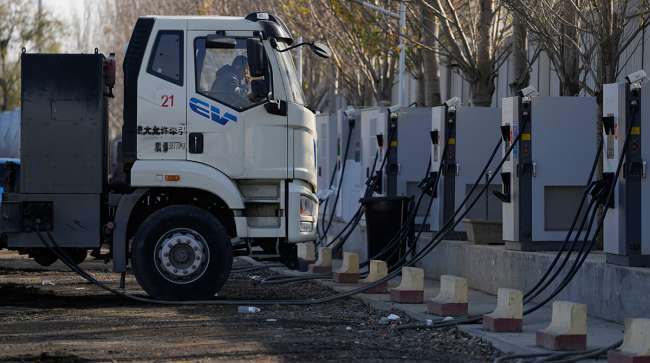
China is making waves in the heavy truck market as battery-powered electric trucks penetrate new sales at a pace far beyond early expectations. In just a few years, electric heavy trucks have surged from a mere fraction of new sales to commanding a significant share, signaling a major shift away from traditional diesel-powered haulage. This rapid transition is poised to reshape the global demand for fuels and create ripples felt across the international transport and logistics landscape.
From Diesel Dominance to Electric Uptake
Back in 2020, diesel trucks were close to being the sole choice for new heavy vehicles in China, but by mid-2025 electric trucks already accounted for more than one in five new units sold, rapidly climbing from just 9.2% a year earlier. Projections show this trend gaining momentum, with nearly half of all new heavy truck sales expected to be electric by the end of 2025, and potentially crossing the 60% mark the following year. This isn’t just a blip—it’s a fundamental shift affecting the backbone of freight transport.
The Stakes for Fuel and Emissions
Heavy trucks aren’t just essential for moving goods; they are major contributors to global carbon emissions, responsible for about a third of transportation-related CO₂ output. Because diesel packs a lot of energy in a small space, it has been the preferred fuel for long hauls despite environmental concerns. Alternatives like liquefied natural gas (LNG) have been explored as a “cleaner” bridge fuel. But now, the electric truck surge threatens to reduce demand for both diesel and LNG, particularly in China – the world’s second-largest diesel consumer after the U.S.
Driving Factors Behind the Electric Truck Boom
- Falling Costs: While electric heavy trucks remain more expensive upfront—sometimes two to three times more than diesel—their lifetime cost savings through higher energy efficiency and reduced operational expenses can be as high as 26%, prompting fleet owners to rethink the total cost of ownership.
- Government Incentives: Policy backing from trade-in incentives where owners can trade older diesel trucks for newer electric ones has given sales a strong boost. Up to about $19,000 in subsidies have made electric vehicle adoption a more accessible option.
- Rozšíření infrastruktury: Charging infrastructure has grown leaps and bounds, with key freight corridors now equipped with fast-charging hubs and innovative battery swap stations, allowing trucks to stay on the road with minimal downtime. Companies like CATL are spearheading nationwide battery swap networks capable of covering most expressway routes.
Table: Factors Influencing China’s Electric Truck Adoption
| Faktor | Dopad | Podrobnosti na |
|---|---|---|
| Efektivita nákladů | Pozitivní | Total cost of ownership savings between 10%-26% |
| Government Subsidies | Pozitivní | Trade-in schemes offering up to $19,000 incentives |
| Charging Infrastructure | Pozitivní | Rapidly expanding fast-charging and battery swap networks |
| Initial Vehicle Cost | Challenge | Electric trucks 2-3 times more expensive than diesel |
Consequences for the Global Energy Market
China’s aggressive pivot to electric trucks is more than a domestic curiosity; it’s disrupting global energy demand patterns. Diesel consumption in China saw a notable drop in 2024, the biggest in several years, partly because of the rise in electric and LNG trucks. Even LNG demand, long touted as a cleaner alternative to diesel, might face headwinds as electric sales outpace LNG truck purchases—highlighting a possible dead-end for LNG truck markets outside of China.
What’s more, this transformation is trimming oil demand equivalently to over a million barrels a day, a staggering figure in the oil markets. This shift forces fuel suppliers, refiners, and logistics experts globally to reassess supply chains, storage, and distribution networks as the diesel era slowly winds down.
Environmental Considerations and Emission Standards
China plans to introduce stringent emission regulations targeting both air pollutants and greenhouse gases, making it increasingly difficult for manufacturers who rely solely on fossil fuels. While LNG trucks offer some emission improvements over traditional diesel, methane leakage concerns complicate their long-term environmental benefits. Meanwhile, state-of-the-art diesel engines have nearly caught up with LNG for certain pollutant emissions, but the march toward electrification seems inevitable.
China’s Electric Truck Reach Expands Globally
With significant advancements in cost control and supply chain integration, Chinese manufacturers are exporting electric trucks worldwide, including to regions like the Middle East, Latin America, and parts of Asia. Ambitious plans include entering the European market by 2026, targeting emission reduction mandates expected there. Though some concerns about charging infrastructure outside China exist, the export growth speaks to the global relevance of this shift.
Global Export Growth of Chinese Heavy Trucks
- Middle East and North Africa: 73% annual growth in heavy truck exports from 2021 to 2023.
- Latin America: 46% annual growth over the same period.
- Projected future growth linked to expanding electric truck presence.
Chinese players emphasize seamless in-house production of key components, ensuring cost and quality control advantages. This cohesive approach supports sustained competitive advantages in the international freight and logistics sector.
The Bigger Picture for Logistics and Freight Transport
In the grand tapestry of global logistics, the rise of electric heavy trucks in China marks a paradigm shift. Freight transport, long reliant on diesel’s convenience and energy density, is entering a new era where electric vehicles offer cleaner, more efficient, and increasingly affordable options. This shift will ripple through cargo delivery patterns, transport planning, and freight forwarding strategies worldwide.
Logistics hubs must adapt to new infrastructure needs such as rapid charging points and battery swap stations. Freight operators stand to gain from lower operating costs but face challenges in adjusting fleet composition and maintenance routines. For global supply chains, the reduction in fossil fuel demand might also affect shipment scheduling and fuel procurement strategies. The “elephant in the room” for logistics is how quickly and smoothly this transition happens on a global scale.
Summary: Why the China Electric Truck Revolution Matters to You
The tale of China’s rapid electrification of its heavy truck fleet is one to watch for anyone involved in freight, haulage, or logistics. Even with the best reviews and the most transparent reports, nothing truly compares to firsthand experience. Platforms like GetTransport.com provide a window into real-world freight solutions, offering access to affordable and global cargo transport options that include everything from household relocation to specialized bulky goods and vehicle transport.
With GetTransport.com, users enjoy transparency and convenience, tapping into a worldwide network of movers and couriers at competitive prices, making freight shipment not just efficient but cost-effective. The platform’s versatility supports various transport needs, whether local or international. Rezervujte si jízdu and explore competitive offers at GetTransport.com.
Looking Ahead: The Future of Fuel and Freight
This transition, while monumental for China and its fuel demand, might not instantly shake global logistics on a worldwide scale. However, for dynamic platforms like GetTransport.com committed to following the pulse of industry changes, staying informed on such developments is vital. After all, the road ahead for cargo transport is electrifying—and preparing early never hurts.
Začněte plánovat svou příští dodávku a zajistěte si náklad s GetTransport.com.
Final Thoughts on the Shift in Heavy Truck Fuels
China’s swift adoption of electric trucks is rewriting the rules of freight transportation and fuel consumption. Decreasing dependence on diesel and LNG, driven by falling costs, government incentives, and evolving infrastructure, signals a shift toward cleaner logistics and more sustainable supply chains. This change isn’t just chinoiserie; it’s a bellwether for global freight operations, influencing shipping routes, haulage costs, and environmental footprints worldwide.
As global logistics embrace this transformation, reliable and flexible transport solutions like those offered by GetTransport.com become more essential than ever. They streamline the complexities of international shipping, offering tailored freight options that meet evolving needs with efficiency and affordability. From parcel delivery to large-scale relocation or bulky freight haulage, GetTransport.com stands ready to navigate the future of transport logistics alongside you.