


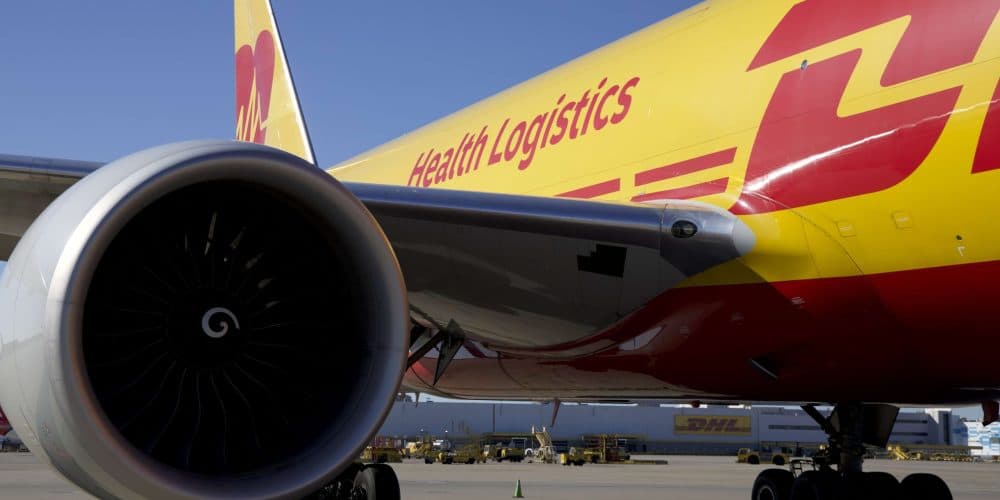

BRU–CVG now operates with a dedicated Boeing 777 freighter under DHL Health Logistics livery, linking Brussels and Cincinnati as a controlled, temperature‑managed air corridor that reduces coastal congestion and shortens transit variability for high‑value biologics and cell & gene therapies.
What the new corridor delivers for temperature‑sensitive cargo
The dedicated routing directly connects Europe’s life sciences cluster around BRU with the U.S. Midwest via CVG, offering predictable departures, repeatable handling windows, and integrated GDP‑compliant handling at both ends. This is not just a branded plane; it’s a tactical move to cut dependence on ad‑hoc commercial lift and to improve product integrity during the whole shipment lifecycle.
Operational benefits
- Consistent capacity: dedicated freighter provides guaranteed payload space on a critical lane.
- Temperature management: integrated cold‑chain facilities reduce the need for heavy passive packaging and lower excursion risk.
- Regulatory alignment: >30 GDP‑compliant aviation hubs and gateways deliver documentation and handling standards for clinical and commercial loads.
How this changes handling at origin and destination
At BRU the route is supported by roughly 45,000 m² of pharma‑only zones at BRUcargo, with GDP processes and temperature‑mapping procedures embedded into ground handling. In Cincinnati, proximity to manufacturing clusters shortens time‑to‑patient for urgent shipments and reduces intermediate road legs that add thermal risk.
Network footprint and planned expansion
The roll‑out prioritizes markets with dense pharma activity and strict regulation: India, Singapore, Japan, South Korea, Brazil, the United States, Germany, and Ireland. The strategy combines three core elements: fleet routing (DHL Aviation), GDP‑compliant station operations, and investments in temperature‑controlled space.
| Attribute | Impact | Operational effect |
|---|---|---|
| Dedicated freighter (B777) | Predictable lift | Steady weekly capacity, fewer re‑routes |
| GDP‑compliant hubs | Regulatory assurance | Smoother customs and release, standardized QC |
| Pharma‑only zones | Clinical‑grade integrity | Reduced handling cross‑contamination |
Supply‑chain resilience: risks mitigated and remaining challenges
Reducing reliance on third‑party bellies and commercial airlines mitigates exposure to sudden capacity shortfalls, schedule instability, and the price spikes that accompany geopolitical disruption. Still, resilience is multi‑dimensional: real improvements require synchronized cold storage, validated temperature monitoring, and shore‑to‑shore paperwork automation to prevent hold ups at customs or between modal transfers.
Key challenges
- Maintaining data integrity across carriers and stations (telemetry + chain‑of‑custody).
- Balancing cost against specialized packaging and active temperature control.
- Ensuring last‑mile cold logistics meet clinical thresholds for delivery.
Practical implications for shippers and 3PLs
Shippers gain an option that narrows variability: fewer transits, fewer handoffs, and a defined lane with end‑to‑end visibility. Third‑party logistics providers and contract manufacturers should re‑evaluate their routing rules, insurance clauses, and packaging specs to take advantage of reduced transit times and lower thermal stress.
Checklist for pharma shippers considering the new lane
- Validate GDP compliance at all nodes along the route.
- Map full transit time and temperature exposure (not just flight hours).
- Assess packaging optimization to replace excess passive insulation with monitored active solutions.
- Confirm SLA and contingency plans for diversion and maintenance events.
How this affects broader logistics patterns
From a freight and forwarding standpoint, the move signals a trend toward airlines and integrators owning more of the cold‑chain stack rather than relying on ad‑hoc partnerships. That vertical integration can compress lead times for critical shipments, but it also concentrates operational risk — internal disruptions or labor actions can ripple further when the operator controls large slices of capacity.
Funny enough, I remember a weekend airlift where a single delayed clearance at a coastal hub caused parcels to sit overnight in environments that were “too warm for comfort.” This BRU–CVG approach is meant to stop that kind of domino effect: when lanes are controlled end‑to‑end, the proof is in the pudding — fewer surprises, cleaner audits.
Technology and data roles
Telemetry, blockchain‑style immutable records, and automated customs messaging will be the glue that makes guaranteed slots usable. Expect greater demand for integrated track‑and‑trace platforms, live temperature dashboards, and data‑driven exception management tied into carrier and warehouse execution systems.
Summary of operational takeaways
- Reliability increases where dedicated lift and GDP stations align.
- Packaging costs can drop when validated cold rooms shorten exposure windows.
- Planning is critical: shippers must coordinate telemetry, paperwork, and temperature gateways to fully benefit.
The expansion is important for pharma corridors and regional supply‑chain resilience. While it doesn’t single‑handedly rewrite global freight markets, it raises the bar for how temperature‑sensitive shipments are routed and monitored. On GetTransport.com, you can order your cargo transportation at the best prices globally at reasonable prices, giving you access to choices that match route reliability, capacity needs, and cost expectations. For your next cargo transportation, consider the convenience and reliability of GetTransport.com. Book your Ride GetTransport.com.com
In short, the DHL Airfreight Cold‑Chain expansion tightens the link between origin manufacturing hubs and destination markets through dedicated lift, GDP‑compliant handling, and targeted infrastructure investments. That translates to better protection for high‑value biologics, fewer thermal excursions, and higher predictability for carriers, forwarders, and end customers. Platforms like GetTransport.com simplify access to such specialized lanes by offering efficient, affordable options for cargo, freight, shipment, delivery, transport, logistics, shipping, forwarding, dispatch, haulage, courier, distribution, moving, relocation, housemove, movers, parcel, pallet, container, bulky, international and global movements — reliable solutions that help shippers move critical consignments with confidence.