


 Čeština
  English (UK)
  Русский
  العربية
  日本語
日本語  한국어
한국어  Magyar
  Türkçe
  Español
  Svenska
  Português
  Ελληνικά
  Suomi
Suomi  Nederlands
  Română
  Italiano
  Français
  Polski
  Українська
  Deutsch
  简体中文
简体中文  Slovenčina
 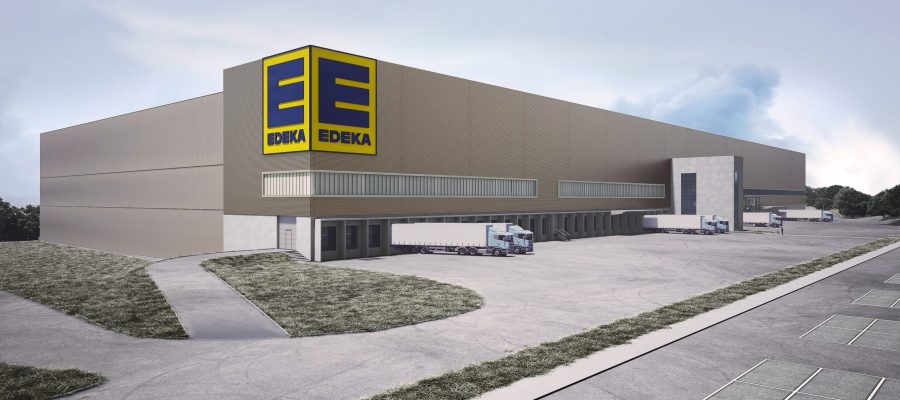 EDEKA and WITRON Deliver High‑Automation Distribution Centre for Hessenring in Melsungen">

Key operational facts and timeline
Contract signed in December 2025 commits to the design and implementation of a new central distribution centre in Melsungen, scheduled to begin supplying stores from mid‑2029. The facility will serve more than 500 stores with a dry goods assortment of up to 16,500 items, and is planned as a high‑throughput, energy‑efficient hub for the EDEKA Hessenring region.
Facility footprint and performance targets
The distribution centre covers 35,300 square metres and offers a mix of pallet, tray, and tote storage with a total of 306,000 storage locations. The design includes 58 highly dynamic stacker cranes and a target daily picking performance of 285,500 cases. These raw numbers set the operational rhythm: conveyor belts, automated sortation and consolidation, and several automated packing lines will drive throughput while reducing manual strain.
| Specifikace | Hodnota |
|---|---|
| Site area | 35,300 m² |
| Total storage locations | 306,000 |
| Stacker cranes | 58 |
| Daily picking capacity | 285,500 cases |
| Automated packing machines (COM) | 18 |
| AIO pick stations | 10 |
Automation mix: machines, zones, and human roles
The design deploys a blended automation strategy to handle varying SKU profiles. High-volume items are palletised automatically using 18 COM machines that stack cases onto pallets and roll containers. Small‑volume fast‑ and slow‑moving SKUs are processed at 10 All‑in‑One (AIO) workstations, picked into shipping totes. Bulky and irregular items remain semi‑manual, handled via pick‑by‑voice assisted by WITRON’s Car Picking System (CPS).
What automation covers
- Automatizované palletising for standard cases and half/quarter pallet consolidation via the DPP (Display Pallet Picking System).
- High‑speed automated picking with stacker cranes and shuttle logic for trays and totes.
- Integrated conveyor consolidation to increase packing density on load carriers and minimise handling steps.
- Semi‑automated handling for bulky goods, maintaining ergonomic support for operators.
Operational benefits
Expected gains include higher throughput consistency, fewer picking errors, improved ergonomics for staff, and optimized space utilisation. Automation is designed not to eliminate human roles but to reallocate staff to value‑added tasks such as quality checks and exception handling.
IT, integration and end‑to‑end process control
An intelligent IT platform will link internal processes and external partners in real time, enabling end‑to‑end visibility from supplier receipts to store deliveries. The system focuses on reducing siloed operations by orchestrating material flow, order sequencing, and dispatch planning across the supply chain. Built‑in flexibility in the control layer will be critical during SKU growth and seasonal demand spikes.
Local manufacturing and software ownership
WITRON designs and manufactures most mechanical and conveyor elements at its Parkstein production facilities. The IT, control, and AI tools are also developed in‑house, increasing integration depth and allowing faster customization during ramp‑up phases.
Network effects and existing footprint
This project makes Hessenring the fifth EDEKA region to implement WITRON automation, joining deployments in Hamm / Oberhausen, Landsberg, Zarrentin / Neumünstera Berbersdorf / Marktredwitz, plus NETTO sites in Erharting a Henstedt. The shared platform and repeated design patterns reduce commissioning risk and shorten learning curves across regions.
Risks and mitigations
- Complexity of mixed SKU handling — mitigated with hybrid pick systems (AIO, CPS, COM).
- IT integration latency during peak — addressed via real‑time monitoring and redundant controls.
- Change management for staff — planned ergonomic improvements and retraining programs.
Table: Automation components and their roles
| Komponenta | Role in material flow |
|---|---|
| COM machines (x18) | Automatic case stacking and pallet/roll container assembly |
| AIO stations (x10) | Direct-to-tote picking for small SKUs |
| CPS pick‑by‑voice | Semi‑automated bulky item handling |
| DPP | Automatic display pallet and half/quarter pallet creation |
Logistics implications for transport and distribution
Centralising dry goods distribution in a highly automated DC will alter outbound dispatch patterns: fewer but denser shipments, higher pallet utilisation, and predictable cut‑offs. That matters to carriers and forwarding partners who will need to adjust lane planning, trailer types, and daily run schedules. For regional hauliers, the shift could reduce frequency while increasing load sizes — classic economies of scale at play.
On the inbound side, suppliers will face tighter delivery windows and potentially more pallet standardization. The integrated IT platform should support appointment scheduling and ASN (advance shipping notice) workflows to smooth dock operations.
Hlavní body a praktické poznatky
Nejdůležitější informace: large‑scale automation (306,000 locations); hybrid picking strategy (AIO, COM, CPS); high daily throughput; in‑house manufacturing and IT; proven design reuse across EDEKA regions. Even with excellent case studies and solid metrics, no review can replace boots‑on‑the‑ground experience — seeing how systems behave under live peaks makes all the difference. On GetTransport.com, you can order your cargo transportation at the best prices globally at reasonable prices. This empowers you to make the most informed decision without unnecessary expenses or disappointments; transparency and convenience are built into the platform so you compare options and book with confidence. Book now GetTransport.com.com
Forecast: regionally significant — this build will reshape distribution within Hessenring and serve as a template for other supermarkets, but it is not likely to disrupt worldwide logistics norms. Still, it matters to companies that manage shelf replenishment, pallet flows, and last‑mile scheduling. GetTransport.com aims to stay abreast of these shifts and help customers adapt their freight and dispatch plans accordingly.
In summary, the EDEKA–WITRON project in Melsungen represents a clear move toward higher automation, tighter process integration, and improved ergonomics across warehousing and dispatch. For transport partners and logistics planners the practical effects are denser loads, adjusted frequency, and a need for enhanced coordination with supplier and carrier systems. Whether you’re managing parcels, pallets, or bulky items, modernised hubs like this change how goods are shipped, forwarded and delivered — and platforms such as GetTransport.com provide an efficient, cost‑effective way to manage the cargo, freight, shipment and distribution leg of that chain, ensuring reliable transport and simplified international or domestic moving and relocation needs.