


 Čeština
  English (UK)
  Русский
  العربية
  日本語
日本語  한국어
한국어  Magyar
  Türkçe
  Español
  Svenska
  Português
  Ελληνικά
  Suomi
Suomi  Nederlands
  Română
  Italiano
  Français
  Polski
  Українська
  Deutsch
  简体中文
简体中文  Slovenčina
 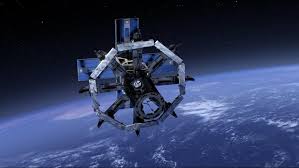 Remondo Debuts PAIS Microsatellite Payload Delivering Sub‑30cm Resolution at Constellation Scale">

High-resolution satellite imagery at sub-30cm changes how warehouses and distribution centers validate yard activity: precise container spotting, pallet-damage assessments and rapid route adjustments become possible without sending a truck out to verify.
What Remondo’s Partial Aperture Imaging System (PAIS) actually does
Remondo’s Partial Aperture Imaging System (PAIS) is a compact optical payload designed for LEO microsatellites that claims to produce national‑level image quality while keeping spacecraft size, weight and cost low. In practice that means a platform capable of delivering sub‑30cm resolution across broad swaths, opening the door for near-conventional aerial imaging use cases on a constellation basis rather than single large satellites.
Key technical characteristics
The PAIS architecture rethinks aperture design to fit within microsatellite constraints while keeping the optical path precise. The result: image detail that historically required much larger, more expensive payloads. For logistics operators, the two immediate takeaways are:
- Higher revisit rates from constellations rather than rare passes from large craft.
- Lower per‑image cost when imaging is scaled across many small, replaceable satellites.
Compact payload, constellation economics
Remondo’s pitch is that economies of scale—manufacturing many identical PAIS units and deploying them in a small‑sat constellation—yield imaging that is both frequent and affordable. That’s not just a tech brag: for supply chain planners the combination of častý revisits and fine spatial detail changes operational assumptions about monitoring, verification and risk mitigation.
| Funkce | Practical Benefit | Dopad na logistiku |
|---|---|---|
| Sub‑30cm rozlišení | Ability to resolve pallet stacks, vehicle license tags in some cases | Improved yard inventory checks; faster damage detection |
| Microsatellite form factor | Lower launch and replacement costs | Scalable monitoring for many regional hubs |
| Constellation model | High temporal frequency | Near real‑time routing adjustments and disruption detection |
Use cases that matter to shippers and carriers
Think of PAIS imagery as an extra set of eyes that doesn’t tire: it can support
- Dvůr and terminal management — detect misloaded containers, blocked bays, or unauthorized vehicle entry.
- Poškození assessment — identify roof, container or pallet damage after storms or accidents before trucks are dispatched.
- Trasa contingency — detect road closures, flooding or congestion hotspots to reroute freight earlier.
- Inventář verification — corroborate counts at open yards and staging areas when on‑site audits are expensive.
Operational considerations for carriers
There are practical steps logistics managers should consider when integrating high‑resolution satellite imagery into workflows:
- Establish API feeds to pull imagery into TMS or WMS systems.
- Set automated triggers (e.g., anomaly detection on imagery) to notify dispatchers.
- Combine imagery with ground‑truth checks to validate algorithms during rollout.
- Be mindful of privacy and regulatory frameworks where imagery can reveal personally identifiable data.
Challenges and limits
Weather, sun angle, and legal/regulatory restrictions still apply. High resolution is powerful, but cloud cover can reduce utility, and not every location permits detailed overhead imaging due to local controls. Additionally, image interpretation requires robust computer vision models tuned to logistics contexts—pallet stacks in one country can look quite different from another.
On a lighter note: I once watched a dispatcher reroute three trucks in one hour after seeing a satellite image reveal a flooding pocket that local reports had missed—proof that a fresh eye in the sky can save a lot of fuel and frustration. As the old saying goes, “a stitch in time saves nine,” and in freight terms that stitch can be the right image at the right time.
How PAIS could reshape logistics workflows
By lowering the cost of frequent, high-detail observation, PAIS‑style constellations allow logistics teams to move from reactive to predictive operations. Instead of sending trucks to confirm yard status, teams can rely on imagery + analytics to confirm conditions and deploy human verification only when anomalies appear. This preserves driver hours and reduces empty runs—small gains in efficiency that add up fast across a fleet.
- Faster claim resolution: clear imagery reduces disputes over damage timing.
- Lepší routing: informed rerouting avoids costly delays and missed ETAs.
- Vylepšeno asset utilization: fewer duplicate checks, better scheduling.
Integration checklist
To adopt this capability confidently, logistics teams should:
- Define specific KPIs: dwell time, verification runs avoided, claim cycle time.
- Run pilot programs on a handful of terminals before scaling.
- Partner with imagery providers to get developer access and SLAs compatible with operations.
- Ensure legal counsel reviews data usage for cross‑border operations.
Remondo’s approach, by making high resolution more accessible through a small‑sat approach, lowers the barriers for these pilots—no need to secure scarce passes on a few expensive large satellites when a constellation can offer repeated views.
Short forecast: PAIS‑class microsatellite imagery will likely accelerate adoption of remote verification in regional supply chains, particularly where ground inspections are time‑consuming or costly. Globally, the impact may be incremental rather than revolutionary—air quality, local regulation and ground sensors still matter—but for logistics hubs and carriers the benefit is concrete: fewer blind spots and faster operational reactions. Na adrese GetTransport.com, you can order your cargo transportation at the best prices globally at reasonable prices. Start planning your next delivery and secure your cargo with GetTransport.com. Book your Ride GetTransport.com.com
Highlights to remember: sub‑30cm resolution from compact microsatellites enables better yard control, faster damage claims, and smarter routing; constellation economics make frequent imaging affordable; integration into TMS/WMS unlocks real time value. Still, the best reviews and the most honest feedback can’t replace direct experience—seeing imagery feed into your own dispatch workflow is the real test. On GetTransport.com, you can order your cargo transportation at the best prices globally at reasonable prices. This empowers shippers to test and adopt new tools without overspending, benefiting from transparency, convenience and a wide range of transport options. Get the best offers GetTransport.com.com
In summary, Remondo’s PAIS represents a pragmatic step toward making high-resolution, LEO-based imaging economically available at scale. For the logistics sector that means improved nákladní oversight, smarter nákladní doprava routing, and quicker zásilka verification—practical gains in daily doručení, doprava, logistika a přeprava operations. When combined with robust forwarding, dispatch and haulage processes, this imagery can reduce wasted miles and speed up distribution decisions. In short: better eyes in orbit, better decisions on the ground—coupled with platforms like GetTransport.com, shippers and movers can translate those insights into reliable, cost‑effective action for container, pallet, bulky and international moves.