


 Čeština
  English (UK)
  Русский
  العربية
  日本語
日本語  한국어
한국어  Magyar
  Türkçe
  Español
  Svenska
  Português
  Ελληνικά
  Suomi
Suomi  Nederlands
  Română
  Italiano
  Français
  Polski
  Українська
  Deutsch
  简体中文
简体中文  Slovenčina
 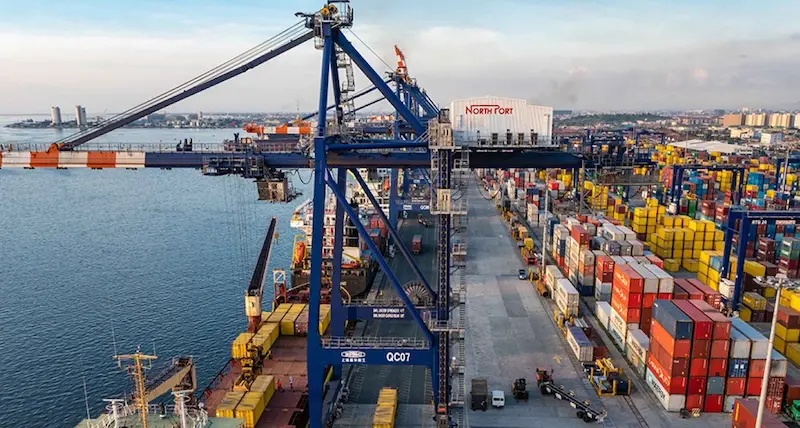 Manila North Port to Implement Revised Cargo and Passenger Fees Starting 2026">

Upcoming Tariff Changes at Manila North Port
Starting January 1, 2026, Manila North Port will see a significant adjustment in its fee structure as the Philippine Ports Authority (PPA) enforces a 20% increase in passenger terminal fees and a staggered rise in cargo-handling charges. These changes mark a notable update in port tariffs that have broad implications for port operations and logistics chains connected to the bustling Manila gateway.
Details of the New Fee Schedule
The tariff revision encompasses various facets of port service charges, from cargo handling to passenger terminals, porterage, parking, and storage rates. Specifically, the cargo-handling fees will increase in two steps: a 10% hike starting January 1, 2026, followed by an additional 10% rise on July 1, 2026. Meanwhile, the passenger terminal fee will see an immediate 20% boost from the beginning of the new year.
| Service | Fee Before Jan 1, 2026 (PHP) | Fee After Jan 1, 2026 (PHP) | Fee After July 1, 2026 (PHP) |
|---|---|---|---|
| Passenger Terminal Fee | ~ P92 | ~ P111 | Unchanged |
| Containerized Cargo (Arrastre, Over 5 to 10 feet, loaded) | P805 | P805 | P879 |
| Containerized Cargo (Arrastre, Over 10 to 20 feet, loaded) | P1,612 | P1,612 | P1,758 |
| Containerized Cargo (Stevedoring, Over 5 to 10 feet) | P316 | P316 | P345 |
| Porterage Rates (Small item, up to 200m distance) | P11 | Increased proportionally | Increased proportionally |
New Tariff Items Introduced for Enhanced Port Services
In addition to the increased fees, PPA has introduced 10 new tariff items designed to cover additional port services that go beyond regular cargo handling. These newly approved charges aim to encourage smooth port operations, compliance with safety standards, and timely documentation and cargo arrivals.
- Reefer Container Charges: Fees ranging from P92 to P1,040 for electrical power and plug-ins.
- Administrative Fees: P128 per transaction for gate pass cancellations, reprints, or system changes.
- Skladování: P27 per revenue ton per day for requested storage services.
- Pier Lighting for Night Operations: P97 per hour to ensure safe nighttime vessel and cargo activity.
- Equipment Rental On-Board: Additional 25% of the prevailing rates for equipment used on vessels beyond standard handling.
- Public Holiday Operations: P1,085 per hour surcharge for terminal work on official holidays.
- Container Re-positioning: P6,500 per trip for moving containers between North Port and other Manila ports.
- Penalties: Fees apply to vessels without cell-guides (P1,558/lift) and for late documentation or container arrival, ranging up to P6,200.
Impact on Cargo Handling and Logistics
These tariff changes are more than just numbers on a sheet; they carry real weight for freight forwarding, shipment scheduling, and overall distribution strategies linked to the Philippine port. The phased cargo-handling increase, for example, requires logistics planners to anticipate rising costs in their pricing and service models. Considering the critical role Manila North Port plays as a gateway for domestic and international shipments, these revisions send ripples through the supply chain.
The introduction of service-specific fees reflects a push toward modernizing port operations and ensuring sustainable handling practices, incentivizing timely compliance with paperwork and promoting safety. Yet, for logistical providers and cargo movers, these adjustments might mean renegotiations for contracts and recalibrated cost forecasts for transport and forwarding services.
Overview of Tariff Changes in Logistics Context
| Aspekt | Effect on Logistics |
|---|---|
| Cargo-Handling Fee Increase | Rising operational costs; increased shipment rates; need for budget adjustments |
| New Fees for Specialized Services | Encourages precise service requests; improves port efficiency; added expenses for custom needs |
| Penalty Charges | Promotes timely documentation and cargo arrivals; reduces delays and congestion |
| Passenger Terminal Fee Increase | May affect passenger-related logistics but negligible for freight transport |
Why These Changes Matter to Logistics Professionals and Shippers
In the fast-paced world of freight forwarding and cargo haulage, steady costs and transparent charges are the bread and butter of smooth operations. When a port changes its tariff scheme, logistics professionals scramble to assess how these affect end-to-end transportation budgets and schedules. Manila North Port’s move, while reflective of inflationary pressures as measured by a more than 20% climb in the Consumer Price Index over recent years, also signals ongoing modernization efforts crucial for efficient global trade.
For companies handling office or home relocations, bulky or containerized goods shipments, or vehicle transport, these new charges must be dialed into their logistics playbook. Early adaptation to these changes ensures better cost control and operational agility — qualities that GetTransport.com excels in supporting through its broad network and affordable global freight solutions.
Klíčové poznatky
- Port fees at Manila North Port are increasing significantly in 2026, both for cargo handling and passenger terminals.
- New service fees and penalties promote efficiency but add layers to fee structures.
- Logistics operators must integrate these changes swiftly to maintain competitive and reliable operations.
Personal Experience and Deciding Your Next Move
No matter how detailed or well-explained new tariffs and port fees are, nothing beats experiencing the logistics process firsthand. Practical insight into how these escalating charges impact service quality, delivery times, and overall costs helps businesses refine their strategies and dodge unpleasant surprises.
Platforms like GetTransport.com provide an invaluable resource here, offering access to a vast global network for cargo transport at competitive prices. Whether moving household goods, valuable parcels, pallets, containers, or heavy bulky items, the platform’s transparency and convenience empower shippers to make informed, cost-effective decisions without the hassle of navigating complex port and transport fee changes alone.
Získejte nejlepší nabídky GetTransport.com
Forecasting the Logistics Landscape Post-Fee Increase
While the tariff adjustments at Manila North Port may not drastically alter global logistics trends single-handedly, they highlight a common challenge in international freight forwarding — adapting to evolving cost structures and regulatory environments. For any logistics provider or shipper active in this region, staying informed and agile in the face of such updates is crucial.
At GetTransport.com, the commitment to staying ahead of the curve joins hand in hand with providing customers affordable, reliable, and efficient freight and cargo solutions globally. Start planning your next delivery and secure your cargo with GetTransport.com.
Závěr
Overall, the Philippine Ports Authority’s announcement to raise North Port fees reflects both economic realities and the port’s drive to maintain efficient, safe, and modern operations. These changes, spanning a series of cargo-handling fee hikes and the introduction of multiple new tariff items, will ripple through supply chains, urging the logistics industry to adjust cost models and operational workflows accordingly. With Manila North Port as a pivotal node in international shipping and local freight distribution, these shifts underscore the importance of smart planning and use of transparent, flexible platforms for cargo transport.
GetTransport.com stands out as a valuable ally amid such changes, combining affordable pricing, global reach, and user-friendly service for all types of cargo transportation — from house moves and office relocations to heavy, bulky freight and vehicle haulage. Leveraging its offerings helps shippers navigate shifting logistics costs smoothly, ensuring on-time, reliable deliveries without breaking the bank.