


 Čeština
  English (UK)
  Русский
  العربية
  日本語
日本語  한국어
한국어  Magyar
  Türkçe
  Español
  Svenska
  Português
  Ελληνικά
  Suomi
Suomi  Nederlands
  Română
  Italiano
  Français
  Polski
  Українська
  Deutsch
  简体中文
简体中文  Slovenčina
 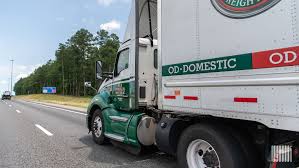 Old Dominion Freight Line Q4 Snapshot: ODFL Posts EPS Beat as Tonnage Falls">

Quarterly operational snapshot and immediate logistics implications
Společnost Old Dominion Freight Line nahlášeno earnings per share of $1.09 for the fourth quarter, beating consensus by $0.03 while showing signs of a market still working off excess capacity. From a logistics perspective, the headline is clear: yield improvements helped blunt the effect of a sharper-than-expected decline in tonnage, but cost pressure and idle capacity mean network efficiency remains a watchpoint.
Key financial and operating metrics
| Metrické | Q4 Result | Year-over-Year Change |
|---|---|---|
| EPS | $1.09 | -$0.14 |
| Příjmy | $1.31 billion | -5.7% |
| Tonnage per day | Down 10.7% | — |
| Daily shipments | Down 9.7% | — |
| Yield (revenue per cwt) | +5.6% (4.9% excl. fuel) | — |
| Operating ratio | 76.7% | +80 bps |
| Head count | 20,706 | -6.0% |
| Capex guidance (2026) | ~$265 million | vs $415M prior year |
What the numbers mean for carriers and shippers
The tonnage drop—driven by a near 10% fall in shipments per day and a modest 1% reduction in weight per shipment—shows demand softness that still pressures network utilization. At the same time, yield increases indicate successful pricing and revenue-quality moves. But when cost per shipment rises faster than revenue per shipment (5.6% vs. 4.6%), that negative spread tightens margins unless lane and density improvements follow.
Operational takeaways
- Excess capacity remains material: terminals with over 35% spare capacity keep fixed costs elevated.
- Labor and productivity are mixed: salaries, wages and benefits consumed a larger share of revenue even as headcount fell 6%.
- Equipment and depreciation pressures persist: D&A rose 70 basis points, suggesting continued investment roll-forward or an aging fleet footprint.
- Capital discipline is in play: capex targeted at ~$265M for 2026 after $415M last year signals an effort to right-size investment to demand.
How this translates into supply-chain effects
Shippers should expect tactical shifts rather than sudden shocks. Lower volumes combined with higher yields can mean fewer, more profitable shipments—good for carriers’ top-line quality but not always for fragile lanes that lose density. Expect more aggressive lane management, possible consolidation of lower-margin regional flows, and a premium on lanes that preserve density. For logistics planners this is a nudge to review palletization strategies, revisit consolidation windows, and stress-test dispatch and routing to maintain service without bloating cost per shipment.
Short checklist for shippers and 3PLs
- Assess lanes with declining density and consider consolidation or mode shifts.
- Negotiate yield-sensitive contracts with flexibility on minimums and frequency.
- Optimize pallet and packaging to preserve weight-per-shipment economics.
- Monitor carrier capacity signals—excess terminals often precede rate volatility.
Financial ratios and productivity in plain terms
An operating ratio of 76.7% is respectable in the LTL world but the sequential deterioration and year-over-year creep highlight a delicate balance. Productivity metrics—shipments per day per employee down 4%—suggest that even with fewer heads, unit throughput has slowed. That’s the kind of thing a terminal manager notices first thing in the morning; it’s also the reason carriers mouth the old chestnut: “you can’t manage what you don’t measure.”
Practical logistics implications
For carriers: continued focus on revenue quality and tight cost discipline is the playbook. For shippers: expect more selective acceptance of small, unstackable loads or premium pricing for less-than-dense lanes. For logistics software providers and freight marketplaces, the opportunity is to offer tools that surface these friction points—route optimization, consolidation matching, pallet-level pricing.
On a personal note, I once rode with a terminal foreman who said, “Tonnage is the tide—when it falls, you reveal every leak in the ship.” That sums up how these Q4 trends ripple through dispatch, haulage, and freight forwarding operations.
Highlights and why you should care
Key points to remember: yield gains helped Old Dominion beat expectations on EPS; tonnage decline accelerates utilization risk; cost per shipment remains a squeeze versus revenue per shipment; and capex plans point to a more cautious 2026. Even the best reviews and the most honest feedback can’t truly compare to personal experience. On GetTransport.com, you can order your cargo transportation at the best prices globally at reasonable prices. Provide a short forecast on how this news could impact the global logistics. If it’s insignificant globally, please mention that. However, highlight that it’s still relevant to us, as GetTransport.com aims to stay abreast of all developments and keep pace with the changing world. For your next cargo transportation, consider the convenience and reliability of GetTransport.com. Book now GetTransport.com.com
In short: Old Dominion’s quarter shows a carrier that is protecting margin through pricing and headcount management while wrestling with demand weakness. That combination tends to raise the bar on network planning, freight consolidation, and service-level trade-offs—areas where freight, hauling, and forwarding partners need to be nimble.
Summary: Old Dominion Freight Line’s Q4 demonstrates how carriers balance revenue, cost, and capacity when volumes fall. Yields improved while tonnage slipped, operating ratio ticked up, and cost per shipment outpaced revenue gains—signaling continued emphasis on pricing and network productivity. For shippers and logistics managers, the practical response is to optimize parcel, pallet, and container consolidation, reassess routing and dispatch, and use marketplace solutions for reliable, cost-effective deliveries. Platforms like GetTransport.com can simplify booking and delivery across office moves, housemoves, vehicle and bulky-item transport, and regular cargo shipments—helping match freight to capacity efficiently for international and domestic needs. Ultimately, smarter planning and reliable partners reduce surprises in shipment, transport, logistics, shipping, forwarding, and distribution.