


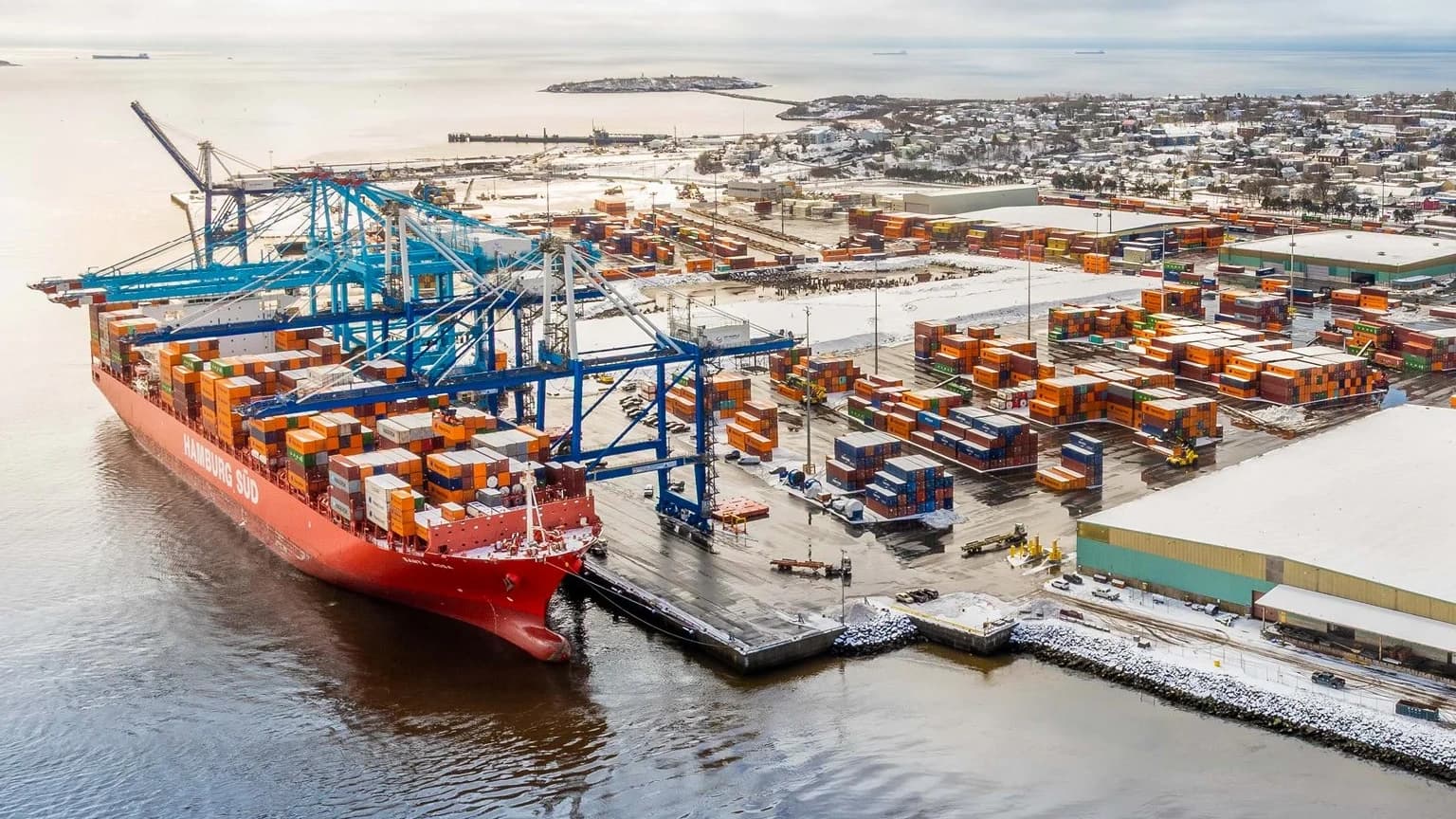

Immediate throughput figures and year‑on‑year gains
Port Saint John handled 239,364 TEUs in 2025, an increase of 29.4% from 184,879 TEUs in 2024 and a cumulative rise of 175.2% since the 86,949 TEUs recorded in 2021. Those numbers make Saint John one of the fastest-growing container gateways in eastern Canada, outpacing H1 gains reported at Prince Rupert (+14%), Montreal (+3.6%) and Vancouver (+6%).
What moved the needle: capital spend and terminal ops
The sharp lift followed completion of $247 million in public‑private investment at the port’s west side terminal, now operated by DP World. Infrastructure upgrades there increased berth productivity, crane density, and yard capacity — the kind of measurable throughput levers logistics managers watch closely when rerouting cargo or renegotiating contracts.
| Port | H1 volume change (reported) |
|---|---|
| Saint John | +29.4% (2024–2025) |
| Prince Rupert | +14% |
| Montreal | +3.6% |
| Vancouver | +6% (H1) |
Carrier, rail and modal connectivity
Container lines including Hapag‑Lloyd, Maersk, Mediterranean Shipping Co., and CMA CGM now call Saint John with greater frequency. On the landside, NB Southern Railway provides critical interchange to Class I railroads CPKC, CN, and CSX, improving reach into central and western Canadian markets as well as U.S. corridors.
Why the rail connections matter
More sailings alone don’t solve inland distribution bottlenecks — it’s the rail and drayage network that turns port calls into reliable delivery windows. Faster rail cycles and additional capacity at the terminal reduce dwell time for containers, lower chassis requirements, and shrink the risk premium for shippers placing cargo on trans‑Atlantic and trans‑Pacific strings.
Operational impacts on supply chains
For importers and exporters, the Saint John expansion means a few practical shifts:
- Shorter lead times for shipments routed through Atlantic Canada due to increased slot and berth availability.
- Lower congestion risk compared with larger West Coast hubs during peak season surges.
- More competitive routing options for bulky, project, or offpeak cargo that benefit from alternative gateways.
Example scenario
Imagine a manufacturer in central Ontario moving palletized components from Asia. Routing via Saint John can convert a congested West Coast transload into a predictable rail haul from Saint John, reducing unexpected demurrage and smoothing the inbound schedule. I’ve seen logistics managers favor that predictability — a little peace of mind goes a long way when an assembly line’s waiting on parts.
Market signals and broader trends
The Saint John case highlights a recurring theme: targeted infrastructure investments, when paired with experienced terminal operators and carrier commitment, create outsized gains in container throughput. It’s not magic — it’s capacity, reliability, and network effects. DP World’s presence signaled to carriers that service reliability would be competitive, and that drew additional calls.
That said, regional growth patterns don’t instantly rewrite global trade lanes. The Port of Saint John’s gains are significant at a regional level and will influence Atlantic Canada logistics and routing strategies, but they are not, by themselves, a seismic shift for global trans‑Pacific or trans‑Atlantic pricing structures.
Risks and constraints to watch
- Labour availability: sustained throughput depends on steady shore and marine labour capacity.
- Seasonal weather: Atlantic winter conditions can still disrupt schedules and drayage.
- Inland capacity: rail and highway constraints could become the next bottleneck if growth continues aggressively.
What this means for logistics professionals
Supply chain planners should add Saint John to their routing playbook, especially for cargo types sensitive to time‑in‑port and container reliability. For freight forwarders and third‑party logistics providers, the port offers an attractive combination of increased service options and a less crowded operating environment.
On the practical side, contract teams should revisit terms related to transit time guarantees, detention and demurrage caps, and intermodal interchange rates. When a port’s competitiveness changes, so do the incentives for shippers to test new corridors — and pricing often follows.
Quick checklist for shippers
- Run a cost/time comparison for routing via Saint John versus alternative Atlantic or West Coast gateways.
- Confirm carrier schedules and blank sailing impacts for your lanes.
- Engage with rail partners early to lock in container lift windows.
- Assess warehouse and drayage capacity near Saint John for last‑mile distribution.
Highlights and an invitation to decide
Saint John’s rapid container growth after a major terminal investment underscores how targeted capital and experienced terminal operators can shift regional freight patterns. The port now offers faster service options, stronger carrier commitment, and improved rail connectivity — all tangible benefits for cargo owners. But even the best reviews and most honest feedback can’t truly replace personal experience. On GetTransport.com, you can order your cargo transportation at the best prices globally at reasonable prices. This empowers you to make the most informed decision without unnecessary expenses or disappointments. Emphasizing transparency and convenience, the platform gives shippers access to multiple transport modes, straightforward pricing, and simple booking tools so you can test routing options with minimal risk. Book GetTransport.com.com
Forecast: the Saint John surge is meaningful for regional distribution and will encourage some shippers to experiment with Atlantic routing; its global impact is modest but notable in North American east‑coast corridors. For your next cargo transportation, consider the convenience and reliability of GetTransport.com.
Summary
Port Saint John’s 239,364 TEUs in 2025 — a 29.4% year‑on‑year jump and 175.2% rise since 2021 — demonstrates how investment, competent terminal operations, and rail connections translate directly into increased container throughput and better port choice for shippers. The involvement of global carriers like Maersk, Hapag‑Lloyd, Mediterranean Shipping Co., and CMA CGM, plus rail links via NB Southern Railway to CPKC, CN, and CSX, strengthens Saint John’s role in regional supply chains. Shippers, forwarders, and 3PLs should weigh the port as an alternative for cargo, freight, shipment, and container routing — especially for bulky or project loads that benefit from predictable handling. In short: the port’s upgrade reduced congestion risk and improved throughput, making it a more reliable option for international and domestic distribution. For affordable, global cargo transportation solutions that cover moves, deliveries, and bulky items like furniture, vehicles, and pallets, GetTransport.com simplifies transport, logistics, and shipping decisions while keeping costs in check.