


 Čeština
  English (UK)
  Русский
  العربية
  日本語
日本語  한국어
한국어  Magyar
  Türkçe
  Español
  Svenska
  Português
  Ελληνικά
  Suomi
Suomi  Nederlands
  Română
  Italiano
  Français
  Polski
  Українська
  Deutsch
  简体中文
简体中文  Slovenčina
  COVID-19 Vakcíny Dodavatelský řetězec – Jak reálná je kybernetická hrozba?">

Adopt zero-trust across all components now. Take decisive actions now. Segment critical assets, enforce MFA for all access to logistics portals, and rotate credentials quarterly. Limit lateral movement by isolating site admin interfaces and procurement portals. Track suspicious activity on each node, requiring proactive collaboration between security teams and suppliers to close visibility gaps. This practical approach yields measurable gains in containment time and reduces blast radius in real-world events.
Hacking attempts increased as criminals pivot toward partners and remote workers. Analysts said last quarter that credential theft remains a leading entry vector. Within compact networks, attackers probe low-privilege accounts and leverage software updates to pivot across sites. A robust plan covers people, processes, and technology; emphasize networking with colleagues in small groups and ensure credible sledování of user activity across portals. A webinar program helps employees and contractors stay current on alerts and response steps.
Key metrics to watch include MTTD under 12 hours, MTTC under 24 hours, and time to restore critical services within 48 hours. Maintain a live inventory of partner software with a simple tracking method; require SBOMs; enforce least privilege; isolate production and distribution systems; implement network segmentation; require encrypted backups; perform quarterly tabletop scenario exercises; run phishing simulations for all employees; deploy automated alerting for anomalous login times; require rapid revocation of access when personnel shift roles; schedule weekly reviews of access logs. For workers at suppliers, ensure ongoing networking training, and security team writes incident notes into a shared repository.
In morphowave scenario modeling, a single breach can cascade into partner networks, disrupting work queues and delaying deliveries. To limit risk, maintain security requirements within contracts, designate security champions at every site, and deploy rapid-response playbooks accessible via webinar drills. Collaboration among manufacturers, distributors, and retailers accelerates information sharing, tracking, and coordinated containment, reducing impact across a wider network.
Outline: COVID-19 Vaccines Supply Chain Cybersecurity
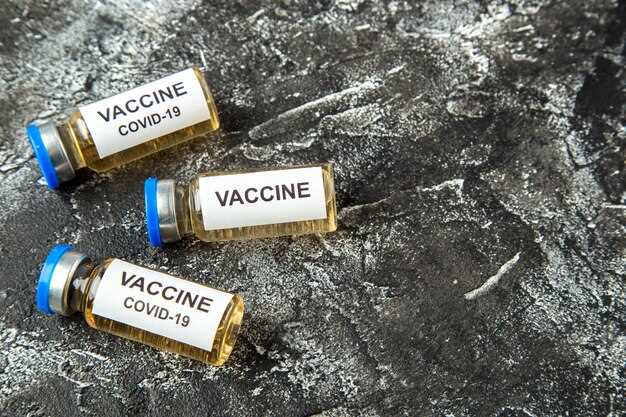
Recommendation: enforce zero-trust architecture across entry points, segment networks by facility, and require MFA for every worker and contractor; ready for immediate rollouts in warehouses and robotics-enabled lines; align access with capabilities and reducing blast radius; teams can begin today without disruption.
There are five threat vectors in this domain: supplier portals, ERP interfaces, WMS/TCM, robotics control nets, and remote maintenance sessions; monitor activity, enable anomaly detection, and conduct breach drills; publications and shared intel shorten detection cycles; went from hours to minutes in initial simulations; in a connected world, cross-team collaboration speeds response.
Entry controls: enforce least-privilege, role-based access, and continuous authentication; accessible controls for teams; adopt secure remote maintenance; order data and access logs must be signed and immutable; five critical entry points mapped to workstreams and robot-control domains; Specifically, implement privileged access management with segmentation and regular credential rotation.
Visibility, inventory, and maps: maintain live inventory across warehouses; build maps of data flows from supplier orders to infection indicators tested in simulations; infection indicators tested in simulations; risk resides in supplier catalogs; источник; emma led a postmortem on a recent incident.
Publications approach: rely on public reports and sector guidelines to shape baselines; ingest threat intelligence; align with common models; cross-team collaboration increases visibility and accelerates containment; workers on-site and remote operators gain accessible dashboards, reducing recovery time; parcel data feeds into inventory integrity checks.
Identify Critical Data Flows and Stakeholders in the Vaccine Supply Chain
Recommendation: Map critical data streams across logistics network, spanning devices at facilities, transport hubs, and end-point systems. Include entry points such as inspections and automated checks, including fulfillment updates, and identify who relies on each stream–partners, researchers, and operators.
Identify data types: environmental metrics, device fingerprints, lot and expiry data, authorization logs, and proof of inspections. For each type, specify which platforms handle it, which partner roles access it, and which devices contribute fingerprints. Ensure data provenance by linking entries to underlying transactions and component changes.
Stakeholders and roles: list manufacturers, distributors, cold-chain managers, labs, regulators, health networks, IT teams, and external researchers and platform vendors. Define each party’s part in data handling. Outline responsibilities, access rights, and incident response workflows so partners can respond quickly.
Governance and controls: map underlying risks across access, authentication, and automation. Deploy device management, networking hygiene, continuous monitoring, and platform-level inspections to limit exposure. Implement validation at entry points and enforce least-privilege access.
Operational steps: starting from minimal viable map, then expand data lines with additional types. Draft data-sharing agreements with partners, define cadence for updates, and tie data flows to business outcomes. Leverage Orion for cross-system analytics and fingerprint-based attestation to verify provenance.
Ransomware and Data-Tampering Risks in Cold Chain and Serialization Systems
Install airtight isolation between IT networks and OT devices in warehouses, enforce MFA and role-based access, and deploy tamper-evident signing for serialization records. Maintain offline backups for critical inventory data and validate integrity during every processing cycle.
Ransomware operators target large and small firms by exploiting weak credentials on networked devices, hijacking update channels, and launching hacking attempts through tricky attack vectors. A single compromised workstation can interrupt power feeds, corrupt track data, and disrupt inventory systems across multiple sites, risking accuracy of public health reporting.
Architecture should enforce segmentation between public interfaces, enterprise systems, and OT, plus redundant logging, immutable backups, and distributed ledgers for serialization. Linked monitoring feeds from existing sites empower executives to spot anomalies quickly; publications from government bodies guide architecture decisions. For existing firmware and devices, implement secure update practices and verify provenance.
Detection and response: apply anomaly detection, integrity monitoring, and rapid restoration procedures for sites, warehouses, and processing nodes. Routine drills with executives train teams; however, announced vulnerabilities require swift patches. If an incident occurs, isolated segments limit spread.
Operational controls: require registered suppliers to deliver signed updates, verify code provenance, and maintain an inventory of all devices on network. Public-private collaboration reduces risk; where possible, operate in linked, monitored environments rather than isolated pockets. This approach makes changes easy to implement.
Scenario snapshot: attackers may exploit a single entry point; layered defenses raise difficulty for intruders; but if access gains, quick isolation helps contain damage. In this landscape, where health data, track records, and serialization must stay accurate, a robust governance framework keeps stakeholders aligned, with linked publications guiding ongoing practices.
Zero-Trust, Access Controls, and Third-Party Risk Management Across Peers

Adopt zero-trust across peer interfaces; require explicit authentication, continuous authorization checks, and near real-time monitoring for each access attempt.
Context: in distributed ecosystems across worlds, enforce glove-level controls across contech vendors, suppliers, and research partners handling items and shipping. A glove becomes symbol of tight control. Controls extend throughout partner environments.
Policy design prioritizes role-based access, device posture, and session verification, with logging, anomaly detection, and networking safeguards baked into governance to support privacy, safety, and ready operations.
Remote operations rely on MFA, adaptive access, and continuous posture checks for remote workers; add additional guardrails and policy-driven revocation when risk signals appear. Organizations find this approach relatively scalable across multiple teams and regions.
Third-party risk management blossoms through ongoing vendor assessments, privacy impact reviews, and contractual controls; maintain an itemized inventory of partnerships and responsible owners. As mentioned, privacy protections support health objectives and public concerns, aligned with governments and health authorities. Costs stay manageable with transparent funding and cross-team collaboration.
Cost and funding: allocate additional funding for identity platforms, hardware tokens, monitoring, and training; remember that costs may be relatively predictable when governance is strong. Whole ecosystem safety improves as policy aligns with health and safety goals across teams and governments.
Education and outreach: run webinar series for teams, publish policy guidance on website, and share lessons with governments and organizations. Emphasize privacy, safety, and workers protection; ready status improves as teams adopt shared practices across distributed contexts.
| Oblast | Akce | Metriky | Owner |
|---|---|---|---|
| Identita a přístup | MFA, glove-level controls, context-aware access | denied requests per 1,000; average session duration; time-to-terminate | Zabezpečení |
| Vendor risk | Ongoing assessments; privacy reviews; contractual controls | risk score; privacy incidents; coverage of clauses | Zadávání veřejných zakázek |
| Remote ops | Remote access policy; device posture; conditional access | incidents; policy violations; readiness score | IT |
| Monitoring | Centralized logging; anomaly detection; audits | MTTD; false positives; audit findings | Zabezpečení |
| Education | Webinars; updates to website; staff training | training completion; phishing susceptibility; policy adherence | Learning |
Regional Reshoring: Cyber Risk Profiles, Local Infrastructure, and Redundancy
Accelerated move toward regional production minimizes exposure in long freight routes; locate core worker hubs near occupancy nodes, deploy automated local data centers, and build redundant network links across multiple carriers using diversified routes.
V tomto kontextu se rizikové profily mění s kvalitou místní infrastruktury. Oblast Londýna vykazuje nižší latenci pro edge processing, zatímco okrajové zóny čelí vyššímu riziku výpadků. Zkontrolujte bezpečnostní kontroly na každém pracovišti, zejména vzdálený přístup, konvergenci OT/IT a rozhraní třetích stran. Důkazy z incidentů kyberkriminality, minulých narušení a hackerských útoků ukazují, že sítě, které již byly prolomeny, se mohou kaskádovitě šířit po místních sítích; reakce bez paniky závisí na připravených plánech omezení v každé vrstvě provozu.
Plán redundance zahrnuje tři pilíře: lokální zpracování dat, offline zálohy a diverzifikované přenosové trasy. Použijte automatické převzetí služeb při selhání mezi dvěma regionálními datovými centry, abyste udrželi provoz během kolísání obsazenosti nebo zpoždění nákladu. Pracovníci a operátoři obdrží postupné školení o reakci na incidenty s kontrolními seznamy přizpůsobenými konkrétním oblastem, jako je Londýn a Howick.
Organizace napříč logistikou, výrobou a námořnictvem se musí zapojit do regionálního projektu odolnosti, aby sdílely důkazy, zkušenosti a související osvědčené postupy. Minulé roky ukazují, že útočníci zneužívají závislosti na jednom místě; poznámky operátorů společnosti Maersk naznačují, že diverzifikace řetězců snižuje dopad. Útočné vektory se vyvíjejí, což vyžaduje průběžné kontroly rizik.
Metriky s bohatým kontextem poskytují konkrétní signály o pokroku. Kroky zahrnují mapování aktiv, výčet cest útoku a úplné definice cílového času obnovy. Používejte automatizované kontroly k ověření, zda lokální zálohy zůstávají neporušené během nárůstu obsazenosti nebo nepříznivých událostí. Související weby v rámci celého podniku by měly hlásit výsledky založené na důkazech, přičemž benchmarky z Londýna a Howicku by měly podporovat neustálé zlepšování.
Praktické příručky pro řešení incidentů: Detekce, reakce a obnova v reálném čase
Okamžité doporučení: rozmístit izolované detekční uzly v kritických budovách a nákladních centrech; automaticky spouštět skripty odezvy do pěti až deseti minut po signálech anomálií; předem načíst plány obnovy, aby se minimalizovalo narušení provozu a urychlilo obnovení.
- Detekce a upozorňování: konsolidace rozsáhlých telemetrických datových proudů z budov, nákladních uzlů, úložišť obsahu; signály často pocházejí z výsledků testování, přístupových protokolů a fyzických senzorů; korelace událostí s modely anomálií; potenciálně hlučná data oříznuta pomocí základních prahových hodnot; redundance napříč segmenty sítě zajišťuje, že se výstraha dostane k týmu pro řešení incidentů, i když jeden kanál selže; dashboardy poskytovány dodavatelům, americkým partnerům, včetně howické lokality; cíl: rychlá detekce v řádu minut.
- Okamžité reakce: po obdržení výstrahy izolujte postižené segmenty sítě; přerušte trasy mezi zařízeními; aktivujte záložní nástroje; přepněte na redundantní datové cesty; vyberte předem připravené kroky nápravy a přidělte úkoly řešitelům; informujte dodavatele a zákazníky; udržujte stručnou komunikaci, abyste omezili nesprávnou interpretaci; bezpečnostní kontroly zásob a obsahových místností vakcín.
- Obnova a učení: ověřte integritu testováním a kontrolami obsahu; obnovte z poskytnutých záloh; měsíce dat by měly být ověřeny; znovu zaveďte operace izolovaně, řízeným způsobem; sledujte obsazenost a zátěž sítě, abyste zabránili přetížení; proveďte poincidentní výzkum s dodavateli a americkými partnery; zdokumentujte události, upravte kontroly, implementujte vylepšenou redundanci a kontroly rizik; sdílejte použitelná řešení poskytnutá k posílení odolnosti lokality, včetně aktualizací lokality Howick a bezpečnostních opatření inventáře vakcín. Mezi výhody patří snížená doba výpadku, zlepšená integrita obsahu a rychlejší rozhodovací cykly.