




Recommendation: map residential clusters likely to receive early shipments and run a three-zone pilot in three selected residential neighborhoods to validate flow, speed, and handling.
The patent describes embodiments that could enable shipments before purchase, relying on signals from warehouses, carriers, and consumer intent. Track how orders are prepared and handled at each step to keep accuracy, with a focus on speed. The approach depends on data from multiple sources and a privacy framework that can be tested simply across pilot zones.
Operational plan requires alignment across fulfillment centers and regional hubs. The filed patent outlines several embodiments and including a network of small buffers, so shipments can move quickly with speed and reliability. In practice, employees in residential areas would play a key role in validating handling, requiring precise routing and real-time adjustment.
Three central questions remain: certain predictive accuracy, the balance of customer trust, and among other factors including privacy, cost, and system load. The model tests how many SKUs can be shipped ahead without tying up capital and sufficiently predictable demand, aiming for speed with reliable handling.
Overview of Amazon Anticipatory Shipping and Replication Challenges
Begin with a controlled regional pilot to validate the model before full rollout. This clear recommendation reduces risk while you observe real-world interaction with guardians of privacy and customer trust.
Anticipatory shipping aims to shorten delivery times by acting on purchase likelihood before a buyer places an order. The system relies on location signals, browsing activity, and historical buying patterns to identify where a package could be staged, particularly in high-traffic corridors. Although the approach raises questions about inventory held without a confirmed purchase, tight guardrails around consent and data usage keep the practice manageable. The ultimate goal is to improve outcomes such as speed, accuracy, and customer satisfaction, without increasing waste or misallocating assets.
At a high level, this setup consists of several components that must work together in real time. Data streams feed predictive models, which translate signals into operational actions. A package may be prepared in advance of a sale, then communicated to the nearest fulfillment node or carrier hub. Physically moving items ahead of a confirmed order carries risk, so the plan emphasizes narrow pilots, clear thresholds, and rapid rollback if signals misfire. The next step is to map how location, inventory, and capacity interact across the network to minimize errors.
Geographically distributed facilities, flexible inventory policies, and tight coordination with carriers form the backbone of replication. The likelihood of success depends on precise timing, accurate signals, and well-defined request workflows from stores and distribution centers. In practice, teams inject signals into the system when a shopper shows intent, then monitor outcomes to adjust thresholds and states of the model. This cycle keeps the approach adaptive rather than rigid.
Key considerations center on privacy, data quality, and operational discipline. Without robust data governance, mispredictions can lead to excess stock, obsolescence, or customer distrust. Data quality affects every step, from recognizing location relevance to interpreting probabilistic outcomes. To mitigate risk, teams establish part-based fallbacks–for example, reverting to standard shipping if confidence drops below a defined threshold.
- Location and demand signals underpin forecasting for each part of the network.
- Autonomous elements in the pipeline adjust staging and routing in real time.
- Package readiness is synchronized with inventory and carrier capacity.
- Communication threads with customers and stores keep expectations aligned.
- Security measures protect sensitive data while enabling timely reactions.
Replication challenges emerge as the system scales beyond a single region. The same techniques must perform consistently across multiple states and geographies, requiring rigorous testing of models in different contexts. Data replication across sites must preserve privacy constraints while maintaining low latency for decision-making. The states of demand signals can shift with seasonality, events, or regional promotions, so models require continual recalibration and robust validation pipelines.
- Data synchronization across geographically dispersed facilities is essential to avoid stale signals and mismatched inventory, which lowers the chance of correct outcomes.
- Model portability must handle diverse market conditions, shopper behavior, and supply constraints, not just a single location.
- Inventory planning and packaging workflows must align with carrier windows, reducing the risk of early holding or late pickups.
- Privacy controls and consent mechanisms must remain front and center as signals are injected into the forecasting loop.
- Request handling from stores and hubs must be precise, with clear escalation paths when predictions fail or become unreliable.
Techniques to manage replication include modular modeling, federated learning approaches, and sandboxed experiments that compare alternative signals and thresholds. By simulating multiple states and routes, teams estimate outcomes and adjust processes before committing capital to a wider roll-out. In this way, the organization learns which components drive success, such as signal quality, packaging design, and carrier coordination, rather than relying on a single path to the market.
Next steps focus on tightening governance, validating predictions at scale, and communicating decisions clearly to customers. A transparent request mechanism for opt-in data sharing helps balance business benefits with user preferences. Teams should document the part of the network where anticipatory actions are enabled and specify the fallback options when signals are weak or incorrect.
Conclusion: A disciplined replication strategy targets data integrity, privacy safeguards, and repeatable metrics, enabling gradual expansion from a pilot to broader regions while maintaining trusted customer experiences.
What the patent covers: scope of pre-shipment based on predicted demand
Adopt a clear basis: the patent covers anticipatory pre-shipment actions driven by predicted demand signals. Architectures illustrate how signals feed a decision layer and trigger shipments ahead of arriving customer orders, shortening lead times and reducing stockouts.
The scope covers businesses across the ecosystem and includes several players, from manufacturers and logistics providers to retailers, including arrangements that adapt to partner needs.
Predicted demand forms the basis for decisions. The system must use signals from multiple sources, including historical data and real-time indicators, and generally relies on a risk-aware cost model. When forecast signals are favorable, the potential benefits justify pre-shipment.
Geographically, decisions vary by region. The patent includes architectures that support local or regional pre-shipment, with shipments shipped to hubs where facilities can receive stock. The workflow includes arriving stock and related validations to ensure alignment with downstream demand.
Scenarios cover high-demand corridors, seasonal spikes, and new-product introductions. In each scenario, the administration should ensure data privacy, auditability, and accountability, with clear ownership of signals and decisions.
Implementation guidance: define gating rules that tie shipments to forecast confidence, monitor accuracy, and limit shipments to geographies with sufficient capacity. Begin with a conservative pilot and measure impact on service levels, shipped units, and cost per unit; expand to additional geographies as forecast quality improves.
Signals and data sources: browsing, cart, location, and inventory cues
Prioritize real-time signals across browsing, cart, location, and inventory to tighten anticipatory shipping decisions. Use combinations of signals rather than single events to reduce false positives. Adopt a manso approach that balances speed and accuracy, iterating with targeted tests and clear feedback loops. Maintain supervisory oversight to ensure privacy, consent, and platform policies stay aligned with legal-status requirements.
Browsing cues drive the early signal of intent. Illustrative metrics include pages viewed, search queries, dwell time, and sequence of category exploration. When a user visits multiple related pages in a short window, elevate readiness scores by 15–25% in the next 24 hours; if dwell time exceeds 60 seconds on a high-price item, increase pre-ship probability by roughly 18–28%. Normalize signals by device, session, and user profile to keep input noise low. Feed these inputs into a real-time scoring engine that updates every few minutes and feeds decisions to inventory and fulfillment platforms.
Cart signals sharpen timing. Items added to cart, quantity, price changes, and cart abandonment signals converge to a higher likelihood of fulfillment intent. In practice, a sequence of adds across related SKUs can raise pre-ship probability by 20–35% within the same day, especially when the cart includes items with shared delivery windows. Use conjunction with stock checks to ensure there is sufficient inventory in the nearest fulfillment node before triggering any pre-ship action. If the cart is abandoned and price movements revert, scale back the urgency to avoid unnecessary shifts in the speed of fulfillment.
Location cues pair user movement with proximity to inventory sources. Device location, travel patterns, and pickup preferences form a spatial input that guides where to place a shipment or which hub to preload. When a user enters a radius around a warehouse or a regional distribution center, increase readiness thresholds accordingly, but respect legal-status boundaries and user consent. In conjunction with current stock and transit times, location signals can boost the chance of a shipped item arriving within the customer’s preferred window by 12–22% on average.
Inventory data supply the feasibility check. Real-time stock levels, replenishment cadence, and cross-warehouse availability feed the decisions that determine what can be pre-positioned, where, and when. Advanced forecasting combines sales history, seasonality, and supplier lead times to produce a reliability score for each SKU across platforms. When inventory confidence remains high (sufficiently high, e.g., above 80%), use faster pre-ship lanes for high-demand items; when confidence dips, hold or delay until cross-warehouse confirmation is obtained to minimize restocking risk. Physically track allocations to avoid oversell and ensure that there is a clear, auditable trail for each shipped item, with a straightforward mechanism for salespeople or customer support to verify status if needed.
Integrating these cues exposes complexity, but disciplined design keeps it manageable. Map each signal to a specific decision boundary, create a unified input schema, and maintain a transparent audit trail across supervisory controls. The system should handle various inputs–from user behavior to backend inventory feeds–without overfitting to a single channel. Use illustrative case studies to test edge cases, such as simultaneous browsing spikes and stockouts, and adjust thresholds to maintain accuracy while preserving speed.
Fulfillment architecture: hub-and-spoke networks, buffering, and last-mile implications
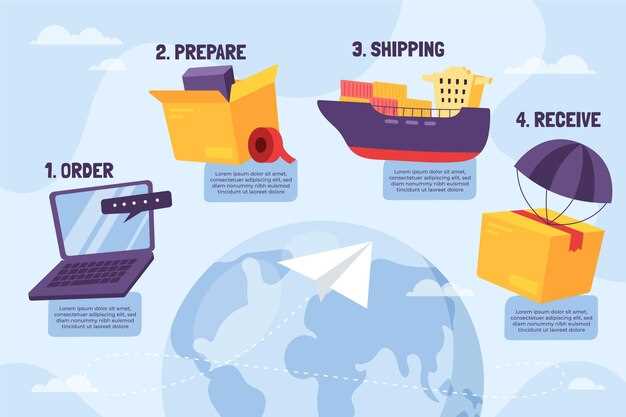
Map your fulfillment network as hub-and-spoke and set buffering rules anchored in predictions to minimize last-mile variance; this approach directly improves delivery reliability and reduces idle time.
Define a backbone with regional hubs connected by high-bandwidth links and a shared code to coordinate decisions; use a single data stream to drive routing and inventory placement, and provide tools for operators.
Determine appropriate buffer depths by product family, supplier lead time, and order profile; maintain a specified buffer depth for high-priority items and apply a duration window that covers fast-moving SKUs while extending for ordinary ones.
Last-mile implications: multi-stop trucks, optimized sequencing reduces trips; plan to limit last-mile activity during peak hours and align with priority and ordinary deliveries.
Predictions drive stock placement and order routing; define what to predict, specify potentially-interested signals from customers, and tag items as ordered to trigger replenishment.
Accounting and governance: track each hub’s costs, including fuel, labor, handling, and limited reverse logistics; ensure metrics relate to links among hubs and carriers, and make dashboards accessible to anyone on the ops team.
Returns and variety: manage returned items at hubs; account for variety of SKUs and adjust buffers to reduce return-related delays; whatever the SKU, keep a responsive loop.
wayve-style routing and traffic analytics can augment buffering decisions; use a data stream plus valuable external feeds to improve last-mile timing.
Taking a year-long view, adapt buffers to seasonality and regional demand; vary the strategy by market and maintain flexibility to respond to promotions and supply interruptions.
Risk and economic considerations: misprediction, returns, and capital allocation
Allocate a reserved capital buffer and implement a data-driven trigger system for shipments that precede purchases, with clear thresholds and weekly validation sessions. Ground the plan on an assumption that misprediction could affect 7–12% of anticipatory shipment value, and add an additional buffer of 2–4% to cover handling, returns, and obsolescence. Involve leaders from supply chain, finance, and IT to validate the model and codify decision rules in a concise set of codes that drive autonomous approvals or holds. Maintain addition to safety stock for high-velocity items, and rely on history from startup pilots to refine the diagram and synchronization across processes. Use signals received from orders, inventory, and market data to guide these shipments that are conveyed to customers as a proactive option.
Operational design focuses on a general objective of balancing risk and service levels. Also, track units in stock and shipments to ensure alignment with forecast; the plan includes a publication of results to internal teams and external stakeholders. This framework ties to financial metrics and uses certain key indicators to measure progress. Combining these inputs through combinations of demand, supply, and logistics signals helps reduce misprediction while preserving customer experiences and cost control. The shipper can leverage their data to support continuous improvement and share insights in a concise publication that informs strategy and capital allocation.
To visualize risk and execution, a diagram links forecast signals, synchronization cadence, and actual shipments, with these connections conveying how adjustments ripple through the network. These connections below the threshold trigger reevaluation and reallocation, while data from various sources feed the model. This approach uses a general methodology that scales across units and product categories and supports an autonomous decision layer that aligns with the startup's solution.
| Risk factor | Estimate | Mitigation | Notes |
|---|---|---|---|
| Mispricing consequence | 5–12% of forecast value per cycle | Dynamic adjustment, phased ship, holdbacks, frequent reforecast | Based on history from pilots |
| Returns and post-purchase adjustments | 12–25% of shipped units | Improve sizing, clear product info, flexible refunds | Returns impact profitability; optimize net cost |
| Working capital lockup | 1.5–3.0% of annual revenue tied to anticipatory stock | Staged releases, sell-through commitments, dynamic replenishment | Lower as forecast accuracy improves |
| Additional governance costs | 2–5% of program budget | Standardize sessions, reuse codes, automate checks | Initial cost may be high; declines with scale |
| Data synchronization risk | 24–48 hours | Unified data fabric, real-time signals, event-driven updates | Critical for timing of shipments |
| Customer/shipper perception | Low to moderate impact on trust | Transparent publication of metrics, clear return policies | Public publication enhances accountability |
Implementation plan: begin with a controlled pilot in 2–3 units and scale after reviewing KPI trends. Maintain weekly sessions to compare forecast and outcomes, adjust the assumption and the addition of buffers, and refine the solution using concrete data from the received results. Track the publications internally to keep leadership informed and ensure alignment with the shipper's strategic goals.
Barriers to replication: data access, scale, partnerships, and regulatory constraints
Recommendation: establish data-sharing agreements now to access supplied signals, secure discount terms, and validate predicted demand with a controlled pilot before expanding.
Data access barriers
- Privacy controls and data governance limit access to customer- or device-level data, forcing anonymization and aggregation that can blunt accuracy. Implement a staged access plan that defines status and level of data use, starting with aggregated signals and moving to more granular panels as compliance allows.
- Negotiations with suppliers, retailers, and logistics networks require legal work, SLAs, and clear ownership of derived insights. Keep the terms simple and mutually beneficial, including expected data refresh rates and uptime commitments.
- Costs for data provisioning can erode ROI; negotiate discount tiers for pilot volumes and future scale. Ensure the economics are transparent, with clear thresholds for when data costs rise or fall.
- Data quality and freshness matter: supplied data must be sufficiently current to forecast demand; latency beyond a few minutes degrades prediction precision. Build a data pipeline that minimizes lag and includes fallback feeds if a source goes offline.
- Schema and interoperability challenges require common techniques and adapters. Don’t rely on a single format; invest in a lightweight schema registry and mapping layer to harmonize inputs across partners, including others in the value chain.
Scale barriers
- Infrastructure costs grow with model complexity and geographic reach. Start with a controlled, regional pilot (level 1) and scale only after hitting predefined accuracy and service metrics.
- Edge and cloud balance matters: distributed networks and device-reported signals can speed decisions, but require robust orchestration and monitoring to avoid drift. Plan for a scalable fleet, not a single center.
- Model training and inference loads increase with data breadth; allocate capacity for peak demand periods and plan for elastic compute to avoid bottlenecks. Support teams to keep systems serviced and responsive.
- Operational risk rises when multiple parties contribute data or triggers. Use a clear governance model to prevent conflicting signals; assign a dedicated salesperson or partner liaison to align expectations and timelines.
Partnership barriers
- Alignment across suppliers, carriers, retailers, and marketplaces is essential. Craft joint value cases that show measurable gains in service levels and delivered demand matching, including incentives for early adopters.
- Data-sharing agreements hinge on trust and risk transfer; establish transparent dashboards and audit trails so all parties can see how signals affect orders, promotions, and discounts.
- Some partners demand protection for their competitive data; offer aggregated or anonymized feeds and clearly define permissible uses to avoid leakage of sensitive information.
- Coordination costs rise with the number of participants. Create a streamlined workflow where a single point of contact (a salesperson or channel manager) coordinates requests, timelines, and escalations.
- Technology alignment across partners requires standardized interfaces. Include technical readiness as a milestone and allocate budget for adapters, testing, and training.
Regulatory constraints
- Cross-border data transfers face regional restrictions. Map where data resides, implement localization where required, and use compliant synthetic or privacy-preserving techniques when possible.
- Privacy laws (GDPR, CCPA, and equivalents) demand explicit consent, minimization, and purpose limitation. Build governance that records consent status and enforces data-use boundaries across all workflows.
- Audits and accountability become more complex with multiple partners. Maintain an auditable trail of data origins, transformations, and access events to satisfy regulators and internal risk controls.
- External tooling and services pose outsourcing risk. Vet providers (including ElevenLabs and others) for data handling, model stewardship, and security posture before integrating into the production stack.
- Compliance requirements can slow implementation. Prepare a regulatory roadmap that details when and how policies will be updated as status or level of access evolves, and mark who is responsible for later changes (they, someone, and teams).
Concrete actions to accelerate legitimate replication while staying compliant
- Inventory data sources: list what is supplied by each partner, estimate the predicted value, and document data quality metrics to justify access levels (g06q as a reference code for policy checks).
- Define a data-sharing baseline: set clear status, level, and latency expectations; negotiate a discount arrangement for early data provision and ongoing sustenance of feeds.
- Run a focused pilot: start with a limited device set and a small product portfolio to validate techniques and model outputs before broader rollout.
- Standardize interfaces: adopt a common data model and lightweight adapters to reduce friction when onboarding new partners, including others in the ecosystem.
- Governance and roles: appoint a dedicated liaison (salesperson or partner manager) to shepherd commitments, timelines, and issue resolution; document decisions in a living plan.
- Privacy-by-design: implement anonymization, aggregation, and purpose limitation from the outset; ensure data remains sufficiently protected even as signals improve.
- Regulatory mapping: create a regulatory playbook with jurisdiction-specific controls and a process to update as rules evolve, including how to handle leave or renewal of data rights later.
- Ethical and operational guardrails: use speculatively generated signals only where permitted; prefer device-led signals and offline testing where feasible to reduce risk.
By combining disciplined data governance with incremental scaling, partnerships that align incentives, and proactive regulatory compliance, replication becomes a controlled, measurable process rather than a leap. This approach keeps the system resilient, allows faster iteration on better techniques, and supports a path to broader adoption without compromising trust or safety.