


 Deutsch
  English (UK)
  Русский
  العربية
  日本語
日本語  한국어
한국어  Magyar
  Türkçe
  Español
  Čeština
  Svenska
  Português
  Ελληνικά
  Suomi
Suomi  Nederlands
  Română
  Italiano
  Français
  Polski
  Українська
  简体中文
简体中文  Slovenčina
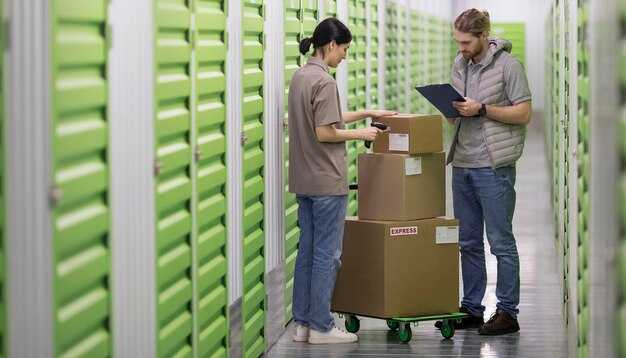
Take this first step: perform a quick energy and process audit to identify opportunities for reducing waste. Replacing inefficient lighting and HVAC, installing smart sensors, and updating systems to eco-friendly standards set the right course for your warehouse.
Implement KI-gesteuert route optimization and inventory control to cut idle time, improve picking speed, and align operations with customer demand across supply chains.
Lighting upgrades with LEDs typically reduce energy use by 40-60% compared with fluorescent systems, while high-efficiency HVAC and roof insulation can push total energy savings to 20-35% on average. When you automate replenishment and picking with a modern WMS, errors drop by 30-50% and cycle times shrink significantly more.
Green warehousing strengthens your brand with customers and employees alike. Eco-friendly practices attract socially conscious buyers, raise morale, and empower teams to meet sharper sustainability goals. Transparent reporting on emissions and energy savings fuels social proof and stakeholder confidence.
Exploring partnerships with solar installers and energy management vendors helps you lower long-term costs. installing on-site solar, real-time monitoring, and advanced warehouse control systems optimize the route from receiving to shipping while reducing emissions across the supply chain.
Many facilities report payback in 12-36 months when combining energy savings, labor efficiency gains, and reduced waste. A phased plan–starting with lighting, then KI-gesteuert routing, then end-to-end energy management–lets teams scale without disruption, and the result is a more resilient operation that customers rely on.
Green Warehousing: Definition, Scope, and Real-World Benefits

Take action now: start with a focused energy audit and map delivery routes to cut power and fuel costs by 10–20% in the first year. Look for opportunities to efficiently consolidate storage and handling to support faster order processing and lower emissions.
Green warehousing defines the design, operation, and management of storage and distribution facilities that minimize environmental impact while preserving throughput and service levels. It combines efficient processes, data-driven decisions, and sustainable equipment to reduce emissions, waste, and energy use without slowing production or order fulfillment.
Scope covers energy, water, waste, packaging, and transport, plus the technology that ties it together. They look at every asset–from conveyors and racking to HVAC and WMS–to maximize space, minimize travel, and sustain performance, looking for continuous changes that improve efficiency.
- Energy and power management: retrofit LED lighting with occupancy sensors, deploy VFDs on motors, implement demand-controlled ventilation, and pursue on-site generation where feasible to power operations with lower costs.
- Goods handling and packaging: optimize put-away and picking paths to shorten routes, reduce travel time, and incorporate reusable or recyclable packaging to minimize waste.
- Transportation and routes: consolidate orders, use load optimization software, and shift to lower-emission fuels and modes (rail, barge) when possible to reduce fuel consumption.
- Technology and data: connect sensors and a warehouse management system to discover real-time energy use, track temperature controls for goods, and build dashboards that support continuous improvements.
- Water, waste, and facilities: install water-saving fixtures, recycle packaging waste, and adopt waste-to-energy where permitted to minimize landfill waste.
- People and governance: train staff, update procedures, and collaborate with suppliers to support sustainable standards throughout the supply chain, together with all partners.
Real-world benefits accrue quickly. Looking to maximize ROI, companies report measurable gains in energy costs, maintenance, and on-time performance. In the world of logistics, reductions of 15–35% in total energy use after LED retrofits and HVAC optimizations are common, with payback often under 2 years. For production-heavy facilities, better storage layouts can shorten goods handling cycles by 10–25%, accelerating throughput without adding headcount. Blackburn-area case studies show that a compact layout plus rooftop solar can cut grid energy use by a quarter.
Actionable steps to start today:
- Take an initial energy and process audit to identify hotspots and quantify potential savings.
- discover and map all major routes and modes, then optimise to reduce empty miles.
- Incorporate renewable energy where possible; identify источник for solar or wind power and test on-site generation if roof space allows.
- Look for quick wins: lighting, fans, and compressors with controls that can be deployed in weeks; aim to maximise efficiency with simple changes.
- Plan a Blackburn-style pilot in a single facility to validate changes before rolling out to others.
- Track key metrics (energy per pallet, miles per order, on-time rate) and adjust strategies to ensure together with teams you sustain long-term improvements.
These changes create a practical solution that supports cost savings and environmental goals. By continually optimise inventory, routes, and production scheduling, you minimize waste while maximizing customer value. Incorporate continuous learning, and the result is a more effective, resilient warehouse network that can adapt to future changes and scale.
What Constitutes Green Warehousing: Criteria and Certifications
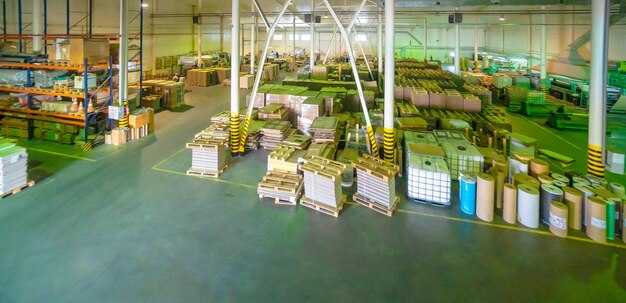
Start with a simple baseline: measure energy use, waste, and packaging per order, then set a long-term target to improve efficiency and minimising waste. Involve your team from day one so every function–from receiving to packing–contributes to greener goals and a well aligned company plan.
Energy and emissions criteria anchor a greener operation. Implement LED lighting with smart controls, seal gaps around doors, and optimise refrigeration where applicable. Install sub metering to track kWh per zone and per order, then drive reductions through maintenance and schedule adjustments. To validate this approach, pursue ISO 50001 energy management certification and pair it with ISO 14001 for a formal environmental management system that covers suppliers, contractors, and facilities.
Packaging and materials practices reduce waste and plastics use. Move to recyclable or biodegradable packaging where feasible, and shift from single-use plastics to returnable transit packaging or reusable totes. For pallets and crates, prefer certified wood on a traceable basis and consider pallet pooling to minimise waste. Communicate a clear policy that encourages customers to accept more sustainable packaging options, strengthening the company’s greener image and protecting margins on long-term orders.
Waste, water, and resource handling require clear targets and visible metrics. Set a waste diversion rate (recycling and composting versus landfill) and install water-efficient fixtures in break rooms and wash stations. Establish a formal waste contractor program with monthly reporting, and implement a policy to reduce landfill-bound materials through reuse or recycling. Documented procedures and regular audits help teams stay aligned and faster to respond to nonconforming materials or packaging defects.
Transportation, routing, and fleet decisions shape the majority of a warehouse’s carbon footprint. Optimise dock-to-door routes with shared shipments, consolidate orders to reduce trips, and deploy energy-efficient handling equipment like electric or hydrogen-powered forklifts where feasible. Build a fuel-usage baseline and target reductions through route optimisation, idle-time minimisation, and improved loading efficiency. A greener transport plan supports faster order processing while improving cost control and customer satisfaction.
Certifications and external validation provide credibility and a structured path to continuous improvement. ISO 14001 confirms an ongoing environmental program; ISO 50001 formalises energy management; ISO 45001 strengthens worker safety in more demanding warehouse environments. EU operations can benefit from EMAS validation, while building-level performance may earn LEED or BREEAM recognition for energy and air quality. Packaging materials can carry FSC or equivalent chain-of-custody certification to prove responsible sourcing, and Lean & Green or similar programs offer practical milestones for reducing waste and improving throughput. These credentials help a company demonstrate to customers and partners that its operations are measured, audited, and continually advancing toward a greener baseline.
Operational rollout tips ensure results stay on track. Start with high-impact areas–lighting, refrigeration, and packaging–then run a six-month pilot in a single zone to quantify savings and establish standard operating procedures. Use a simple data feed from your WMS and ERP to monitor energy intensity, waste volumes, and on-time performance, linking outcomes to incentives for the team. Communicate progress to customers with clear metrics and next-step plans. By keeping the approach transparent and iterative, you encourage steady gains and a better outlook for the company’s long-term resilience and competitiveness.
Energy-Saving Warehouse Design: Lighting, Insulation, and HVAC Controls
Install LED high-bay lighting with occupancy sensors and daylight harvesting, and target a lighting power density of 0.6–0.9 W/ft². This change typically reduces lighting energy by 25–40% in warehouses. Governments and utilities often offer incentives that boost the return. Use a simple tracking plan to measure energy use across times and situation shifts, and select energy-efficient products that deliver consistent illumination in dimmer days.
Seal gaps around dock doors and penetrations, upgrade roof insulation to R-38–R-60 and walls to R-20–R-30, and install dock curtain systems to cut heat gain. These envelope changes limit energy loss and help keep temperatures stable during high-throughput periods. Reusing materials from existing builds where feasible lowers cost, while tight sealing reduces noise and improves operator satisfaction.
Install HVAC controls: add VFDs on supply and exhaust fans and deploy an economizer to use outside air when conditions allow. Implement demand-controlled ventilation with CO2 sensors in occupied zones to trim ventilation by 20–40% without compromising air quality. Set general-space temperatures to 68–72°F and cold storage to 34–38°F; target humidity around 50–60% for general areas, adjusting for sensitive products. This operational approach minimizes peak loads and boosts overall efficiency.
Integrate a compact energy management system (EMS) or building management system (BMS) to track energy use by zone and by product flow, with dashboards that show planned savings versus actual results. Use the data to answer questions from teams and clients, and to guide ongoing improvements. Leaders in the world of logistics rely on these tools to attract customers, maintain high satisfaction, and demonstrate a best practice approach to energy use.
Execution steps: start with a paper-based retrofit plan, identifying low-hanging opportunities, then run a phased pilot in one zone before a facility-wide rollout. Keep the project scope limited to controllable changes and secure limited upfront investment. Ask vendors about compatibility, service, and power densities, and have a clear order for implementation. Committed teams should document results, monitor times to payback, and adjust the program to maintain momentum.
Automation and Data-Driven Optimization: Sensors, WMS, and Process Automation
Deploy a modular sensor-enabled WMS and process automation stack today to cut idle time and maximize profit.
Sensors enable tracking of goods from receiving through put-away, picking, packing, and shipping. Paired with a designed WMS, they deliver real-time alerts, route optimization, and accurate inventory counts, giving youre operators the context to act quickly and stay productive. On-demand dashboards translate vast data into clear actions, helping industry leaders identify bottlenecks before they affect customers and deliver the needed visibility.
Automation of processes replacing manual steps with continuous flow. The integration of sensors, gateways, and the WMS provides a single source of truth for supply planning and order fulfillment, supporting tracking across the supply chain and reducing idle time and errors. Partnering with technology leaders lets you tailor rules locally to meet service levels and customer expectations.
Data-driven optimization leverages vast streams of data to forecast demand, optimize slotting, and reallocate resources on-demand. For example, dynamic slotting can cut travel distances by 15–25% and boost throughput by a similar margin, while more accurate shipping windows reduce mis-shipments. Youre operations can improve speed, increase profit margins, and scale without adding headcount themselves, addressing the supply challenge faced by many retailers and manufacturers. Like peers, you can benchmark against leaders to accelerate gains.
Implementation requires a clear pilot-and-scale plan: start with one site, measure ROI over 6-12 months, then extend to others. Use locally designed workflows to reflect real-world processes and minimize disruption. With sensors, WMS, and process automation, youre able to outperform rivals, keep goods moving, and deliver strong service to customers while reducing shipping costs and idle capacity, and empowering teams themselves to act without waiting for central approvals.
Sustainable Packaging and Transportation: Routing and Packaging Choices
Start with a packaging audit and route optimization: switch to lighter, tighter packaging materials and implement smarter routing to cut shipping miles by 20% and reduce packaging waste by 25%.
Choose greener materials that maximize protection while minimizing space. Favor high recycled content and end-to-end recyclability, and design packages that stack efficiently on standard pallets. Incorporate nested or modular designs to reduce voids, and retrofit lines to handle lighter, uniform formats without slowing processes. youre team can improve handling with forklifts, cut damages, and lower loading times, creating a win-win for costs and environmental outcomes.
Routing decisions should consolidate shipments, prioritize efficient modes, and balance speed with scale. Map demand across facilities to reduce backhauls, combine smaller loads into full-truck shipments, and consider intermodal options where appropriate. Look for opportunities to maximize load factors, select right carrier partners, and align routing with inventory management to reduce unnecessary trips. This approach boosts environmental performance while maintaining service levels for customers and the company.
Operational controls matter: standardize packaging specifications, train staff, and monitor key metrics in real time. Manage pickups and deliveries with a simple dashboard that flags deviations and flags opportunities to retrofit or modify routes. By taking a systematic approach to materials and routing, you can control costs, minimize waste, and scale sustainability benefits across the business and its supply chain.
| Aktion | Auswirkungen | Metrics / KPI | Next Steps |
|---|---|---|---|
| Switch to lightweight, modular packaging | Reduces weight and space, enabling greener shipping | Packaging weight per SKU; void-fill usage; damage rate | Test nested designs, pilot with 3 product families, if successful retrofit packaging lines |
| Consolidate shipments and optimize routing | Decreases miles and emissions; improves on-time performance | Total shipping miles; on-time delivery rate; average load factor | Use route planning software; run quarterly demand analyses to align with facilities |
| Adopt intermodal where feasible | Lower emissions and transport cost per unit | Share of shipments via rail/sea; cost per mile | Pilot one regional lane; compare total landed cost |
| Retrofit fleets with energy-efficient equipment | Direct environmental and operational gains | Fleet idle time; fuel consumption; CO2 emissions | Upgrade to electric or low-emission forklifts; train operators |
| Implement returnable packaging where possible | Long-term cost savings and reduced packaging waste | Return rate; lifecycle cost per unit; damage in transit | Experiment in a controlled channel; expand if results show a win-win |
Cost Savings and ROI Calculations for Green Upgrades
Target a payback of 2–3 years by upgrading lighting and implementing a smart control system; assign a cross-functional team to validate costs and savings today.
Take a data-driven approach with a simple ROI model: capture capex, opex, and the reduction in energy, maintenance, and waste-handling costs. Build a single source of truth in the documentation so providers and the team reference the same assumptions.
Step 1: map energy resources and routes within the warehouse using current metering; Step 2: quantify possible savings from upgrades such as LED lighting, optimisation of HVAC with a system, door seals, roof insulation, and efficient crates handling; Step 3: compute net annual savings and apply a discount rate to obtain NPV; Step 4: compare upgrade options against each other and against non-green investments to maintain balance; Step 5: implement in a staged plan using on-demand monitoring, with milestones tracked by the team; keep associated documentation up to date, and track reduction in energy costs over each quarter.
Choose providers who show transparent ROI data and offer scalable system upgrades; compare upfront capex vs operating savings; confirm installation routes and ensure crates are sourced responsibly; ensure environmentally friendly credentials and compliance; consider financing options including on-demand or ESCO arrangements; a balanced approach lowers risk and improves results.
Track two practical metrics: payback period and ROI; monitor results in a central control dashboard; maintain a single источник of cost and savings data; document every step and update the plan quarterly; with the plan shared across the team and stakeholders, you accelerate value realization.