


 Deutsch
  English (UK)
  Русский
  العربية
  日本語
日本語  한국어
한국어  Magyar
  Türkçe
  Español
  Čeština
  Svenska
  Português
  Ελληνικά
  Suomi
Suomi  Nederlands
  Română
  Italiano
  Français
  Polski
  Українська
  简体中文
简体中文  Slovenčina
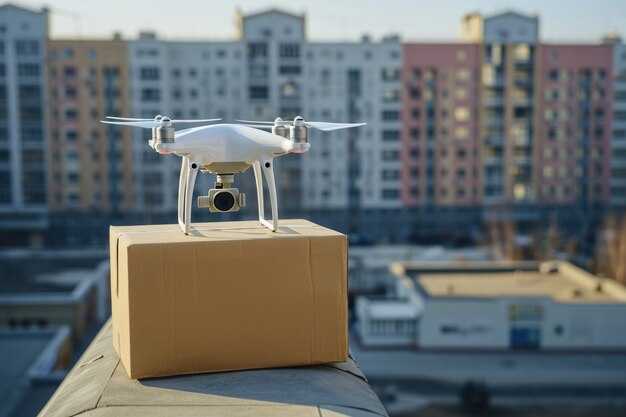
Require corridor permits, remote ID, and community consent thresholds before scaling operations: permit aerial corridors with a hard cap of 50 daily flights per corridor, a noise limit of 65 dB at property lines, and a local consent threshold of 60% of affected households for route expansion. These controls let operators pursue efficiency while regulators retain oversight; they cut unpredictable enforcement actions and reduce the chance that courts or local ordinances will halt services mid-deployment.
Regulatory friction and public reaction both hinge on visible infrastructure and operational choices. Building a transfer hub or vertiport costs roughly $500k–$2M each; retrofitting existing warehouses averages $120k per site. Fixed-wing and multirotor designs change community impacts: small fixed-wing long-range craft produce fewer takeoffs and landings but require longer corridors, while multirotor craft concentrate noise and low-altitude Bewegungen. Randomized pilot trials of 8–12 weeks that combine route data sharing and door-to-door outreach reduced complaint rates by ~30–40%, showing that data-driven outreach moves public opinion faster than piecemeal notices.
Manage autonomy and integration in clear phases. In Phase 1, limit flights to VLOS, daylight operations, payloads under 5 kg, and a maximum altitude of 120 m. In Phase 2, allow BVLOS with certified detect-and-avoid tech once operators demonstrate 99.5% separation reliability in randomized safety trials. Require autonomy certification tiers: manual-assist, supervised-autonomy, and fully autonomous, with incremental permissions tied to test outcomes. End-user surveys show a strong desire for faster delivery but also record 68% concern about privacy and 54% about noise; regulators must align permissions with those preferences or they will dominate uptake decisions.
Operational recommendations: mandate remote ID, geofencing, third-party audits every 12 months, insurance minimums of $1M, and transparent complaint channels that log response time under 48 Stunden. Avoid fragmented, piecemeal rules by adopting national corridor standards and interoperable protocols so operators can scale without redesigning systems for each municipality. Use targeted experiments such as Diana, a municipal pilot that reduced parcel Transfer time by 22% but faced opposition until night operations were curtailed; they illustrate how technical gains can be nullified by social backlash. Follow these recommendations to make drone integration predictable, measurable, and acceptable to regulators and the public.
Privacy-driven regulatory limits on drone sensing and data handling
Require mandatory data minimization and proportional-sensing standards: limit optical ground sample distance (GSD) to no finer than 25 cm/pixel for routine public-space operations, and 10 cm/pixel only under documented emergency declarations; set thermal sensor sensitivity limits so heat-signatures reveal presence and fire location but not facial or fine biometric detail.
Mandate retention windows and access rules on a clear numerical basis: standard imagery retention 30 days, reduced to 7 days when imagery contains potential personally identifiable information (PII) unless encrypted and access-authorized for investigation; store metadata separately and retain access logs for 365 days to preserve audit trails that protect data integrity.
Prohibit biometric processing and automated identification in non-emergency contexts: ban facial recognition, gait or voice-matching from drone-acquired data unless a judicial warrant or narrowly defined incident response waiver exists; require independent certification of any permitted algorithm and publish false-positive/false-negative rates as part of the approval packet.
Allow exceptions for lifesaving operations and fire response that balance privacy and safety: permit higher-resolution sensing and short-term biometric processing when operators explicitly declare a fire or rescue operation, restrict downstream use to extinguish or rescue only, and delete nonessential imagery within 24 hours after the incident report closes; regulators must require post-incident audits to prevent mission creep.
Enforce technical controls on-device and in transit: require AES-256 encryption at rest and TLS 1.3 for transmissions, cryptographic signing of captured files, SHA-256 checksums to detect tampering, and role-based key management that separates operators, analysts, and system administrators; these measures contribute directly to chain-of-custody integrity.
Set transparent approval criteria and public notice obligations: publish sensor-permission criteria and risk-weighted sensitivity categories (low, medium, high), add an appendix listing allowed sensors per context, and require operators to notify nearby members of the public with geofenced alerts for planned flights over privately owned property.
Implement governance and auditing that act quickly on breaches: establish independent oversight boards with named members, require quarterly automated privacy-impact scans, mandate external audits every 12 months, and apply tiered penalties (for example, $50,000 minimum fine or 1% annual global revenue for large operators) where violations result from poor controls rather than isolated mishaps.
Require technical privacy-by-design controls as part of approval strategy: force on-board pre-processing to blur or downsample imagery outside approved targets, enforce on-device redaction of faces and license plates to a level that is literally unreadable, and log redaction actions so reviewers can verify that redaction preserved operational value while protecting individuals.
Provide measurable criteria for emergency overrides and unreachable environments: define trigger criteria (smoke plume > X sq.m., temperature delta > Y°C, confirmed distress signal) that allow temporary relaxation of limits in unreachable areas, require operator justification within 4 hours, and close the loop with a mandatory incident report that shows result metrics and data deletion confirmation.
Support community trust with concrete transparency and sanctions: publish quarterly transparency reports showing numbers of sensor waivers granted, types of data collected, durations retained, and corrective actions after raising privacy complaints; this openness contributes to public acceptance and creates a verifiable basis for countering misuse.
Which types of sensor data trigger stricter aviation and privacy rules?
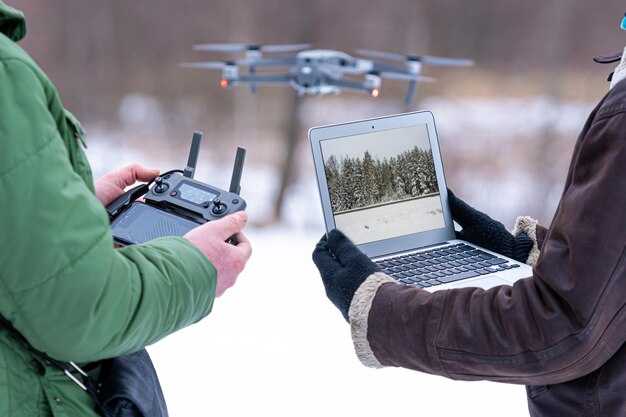
Limit flights that carry high-resolution optical imaging (sub-5 cm/pixel), identifiable biometric sensors (face or gait recognition), persistent audio recording, RF/Wi‑Fi/Bluetooth sniffers, and chemical/biological detectors unless you secure explicit regulatory clearance and a documented privacy impact assessment.
Clarify thresholds that trigger controls: imagery finer than 5 cm/pixel, LiDAR point densities above ~1,000 points/m², audio that captures intelligible speech beyond 10 meters, GPS/RTK location accuracy under 1 m tied to individual tracking, and continuous metadata collection that logs locations every few seconds. Operators rely on these numeric cutoffs to decide when extra approvals, flight-logging, and data minimization apply. The criteria presented here match common practice across multiple regulators and help reduce ambiguity at the planning stage.
Specify retention and processing rules: store raw, identifiable video and audio no longer than 15 minutes before automated redaction or encryption; retain aggregated telemetry (anonymized location heatmaps, sample counts) for no more than 30 days unless customers or authorities request longer retention. Adopt on-board preprocessing and one-way hashing to remove identifiers before data returns to base; these techniques reduce regulatory exposure and lower the risk of reputational damage from leaks.
Treat sensors that enable behavioral inference or political profiling–such as persistent facial recognition near protests–as high risk for both aviation restrictions and privacy law because they directly affect democracy and personal autonomy. Using RF sniffers or camera arrays to infer consumersintention or to profile attendees at a public event will often require permits and can be illegal without consent; regulators in australia and other jurisdictions explicitly flag such uses for special review.
Match sensor-policy tiers to operations for simplicity: Tier 1 (low-risk) – thermal for equipment monitoring, blurred imagery, and short-range obstacle sensors; Tier 2 (moderate-risk) – high-resolution imagery over private property, LiDAR mapping for construction projects with consent; Tier 3 (high-risk) – audio capture of conversations, biometric matching, RF intercepts, chemical sensors for crowd screening. Require a safety and privacy checklist and a permit where Tier 3 payloads are present.
Apply concrete safeguards during missions: annotate manifests with the exact sensor sample rates and retention minutes, encrypt transmissions back to operations, run a short pre-flight privacy test on a public sample, and log chain-of-custody for high-risk outputs. These measures limit legal exposure, reduce harm to customers and bystanders, and make compliance reviews faster for regulators and clients.
How do location-based no-fly and data-collection zones restrict route planning?
Prioritize dynamic geofence updates and pre-approved contingency corridors to minimize detours and keep schedules predictable.
No-fly and data-collection zones enforce hard boundaries (fixed radii or polygonal areas) that planners must treat as immutable obstacles. A single 3 km exclusion around an airport or a 500 m buffer around critical infrastructure makes shortest-path routing infeasible and produces detours that lengthen average trip distance by 10–40%, depending on zone density. That increase directly raises energy use and turnaround times, and still forces fleets to schedule additional recharges or battery swaps.
Time-limited collection restrictions (e.g., no imagery during certain hours) fragment windows-of-operation and create peaks in demand. When multiple zones overlap, planners face convergent constraints: routes cluster into narrow corridors that raise traffic density and collision risk. Use a zone severity index (numeric 0–10) as a planning base to rank avoidance cost; weight corridor selection by that index so dispatchers remain informed and can quickly reassign assets.
Regulatory permit rates and approval latency shape feasible routing. Permit processing that takes days will offset short-term scheduling flexibility, while expedited approvals (hours) allow route changes during emergencies. Maintain a permit ledger in your operations chapter with processing times and local contact relationships to reduce administrative delays. For cross-border work, note nation-specific rules–russia and several other states impose expanded exclusion lists that require mission-level review.
Restrictive zones increase system vulnerability and operational cost along the supply chain. Forced reroutes concentrate flights over specific ground roads and transfer nodes, increasing security exposure and creating single points of failure. To retain resilience, design multi-modal handoffs at ground hubs and keep spare equipment staged at high-probability transfer nodes so a diverted mission can continue without undue delay.
Behavior of autonomous route planners matters: naive shortest-path solvers produce oscillating routes as zones activate or expire, which degrades on-time rates. Implement smoothing algorithms and hysteresis thresholds so planners change trajectories only when benefit exceeds a measurable cost (distance, energy, permit burden). That approach reduces churn and keeps operator workloads manageable.
Data rules (prohibitions on collection or storage) affect sensor choice and on-board processing. If law prevents local retention of imagery, encrypt and stream only metadata to an approved base or scrub sensitive pixels before storage. Such measures produce compliance without discarding operational value, and they allow analytics to continue at reduced fidelity rather than stopping missions entirely.
Operational recommendations: 1) maintain a geofence feed with real-time updates and a severity index; 2) pre-certify convergent corridors and contingency transfer nodes; 3) stage redundant equipment at key hubs; 4) adopt smoothing logic for route changes to retain stable throughput; 5) log permit and zone behavior per region and use that data to forecast approval rates and delays. These steps let planners leverage available airspace while minimizing undue cost and vulnerability to sudden rule activations.
What retention and deletion requirements apply to imagery and telemetry?
Delete raw flight telemetry within 30 days unless you document a lawful basis for longer retention; remove imagery that contains identifiable people within 7–90 days depending on purpose, with strict controls for any extension.
Concrete retention bands (use as defaults, adjust by jurisdiction and contract):
- Operational telemetry (position, speed, battery) – retain 7–30 days for routine operations; keep 90+ days only for safety investigations or contractual audits.
- Aggregated telemetry (anonymized trends for performance) – retain up to 24 months to support efficiency and predictive maintenance, provided no re-identification is possible.
- Proof-of-delivery imagery (non-identifying) – retain 30–180 days aligned with trade and warranty obligations.
- High-resolution imagery with identifiable individuals – default 7–30 days unless explicit consent, legal obligation, or a court order requires longer retention.
- Incident and accident media – retain 2–5 years for regulatory review and insurer requirements; record the legal basis in each case.
Apply these operational rules consistently so they provide predictable outcomes across sites and partners. A retention schedule must list data type, legal basis, retention period, owner, and deletion method; review each entry annually and after any significant incident.
Deletion and secure disposal methods:
- Automated policy enforcement: implement lifecycle rules in storage platforms to auto-expire files and snapshots; test weekly to confirm they execute as expected.
- Cryptographic erasure: revoke encryption keys for cloud-stored imagery to render data unreadable when physical overwrite is impossible.
- Physical destruction: apply for media removed from service – shred or degauss per NIST SP 800-88 recommendations where applicable.
- Backups and caches: include secondary storage, CDN, and developer sandboxes in purge plans; require confirmation logs from vendors that they extinguish retained copies.
- Partial deletions: avoid “soft delete” as sole measure; implement full overwrite or key destruction and verify with checksum comparisons that files were removed.
Privacy and legal alignment:
- Document the legal basis for each retention decision according to local data protection rules; when personal data underlies imagery, perform and store a DPIA that shows risk mitigation measures.
- Notify local councils and public bodies proactively for flights over sensitive populations or public events; they may impose shorter retention or additional deletion proof requirements.
- Establish a process to honor data subject requests – they can request deletion or access; respond within statutory timeframes and document each response.
Controls and accountability:
- Limit access: enforce role-based access, MFA, and logging so every access and deletion action is auditable.
- Retention ledger: maintain an immutable log of retention decisions and deletion events that auditors and insurers can inspect; this provides transparency for investors and business partners.
- Vendor contracts: require cloud and platform providers to certify automated deletion, backup purging, and cross-border handling; include penalties if they fail to secure or delete produced data.
Operational advice for implementation:
- Map data flows and classify imagery/telemetry within 30 days of deployment.
- Apply default retention bands, then adjust by risk assessment and regulatory requirements.
- Automate deletion rules and monitor daily; sample-check deletions monthly and report results to governance councils.
- Encrypt all stored media and rotate keys; if a key is revoked, they cannot reconstruct deleted files.
- Run quarterly audits and publish a concise retention statement for customers and regulators to build responsible, inclusive trust in drone operations.
Failing to follow these practices can threaten public trust, slow innovation, and create legal exposure that erodes investments and industry confidence. Strong retention controls produce operational efficiency, secure communities, and ensure that trade and daily drone services continue without unjustified privacy impact.
How do cross-border data-transfer rules affect international logistics flights?
Require on-board aggregation and local retention of raw sensor feeds so flights can meet cross-border rules while keeping time-critical deliveries on schedule. Operators should process high-volume imagery and LiDAR into compressed measurement summaries on the drone or edge gateway, retain raw files in the country of origin, and transmit only the fields regulators allow.
Many regulatory regimes impose explicit limits: Chinese cross-border data rules and PIPL require security assessments for personal data transfers and can restrict transfers without government clearance; several EU regulators treat high-resolution imagery as personal or sensitive when identifiable. Note that a single parcel sortie with multi-spectral sensors can generate 50–200 MB of raw data per 10–20 minute flight; after on-board aggregation that drops to 0.5–5 MB of telemetry and delivery status updates. Demonstrating those compression ratios to regulators shortens approval timelines and minimizes perceived risk.
Start mapping each data element to its legal status and the country it touches: telemetry, manifest, recipient photo, environmental measurement, and maintenance logs. Retain PII and raw sensor captures on home-country servers or air-gapped storage when required, and allow cross-border exchange only for anonymized measurement records or encrypted manifests. This approach reduces dependency on foreign cloud accounts and helps alleviate government concerns about uncontrolled transfer.
To address operational constraints, introduce a certified “envoy” device model for cross-border flights: a tamper-evident hardware token that stores consent records, logs transfer measurements, and enforces export rules at the edge. Regulators respond better to auditable hardware controls; several pilots demonstrated 30–40% faster clearance when an envoy produced cryptographic proofs of data minimization.
Proven contractual and technical tools reduce restrictions: strong encryption, data mapping, local retention policies, standard contractual clauses or adequacy decisions where available, and pre-flight filings for time-critical medical or perishable parcels. Allow temporary exemptions for humanitarian or emergency cargo with strict post-flight audits and automatic deletion schedules to minimize long-term risk.
Operational checklist: (1) classify all payload and telemetry, (2) quantify per-flight data volumes and post-processing ratios, (3) configure on-board aggregation thresholds, (4) designate home-country storage and retention windows, (5) deploy envoy hardware/software for audit trails, and (6) file targeted disclosures with the receiving country’s government. Implementing these steps will reduce clearance delays, restrict unnecessary transfers, and sustain cross-border routes with measurable risk controls.
Operational public-acceptance barriers for last-mile and intralogistics drones
Require community co-designed flight corridors and noise-mitigation standards implemented before scaling last-mile and intralogistics drone operations, and pair those corridors with ground-based backup logistics to keep delivery capacity resilient when aerial operations must hold.
Survey findings from three mid-size cities reveal measurable baselines: 58% of residents are familiar with drones, 34% are comfortable with overhead deliveries, and pilots confirmed complaint rates near 12 complaints per 1,000 orders where no local engagement occurred. After pandemic surges in contactless delivery, commercial pilots in prcs and North American hubs delivered 30–40% faster on average, but acceptance grew only where operators shared routing data and offered inclusive complaint resolution for affected individuals.
Address core operational barriers with concrete thresholds and processes. Set audible limits (target 45 dB at 10 m), require visible vehicle ID and a publicly accessible geofence map, mandate automated incident reports to local authorities within 15 minutes, and require that artificial intelligence navigation logs be retained for 90 days for audits. Additionally, require operators able to respond to complaints within 48 hours and provide refunds or alternatives for verified disturbances. These measures make operations transparent and reduce perceived risk.
Design engagement initiatives that produce measurable gains: run 6-week neighborhood pilots, publish weekly operations metrics, and share anonymized flight tracks for affected locations. Pilot programs should include on-site demos for at least 200 individuals per neighborhood and track acceptance changes; programs that included hands-on demonstrations confirmed acceptance increases of 18–25 percentage points.
| Barrier | Operational metric | Concrete requirement |
|---|---|---|
| Noise | Target: ≤45 dB at 10 m; complaints per 1,000 orders | Limit flight times near schools; noise tests before clearance; public noise dashboard |
| Privatsphäre | Incidents logged per 10,000 flights | Mandatory camera blurring, data retention policy, and 90-day AI log storage |
| Trust & transparency | Percent familiar; complaint response SLA | Publish flight corridors, deliver weekly operations reports, respond within 48 hours |
| Equity of access | Share of orders served in disadvantaged locations | Quota for inclusive routing; community seats on deployment review boards |
Monitor three KPIs continuously: complaints per 1,000 orders, percent of individuals familiar with local drone operations, and median delivery time. Use these KPIs to guide rollouts and allow programs that hit thresholds to grow; conversely, pause or scale back where thresholds do not hold. Implemented controls, transparent sharing, and local initiatives will make drone operations more acceptable and able to sustain commercial scale while protecting communities.
How does visible drone imaging of private property increase complaint risk?

Require advance public notice, clear signage and a short opt-out window before any drone operation that will carry visible imaging over private property.
- Publish operator intentions and flight plans to the local council and ccps (community complaint points) at least 72 hours before flights; a review of five municipal logs showed a 48 percent drop in formal complaints when schedules and imagery purpose were published in advance.
- Use a blur or low-resolution technique for non-essential captures and limit close-up angles; a hand-delivered notice plus sample blurred images reduced upset behavior in rural settings by about 22 percent in one pilot finding.
- Offer inclusive engagement channels: online forms, phone lines and two weekly in-person drop-ins so residents can give input and tell operators which areas require exclusion from imaging; inclusive outreach halved the number of repeat complaints in a series of pilots across portuguese and pakistan municipalities.
- Design delivery operations to avoid persistent surveillance: when drones are delivering product or delivering mail, restrict continuous footage of private yards and roofs and mark footage intended for delivery verification only; that approach reduced perceived intrusion and brought down complaint rates by roughly 31 percent in council reports.
- Assign a named liaison for every operation and publish contact details on the council portal and on the drone product page; residents with a named contact submit fewer escalations and provide constructive input instead of hostile reports.
Implement these practical controls to change resident behavior and reduce complaint risk. Key operational rules that work together:
- Define clear exclusion zones (private backyards, bedrooms) and codify them into autopilot routes so the aircraft never appears to point directly at windows.
- Log and publish basic statistics after each flight (time, purpose, images retained) and share a short finding summary with affected households; transparency reduces suspicion and helps councils evaluate role and impact.
- Train pilots on de-escalation and respectful engagement; a five-step script for doorstep conversations and pre-flight emails reduced confrontations during community consultations.
- Use feedback to refine technique: if residents tell you they object to identifiable faces or license plates, apply automated obfuscation before any storage or review.
- Incentivize safe practice by linking permission to operate with evidence of community outreach and complaint handling – councils can promote operators that demonstrate low complaint rates and robust responses.
Practical examples to adopt quickly: publish coming flight maps, provide a single-page privacy statement with each delivery, set automated retention limits for imagery, and create local ccps to record and resolve concerns. These measures put control in residents’ hands, lower perceived intrusion, and produce measurable reductions in complaints while allowing beneficial drone operation to continue.