


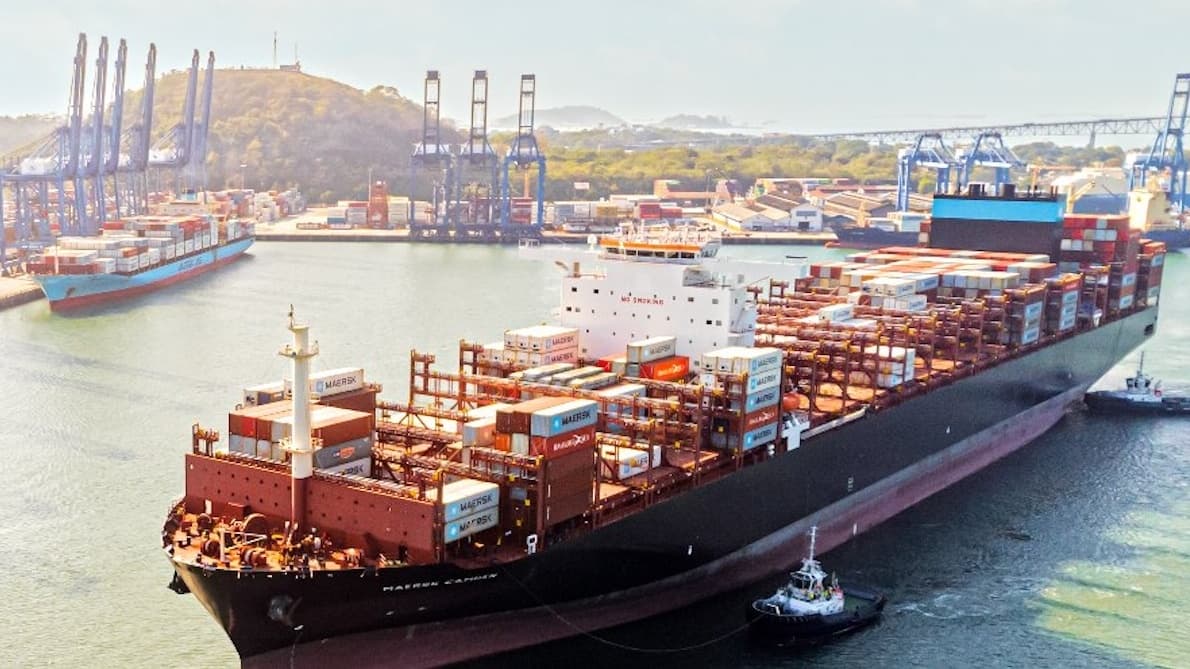

Operations at the Balboa (Pacific) and Cristobal (Atlantic) container terminals have been placed under direct administrative and operational control of the Panamanian State following enforcement actions at the terminals, immediately affecting terminal access, gate operations, and berth assignment procedures.
What changed on the ground: immediate operational impacts
Panamanian authorities physically entered the terminals formerly run by subsidiary Panama Ports Company (PPC), barred PPC representatives from the sites, and assumed control of staffing and operational directives. Vessel planners, liner operators, and trucking companies handling drayage were notified that point-of-contact and access protocols were replaced by state-appointed managers. The handover disrupted routine communications and raised short-term questions around container dwell time, crane scheduling, and security clearances for yard personnel.
Operational elements affected
- Berth scheduling and pilot coordination — temporary reassignment to state control and interim operators changed berth windows.
- Terminal gate operations — administrative access for carriers and third-party logistics providers was suspended pending new directives.
- Labour and staffing — employees were instructed to comply with government instructions and were temporarily transferred out of PPC employment rosters.
- Health & safety oversight — operator change raised concerns over continuity of safety management systems and emergency response plans.
Timeline and stakeholders
The sequence of events is short but consequential:
| Date | Event | Primary Stakeholders |
|---|---|---|
| Jan. 29 | Supreme Court ruling: concession deemed unconstitutional | Panama Supreme Court, PPC, CK Hutchison |
| Subsequent days | State takes physical control of Balboa and Cristobal | Panamanian authorities, PPC, terminal staff |
| Interim | Temporary operations assigned (e.g., APM Terminals at Balboa) | APM Terminals, Maersk, Mediterranean Shipping Co. |
Key corporate players
- CK Hutchison Holdings Limited — former concessionaire via PPC.
- APM Terminals (Maersk) — engaged as temporary operator at Balboa.
- Mediterranean Shipping Co. — reported to be involved in Atlantic-side operations at Cristobal.
- Panama State authorities and the national port authority — now steering long-term procurement and eventual re-tender.
Legal and commercial backdrop
The transfer follows a judicial determination that the concession contract with PPC was unconstitutional. While the State asserts full authority to administer and solicit new long-term contracts, the former operator regards the takeover as unlawful and is exploring legal options. From a commercial perspective, the scenario creates uncertainty for shipping lines and forwarders who programmed rotations and port calls around established terminal routines.
Contractual flashpoints
- Concession validity — the Supreme Court ruling voided prior contractual guarantees.
- Sale negotiations — planned asset sales to Mediterranean Shipping Co. and BlackRock were complicated by regulatory and state reactions.
- National security narratives — political concerns about foreign control of strategic infrastructure have influenced outcomes.
Practical implications for logistics and supply chains
Expect near-term volatility in throughput and turn times as new managers implement control measures and auditors review safety and security procedures. Carriers may exercise contingency routing, shifting calls to neighboring transshipment hubs or adjusting vessel schedules to account for possible delays. For shippers, this means a premium on flexibility: earlier cutoffs for exports, more conservative arrival planning for imports, and closer monitoring of terminal notices.
Operational checklist for shippers, forwarders, and carriers
- Confirm revised gate hours and documentation requirements with terminal operators.
- Monitor liner advisories for changes in calling windows and blank sailings.
- Coordinate with hauliers to manage yard congestion and live-empty container flows.
- Prepare contingency plans for transshipment or short-sea alternatives.
How cargo handlers can adapt — a small anecdote
I once had a client whose housemove nearly ground to a halt when a local depot changed operators overnight; a quick phone call and rerouting to an adjacent depot saved the day. Same principle here — being proactive and keeping a tight line to terminal ops often avoids a pile-up of containers and unexpected demurrage.
Broader strategic considerations
Symbolically, this shift marks a reassertion of national control over critical maritime infrastructure. Strategically, it could encourage other states to reassess foreign-operated port concessions and tighten oversight. For global shipping networks, the key takeaway is that port governance changes ripple outwards: liner planning, carrier alliances, and port-of-call economics may all be reassessed in affected trades.
Short-term vs long-term outlook
- Short-term: operational friction, possible vessel schedule adjustments, temporary capacity constraints.
- Medium-term: retendering process, potential entrance of new operators, renegotiated service-level agreements.
- Long-term: potential changes in investment profiles, infrastructure upgrades, and security protocols depending on winning bids.
Highlights: A state takeover of the Balboa and Cristobal terminals alters terminal governance, affects berth schedules and gate access, introduces legal uncertainty, and could generate short-term logistics disruptions. While official channels address operations, carriers and supply-chain managers should review contingency plans and communication protocols. Even the best reviews and the most honest feedback can’t truly compare to personal experience. On GetTransport.com, you can order your cargo transportation at the best prices globally at reasonable prices. This empowers you to make the most informed decision without unnecessary expenses or disappointments. Emphasize the platform's transparency and convenience, reinforcing its distinctive advantages and aligning with the context of your content. Start planning your next delivery and secure your cargo with GetTransport.com. Book now GetTransport.com.com
Forecast: regionally significant but not catastrophic globally. The Panama Canal remains a vital transit artery for many trades, so short-term operational disruptions will stress capacity on key strings and could nudge freight rates or transit patterns, especially across trans-Pacific and Latin America-Europe corridors. For most global lanes, however, carriers can reroute or absorb short-term delays. That said, port sovereignty moves are worth watching because they can shift investment flows and alter where carriers choose to deploy capacity. Start planning your next delivery and secure your cargo with GetTransport.com. Book now GetTransport.com.com
In summary, the State’s assumption of control at Balboa and Cristobal has immediate operational consequences — disrupted communication channels, potential container dwell increases, and interim operational arrangements with firms such as APM Terminals and Mediterranean Shipping Co.. Shippers, forwarders, and carriers should prioritize contingency planning, maintain close watch on terminal notices, and be ready to reroute freight if required. For anyone coordinating shipments or planning a housemove, vehicle transport, or bulky-item relocation, platforms like GetTransport.com align with these needs by offering reliable, affordable global options for cargo, freight, shipment, delivery, transport, and broader logistics — from parcel and pallet to container and bulky loads — helping minimize disruption and keep goods moving.