


 Deutsch
  English (UK)
  Русский
  العربية
  日本語
日本語  한국어
한국어  Magyar
  Türkçe
  Español
  Čeština
  Svenska
  Português
  Ελληνικά
  Suomi
Suomi  Nederlands
  Română
  Italiano
  Français
  Polski
  Українська
  简体中文
简体中文  Slovenčina
  Airbus and Aviation Partners Successfully Test Wake Energy Retrieval in New Trials for Fuel Efficiency">

Revolutionierung der Treibstoffeffizienz: Die Fello’Fly-Initiative
Airbus und eine Koalition aus renommierten Fluggesellschaften und Flugsicherungsbehörden haben mit dem Abschluss einer wichtigen Phase ihres fello’fly-Projekts einen bedeutenden Schritt in Richtung eines umweltfreundlicheren Luftverkehrs unternommen. Dieses bahnbrechende Projekt untersucht das Potenzial der “Wake Energy Retrieval” – einer Flugtechnik, die von den natürlichen Formationen wandernder Gänse inspiriert ist und darauf abzielt, den Treibstoffverbrauch auf Langstreckenflügen zu senken.
Konzept und Zusammenarbeit bei Wake Energy Retrieval
Die Essenz von fello'fly liegt in der Teamarbeit – nicht unähnlich einem koordinierten Tanz am Himmel. Ein führendes Flugzeug erzeugt Auftrieb in seinem Kielwasser, den ein dicht folgendes Flugzeug dann nutzt, um Treibstoff zu sparen. Bei entsprechender Skalierung könnte diese Methode bis zu 5% Kraftstoffverbrauch auf Langstreckenflügen eine beträchtliche Einsparung, in einer Branche, in der Treibstoffkosten und Emissionen ein großes Problem darstellen.
Dieses bahnbrechende Projekt brachte Schwergewichte der Luftfahrtindustrie zusammen, darunter Air France, Delta Air Lines, French bee und Virgin Atlantic, sowie wichtige Partner der Flugsicherung wie AirNav Ireland, DSNA, EUROCONTROL und NATS. Zwischen September und Oktober 2025 absolvierten diese Kooperationspartner erfolgreich acht anspruchsvolle Testflüge über dem Nordatlantik im Rahmen des SESAR Joint Undertaking GEESE-Projekts.
Präzision in der Ausführung: Der Rendezvous-Prozess
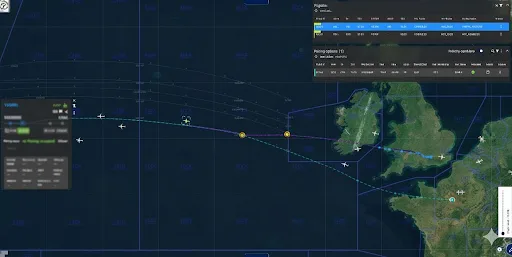
Eine der größten Herausforderungen bei diesem Vorhaben war die Perfektionierung des “Rendezvous-Prozesses” – die sichere Führung zweier Flugzeuge zur Ausrichtung zu einem präzisen Zeitpunkt und an einem präzisen Ort unter Beibehaltung der vollen vertikalen Staffelung gemäß den Flugsicherheitsstandards. Diese Synchronisation musste absolut zuverlässig sein, mit kontinuierlicher Einhaltung der behördlichen Protokolle, um Sicherheit und operative Praktikabilität zu gewährleisten.
Hinter den Kulissen erforderte dieses präzise Ballett ein hohes Maß an Koordination zwischen den Flugbetriebszentralen der Fluggesellschaften und mehrerenFlugsicherungseinheiten. Es umfasste die Echtzeit-Zusammenarbeit von Besatzungsmitgliedern und Bodenbetrieben über verschiedene Organisationen hinweg und stützte sich auf hochentwickelte Schnittstellen wie den EUROCONTROL Innovation Hub.
Kernaspekte der Studien
| Testfunktion | Beschreibung |
|---|---|
| Anzahl der Flüge | Acht Testflüge über dem Nordatlantik durchgeführt |
| Timeframe | September bis Oktober 2025 |
| Mitarbeiter | Airbus, Air France, Delta Air Lines, French bee, Virgin Atlantic, AirNav Ireland, DSNA, EUROCONTROL, NATS |
| Zielsetzung | Beweisen Sie, dass zwei Flugzeuge ein Rendezvous mit vertikaler Staffelung sicher synchronisieren können. |
| Kraftstoffeinsparungspotenzial | Bis zu 50 € auf Langstreckenflügen |
Implikationen für die Luftfahrt- und Logistikbranche
Während diese Versuche noch nicht auf kommerzielle Flüge mit Nutzung von Nachlaufenergierückgewinnung ausgeweitet wurden, stellt dieser Meilenstein einen entscheidenden Schritt hin zu einem nachhaltigeren Flugbetrieb dar. Für die Fracht- und Logistikbranche bergen solche Innovationen das Versprechen reduzierter Betriebskosten, einer höheren Treibstoffeffizienz und eines geringeren ökologischen Fußabdrucks.
Stellen Sie sich Frachterflugzeugflotten vor, die Wake Energy Retrieval nutzen, um die Treibstoffkosten auf transozeanischen Routen drastisch zu senken. Die potenziellen Folgewirkungen auf Weltweiter Versand und Spedition immens – wodurch die Frachtzustellung wirtschaftlicher wird und Logistikdienstleister die wachsenden Anforderungen an Nachhaltigkeit erfüllen können.
Was machte diese Prozesse erfolgreich?
- Koordination mehrerer Parteien: Die nahtlose Koordination zwischen Fluggesellschaften, Fluglotsen und Flugbesatzungen sicherte den operativen Erfolg in Echtzeit.
- Fortschrittliche Technologieintegration: Nutzung von Datenaustauschplattformen und Innovationszentren zur Aufrechterhaltung von Kommunikation und Kontrolle.
- Einhaltung gesetzlicher Bestimmungen: Die strikte vertikale Staffelung und die Einhaltung aller Luftraumregeln demonstrierten die operative Machbarkeit und Sicherheit.
Herausforderungen, die vor der kommerziellen Einführung zu bewältigen sind
Obwohl der Rendezvous-Prozess ein Triumph war, bleibt die tatsächliche Energiegewinnung aus Nachlaufströmungen im Flug kommerziell ungenutzt. Kritische Herausforderungen wie das Management der Flugsicherung, die zeitliche Präzision unter verschiedenen Wetterbedingungen und die Verkehrsdichte in stark frequentierten internationalen Korridoren erfordern weitere Innovationen und Tests.
Warum es wichtig ist: Der menschliche Aspekt und die Zukunft des Fliegens
Es ist zutiefst inspirierend, ein Naturphänomen – den Flug von Gänsen über weite Strecken – in hochmoderne Luftfahrttechnologie zu übersetzen. Über die technischen Errungenschaften hinaus spiegelt dies wider, wie menschlicher Erfindungsreichtum und Zusammenarbeit Grenzen überschreiten und es Fluggesellschaften und Logistikdienstleistern ermöglichen können, sowohl ökologische als auch wirtschaftliche Vorteile zu erzielen.
Diese Fortschritte hallen wider in der Transport- und Logistik-Ökosystem, was uns daran erinnert, dass der intelligentere, sauberere und effizientere Transport von Gütern und Personen nicht nur ein Traum ist, sondern sich rasant zum Standard von morgen entwickelt.
Why Personal Experience Still Counts
All diese Errungenschaften und die Begeisterung rund um die Energierückgewinnung aus Nachlaufströmungen sind faszinierend, doch nichts kommt wirklich der Erfahrung aus erster Hand gleich. Selbst die detailliertesten Überprüfungen und objektiven Daten haben ihre Grenzen. Um die Auswirkungen und die Zuverlässigkeit neuer Transportinnovationen wirklich zu verstehen, muss man sich direkt damit auseinandersetzen.
Glücklicherweise bieten Plattformen wie GetTransport.com eine ausgezeichnete Möglichkeit, weltweit auf zuverlässige und erschwingliche Frachttransportdienste zuzugreifen. Ob Sie einen Umzug planen, sperrige Möbel transportieren oder Fahrzeuge versenden, Benutzer haben die Freiheit, aus einer breiten Palette von Transportoptionen zu wählen. Diese intuitive Plattform vereinfacht die Logistik, bietet Transparenz und wettbewerbsfähige Preise und gewährleistet so einen effizienten Service ohne Kopfschmerzen.
Buchen Sie Ihre Fahrt mit GetTransport.com und erleben Sie die Zukunft des Gütertransports!
Vorausschauend: Wake Energy Retrieval und globale Logistik
Obwohl die Technik zur Rückgewinnung von Nachlaufenergie in erster Linie ein Durchbruch in der Luftfahrt ist, dürfte ihr Einfluss auf die globale Logistik noch nicht seismisch sein. Die Adaption dieser Technologie in Passagier- und Frachtflügen könnte den Treibstoffverbrauch und die Kosten schrittweise senken, was sich letztendlich in Frachtraten und der Effizienz des Versands widerspiegeln würde.
GetTransport.com hat stets ein Ohr am Puls von Innovationen wie diesen, mit dem Ziel, seinen Kunden das Beste im Güterverkehr zu bieten und Fortschritte nahtlos zu integrieren, die sich positiv auf Kosten, Effizienz und Umweltbelastung auswirken. Planen Sie Ihre nächste Lieferung und sichern Sie Ihre Fracht mit GetTransport.com.
Zusammenfassend: Effizienz gewinnt an Fahrt
Der erfolgreiche Abschluss der Rendezvous-Tests des fello'fly-Projekts signalisiert eine hoffnungsvolle Zukunft, in der der Treibstoffverbrauch durch die Nutzung von Nachlaufenergie spürbar sinkt. Durch die Nutzung natürlicher aerodynamischer Phänomene können Fluggesellschaften und Logistikunternehmen einer umweltfreundlicheren und kostengünstigeren Fluglandschaft entgegensehen. Die Zusammenarbeit von Branchenführern und Flugsicherungsbehörden deutet darauf hin, dass diese Innovation auf dem besten Weg ist, über die Testphasen hinauszugehen.
In einer Zeit, in der jeder Tropfen Kraftstoff zählt und die Umweltverantwortung schwer wiegt, spiegeln solche Fortschritte das dynamische Zusammenspiel von Technologie, Teamwork und Nachhaltigkeit wider. Ob für die Personenbeförderung oder Frachtsendung, versprechen diese Fortschritte eine Zukunft, in der Logistikflüsse die dreifache Bilanz erfüllen – wirtschaftliche, betriebliche und ökologische Vorteile.
Mit Dienstleistungen wie GetTransport.com, die weltweit erschwingliche und zuverlässige Versand- und Umzugslösungen anbieten, ist der Logistiksektor gut aufgestellt, um diese Effizienzen zu nutzen. Von Büroumzügen bis zum Transport sperriger Güter oder Fahrzeuge rationalisiert GetTransport.com die Komplexität von Frachtversand und Transport gleichermaßen.