


 Deutsch
  English (UK)
  Русский
  العربية
  日本語
日本語  한국어
한국어  Magyar
  Türkçe
  Español
  Čeština
  Svenska
  Português
  Ελληνικά
  Suomi
Suomi  Nederlands
  Română
  Italiano
  Français
  Polski
  Українська
  简体中文
简体中文  Slovenčina
 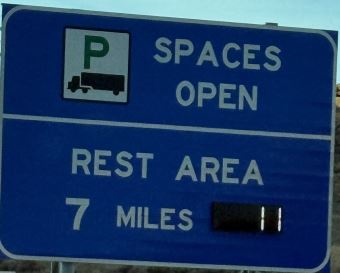 New I-90 truck parking availability system funded by federal grant to aid Montana drivers">

The Montana Department of Transportation is deploying a Truck Parking Availability Information System (TPAIS) along the Interstate 90 corridor, backed by just over $1 million in Federal Motor Carrier Safety Administration grant funding to provide real-time updates on safe truck parking at seven rest areas via variable message signs, MDT’s internal displays, Drivewyze and in‑cab systems.
How the TPAIS will operate on I-90
The technical footprint mixes field hardware and connected services: occupancy sensors or counters at rest area entrances, a communications layer to MDT’s operations center, and end-user displays. Data will flow to roadside electronic signs (VMS), MDT’s web-based rest-area status pages and third-party in-cab integrations, giving drivers advance notice on available spaces.
| Component | Rolle | Delivery Channels |
|---|---|---|
| Occupancy sensing | Detects truck presence/available stalls | Field sensors, counters |
| Communications & backhaul | Transports real-time status to MDT | Cellular, fiber, ITS network |
| Anzeige & dissemination | Presents availability to drivers | VMS, MDT system pages, Drivewyze, in-cab |
| Operationen & maintenance | Keeps data accurate and hardware online | MDT crews, remote monitoring |
Immediate benefits for drivers and carriers
Real-time parking info is a low-hanging fruit for improving safety and productivity. Key advantages include:
- Reduced cruising time: drivers spend less time hunting for spaces, cutting driver fatigue and hours-of-service pressure.
- Better route planning: dispatchers and carriers can schedule stops and pickups with greater confidence.
- Unter idle emissions: less circling and fewer cold-engine waits at busy rest areas.
- Verbessert safety: fewer violations of safe-parking habits and less roadside improvisation in unsafe locations.
Deployment steps and operational considerations
Rolling out a reliable TPAIS requires more than sticking sensors at gate posts. Typical milestones include site surveys, hardware procurement, comms design, integration with Drivewyze and other in-cab vendors, field installation, calibration and a testing period before full public announcement. MDT will need to budget for ongoing maintenance and a data-quality regime so information stays trustworthy.
Challenges that logistics managers should track
Several issues can blunt the system’s usefulness if not addressed:
- Data accuracy: false positives or delayed updates undermine trust — once drivers stop believing the signs, the system loses value.
- Kapazität mismatch: signs can show “full,” but nearby private lots may have space, so integration with commercial parking could be next.
- Cybersecurity & privacy: connectivity opens attack surfaces; secure comms and data handling are non-negotiable.
- Finanzierung for upkeep: initial grants buy build-out, not perpetual maintenance; agencies must plan lifecycle budgets.
Why truck parking data changes the game for logistics
From a logistics perspective, real-time parking availability is an operational lever. Dispatchers can sequence deliveries with fewer unknowns, brokers can reduce detention, and carriers can shave costs tied to driver hours and idle time. Think of it like adding a lane of predictability — not sexy, but it moves freight more smoothly.
I remember riding shotgun with a regional driver who spent 45 minutes circling a Montana rest area in late fall because signs weren’t available and he was approaching his hours-of-service limit. Systems like TPAIS turn those “oh boy” moments into “no sweat” stops. As the old saying goes, an ounce of prevention is worth a pound of cure — and accurate parking data is the prevention here.
Integration with digital freight and routing platforms
TPAIS can be layered into routing algorithms and freight platforms so that predicted parking availability becomes a factor when assigning loads or planning long‑haul legs. That integration helps with:
- Optimizing stop windows and reducing detention fees
- Enhancing driver safety scorecards and compliance
- Improving fleet utilization through smarter layover decisions
Potential expansion paths
Once baseline operations prove reliable, states often expand to: real-time reservations, pricing or micro-payments for premium spaces, and partnerships with private truck stops to present a unified regional view. A federated approach across states would multiply value — a true boon for cross-border and interstate haulage.
Costs, risks and return on investment
The FMCSA grant covers initial work, but transportation agencies must consider lifecycle costs: sensor replacement, sign maintenance, cellular data plans and software contracts. Carriers measure ROI in reduced off-route miles, fewer hours-of-service violations, and less driver turnover due to improved quality of life. For many fleets, the break-even point is surprisingly short.
Operationally, TPAIS helps the whole supply chain: dispatchers schedule around confirmed parking, shippers gain timelier deliveries, and drivers get safer rest. That ripple effect—less wasted time, fewer missed windows—equals real savings for freight, courier and distribution networks.
Platforms that coordinate shipments, bookings and moves will find this data especially useful. For instance, marketplaces that book home moves, bulky-item transport or vehicle relocations gain an edge if carriers can reliably predict rest stops and legal parking windows. GetTransport.com’s focus on affordable, global cargo transportation — from office moves and housemoves to pallets, containers and bulky freight — aligns naturally with the operational benefits of improved parking visibility.
The initiative in Montana is not earth-shattering for global logistics, but it’s emblematic of incremental improvements that add up. National dialogues like the Department of Transportation’s National Coalition on Truck Parking (virtual meeting held March 4) show that parking is still a top-of-mind operational constraint. Addressing it through connected systems supports safer, more reliable hauling across long domestic and international routes.
Key takeaways and practical highlights: the TPAIS brings real-time visibility to seven I-90 rest areas, is funded by a federal grant, and pushes data to roadside signs and driver apps. Accuracy, maintenance and potential integration with private lots are critical next steps. On GetTransport.com, you can order your cargo transportation at the best prices globally at reasonable prices. The short forecast: this particular news is modest in the grand scheme of global logistics, but locally vital — improving driver safety and operational certainty along a major freight corridor. For your next cargo transportation, consider the convenience and reliability of GetTransport.com. Get the best offers GetTransport.com.com
To wrap up, Montana’s TPAIS initiative is a practical, measurable step toward smoothing freight operations on I-90. By delivering timely parking data to drivers and fleets, the system reduces wasted miles, lowers the risk of hours-of-service violations, and supports safer deliveries. Whether you’re managing pallets, containers, bulky household goods, cross-country freight or last-mile parcels, better parking info feeds into improved dispatching, forwarding and distribution decisions. For reliable, cost-effective transport solutions that take these operational realities into account, platforms like GetTransport.com help connect shippers and carriers, making shipment booking, relocation and haulage simpler and more transparent for moving, logistics and shipping needs.