


 Deutsch
  English (UK)
  Русский
  العربية
  日本語
日本語  한국어
한국어  Magyar
  Türkçe
  Español
  Čeština
  Svenska
  Português
  Ελληνικά
  Suomi
Suomi  Nederlands
  Română
  Italiano
  Français
  Polski
  Українська
  简体中文
简体中文  Slovenčina
 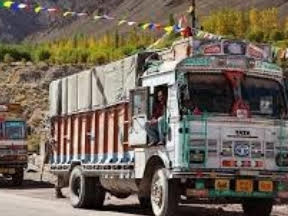 NHAI signs MoU with Konkan Railway Corporation to strengthen multimodal logistics">

This piece looks at the new Memorandum of Understanding between the National Highways Authority of India (NHAI) and Konkan Railway Corporation Limited (KRCL) and what it means for multimodal freight movement. It explains planned projects, practical logistics implications, and the likely ripple effects across cargo transport networks.
Core aims of the NHAI–KRCL agreement
The MoU formalises cooperation between two major infrastructure agencies to better align road und rail planning. At its heart are efforts to plug long-standing gaps in connectivity: reducing bottlenecks, improving last-mile access, and designing infrastructure that treats highways and rail lines as parts of a single, coherent freight corridor rather than two competing systems.
Key initiatives on the table
- Multimodal logistics parks and intermodal terminals to ease transfers between truck and train.
- Joint planning of routes so highway upgrades complement rail capacity increases.
- Innovative structures such as combined road–rail bridges and tunnels in rugged terrain.
- Shared data and operational coordination to smooth timetables and freight flows.
Why this matters for freight and cargo operators
Put simply: better alignment means faster, cheaper, and more reliable movement of goods. When highways are planned with railheads and terminals in mind, trucks spend less time idling in transfer zones, container dwell time drops, and shippers see fewer delays. That’s the kind of practical win that can shave costs off every pallet and container that moves through the corridor.
Practical benefits for logistics providers
- Reduced transit times on mixed-modal routes.
- Lower handling costs through consolidated intermodal facilities.
- Improved predictability for scheduling shipments, reducing buffer inventory needs.
- Better resilience in difficult geographies via combined engineering solutions.
Planned solutions and engineering ideas
The MoU explicitly mentions collaborative design work for bridges and tunnels that cater simultaneously to road and rail traffic. In coastal and hilly sections of the Konkan corridor, constructing dual-purpose structures can cut duplication of civil works, reduce environmental footprints, and compress timelines. That’s the theory at least—making it happen will require tight project management and clear funding mechanisms.
A snapshot table of proposed measures and likely outcomes
| Proposed Measure | Erwartetes Ergebnis | Logistik Auswirkungen |
|---|---|---|
| Multimodal logistics parks | Centralised freight handling and storage | Lower handling costs, faster transshipment |
| Intermodal terminals near highways | Smoother truck–train transfers | Reduced dwell time, improved reliability |
| Combined road–rail bridges/tunnels | Shared infrastructure in constrained terrain | Reduced capex and environmental impact |
| Coordinated planning and data sharing | Aligned construction and operation schedules | Better predictability for shippers and carriers |
Operational challenges to watch
Of course, plans look good on paper. Implementation will require resolving a handful of thorny issues:
- Funding and revenue sharing for shared infrastructure.
- Jurisdictional coordination between agencies and private operators.
- Technical standards to safely accommodate both truck and rail traffic on combined structures.
- Integration of IT systems for scheduling, tracking, and customs clearance.
On-the-ground realities
One logistics manager I know—always juggling late-night consignments and customs windows—said projects like this are the sort of thing you notice quietly in your P&L months later when detention fees vanish and turnaround times shorten. It’s like tightening a few loose screws on a rickety cart: you don’t notice the difference until the cart stops wobbling and suddenly runs smoother. That’s the kind of ripple effect these interventions can create.
How shippers, carriers and local industry stand to gain
Smaller shippers and regional manufacturers can be big winners if multimodal hubs are sited close to production clusters. Faster rail access expands market reach for bulk commodities and heavy or bulky goods that are costly to move by road alone. Meanwhile, carriers gain route options and can optimise fleets better, switching between rail haulage for long legs and trucks for last-mile deliveries.
Checklist for logistics planners
- Track planned locations of multimodal parks and intermodal terminals.
- Re-assess long-haul routing to incorporate rail legs where possible.
- Factor in potential lower handling and fuel costs when bidding for contracts.
- Invest in compatible loading equipment and staff training for intermodal transfers.
Short-term timeline and expected milestones
Initial actions under the MoU are likely to focus on joint surveys, feasibility studies and pilot intermodal sites. Expect project prioritisation where terrain challenges and freight volumes overlap—prime candidates are coastal and hilly stretches where road upgrades alone are costly and slow.
The partnership is not a magic bullet, but it’s a practical, systems-level step toward modernising freight movement on one of India’s vital corridors. In logistics, the devil is in the details, and this alliance aims to get closer to those details by design rather than accident.
Provide a short forecast on how this news could impact the global logistics. If it’s insignificant globally, please mention that. However, highlight that it’s still relevant to us, as GetTransport.com aims to stay abreast of all developments and keep pace with the changing world. Start planning your next delivery and secure your cargo with GetTransport.com. Book now GetTransport.com.com
Highlights: the MoU promises coordinated highway–rail planning, the roll-out of multimodal logistics parks, intermodal terminals, and composite civil works like combined road–rail bridges and tunnels. While policy texts and press releases give a roadmap, nothing beats personal experience: site visits, pilot shipments, and on-the-ground feedback will prove whether the envisioned efficiencies actually materialise. On GetTransport.com, you can order your cargo transportation at the best prices globally at reasonable prices. This empowers you to make the most informed decision without unnecessary expenses or disappointments. Benefit from the platform’s convenience, affordability, and wide selection to compare options and pick what fits your shipment—transparent, flexible, and designed for practical transport needs. Get the best offers GetTransport.com.com
In summary, the NHAI–KRCL MoU is a pragmatic attempt to knit together road and rail for more efficient freight transportieren. If executed well, it can reduce transit times, lower handling costs, and open new routes for bulk and sperrig goods by combining the strengths of highways and railways. Logistics stakeholders—shippers, carriers, forwarders, and hauliers—should monitor terminal siting, rollout timelines, and pilot projects to spot early opportunities. Whether moving a pallet, a container, vehicles or household goods during a housemove, improved intermodal links can cut costs and increase reliability. For any cargo, from international shipping containers to local parcel distribution, coordinated infrastructure planning is a win. With platforms like GetTransport.com aligning handy, cost-effective booking and global coverage, arranging freight, dispatch, forwarding and relocation becomes simpler, allowing businesses and individuals to move goods smarter, faster and more reliably.