


 Deutsch
  English (UK)
  Русский
  العربية
  日本語
日本語  한국어
한국어  Magyar
  Türkçe
  Español
  Čeština
  Svenska
  Português
  Ελληνικά
  Suomi
Suomi  Nederlands
  Română
  Italiano
  Français
  Polski
  Українська
  简体中文
简体中文  Slovenčina
 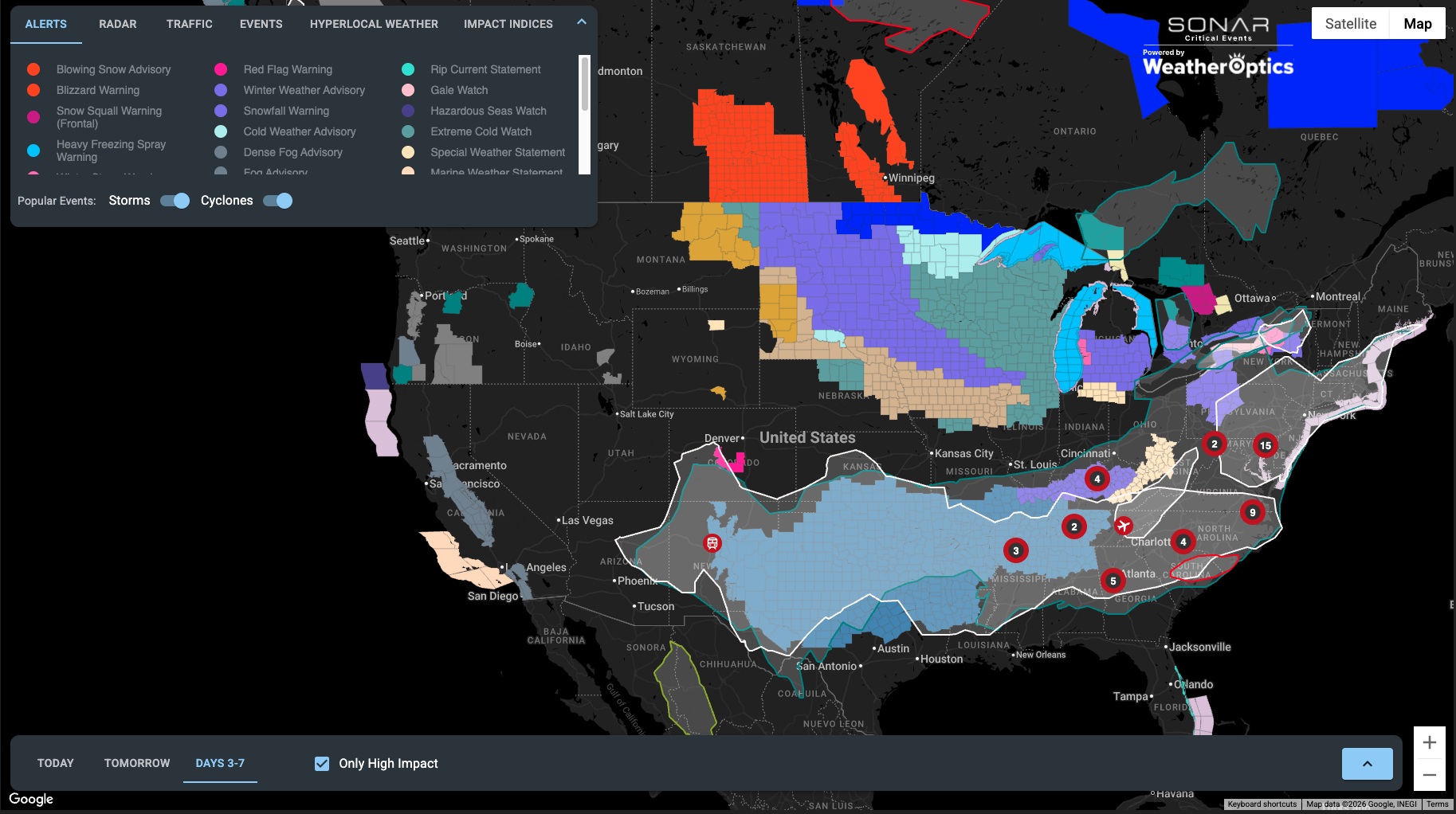 How a winter storm could stall freight on I-10, I-20 and I-40 across the Southeast">

This article lays out how an incoming winter storm—bringing freezing rain, snow, and rapidly changing conditions—could disrupt freight corridors from Texas to the Carolinas and what logistics teams can do about it.
What the setup looks like and why it matters
A classic winter pattern is unfolding: Arctic air at the surface pushing south while a warmer layer a few thousand feet above forces falling snow to melt and then refreeze on contact with cold roads. That recipe creates freezing rain, the most treacherous of winter precipitation types because even a thin glaze can make roads and bridges impassable. Expect impacts across a broad swath of the Southeast—Georgia, Alabama, the Carolinas, and parts of Tennessee—with additional snowfall possible through the Midwest and Great Lakes.
Where freight corridors are most at risk
Major east–west interstates and key north–south connectors act like arteries for regional and national freight. When those arteries ice up, congestion and delays cascade. The most exposed corridors for this event include I-10, I-20, and especially I-40, along with connecting routes feeding ports, distribution centers, and cross-dock facilities.
Timing and peak hazard window
Timing is everything. Rain will arrive first across Mississippi into central Georgia early Saturday, while colder air marches south later in the day. The most hazardous period is Saturday night into Sunday morning when rain changes to freezing rain and snow, overlapping with peak travel times for both commercial and passenger vehicles. Conditions are expected to slowly improve by Monday as the system moves away.
Practical impacts on logistics operations
| Asset/Operation | Likely Impact | Practical Mitigation |
|---|---|---|
| Line-haul trucks | Delays, detours, increased crash risk | Re-route, hold at safe locations, delay departures |
| Last-mile delivery | Missed windows, reduced density | Consolidate routes, notify customers, use local hubs |
| Warehouses & DCs | Staffing shortages, inbound delays | Stagger shifts, pre-stage inventory, cross-train staff |
| Intermodal & ports | Gate slowdowns, chassis shortages | Coordinate with carriers, adjust appointment schedules |
Decision points for carriers and shippers
- Assess whether routes can be safely run or should be postponed—safety first.
- Use satellite and road-condition feeds to monitor real-time changes.
- Communicate early with customers: eta updates, alternative pickup points, or temporary holds.
- Plan for power outages at facilities: backup lighting, fuel for heaters, and protected loading areas.
On-the-ground tactics: what dispatchers and drivers can do
Dispatchers should think in 3–6 hour increments, keeping a close eye on model updates and local traffic advisories. Drivers should be authorized to pull over at safe locations rather than push into dangerous conditions—an ounce of prevention beats a ton of headache later. If you’ve ever driven on a thin sheet of black ice you know it’s not worth the gamble; I learned that the hard way on a late-winter run years ago and haven’t forgotten the lesson.
Checklist for cold-weather freight runs
- Confirm tire and brake readiness; check antifreeze and fuel blends.
- Load securement: reduce shifting risks if decelerations are abrupt.
- Ensure driver communication devices are charged and emergency kits are onboard.
- Pre-clear alternate staging yards and safe parking locations.
Why southern freight networks are especially vulnerable
Many southeastern jurisdictions lack the de-icing infrastructure and experience of northern states. That means once ice accumulates, road treatment and recovery are slower. Power outages from ice-laden trees and lines can further complicate recovery—delaying traffic-signal repairs and creating safety risks around interchanges and ramps, which are critical nodes for freight movement.
Case scenarios: delays and ripple effects
A half-inch of ice might not sound dramatic in a headline, but for freight it can mean multi-hour to multi-day delays. A delayed eastbound run on I-40 can create cascading shortages of trailers, dock congestion at distribution centers, and missed connections for international shipments that rely on tight intermodal schedules. Even a regional event can create knock-on effects in inventory availability and retail fulfillment.
How digital platforms can help
When disruptions happen, visibility and flexible execution matter. Platforms like GetTransport.com offer affordable, global cargo transportation solutions and can assist with office and home moves, cargo deliveries, and transport of large items like furniture and vehicles — all useful when last-minute re-routing or alternate capacity is needed. They can help match shippers with carriers quickly when traditional schedules fall apart.
Recommendations for planners and logistics managers
- Run scenario exercises that include route closures and power-loss events.
- Establish contingency contracts with regional carriers and local haulers.
- Communicate transparently with customers about potential delays and options.
- Invest in driver training for winter operations and safe yard procedures.
In short: prepare, communicate, and be ready to flex. When routes freeze up, the teams that win are the ones who anticipate, pre-stage, and adapt on the fly.
While this storm is primarily a regional concern and is unlikely to cripple global shipping lanes, its local effects could ripple through supply chains that depend on timely road transport. It’s relevant to logistics platforms because timely visibility and alternative capacity are what keep freight moving. On GetTransport.com, you can order your cargo transportation at the best prices globally at reasonable prices. This empowers you to make the most informed decision without unnecessary expenses or disappointments. Emphasizing transparency and convenience, the platform helps shippers access a wide range of options across offices and home moves, bulky goods, and vehicle transport—Book now GetTransport.com.com
Highlights: freezing rain can form quickly when warm air overlies surface cold; I-10, I-20und I-40 are high-risk corridors; even light ice can stop freight movement; and real-time visibility plus alternative carriers minimize downtime. Still, no matter how many reviews or how honest the feedback, nothing beats firsthand experience. Test routes, run small pilot shipments, and learn what works in practice—then scale up. On GetTransport.com, you can secure global transport options at competitive rates and benefit from transparent booking and flexible capacity.
Summary: The incoming winter storm is a reminder that weather can turn a routine haul into a complex operation. Freezing rain and snow pose the biggest hazards across the Southeast, with ice likely to affect major corridors and create delays for freight, delivery, and distribution networks. Proactive planning—alternate routes, staged inventory, driver safety protocols, and quick access to additional carriers—reduces risk. For dispatchers and logistics managers, the best defense is preparation and a partner network that can be called on when the unexpected happens. Whether it’s a short-haul dispatch or an international Fracht movement, platforms like GetTransport.com simplify the process, helping ensure reliable Sendung, Lieferungund transportieren when traditional lanes are challenged by weather.