


 Deutsch
  English (UK)
  Русский
  العربية
  日本語
日本語  한국어
한국어  Magyar
  Türkçe
  Español
  Čeština
  Svenska
  Português
  Ελληνικά
  Suomi
Suomi  Nederlands
  Română
  Italiano
  Français
  Polski
  Українська
  简体中文
简体中文  Slovenčina
  Eastern ports and railways prepare for heavy snow and ice — operational responses and logistics impacts">

Storm on the horizon: what operators are preparing for
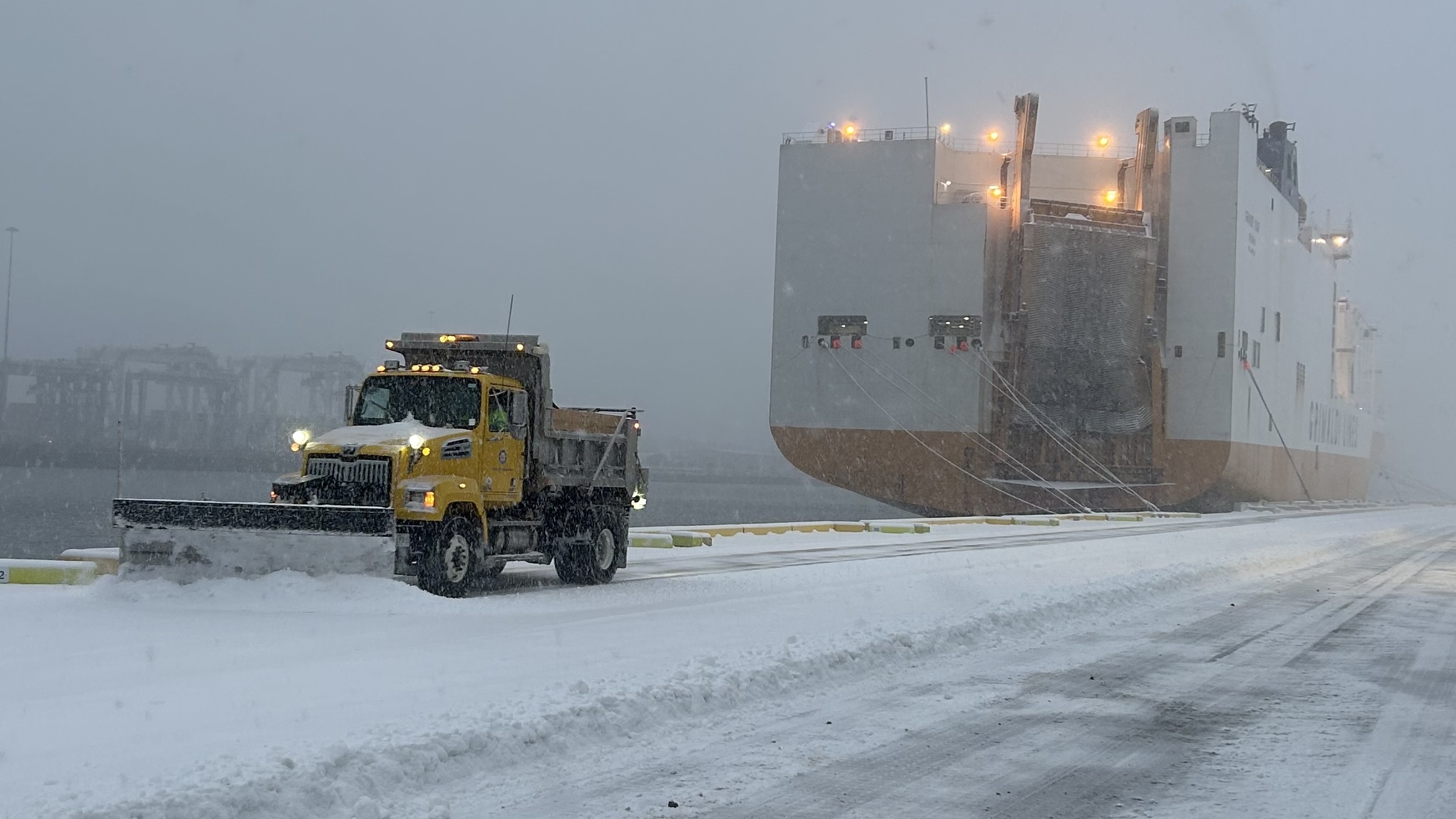
A potent winter system is forecast to sweep along the I-95 corridor, bringing a mix of snow, ice and subfreezing temperatures from the Midwest up through the Northeast; this piece outlines how East Coast ports and railroads are gearing up and what shippers should expect.
Scale and timing
The weather pattern covers a vast area — potentially affecting some 200 million people — with the upper eastern seaboard expecting the worst conditions to arrive early Sunday and persist into Monday. Forecasts for the New York City area call for roughly 4–8 inches of snow, while parts of the mid-Atlantic may see 1–3 inches turning to rain, followed by subfreezing conditions that slow recovery.
Who’s watching and coordinating
Major port authorities and terminal operators are in active communication, prioritizing safety while trying to maintain flow. The Port of New York and New Jersey is coordinating with terminal operators and stakeholders; any operational changes will be shared with the port community. Similarly, ports from Baltimore to Virginia and Wilmington are running contingency plans and operational adjustments.
On-the-ground measures at key ports
| Port / Terminal | Forecast | Planned actions |
|---|---|---|
| Port of New York & New Jersey | 4–8 in. of snow | Monitoring, collaborative operational decisions, real-time alerts to community |
| Port of Baltimore — Seagirt | Snow and ice | Saturday limited hours (6 a.m.–12 noon); closed Monday |
| Dundalk Marine Terminal | Snow/ice | Ports America Chesapeake will shut down on Monday; brine/salt and 12-hour plowing shifts |
| Port of Virginia (NIT, VIG) | 1–3 in., then rain | NIT/VIG gates opening 8 a.m. Monday; some gates closed; vessel & rail ops continue weather permitting |
| Port of Wilmington (Enstructure) | Snow/ice tracking | Year-round safety posture, close coordination with partners |
Railroads and network readiness
Rail companies are scaling up monitoring and staff coverage. CSX has signaled expectations of ice from Nashville through Georgia with snow farther north, and will have senior leadership coverage around the clock in key areas and the network center. Norfolk Southern advised that no intermodal terminal or gate closures were planned at the time of the advisory, while still keeping teams ready to adapt.
Practical implications for shippers and carriers
When winter turns nasty, the ripple effects can be surprising — a delayed gate at noon can mean a missed vessel or a rail slot lost for a day. Here are concrete steps logistics teams are taking and what shippers should consider:
- Safety-first operations: brine and salt pretreatment, continuous plowing shifts and restricted gate hours to protect workers and equipment.
- Staggered gate scheduling: some terminals will limit hours or open later to allow for de-icing and staffing adjustments.
- Rail coordination: status of rail cargo will depend on railroad decisions; expect adjustments to intermodal schedules.
- Real-time communication: watch port authority alerts, terminal advisories and carrier notices for the latest gate and vessel updates.
Quick checklist for shippers and logistics managers
- Confirm scheduled appointments and allow buffer time for delays.
- Prioritize critical shipments and consider rerouting or rescheduling non-urgent loads.
- Communicate with consignees and carriers; confirm gate hours before dispatch.
- Prepare documentation and contingency plans for rail or road disruptions.
How these disruptions ripple through supply chains
Even short closures can cascade: a closed gate can hold trucks in queue, causing driver shortage at other terminals, delaying inland deliveries and increasing detention and demurrage exposure. Perishables and time-sensitive freight are especially vulnerable. In a pinch, firms may lean on alternative modes — local truckers, expedited courier services or rerouted rail — but those solutions come at a cost.
It’s worth remembering that while ports may declare vessel and rail operations “weather permitting,” the real test is the follow-through on road networks and yard operations. When subfreezing temps follow precipitation, recovery slows — and that’s when the ticking clock for a supply chain really gets loud.
Preparedness tips for logistics providers
Some tried-and-true measures keep operations resilient. First, invest in pre-treatment (brine) and clear snow routes early. Second, keep a senior operations presence running 24/7 during the event. Third, communicate humanely: drivers and dock teams need clear, realistic windows and backup plans. As the saying goes, “plan for the worst, hope for the best,” and make sure your partners do the same.
What platforms and service providers can do
Digital platforms that aggregate carrier options and provide transparent pricing help shippers pivot quickly during disruptions. When terminals curtail hours or rail lanes slow, being able to spot and book the next best option — whether for a container, pallet, bulky item or vehicle — makes a real difference.
Highlights and a reality check
Key takeaways: ports along the I-95 corridor are activating snow and ice plans, some terminals are limiting hours or closing, and railroads have elevated staffing and monitoring. However, even the clearest advisories and best-laid plans can’t replicate boots-on-the-ground experience. On GetTransport.com, you can order your cargo transportation at the best prices globally at reasonable prices. This gives you flexibility to compare options, avoid unnecessary expense, and choose reliable transport alternatives when traditional routes are constrained — Book now GetTransport.com.com
Final summary
Ports and rail operators are taking sensible, safety-first steps to manage an impactful winter storm: pretreatment, adjusted gate hours, extra plowing shifts and round-the-clock oversight from rail network centers. Shippers should expect delays in Fracht und Fracht movements, keep documentation ready, and consider contingency routing. Platforms that offer transparent rates and diverse carrier options make it easier to arrange timely Sendung, Lieferungund transportieren alternatives. For anyone managing Logistik — be it shipping containers, pallets, bulky goods, or vehicle relocations — having flexible forwarding, dispatch and haulage options reduces exposure to disruption. GetTransport.com simplifies the search for affordable, reliable, and global transportation solutions, helping keep your parcels, containers and international shipments moving even when the weather throws a wrench in the works.