


 Deutsch
  English (UK)
  Русский
  العربية
  日本語
日本語  한국어
한국어  Magyar
  Türkçe
  Español
  Čeština
  Svenska
  Português
  Ελληνικά
  Suomi
Suomi  Nederlands
  Română
  Italiano
  Français
  Polski
  Українська
  简体中文
简体中文  Slovenčina
  Unterbrechung des Roten Meeres – Wie Reedereien in der Notlage reagieren">

Recommendation: Diversify courses for international trade, secure buffer inventories for key goods, and rebalance freight capacity across lines to blunt the impact of dropped shipments during peak congestion. cosco and other shippers should publish real‑time information feeds to the shipper community, noting trends in south routes and updating return schedules.
Analysts cited a источник information feed showing swings in volumes, with international flows wavering last quarter, sometimes by 6–9% across routes. revenues across lines tightened as operators invested in diversified routes and port call patterns to reduce single‑point risk. The hinweis to partners about revised schedules and anticipated returns is critical in this environment, said industry watchers.
Implementation plan: Build a three‑layer response: (1) a dynamic routing framework that shifts courses when a chokepoint emerges; (2) a rotation of lines via multi‑carrier tenders, including cosco and other international operators; (3) automated freight tracking and pre‑cleared manifests integrated with ERP to shorten notice windows. These steps improve operations and reduce the risk of dropped goods by strengthening return flows toward south ports.
Financial guardrails focus on protecting revenues under pressure. Companies should renegotiate terms where possible, reserve liquidity for auto adjustments, and invest in buffer storage to weather times of congestion. The invested capital should yield measurable improvements in on‑time performance and dwell reduction, with a target return uplift in the last quarter of the year.
In practice, south corridors show improved resilience when lines share information and align schedules; last‑minute notices and cross‑dock pilots have trimmed delays. Shippers return on investment becomes more predictable when cosco and partner fleets maintain flexible tonnage, enabling international traffic to keep moving through south corridors despite constrained ports.
Practical playbook for navigating Red Sea disruption and safeguarding operations
Immediate action: lock capacity with at least two carrier lines and set a weekly update cadence with your team and external sources to avoid penalties and keep revenue flowing. Build a plan that supports case-by-case routing decisions and keeps vessels moving amid fluctuations.
- Routing and capacity portfolio
- Identify key volume lanes and build backup routes that bypass bottlenecks; using alternative passages reduces exposure to weekly volatility in rates and availability; document the rationale for each shift. If a route goes offline, switch to backup passages promptly.
- Establish a single source of truth for schedules and port calls, drawing on international authority data and other trusted information sources to inform decisions.
- Carrier diversification and fee management
- Engage with cosco and swiss-based operators, plus chinas-based carriers, to secure vessels and avoid single-source risk; negotiate flexible terms to handle dropped slots or schedule changes.
- Maintain visibility into fees and penalties; lock in favorable terms early and monitor rate cards to protect revenue margins.
- Maintain relationships with chinas partners to secure capacity and reduce exposure to disruptions in any single market.
- Operational planning and execution
- Translate the plan into actionable commands for ships and vessels; align with the built fleet and ensure crew and shore teams understand revised routing and port calls.
- Apply case-by-case guidance for port restrictions; assign owners and timelines for each action to minimize latency.
- Information governance and data sources
- Consolidate information from authorities, international bodies, and core sources; run weekly checks and publish concise updates to leadership and customers.
- Keep a clear data model and traceable provenance for schedules and movements to support auditability.
- Financial discipline and revenue protection
- Forecast revenue impact by scenario; model cost-to-serve under different routes; track volume shifts and any demand drops; prepare mitigations if volumes fall.
- Implement contingency cost controls to protect margins, including freight, handling, and fuel-related charges; monitor detention and demurrage exposure.
- Maritime risk governance and sustainability
- Keep operations compliant with international regulations, maintain ongoing dialogue with authorities, and pursue routes with lower emissions where feasible to support sustainability targets.
- Report last-mile performance and efficiency gains to stakeholders; align with long-term sustainability plans.
- Performance tracking and cadence
- Track KPIs for ships and vessels: on-time departure/arrival, plan compliance, and container dwell; publish a concise update weekly to executives.
- Review what dropped in the previous cycle; adjust the plan accordingly and keep courses oriented toward resilience.
Real-time risk assessment criteria to guide voyage decisions
Recommendation: implement a real-time risk score for voyage decisions, using a 0–10 scale with an automatic route adjustment when the score exceeds 7; maintain a running decision log with the rationale and a fallback plan.
Inputs come from international AIS feeds, official advisories, weather forecasts, market data, and notifications from the carrier; track fluctuations in traffic around chokepoints and canal approaches, and escalate when density rises or transit times diverge from baseline by more than 20%.
Security and political risk: monitor houthis activity and related intelligence; authorities warned about elevated risk levels in select lanes; if the risk level rises, avoid high-exposure routes and consider staging at a secure port to protect crew and assets.
Economic signals: watch fluctuations in bunker prices and freight costs, canal fees, and port charges; if prices dropped or volatility increases, adjust the voyage term and negotiate with vendors; factor in year-over-year shifts and the investment profile of the voyage.
Operational feasibility: assess transit duration against vessel performance, crew readiness, and the availability of support at next ports; align with term limits and maintenance windows, with several scenarios tested by professionals to ensure resilience for vessels in southbound or cross-trade lanes.
Decision framework: run multiple scenarios for the next leg and the return path; weigh market signals against safety and schedule impact; if a route offers a favorable risk-adjusted term, commit or else replan with the carrier and international partners, documenting the rationale for the next steps.
Learning and governance: capture lessons learned about traffic patterns, canal operations, and market reactions; share insights with international teams, invest in training for professionals, and with next cycles update thresholds and alert levels so invested capital remains protected.
Routing alternatives and plannable detours to minimize exposure
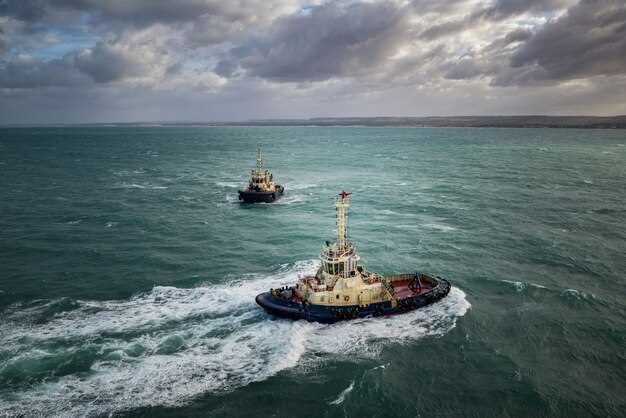
Immediate action: implement a live routing plan that diversifies routes across international corridors and includes a viable divert to the south, with pre-approved contingencies for port calls and cargo staging. This reduces remaining exposure from a single point and supports stable revenues while operations stay resilient.
Source data should feed a centralized plan that blends several indicators: political risk, port rates, weather, and queue lengths. There is value in testing courses of action now to learn how fluctuations in rates and throughput affect margins, and to resume normal operations quickly after events there in march or thereafter.
Engage a diversified roster of partners: maersk, cosco, and star lines can offer flexible tonnage; swiss-flagged vessels may improve notice and reliability in volatile windows. Reuters analytics from march highlight how chinas state carriers shift routes in response to regional disturbances, underscoring the need for a proactive plan and quick divert options for revenues protection. Thanks to this alignment, international flows can be maintained even as regional risk rises, and the economy benefits from steady maritime activity.
Detour logic prioritizes the southbound corridor when northern lanes show strain: divert to the Bab al-Mandab and Indian Ocean route where permitted, with a reserve of slots on multiple sources to reduce single-point dependency. There is remaining capacity to rotate several ships across routes, which helps minimize exposure to price spikes and port congestion in the region. Notice the advantage of maintaining a flexible schedule that can resume normal cycles after events, keeping transiting volumes on track.
| Route option | Estimated transit days | Cost impact | Anmerkungen |
|---|---|---|---|
| Primary corridor via Suez Canal | 9-12 | baseline | core path; monitor fluctuations in rates and port throughput; notice scale and maintain source data |
| Southern detour via Bab al-Mandab + Indian Ocean | 15-22 | moderate increase | divert when international lanes tighten; learn from march observations; beneficial for chinas, cosco, maersk; swiss capacity can ease transitions; houthis region risk considered |
| Cape Route alternative | 28-40 | hoch | longer sea leg; higher fuel costs; used for resilience during major interruptions; courses of action tested for remaining capacity |
In practice, firms should maintain a single source of truth for routing decisions, update notices daily, and align with customers on revised schedules. There is potential to resume steady revenues by sustaining operations across diverse courses and leveraging the experience of international carriers to smooth volumes and economy effects.
Contingency cargo plans, scheduling, and port calls for diverted voyages

Begin with a unified contingency cargo plan activated within 6 hours of a diversion notice, aligning ships, logistics, and cargo priorities across corridors. Prioritize energy shipments and time-sensitive goods, and classify loads into A-urgent and B-standby queues. This approach remains operational when the suez canal is suspended or routes go via al-mandab, reducing voyage risk and cost.
Scheduling is revised daily with a granular view of berth windows, fuel implications, and tugboats availability. The plan uses dynamic calendars shared with customers and crews, and it goes beyond timing to account for weather, port congestion, and accidents. As planners said, the practical approach must be adaptable, with chinas share increasing and dropped routes redirected toward south hub ports, while more flexible container allocations and notices to shippers keep operations smooth.
Port calls are sequenced to leverage hubs offering bunkering, repairs, and rapid crane productivity; ensure at least two sail windows per port to accommodate tide and canal operations. For diverted voyages, schedule calls at al-mandab facilities and along the south coast with robust tugboats and pilotage support; maintain a Swiss notice on changes and costs to reassure customers.
Operational risk management: pre-position key spares, fuel, and ballast; monitor accidents and weather; update risk matrices; use data to learn and refine routing logic. If the canal is suspended, vessels go around the cape, adding time and energy demand; the plan incorporates slack in crews and schedules to absorb shocks.
Financial discipline: maintain Swiss-style cost accounting and timely notices; share revised schedules and charges with customers; invest in digital planning tools to shorten decision cycles and improve visibility across the south.
Performance metrics and learnings: monitor recent data showing increasing diversions; measure on-time port calls, energy consumption, and demurrage days; learn from incidents to refine the two-tier queues; dropped cargo flows are redistributed; invested in advanced analytics increases response agility.
Insurance coverage, claims posture, and liability considerations during disruption
Perform a case-by-case review of coverages across cargo, hull, liability, and war-risk endorsements. Align limits with exposure on sailings and port calls, and secure endorsements for rerouting, extended storage, and late deliveries. Validate auto and inland transit elements, ensuring coherence through the fiscal cycle and the global economy; assemble a cross-functional team to monitor market changes and risk appetite, reporting through a single information channel and defined response times.
Establish a rapid-response claims posture: assign a dedicated desk to file notices, collect incident information, and coordinate with insurers. Preserve data such as bill of lading numbers, vessel positions, cargo values, and event times; use ebooks of policy terms for quick reference and train staff via short courses to shorten escalation paths and avoid delays; ensure carriers understand the format and times for documentation and claims, avoiding duplicative work and streamlining processes so accidents are addressed promptly.
Liability considerations: verify allocations under bills of lading and charterparties, including safe-port clauses and force majeure where applicable. Ensure coverage for salvage, towage, and third-party property such as tugboats; prepare for cross-border disputes in the region. Monitor tariffs and sanctions that affect charges and compensation; consider indemnities or back-to-back clauses to reduce exposure when a participant deviates from planned maneuvers, and record how energy costs interact with overall risk.
Operational and financial resilience: maintain an information-driven approach to routing and capacity planning. Track capacity constraints on sailings via the cape corridor and other chokepoints; use Swiss reinsurers to support capital adequacy and explore a diversified panel of underwriters. Reference Reuters updates for the latest conditions and outlook; plan alternative hubs to keep operations moving when times are tight; emphasize sustainability measures to support the economy and global logistics across the worlds markets; in March, volumes dropped in several regions, and the approach goes beyond compliance to add resilience for future events; hope remains that collaboration will reduce friction and that already some fleets adapt quickly to changing tariffs and routes, and the world goes on with stronger governance.
Stakeholder communication protocols with charterers, terminals, and authorities
Recommendation: Activate a standing, time-stamped alert protocol within four hours of any incident affecting operations, and circulate the alert to charterers, terminal operators, and authorities via secured channels. Assign a primary point of contact for maersk, cosco, and other major carriers under your services, with backups to ensure continuity. Said teams should confirm receipt and log any changes in the shared record.
Establish three parallel communication streams: navigational updates, supply and logistics implications, and economic considerations. Use a joint incident log shared through your preferred portal and email, with fields for location, ETA, capacity changes, transit options, and remaining steps to restore normal operations, including any adjustments for ocean transit along the south china corridor and beyond.
Cadence and escalation: Level 1 immediate bulletins within two hours, Level 2 operational updates within eight hours, Level 3 strategic briefs daily. This structure avoids duplications and avoids conflicting guidance, improving coordination through the south china corridor and beyond.
Data governance: standard data fields include ETA, draft, speed, fuel status, cargo status, and required actions. Close coordination with terminals and authorities reduces risk of misinterpretation and improves response times, while a common dashboard supports all services and keeps your partners aligned. reuters feeds can supplement situational awareness with verified external context about market conditions and economic signals.
Capacity planning and recovery: if capacity fell or shipments dropped, propose alternative routes or back-up corridors, with a clear return into normal transit schedules. Align with charterers to avoid overbooking and to optimize space, leveraging lessons learned from japans authorities and the wider Asia-Pacific market. Share learnings with your team to improve the sequence of courses and avoid repeating errors.
Training and governance: run quarterly courses for operations, logistics, and compliance staff. Include simulations of incidents in the south china region and practice with maersk and cosco stakeholders to ensure readiness. Begin new onboarding programs and learn from each cycle to elevate your team’s navigational judgment and crisis agility. Thanks for engaging with these protocols, which aim to protect the economic value of supply chains.