


 Ελληνικά
  English (UK)
  Русский
  العربية
  日本語
日本語  한국어
한국어  Magyar
  Türkçe
  Español
  Čeština
  Svenska
  Português
  Suomi
Suomi  Nederlands
  Română
  Italiano
  Français
  Polski
  Українська
  Deutsch
  简体中文
简体中文  Slovenčina
 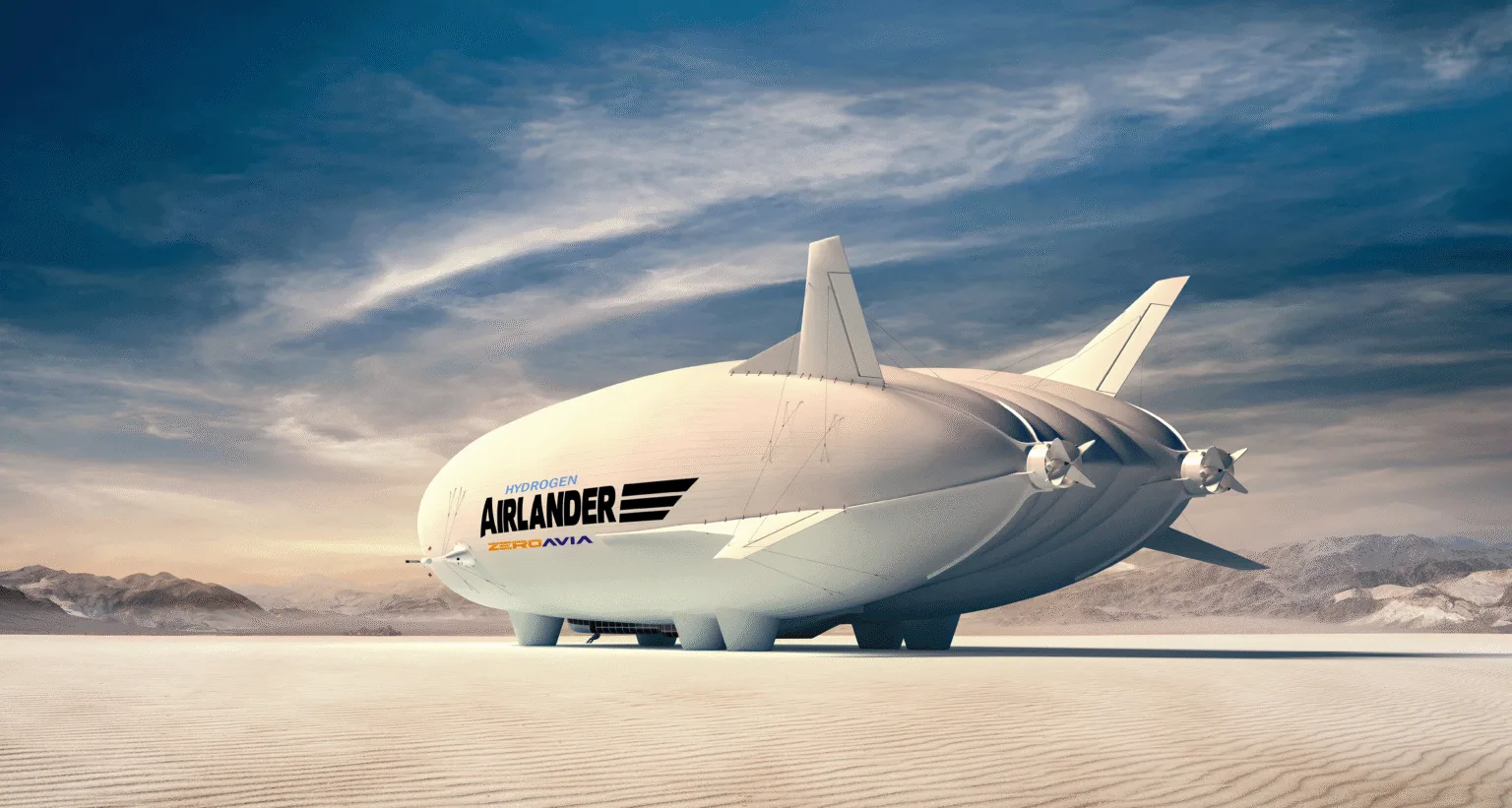 Εξερεύνηση της Πτήσης Μηδενικών Εκπομπών: Η ZeroAvia και η Hybrid Air Vehicles συνεργάζονται για να ηλεκτροδοτήσουν το Airlander 10">

ZeroEmissions Take Flight: The Promise of Hydrogen Power for Airlander 10
Innovative steps are underway in the world of aviation as ZeroAvia and Hybrid Air Vehicles join forces to create a hydrogen-electric version of the Airlander 10 — an aircraft that blends aerostatic and aerodynamic lift with vectored thrust. This collaboration aims to revolutionize sustainable air travel by transitioning away from fossil fuels and setting a new benchmark for zero-emission flight.
What Makes the Airlander 10 Special?
The Airlander 10 brings something unique to the table: it’s a hybrid aircraft equipped with four diesel engines initially but designed to carry a sizable payload — up to 10 tonnes — across impressive distances, reaching a maximum range of 4,000 nautical miles. The clever part? Its construction offers abundant space within the hull for hydrogen storage. This spacious design opens the door for adopting cutting-edge hydrogen fuel cell technology that promises emissions-free flights capable of carrying over 100 passengers.
Extending Range and Capacity Through Hydrogen
One of the biggest challenges with electric aircraft has always been energy storage and range limitations. Hydrogen fuels this plane differently; its storage potential in the Airlander’s hull is unmatched compared to the limited battery capacities of traditional electric aircraft. The planned integration of four ZeroAvia ZA600 powertrains, each a 600kW hydrogen-electric engine, puts the Airlander in a league all its own for distance and payload, all while staying eco-friendly.
ZeroAvia’s Hydrogen-Electric Powertrain: A Proven Performer
ZeroAvia’s ZA600 powertrain isn’t just conceptual; it’s a system that has passed multiple regulatory hurdles and caught the attention of airlines already eager to place pre-orders. Having undergone flight tests on a smaller 19-seat aircraft, this innovative powertrain heralds a new phase in aviation — one where clean energy and efficiency converge. The benefits extend beyond environmental impact, promising reduced maintenance costs too, thanks to the simpler mechanics of electric propulsion versus traditional combustion engines.
Partnership Goals: More Than Just One Plane
The collaboration doesn’t stop at electrifying the Airlander 10. The companies plan to explore how this hydrogen-electric technology could be scaled up to future, larger aircraft envisioned by Hybrid Air Vehicles. A vital part of the project also involves assessing hydrogen fuel infrastructure requirements for Airlander operations — a crucial piece of the puzzle to ensure smooth and practical deployment of these aircraft in real-world logistics and passenger transport scenarios.
The Visionaries Behind the Innovation
- Hybrid Air Vehicles’ CEO Tom Grundy highlights the technical and commercial strides made by ZeroAvia, emphasizing the goal to offer customers a fully zero-emission option, which balances efficiency with environmental responsibility.
- ZeroAvia’s Founder and CEO Val Miftakhov praises the Airlander as a game-changer in air travel, due to its unique range and adaptability to various operational environments, pointing out the shared vision of both companies to push manufacturing and job creation within the UK aerospace sector.
Implications for Logistics and Air Cargo Transport
While the spotlight often shines on passenger aviation, the impact on the logistics sector is hard to overlook. With a 10-tonne payload and zero emissions, the hydrogen-electric Airlander could reshape how cargo moves through the air. The ability to carry bulky or sensitive freight over long distances, powered cleanly, will appeal to companies aiming to reduce the carbon footprint of their supply chains.
Imagine a future where bulk freight, parcels, and even vehicles are transported efficiently and sustainably through this kind of airship technology. The Airlander’s hybrid lift approach offers versatility in accessing locations with limited infrastructure, potentially streamlining distribution networks, reducing reliance on road haulage, and easing congestion in traditional shipping hubs.
Table: Key Features of Hydrogen-Electric Airlander 10
| Χαρακτηριστικό γνώρισμα | Προδιαγραφή |
|---|---|
| Payload Capacity | 10 τόνοι |
| Μέγιστη Εμβέλεια | 4,000 nautical miles |
| Engine Type | Four ZeroAvia ZA600 hydrogen-electric powertrains |
| Passengers Capacity | 100+ |
| Emission Level | Zero in-flight emissions |
| Fuel Storage | Ample hydrogen storage within hull |
The Road Ahead: Challenges and Opportunities
Deploying hydrogen-electric aircraft at scale certainly has its hurdles. The need for hydrogen fuel infrastructure development and compliance with regulatory standards demands coordinated effort across multiple sectors. However, the progress made by ZeroAvia and the design ingenuity of Hybrid Air Vehicles signal a promising future where these obstacles will be overcome by innovation and commitment.
Integration with Global Transport Networks
For the global logistics industry, adopting cleaner airfreight options can drastically alter the sustainability profile of supply chains. Integrating hydrogen-powered aircraft into existing multimodal transport networks could enable faster, greener shipment and delivery of goods, complementing land and sea transport methods effectively.
Why Personal Experience Still Counts
All the technical specs and glowing reviews aside, experiencing such new technology firsthand remains the best way to appreciate its true value. Thankfully, platforms like GetTransport.com facilitate access to a variety of transport solutions worldwide, including the latest trends in cargo and freight movement. Whether moving offices, home relocations, bulky goods, or even vehicles, GetTransport.com offers globally competitive pricing and transparent, hassle-free booking options that empower users to tailor logistics to their needs without breaking the bank or facing surprises.
Convenience, affordability, and extensive choices make it easier than ever for customers to select services that align perfectly with their expectations and requirements. So why not Κάντε κράτηση για τη βόλτα σας GetTransport.com and see for yourself?
Looking Into the Future of Sustainable Aviation and Logistics
While the immediate effects of this zero-emission Airlander project might be modest on a global logistics scale, its relevance is unmistakable. This partnership serves as a beacon for the aviation and transport industries, highlighting a shift towards cleaner technologies that will one day reshape global shipment and freight forwarding.
As GetTransport.com keeps pace with such transformative developments, offering reliable, efficient, and eco-conscious transport options, customers stand to benefit from the evolving landscape of logistics. Start planning your next delivery and secure your cargo with GetTransport.com.
Περίληψη
The collaboration between ZeroAvia and Hybrid Air Vehicles to create a hydrogen-electric Airlander 10 marks a bold step in sustainable aviation, combining innovative propulsion with impressive payload and range capabilities. This fusion opens possibilities to reshape passenger transport and logistics by offering zero-emission, efficient, and versatile aircraft.
With the potential to efficiently haul cargo across long distances, supported by a new generation of fuel infrastructure, this development aligns closely with the growing demand for sustainable freight and moving services worldwide. Platforms like GetTransport.com play a pivotal role by connecting customers with cost-effective, reliable shipping and moving solutions, accommodating everything from parcels and pallets to bulky and international shipments.
Embracing these advancements will not only reduce carbon footprints but also streamline logistics operations in an increasingly globalized world, with GetTransport.com offering a practical gateway to this promising future.