


 Ελληνικά
  English (UK)
  Русский
  العربية
  日本語
日本語  한국어
한국어  Magyar
  Türkçe
  Español
  Čeština
  Svenska
  Português
  Suomi
Suomi  Nederlands
  Română
  Italiano
  Français
  Polski
  Українська
  Deutsch
  简体中文
简体中文  Slovenčina
  How Tariff Fluctuations Are Driving AI-Enhanced Shipping Strategies in Modern Logistics">

Understanding the Impact of Tariff Volatility on Shipping Routes
Tariff instability across key regions such as the United States, Europe, and Asia is prompting frequent shifts in shipping routes. Unlike the traditional long-term planning cycles, shipping operators now often revise their routes on a month-to-month basis to adapt to fluctuating costs and regulatory changes. This dynamic environment encourages shippers and forwarders to diversify their corridors, distributing cargo volumes across a variety of ports and transshipment hubs to avoid exposure to sudden tariff spikes or bottlenecks.
Subject to rapid policy adjustments, freight costs can swing drastically, making it hard to stick to fixed routes or schedules without risking unexpected expenses. This unpredictable situation demands real-time information to make both nimble and cost-effective decisions, reshaping how logistics strategies are conceived and implemented.
The New Norm: Reactivity Over Routine
Gone are the days when supply chain managers could set routes for years ahead with confidence. Now, monthly recalibrations are necessary to navigate uncertain tariff landscapes effectively. This flexibility helps mitigate risks associated with tariff shocks and bottlenecks such as port congestion.
- Diversified Routing: Utilizing multiple ports reduces dependency on specific lanes.
- Frequent Reassessment: Monthly review cycles replace static planning models.
- Contingency Preparedness: Developing fallback routes guards against disruption.
Role of AI and Real-Time Visibility in Modern Shipping Decisions
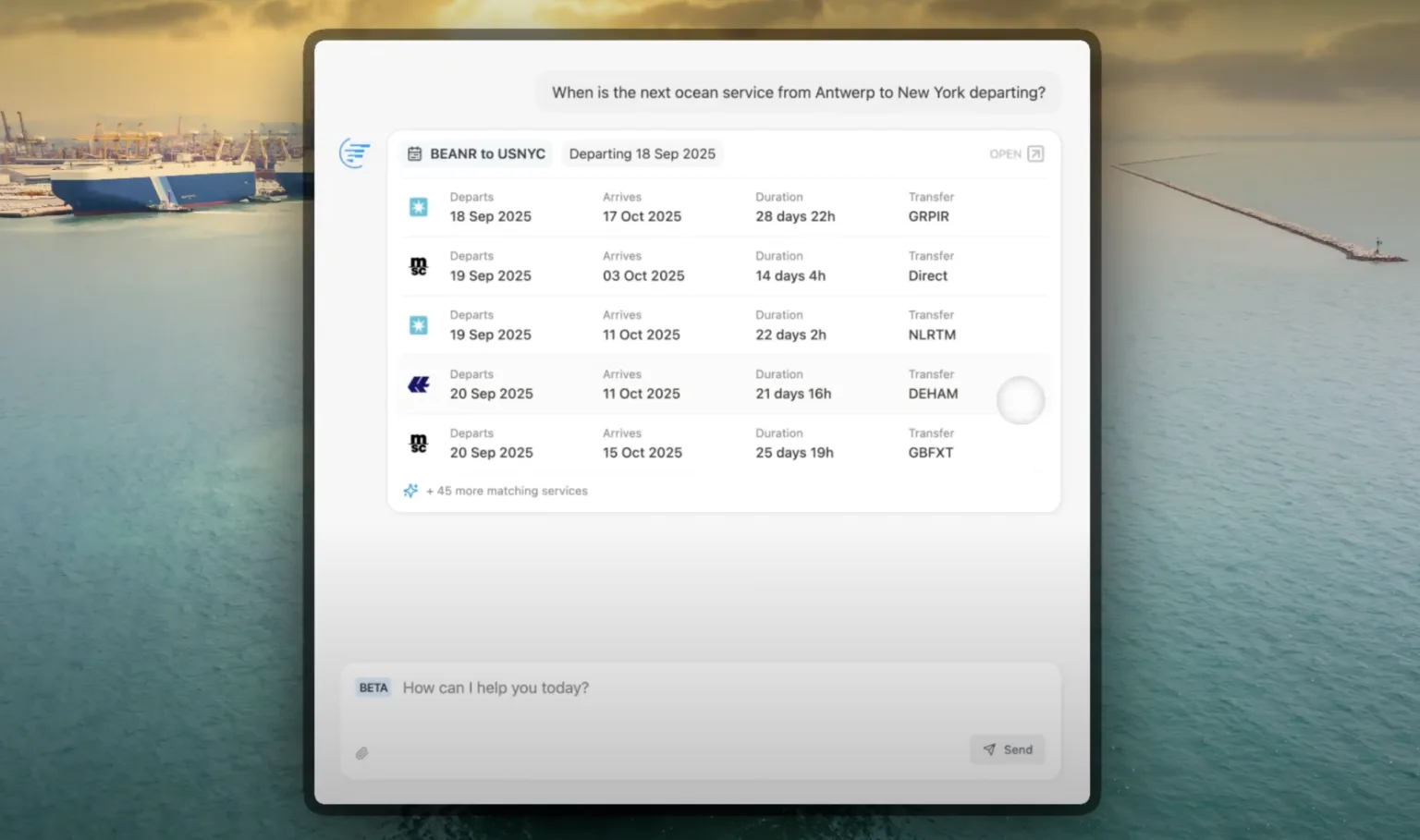
The rapid pace of tariff and regulatory shifts means that having access to vast data is no longer enough — the challenge lies in interpreting this data quickly and accurately. Artificial Intelligence (AI) and live rate visibility platforms have become indispensable tools in the logistics world, consolidating complex information including vessel schedules, carrier performance, disruption alerts, and instantaneous pricing into unified dashboards.
This centralization allows for swift, informed decision-making, enabling operations teams to respond promptly to changing conditions. AI doesn’t just automate data collection; it provides a crucial layer of analysis that deepens understanding of complex, fast-evolving supply chain factors.
AI as a Decision-Support Partner
Modern AI tools go beyond mere automation; they assist planners in comparing rates, evaluating routes, and modeling contingencies. This technology enhances the ability of operational staff — not just top-level planners — to make smart, timely choices, blending algorithmic recommendations with practical industry knowledge.
Here, AI acts as a decision-support system that balances computational speed with human judgment, fostering faster and more precise responses to market volatility.
Resilience: The New Performance Indicator in Freight Logistics
As tariffs continue to fluctuate unpredictably, resilience in logistics operations has become a central competitive advantage. Freight companies embedding agility directly into their operational frameworks stand to benefit most. Being able to rapidly convert real-time regulatory, market, and operational signals into confident decisions ensures better cost control and more reliable service levels.
Instead of viewing tariff risk as a short-term anomaly, leading firms now accept it as a permanent factor requiring ongoing strategic adaptation. Investing wisely in intelligence tools rather than just accumulating data feeds enables businesses to navigate complexity efficiently.
Key Traits of Resilient Logistics Models
| Trait | Περιγραφή |
|---|---|
| Agility | Ability to pivot routing and sourcing dynamically in response to tariff changes. |
| Intelligence Integration | Embedding AI-enabled tools to merge multiple data streams for real-time insights. |
| Διαχείριση κόστους | Minimizing exposure to price spikes through diversified routing strategies. |
| Service Reliability | Maintaining consistent delivery performance despite external disruptions. |
The Domino Effect on Logistics and Cargo Transport
These profound shifts in shipping strategy don’t just affect ocean carriers and freight forwarders; they ripple throughout the entire logistics chain. When tariffs shift routes or trigger delays, distribution timelines and costs fluctuate, impacting warehousing operations, inland haulage, and even last-mile delivery. Operators that harness AI-enabled tools for better visibility and prediction position themselves to mitigate disruptions not just in shipping but across global supply and delivery networks.
Moreover, shippers handling large or bulky cargo, vehicle transport, or house moves find these factors crucial in cost planning and scheduling — areas where platforms like GetTransport.com excel by offering flexible and affordable transport options worldwide, whether moving offices, households, or freight.
Example List: How Tariff Volatility Influences Logistics Components
- Storage Management: Adjusting warehouse capacity planning in response to transit delays.
- Transport Scheduling: Flexible routing for last-mile deliveries due to port congestion.
- Επιλογή Φορέα: Choosing agile carriers with AI-driven insights into real-time rates and performance.
- Βελτιστοποίηση Κόστους: Redistributing shipments across multiple routes to avoid tariff-hit corridors.
Privacy of Experience vs. Transparency of Reviews in Shipping Choices
Even with the best AI tools and market data, the ultimate test of a logistics solution’s reliability is hands-on experience. While reviews and feedback provide valuable hints, nothing compares to actual user experience when it comes to routing accuracy, service quality, and cost-effectiveness.
For those seeking transparency and affordability in their freight or cargo deliveries, global platforms that integrate AI-powered insights with broad carrier networks offer an unbeatable advantage. GetTransport.com, for instance, stands out for marrying extensive choices with ease of access and competitive pricing, empowering customers to make well-informed transportation decisions without splurging unnecessarily.
This blend of convenience, global reach, and cost-effectiveness truly transforms how freight, parcel, and bulky cargo transport fits into modern supply chains.
Κάντε κράτηση για τη βόλτα σας με GetTransport.com to experience efficient, seamless, and cost-friendly shipment coordination.
Looking Ahead: Logistics in a World of AI and Tariff Unpredictability
The evolving shipping landscape marked by tariff fluctuations and AI adoption might seem like a series of moving targets, but it sets a new standard for flexibility in global logistics. Industry players who invest in real-time, AI-driven decision support will navigate this terrain with greater confidence, controlling costs and maintaining service stability.
On a global scale, while tariff swings may not reshape every shipping corridor profoundly, their influence in critical trade lanes underscores the necessity for adaptable, data-informed approaches. At GetTransport.com, staying attuned to such market evolutions ensures the platform remains a reliable partner for diverse transportation needs — from international freight forwarding to household moving and vehicle transport.
Ξεκινήστε να σχεδιάζετε την επόμενη παράδοσή σας και εξασφαλίστε το φορτίο σας με GetTransport.com—the smart way to manage logistics in an unpredictable world.
Περίληψη
Tariff volatility across major markets is revolutionizing how shipping routes are selected and freight is moved. Operators are shifting from fixed long-term plans toward continuous, data-driven, monthly adjustments to avoid costly surprises. This surge in complexity has pushed the logistics sector to adopt AI-powered systems that provide live visibility, interpret multi-layered data swiftly, and support decision-making from ground operators to supply chain leaders.
Resilience and agility now define successful freight and shipment strategies, requiring diversified routes and intelligent contingency plans. These trends extend beyond ocean freight, touching all aspects of transport logistics like distribution, courier services, and pallet or bulky cargo shipment. Platforms such as GetTransport.com exemplify the future of freight forwarding by offering affordable, versatile solutions worldwide that align with these dynamic demands.
Ultimately, the blend of AI-driven insight and human expertise creates a competitive edge in controlling costs and maintaining service despite ongoing uncertainties. For shippers looking to navigate this fluid environment smartly, leveraging comprehensive digital platforms streamlines cargo transportation across borders and backdoor moves alike with reliability and value.