


 Ελληνικά
  English (UK)
  Русский
  العربية
  日本語
日本語  한국어
한국어  Magyar
  Türkçe
  Español
  Čeština
  Svenska
  Português
  Suomi
Suomi  Nederlands
  Română
  Italiano
  Français
  Polski
  Українська
  Deutsch
  简体中文
简体中文  Slovenčina
 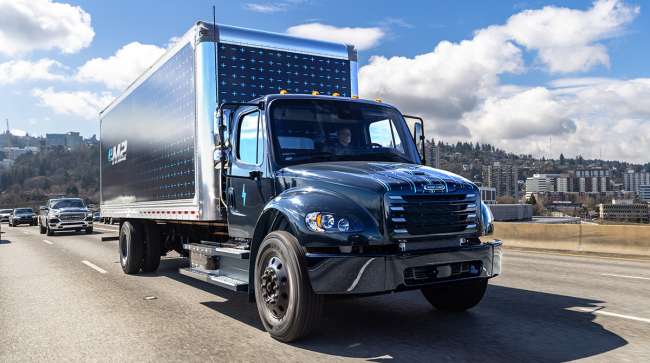 Declining Medium-Duty Truck Sales in 2025 Reflect Broader Industry Pressures">

Medium-Duty Truck Sales Experience Significant Downturn in 2025
As 2025 draws to a close, the medium-duty truck market in the United States reveals a concerning sales slump with only one month seeing year-over-year growth. This decline illustrates the ongoing hurdles faced by operators, manufacturers, and smaller businesses relying on these trucks for their daily operations.
Sales Volume Drops Sharply in Late 2025
The retail sales data for medium-duty trucks, covering Classes 4 through 7, show a dramatic fall of 30.6% in November compared to the same month last year. Only 13,063 units were sold, down from 18,828 units previously. This decline continues a trend where, aside from January 2025, there was no other month showing sales growth year-over-year. Furthermore, sales dipped nearly 15% on a month-to-month basis from October’s 15,345 shipments.
Monthly Sales Breakdown by Truck Class
| Κατηγορία Φορτηγών | November 2025 Sales | November 2024 Sales | Ποσοστιαία μεταβολή |
|---|---|---|---|
| Class 7 | 3,210 units | 5,204 units | -38.3% |
| Class 6 | 3,868 units | 5,946 units | -34.9% |
| Τάξη 5 | 4,897 units | 6,350 units | -22.9% |
| Τάξη 4 | 1,088 units | 1,328 units | -18.1% |
What’s Behind the Sales Slump?
The sales downturn is not just numbers on a page — it reflects deeper challenges at play, especially among the buyers that dominate the medium-duty segment. Larger lease and rental fleets remain pivotal players in Class 6 and 7 purchases, but the market also includes a significant number of small business owners and tradespeople. These customers often view medium-duty trucks as essential tools, integral to the operations of their crafts and services.
However, economic pressures are tightening the purse strings even for these business users. Rising costs due to tariffs and wider economic uncertainty have many sticking with older equipment and delaying new purchases. The phrase “making do with what they’ve got” probably sums it up best for these operators, who are navigating a challenging landscape where every dollar counts.
Leading Manufacturers and Market Shares
- Freightliner, a Daimler Truck North America brand, led the Class 7 category with 1,554 units sold in November.
- Ford led in both Classes 6 and 5, moving 1,895 and 2,886 units respectively.
- Isuzu held the top spot for Class 4 trucks with 544 units sold.
These figures highlight the competitive landscape where several key manufacturers dominate their segments, but overall industry momentum remains sluggish.
Επιπτώσεις για τον τομέα της εφοδιαστικής
Medium-duty trucks form the backbone of many logistics operations — acting as the optimal balance between capacity and maneuverability. A decline in sales, especially when influenced by economic constraints, can ripple through the entire logistics ecosystem. From last-mile delivery fleets to smaller freight carriers, the hesitance or delay in acquiring new vehicles can lead to inefficiencies, higher maintenance costs, and capacity bottlenecks.
In the context of supply chain management, reliable transportation is the name of the game. When smaller businesses cut back on fleet renewals, it’s not just a sales issue for manufacturers but a wake-up call for logistics planners to seek adaptable and cost-effective transport solutions. It’s where flexible platforms like GetTransport.com come into play, bridging gaps efficiently by offering affordable, global cargo and freight transportation options.
The Role of Small Businesses in the Medium-Duty Market
Small business owners and tradespeople represent a critical piece of this puzzle. Unlike large fleets that may refresh their vehicles regularly, these operators often see their trucks as indispensable work tools rather than just assets to rotate out. When faced with rising costs, many opt to extend the life of their current equipment instead of investing in new units. This cautious approach affects shipment and haulage capacities, slowing down movement and potentially impacting distribution timelines.
Key Challenges Facing Medium-Duty Truck Buyers:
- Increasing operational costs, driven by tariffs and inflation
- Economic uncertainty causing reductions in capital expenditures
- Trade dynamics influencing manufacturing and vehicle pricing
- Limited upgrades for many small-scale operators, leading to older vehicle fleets
How These Challenges Translate to Logistics
Logistics businesses, especially those managing fleets for deliveries and relocations, must adapt in an environment where vehicle refresh cycles are lengthening. This could mean higher maintenance overheads and the need to optimize routing and scheduling to cater to decreased vehicle availability or performance. In turn, this raises demand for flexible forwarders and couriers able to manage varying cargo loads — an area where platforms like GetTransport.com shine.
Looking Ahead: What This Means for the Market
Despite the downturn in medium-duty truck sales, the market’s core importance in freight and haulage remains unchanged. It’s a classic tale of tough times prompting innovation and adaptation. Buyers and logistics operators alike need to be savvy, balancing cost pressures with the necessity of staying operationally efficient.
Thankfully, comprehensive transportation marketplaces now offer a broad spectrum of solutions, from office and house moves to transporting bulky, heavy equipment, vehicles, and furniture. These platforms not only make finding cargo transportation more affordable but also streamline dispatch and delivery, which is pivotal for maintaining smooth logistics chains.
With transparent, accessible options, businesses have more control over their shipping needs, helping them avoid unnecessary expenses or logistical setbacks. But after all the reviews and data, nothing substitutes experiencing the service firsthand — and that’s where you really get the lowdown on what works best.
On GetTransport.com, customers can explore an extensive range of cargo and freight transport options worldwide at competitive rates, providing convenient access to reliable delivery and haulage solutions. Κάντε κράτηση για τη διαδρομή σας today and take control of your transport needs with confidence and ease. GetTransport.com
Forecasting the Impact on Global Logistics
While the slump in U.S. medium-duty truck sales might not send shockwaves through global logistics in isolation, it still signals noteworthy shifts in fleet management and cargo transport demand. For the logistics industry, staying agile amid these shifts is vital – which is exactly what GetTransport.com aims to support by keeping pace with market dynamics. Whether you’re handling international shipments, local deliveries, or moving bulky goods, planning ahead and securing efficient transport is no longer a luxury but a necessity.
Ξεκινήστε να σχεδιάζετε την επόμενη παράδοσή σας και εξασφαλίστε το φορτίο σας με την GetTransport.com.
Περίληψη
In 2025, medium-duty truck sales in the U.S. have seen notable declines, underscoring the challenges faced by both large lease fleets and smaller business operators. Economic pressures and rising costs have led many to defer new purchases, impacting freight operations and logistics efficiency. The sales drop spans Classes 4 to 7, with key manufacturers like Freightliner, Ford, and Isuzu maintaining leadership within their segments despite the broader downturn.
This situation highlights the critical role medium-duty trucks play in the logistics chain and how their availability affects shipment, haulage, and distribution operations. Platforms such as GetTransport.com offer adaptable, cost-effective alternatives for cargo and bulky freight transportation, catering to a variety of moving and forwarding needs globally.
As the industry adapts, leveraging flexible and transparent transportation solutions becomes more important than ever to maintain smooth logistics flows and efficient delivery schedules.