


 Ελληνικά
  English (UK)
  Русский
  العربية
  日本語
日本語  한국어
한국어  Magyar
  Türkçe
  Español
  Čeština
  Svenska
  Português
  Suomi
Suomi  Nederlands
  Română
  Italiano
  Français
  Polski
  Українська
  Deutsch
  简体中文
简体中文  Slovenčina
 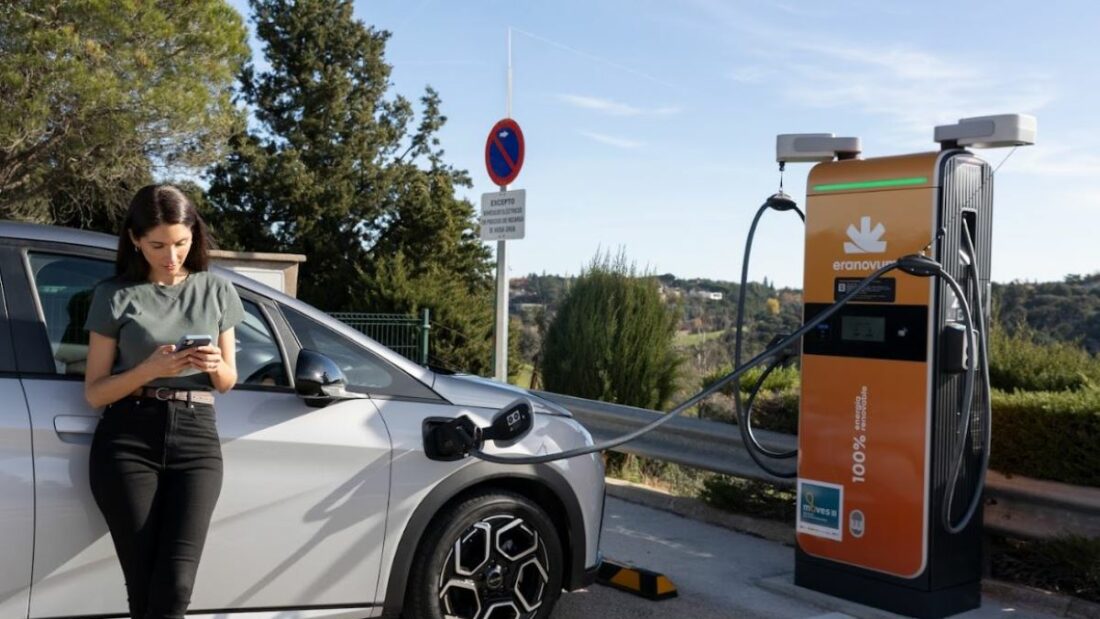 Εξετάζοντας τα Βήματα της Ισπανίας προς τη Βιώσιμη Κινητικότητα και τη Θέση της στον Ευρωπαϊκό Αγώνα Ηλεκτρικών Οχημάτων">

Spain’s Sustainable Mobility Progress and the European Benchmark
The recent ratification of Spain’s Sustainable Mobility Law has propelled sustainable transportation to the forefront of public discourse. While it marks an important step forward, Spain’s journey towards embracing electric mobility reveals a patchwork of progress with significant gaps compared to other European nations leading the way.
The law introduces valuable administrative streamlining, notably simplifying local procedures through mechanisms like the declaration of responsibility, which promises to untangle years of bureaucratic gridlock. This aligns public bodies and businesses for better coordination, especially in deploying charging infrastructure necessary for electric vehicles (EVs).
Uneven Electric Vehicle Adoption Across Spain
The adoption of EVs has not progressed uniformly across Spain. Urban centers exhibit more rapid growth in electric vehicle usage due to higher demand and infrastructure availability. However, rural and less densely populated areas lag significantly, creating a divide where sustainable transport options seem exclusive rather than inclusive.
Addressing this requires a transportation model that reaches beyond major metropolitan areas. The national strategy to implement charging points in medium and smaller municipalities is a promising route toward this inclusivity. However, the complex landscape of local tenders and high fees have sometimes inflated energy costs, discouraging broader adoption.
| Περιοχή | EV Adoption Speed | Infrastructure Challenges |
|---|---|---|
| Major Urban Areas | Fast-paced | Better charging networks, higher demand |
| Medium/smaller Municipalities | Slower | Complex licensing, higher energy fees |
| Rural Areas | Most delayed | Lack of infrastructure and resources |
The Need for Stable Regulatory Frameworks
Consistent regulatory policies are the backbone for sustainable transport adoption. The rapid shifts in regulations and inconsistent incentive programs over recent years have introduced uncertainty, affecting investment by both families and companies. For the uptake of electric vehicles to gather speed, investors must perceive a stable and predictable environment.
Currently, Spain trails behind European neighbors who have cemented solid markets with clear strategies and reliable incentives. This irregular regulatory landscape can slow down freight and passenger transport sectors eager to integrate electric or other sustainable mobility options.
Technical and Operational Bottlenecks
Further compounding the challenge are technical and transparency issues. Promoters face opaque processes from electricity distributors, sporadic response times, and unclear criteria in both requesting and setting up new power supplies. These operational inefficiencies create major roadblocks, slowing the rollout of the EV infrastructure network that many European countries have successfully expedited through well-planned deployment.
Learning from European Leaders While Tailoring to Spain’s Strengths
Looking beyond national borders, countries like Belgium excel in combining active fiscal policies, strategic deployment plans, and effective public-private partnerships. These elements create a cohesive framework that fuels rapid expansion of EV networks and solid growth in electric vehicle uptake.
Spain need not copy these frameworks verbatim but should adapt proven elements to local conditions. The abundance of renewable energy potential and strong experience in energy sectors represent solid advantages that can be harnessed better to accelerate sustainable transport.
Incentives and Environmental Labeling
Two critical factors that continue to restrict the growth of Spain’s electric vehicle fleet are the lack of substantial fiscal incentives and the need to rationalize environmental labeling systems. These tools send strong national signals driving consumer and commercial uptake. Without them, progress depends heavily on individual efforts and company initiatives instead of a unified national vision.
Infrastructure as the Backbone of Sustainable Transport
At the heart of sustainable mobility lies the charging infrastructure. Without a network that is accessible, widely distributed, and aligned with user needs, stagnation in sustainable transport adoption is inevitable. The law provides momentum but must evolve to ensure infrastructure deployment is swift, efficient, and competitive with European benchmarks.
The current landscape is one of concurrent advances and setbacks, pointing toward divergent directions. To close the European gap and tap into Spain’s renewable energy potential fully, a mix of regulatory stability, inter-institutional coordination, and infrastructure development must come together as a well-oiled engine guiding the transition.
How This Impacts Logistics and Cargo Transport
The ripple effects of Spain’s current sustainable mobility status extend into logistics, freight, and cargo transportation. Efficient, green transport isn’t just a passenger matter – electrifying freight and delivery fleets could significantly reduce emissions and operational costs.
Uneven infrastructure impacts how reliable and flexible logistics companies can be, especially when navigating urban to rural routes. The push for uniform access to EV charging stations would create new efficiencies in haulage, moving, and international freight forwarding, benefiting all layers of the supply chain.
Challenges for Logistics Providers
- Λειτουργικά Κόστη: Higher energy costs in some municipalities increase cargo transport expenses.
- Σχεδιασμός διαδρομής: Incomplete or uneven charging infrastructure complicates long-haul planning for electric freight vehicles.
- Investment Hesitation: Lack of stable incentives slows fleet upgrades to electric or sustainable alternatives.
Opportunities Arising from Progress
- Wider deployment of charging points in smaller towns could open new last-mile delivery zones for electric vehicles.
- Stable policies can encourage logistics companies to invest in greener fleets, pushing forward sustainable freight.
- Improved infrastructure transparency can speed up adoption of electric cargo transport.
The Road Ahead: Stability and Coordination
Ultimately, success depends on harmonizing regulation with infrastructure and market demands. Stable, transparent policies paired with coordinated action across institutions and stakeholders form the foundation for an effective green transition in Spain’s transportation landscape.
Takeaways on Spain’s Sustainable Mobility and Logistics
Spain’s journey to sustainable mobility is dotted with promise and pitfalls. On the plus side, the new legislation and plans present hopeful signs of progress, especially with administrative streamlining and focused development in smaller locales. However, regulatory inconsistency, uneven infrastructure deployment, and technical bottlenecks hinder rapid growth.
The country’s renewable energy advantage and energy sector expertise are notable assets that, if leveraged well, can make Spain a faster mover in the green transport arena. Nevertheless, closing the gap with European frontrunners will require focused incentives, cohesive planning, and an inclusive infrastructure rollout.
While extensive reviews and analyses provide insights, nothing speaks louder than personal experience navigating Spain’s transport ecosystem. This is where platforms like GetTransport.com come into play, offering a versatile and affordable solution for cargo transport needs worldwide. Whether it’s local or international freight, bulky cargo, vehicle transport, or house moves, GetTransport.com simplifies logistics with transparent pricing and a global network — helping you stay ahead in an ever-evolving transport landscape.
For anyone keen to avoid coming unstuck due to regional disparities or supply chain uncertainties, combining on-the-ground experiences with smart booking tools is the name of the game. With GetTransport.com, you gain access to the best offers and unmatched convenience in the logistics market. Book your cargo transportation with GetTransport.com τώρα!
Συμπέρασμα
Spain’s Sustainable Mobility Law signals a forward movement toward electric and sustainable transport, yet uneven progress leaves room for improvement. The blend of administrative reforms, infrastructural challenges, and regulatory complexity shapes the nation’s pace in this green transition. The logistics sector, intertwined with transport evolution, stands to gain immensely from a more cohesive and inclusive infrastructure network.
By learning from European examples and capitalizing on its renewable energy potential, Spain could accelerate its delivery and freight sectors’ switch to sustainable vehicles. Platforms like GetTransport.com enhance this journey by providing easy access to affordable, reliable logistics solutions tailored to diverse cargo and relocation needs. In a world where seamless, green transport matters more than ever, such services bring the future of logistics a step closer—making shipments, forwarding, and haulage simpler and more efficient.