


 Ελληνικά
  English (UK)
  Русский
  العربية
  日本語
日本語  한국어
한국어  Magyar
  Türkçe
  Español
  Čeština
  Svenska
  Português
  Suomi
Suomi  Nederlands
  Română
  Italiano
  Français
  Polski
  Українська
  Deutsch
  简体中文
简体中文  Slovenčina
  Trump and Modi’s India–U.S. Trade Statement: Practical Logistics Takeaways for Supply Chains">

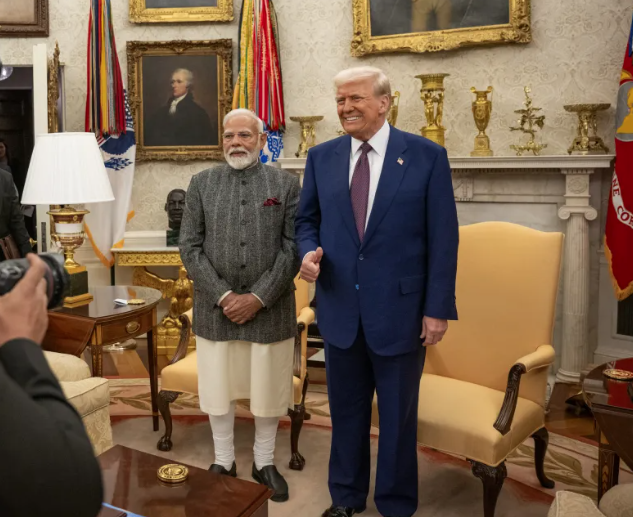
No new tariff schedules, HS code amendments, or bilateral customs procedures were published after the joint announcement by Donald Trump και Narendra Modi, leaving customs brokers, freight forwarders, and port operators without executable directions for India–U.S. trade lanes.
Summary of the public assertions and what’s missing
The public statements reported by outlets such as CNBC και Al Jazeera list several high‑level commitments, but they lack the formal instruments logistics teams need to act. What was stated includes:
- Expressed intent to increase bilateral trade and reduce trade barriers in principle.
- Reference to potential tariff simplifications and cooperation on supply‑chain resilience.
- Political affirmations of collaboration on technology, defense, and energy trade.
What was not provided — and what matters operationally — is a clear roadmap: no signed tariff schedules, no annexes modifying duty rates, no customs memoranda of understanding, and no regulatory timelines for implementation. That gap converts a headline into an option set rather than an executable agreement.
Table: Announced items vs. execution requirements vs. short‑term logistics impact
| Announced Item | Required for Execution | Immediate Logistics Impact |
|---|---|---|
| Intent to reduce trade barriers | Legal texts, tariff schedules, bilateral protocols | None until formalized; planning uncertainty for sourcing |
| Cooperation on supply‑chain resilience | Operational frameworks, joint inspections, data sharing | Potential pilot projects; no widespread change yet |
| Technology and defense collaboration | Export controls alignment, licensing processes | Case‑by‑case licensing continues; compliance burden unchanged |
Operational implications for shippers and 3PLs
From a supply‑chain standpoint, the headline creates strategic options but not immediate procedural change. Logistics managers should focus on tactical measures to manage uncertainty:
- Sourcing flexibility: Maintain supplier diversification and conditional contracts rather than locking into assumptions about tariff relief.
- Inventory posture: Avoid abrupt de‑stocking or re‑routing based on press releases; favor staged adjustments.
- Customs and compliance: Continue current classification and valuation practices until formal notices arrive from customs authorities.
- Carrier negotiations: Expect no immediate rate baseline shifts; carriers will treat the announcement as market sentiment only.
Risks freight teams should watch
- Misapplied tariff expectations leading to customs delays and penalties.
- Supplier contract disputes if buyers assume tariff changes that have not occurred.
- Capacity planning errors if procurement teams prematurely re‑route shipments.
Practical checklist for logistics teams this quarter
Here’s a quick checklist operations and logistics leads can use to avoid being caught flat‑footed:
- Confirm current tariff and regulatory treatments with customs brokers.
- Model incremental scenarios (best case, baseline, worst case) for landed cost.
- Flag contracts with force‑majeure or renegotiation clauses tied to trade policy changes.
- Engage carriers and forwarders to understand capacity and lead‑time posture.
- Keep documentation for any test shipments if pilot programs are later announced.
Anecdote from the warehouse floor
Funny thing: at a recent site visit I watched a supply‑chain director decide to hold a single pallet of parts rather than reroute an entire container after a rumor of preferential duties circulated. That pallet ended up saving a week of expedited freight and a small fortune in rework when the rumor proved premature — proof that cautious, local decisions often outperform headline‑driven frenzy.
How specific modes are affected
Ocean freight: Container schedules and BCO (beneficial cargo owner) decisions will remain driven by demand and SSS (short sea shipping) economics, not by the political statement alone.
Airfreight: Spot market moves react more quickly to geopolitical sentiment, but without regulatory change there’s no structural shift in AWB processing or customs clearance.
Road and last‑mile: Cross‑border haulage and inland distribution are largely unaffected until customs procedures are updated; however, logistics providers should be ready for pilot corridors if bilateral programs are announced.
Where the strategic options matter most
The joint statement does create a menu of potential actions that firms can plan for:
- Supply‑chain relocation or nearshoring pilots to India for specific product categories.
- Dual‑sourcing strategies to increase resilience for critical components.
- Investment in compliance automation to accelerate adoption if preferential rules appear later.
Regulatory & compliance timeline to monitor
Agencies to watch for formal instruments include customs administrations in both countries, trade ministries, and any joint working groups announced. Key deliverables that will change behavior are:
- Published tariff schedule amendments (official gazette entries).
- Customs operating procedures and binding rulings.
- Agreements on rules of origin and certification processes.
Bottom line for logistics planners
Hard rules matter more than political rhetoric. Until legal texts and procedural guidance are released, logistics managers should treat the announcement as a strategic signal — not as a switch to flip in operational systems.
On GetTransport.com, you can order your cargo transportation at the best prices globally at reasonable prices. This development likely has limited immediate global impact because no formal trade instruments have been published; however, it remains relevant for route planning and supplier contracting as a potential future change. For your next cargo transportation, consider the convenience and reliability of GetTransport.com. Book now GetTransport.com.com
Highlights: the announcement offers strategic options rather than executable change; logistics teams must prioritize compliance, staged planning, and supplier flexibility; carriers and freight markets will react to sentiment but not to unissued regulations. Of course, nothing beats first‑hand experience — even the best analyses and reviews can’t replace running a live lane test or a small pilot shipment yourself. On GetTransport.com, you can order your cargo transportation at the best prices globally at reasonable prices. This empowers you to validate assumptions in real time without overspending or risking major disruptions. Book now GetTransport.com.com
In summary, the Trump–Modi announcement creates strategic options for sourcing, inventory, and routing, but no immediate procedural changes for customs, tariffs, or licensing. Logistics, shipping, and forwarding teams should continue current compliance practices, run scenario planning for cargo, freight, shipment, delivery, transport, and distribution, and consider pilot relocations or dual‑sourcing only once legal instruments appear. For practical moves—whether a pallet, container, bulky item, vehicle, or household relocation—reliable execution depends on verified regulatory texts and robust carrier planning. GetTransport.com aligns with these realities by offering cost‑effective, global transport options for freight, courier, movers, and haulage needs, simplifying dispatch, forwarding, and international shipping across channels while keeping your logistics flexible and reliable.