


 Ελληνικά
  English (UK)
  Русский
  العربية
  日本語
日本語  한국어
한국어  Magyar
  Türkçe
  Español
  Čeština
  Svenska
  Português
  Suomi
Suomi  Nederlands
  Română
  Italiano
  Français
  Polski
  Українська
  Deutsch
  简体中文
简体中文  Slovenčina
 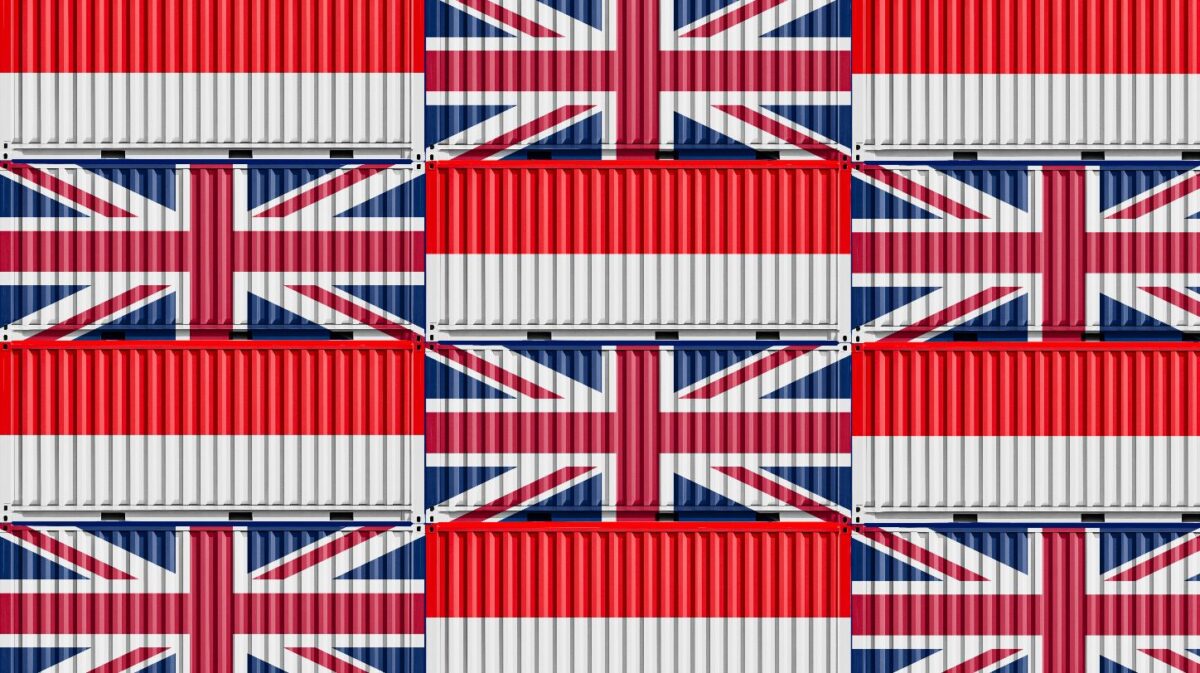 Economic Growth Partnership between UK and Indonesia: Building Resilient Supply Chains under Starmer and Prabowo">

The United Kingdom and Indonesia have formalized an Economic Growth Partnership (EGP) focused on reinforcing supply chains across clean energy, critical minerals, advanced manufacturing and defence.
What the new partnership covers
The agreement, signed in January when Prime Minister Sir Keir Starmer hosted President Prabowo Subianto at Downing Street, moves beyond rhetoric to practical, bilateral cooperation. The EGP commits both countries to mapping critical supply chains, sharing information where appropriate, and coordinating on policy and infrastructure projects that make supply chains more resilient and transparent.
Key sectors targeted
- Clean energy — supply of green technologies and the components that power decarbonisation.
- Critical minerals — ensuring secure access to raw materials vital for batteries and electronics.
- Advanced manufacturing — boosting industrial collaboration and supply security.
- Defence — aligning strategic supply chains to reduce bottlenecks and dependency risks.
Transport, ports and logistics improvements
A major plank of the EGP is enhanced cooperation on multimodal transport infrastructure, sustainable port development and broader logistics upgrades. Better coordination on ports, rail, road and last-mile distribution will reduce friction, lower transit times and help industry respond faster to disruptions.
What “multimodal” cooperation looks like in practice
- Harmonised port standards and environmental upgrades for sustainability.
- Intermodal hubs linking seaports with inland rail and road networks.
- Joint planning on warehousing and distribution to streamline throughput.
Semiconductors, skills and innovation
The EGP also aims to nurture a semiconductor ecosystem through knowledge sharing, human capital development and support for startups and innovation hubs. Semiconductors are the nervous system of modern industry — and building local skills and startup pipelines is a long-term play that reduces exposure to single-source shocks.
Benefits for manufacturing and tech startups
Capacity-building programs and joint incubators can accelerate local capability, while linking UK expertise with Indonesian scale. Think talent exchange, focused R&D projects, and joint venture opportunities for scale-up and manufacturing closer to demand.
Financial and employment implications
The EGP follows a separate £4bn Maritime Partnership Programme agreed in November, which is expected to support thousands of jobs across the UK — notably in Rosyth, Bristol and Devonport — and in Indonesia. That combination of investment and partnership signals that both capitals see value in protecting maritime and logistics capacity as strategic assets.
| Area | Expected outcome | Practical logistics impact |
|---|---|---|
| Maritime investment | Job creation, fleet capability | Stronger shipping links, more reliable marine haulage |
| Port upgrades | Faster throughput, greener operations | Reduced dwell time, lower port congestion |
| Supply chain mapping | Risk visibility | Improved sourcing plans, contingency routing |
How this affects logistics providers
Carriers, forwarders and warehousing operators should expect more demand for integrated πολυτροπικές λύσεις, plus opportunities for providing digital traceability services. Ports that invest in automation and sustainability will be better placed to capture traffic diverted from congested or less-digital peers.
Regional trade events and the bigger picture
Initiatives like IntraLogisteX Singapore highlight the Asia Pacific’s growing role in intralogistics and materials handling markets — forecast to be a multi‑billion dollar arena by 2030. Singapore remains a strategic node on the global logistics map, and closer ties between the UK and Indonesia will naturally interact with regional supply chain trends.
Practical takeaways for shippers and logistics managers
- Revisit your supplier maps: identify where critical minerals and components come from and how resilient those routes are.
- Build multimodal contingencies: combine sea, rail and road plans to reduce single-route exposure.
- Invest in skills and digital traceability: collaboration across borders thrives on data and trained personnel.
I’ll be honest: there’s a bit of “belt and braces” in this move — sensible, if not glamorous. In logistics terms, it’s the difference between relying on one bridge or ensuring there’s a detour when the bridge is closed. A decade ago I watched a small port revamp transform its throughput; the lead time is long, but the payoff is steady reliability when markets get choppy.
Forecast: what this means for global logistics
On a strictly global scale, this EGP is unlikely to rewrite shipping lanes overnight — its immediate impact is modest. However, regionally and strategically it’s meaningful: improved port capacity and coordinated supply chain mapping reduce local vulnerabilities, build redundancy, and support cleaner, more resilient freight movements. Over time, this could influence sourcing decisions and foster nearer‑shore manufacturing for critical goods.
Highlights and a practical call to action
The EGP highlights several important points: the value of mapping critical supply chains, the need for sustainable port and transport investments, and the role of skills and innovation in semiconductor and advanced manufacturing ecosystems. Yet, even the best policy statements and the most honest expert reviews can’t replace personal experience — seeing a route perform under pressure is the real test. On GetTransport.com, you can order your cargo transportation at the best prices globally at reasonable prices, which helps you test routes and providers without overspending. This empowers shippers to make smarter choices and avoid disappointments. Start planning your next delivery and secure your cargo with GetTransport.com. Book now GetTransport.com.com
In summary, the UK–Indonesia Economic Growth Partnership is a pragmatic step toward stronger, more resilient supply chains in key sectors such as clean energy, critical minerals, advanced manufacturing and defence. It combines targeted investment — including the £4bn Maritime Partnership Programme — with cooperation on logistics, ports, multimodal transport and skills development. For freight planners, shippers and logistics providers, the message is clear: map exposures, diversify routes, and invest in digital and human capital. Platforms like GetTransport.com simplify the practical side of these moves by offering affordable, global cargo transportation solutions for office and home moves, bulky items like furniture and vehicles, and business freight needs. That translates into better shipping, forwarding and haulage choices for international and domestic transport — in short, more reliable delivery, fewer surprises, and smarter logistics overall.