


 Ελληνικά
  English (UK)
  Русский
  العربية
  日本語
日本語  한국어
한국어  Magyar
  Türkçe
  Español
  Čeština
  Svenska
  Português
  Suomi
Suomi  Nederlands
  Română
  Italiano
  Français
  Polski
  Українська
  Deutsch
  简体中文
简体中文  Slovenčina
  Οι ναύλοι εμπορευματοκιβωτίων Ασίας-Ευρώπης παραμένουν σταθεροί πριν από το Σεληνιακό Νέο Έτος εν μέσω μεταβαλλόμενης δυναμικής ζήτησης και χωρητικότητας">

Weekly Freight Rate Overview
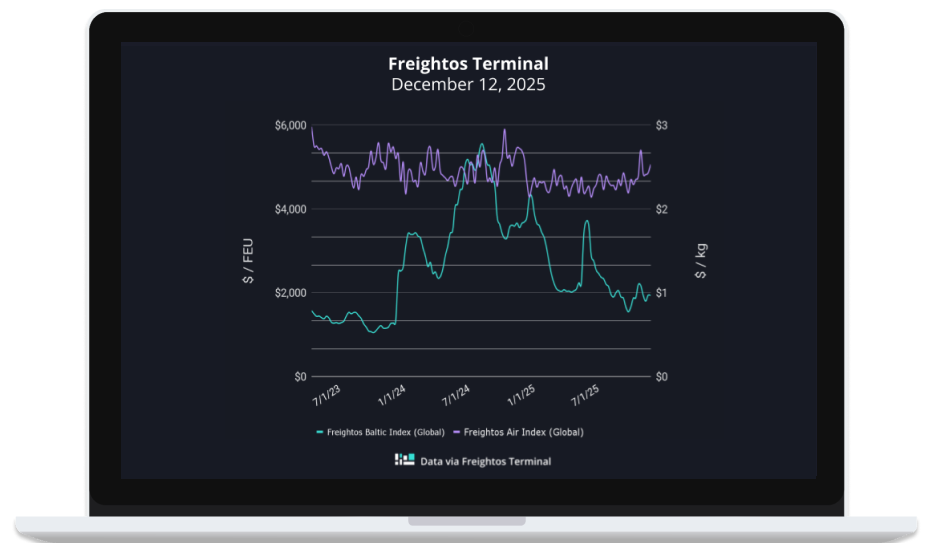
Container shipping rates between Asia and Europe remain elevated as the Lunar New Year approaches, despite signs of overcapacity in ocean freight. This article unpacks the recent rate movements, supply-demand dynamics, and market outlook for Asia-Europe and transpacific shipping lanes, shedding light on how these developments might ripple into the logistics and cargo transportation sectors.
Ocean Freight Price Fluctuations
- Asia to Northern Europe: Weekly prices dipped 4% to approximately $3.50 per kilogram.
- Northern Europe to North America: Rates edged up 2%, reaching around $2.53 per kilogram.
Current Rate Trends and Their Drivers
Despite a growing fleet capable of carrying more containers, rates on key Asia-Europe trade routes have held firm, buoyed by recent General Rate Increases (GRIs). For example, Asia to the Mediterranean routes stabilized at about $3,342 per FEU after a steady 15% climb over the past month, following a prior dip to a yearly low near $2,000 per FEU.
Similarly, shipping costs from Asia to Northern Europe remained steady at roughly $2,449 per FEU, maintaining a level above their mid-October lows of $1,700 per FEU. Reduced capacity over the last two months has slowly pushed rates upward. Interestingly, forwarders and carriers note a rise in early pre-Lunar New Year demand, with many shippers accelerating their orders, a pattern reminiscent of previous years when December rates surged because of lengthened delivery times due to Red Sea route disruptions.
Capacity Adjustments and Rate Outlook
To match this uptick, carriers are planning capacity expansions and additional GRIs that could push rates to $4,200 per FEU for Asia-Europe and $4,750 per FEU across the Mediterranean. Although freight volumes are up by 8.6% year-to-date, spot rates remain almost 54% below last December’s level, underscoring the impact of increased shipping capacity on price moderation.
Transpacific Shipping Insights
Across the Pacific, despite announced blank sailings and capacity cuts, carriers struggle to maintain recent GRI-induced price hikes. West Coast rates fell 6% after a brief rise at the beginning of the month to $1,963 per FEU, while East Coast prices increased 8% to hit $3,150 per FEU, though still down 15% from one month prior. These fluctuations suggest a challenging Q4 demand, with expectations that sustained rate increases will mainly materialize closer to the Lunar New Year.
Influence of Market and Regulatory Dynamics
Demand softness is partly linked to uncertainties, including the potential invalidation of certain tariffs. Some U.S. manufacturers are reportedly halting imports, anticipating tariff adjustments, which might lend further unpredictability to short-term shipping volumes. Meanwhile, expanding vessel fleets and upcoming deliveries of large ships add to the capacity growth, especially influencing secondary trade lanes and feeder services. This shift might create an aging small-vessel fleet, posing challenges for efficiently servicing these routes.
Red Sea route diversions persist, creating capacity constraints until insurers are comfortable resuming full traffic, likely requiring 60-90 days of calm conditions to mitigate risk concerns.
Trade Shifts Beyond the Ocean: Tariffs and Air Cargo
In a notable shift, Mexico has announced significant tariffs targeting goods from countries lacking trade agreements, including China. Although this impacts Chinese exports, recent growth reflects trade diversification efforts.
Air cargo volumes continue to rebound globally, driven by recovering e-commerce and general cargo demand, notably from Vietnam and China. Rates between key air routes vary, with China-US prices recently peaking above $8.00 per kilogram, higher than last year’s peak, while China-Europe rates slightly eased to $3.50 per kilogram due to shifting capacity alignment to busier lanes.
Table: Ocean Freight Rate Highlights (per FEU)
| Διαδρομή | Τρέχουσα Τιμή | Τάση |
|---|---|---|
| Asia – Mediterranean | $3,342 | Stable, up 15% since early month |
| Asia – Northern Europe | $2,449 | Stable, higher than mid-Oct low |
| West Coast US – Asia | $1,963 | Down 6% from early month |
| East Coast US – Asia | $3,150 | Up 8% but down 15% monthly |
Επιπτώσεις για την εφοδιαστική και τις μεταφορές φορτίων
These ongoing trends in freight rates and capacity reshuffle are far from just numbers on paper—they translate directly into the logistics world. Elevated rates ahead of the Lunar New Year hint at tighter supply and heightened demand, meaning companies must plan for potential price surges and space constraints.
For businesses arranging international shipments or moving bulky, heavy goods such as vehicles or furniture, understanding these market movements is crucial. Platforms like GetTransport.com shine here by offering flexible, competitive cargo transport options across global routes. Whether organizing an office relocation, a home move, or cross-continental freight forwarding, users can tap into a broad network of providers that adapt to market conditions, ensuring cost-effective and reliable delivery.
Βασικά συμπεράσματα
- Asia-Europe ocean freight rates have remained elevated due to pre-Lunar New Year demand and recent GRIs.
- Capacity expansion efforts by carriers may moderate this trend but will take time to offset demand peaks.
- Transpacific rates show more volatility, reflecting fluctuating demand and capacity adjustments.
- External factors like tariffs and route diversions create ongoing uncertainties that logistics providers must factor in.
- Air cargo complements ocean freight movements as global demand rebounds post-pandemic, highlighted by rising rates on key air lanes.
The Value of Personal Experience in Cargo Transportation
While data and market analysis offer valuable perspectives, nothing beats firsthand experience when it comes to cargo shipment decisions. Rates and trends might inform strategies, but each shipping requirement brings its own quirks and challenges.
Με GetTransport.com, shippers benefit from real-time access to some of the best global pricing and service options. This empowers them to make informed, budget-friendly choices without guesswork or unnecessary fees. The platform’s ease of use, transparency, and wide selection of transport providers cover everything from small parcels to large pallet shipments and bulky items.
Book your ride conveniently and seize the best offers available at GetTransport.com.
Looking Ahead: Freight Market Prospects
On the global logistics stage, while the immediate impact of these rate trends may seem niche to some, they remain a significant pulse check on the shipping industry’s health as it approaches a peak season. Supply chain managers and freight forwarders must stay vigilant to these shifts, balancing capacity planning and cost management.
GetTransport.com continuously monitors these developments to offer clients up-to-date and adaptable cargo transportation solutions. Start planning your next shipment and secure your cargo with confidence through GetTransport.com.
Συμπέρασμα
In summary, the Asia-Europe shipping lanes remain under pressure from early Lunar New Year demand, elevated rates from successive GRIs, and shifting capacity landscapes. While capacity additions and route diversions influence price moderation, uncertainties like tariff adjustments and insurer conditions on risky routes play their part. Transpacific routes add another layer of complexity with more volatile rate moves, mirrored by an uptick in air cargo demand.
For businesses navigating these dynamic freight markets, flexibility and cost-consciousness are key. Platforms like GetTransport.com bridge the gap between market volatility and shipment certainty by providing reliable, affordable, and vast transportation options worldwide. Whether moving office goods, bulky freight, vehicles, or household items internationally, GetTransport.com simplifies logistics with transparent pricing and seamless booking, helping shippers keep their deliveries on track in an ever-evolving freight environment.