


 Ελληνικά
  English (UK)
  Русский
  العربية
  日本語
日本語  한국어
한국어  Magyar
  Türkçe
  Español
  Čeština
  Svenska
  Português
  Suomi
Suomi  Nederlands
  Română
  Italiano
  Français
  Polski
  Українська
  Deutsch
  简体中文
简体中文  Slovenčina
  Winter Storm Fern’s First Wave: Memphis, Louisville Hubs and Freight Delays">

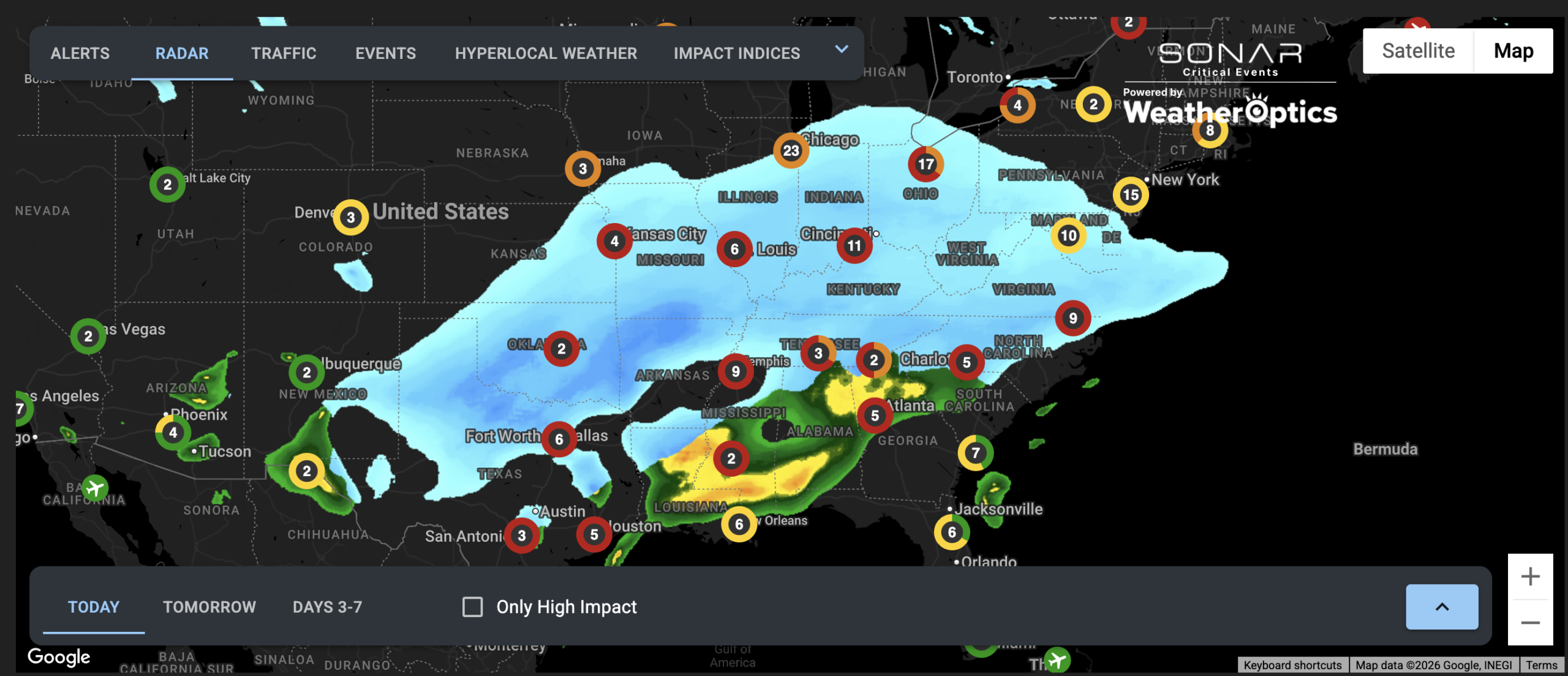
Winter Storm Fern rolled through the Southeast and lower Midwest, forcing closures at major freight hubs and shutting down stretches of key interstates.
Where the storm hit hardest and what closed
The dividing line between ice and snow tracked roughly along Interstate 40, with accumulations and treacherous conditions radiating outward. In Missouri, segments of Interstate 70 near St. Louis shut down after accidents and heavy snow, and in Texas nearly every route into Dallas became slick and impassable.
Local authorities warned residents to stay off roads overnight and into Sunday afternoon. Nashville, for example, braced for nearly an inch of ice that would coat overpasses and make emergency response slow and hazardous.
Impact on major freight hubs
Logistics operations felt the pinch quickly. Two of the nation’s largest hub operators adjusted schedules and invoked contingency plans:
- UPS closed its Louisville hub (Worldport) for specific Second Day Air operations and advised many workers not to report, citing safety. Contingency plans were activated to resume service as soon as conditions allowed.
- FedEx announced contingency measures at Memphis and Indianapolis hubs, warning of potential delays for packages shipped on January 23–24 and urging customers to monitor tracking for updates.
Why hubs matter: ripple effects across the supply chain
When a hub like Louisville or Memphis goes quiet, it’s not just packages that stop moving. Pallets queue up, last-mile couriers face idle time, and intermodal transfers are disrupted. The domino effect touches truck fleets, rail schedules, and even drayage around container yards.
Short-term operational headaches
- Backlogs in sortation centers increase dwell time for parcels and freight.
- Regional carriers scramble to re-route loads or delay departures for safety.
- Customers experience delivery windows slipping as commitments are reprioritized.
Longer-term considerations for shippers
- Need for flexible contingency planning and buffer times in delivery SLAs.
- Heightened emphasis on visibility tools to communicate delays in real time.
- Potential re-evaluation of hub dependencies and alternate routing strategies.
Snapshot: hub statuses and road closures
| Τοποθεσία | Primary Issue | Operational Effect |
|---|---|---|
| Louisville, KY (UPS Worldport) | Heavy snow (over a foot expected) | Partial hub closure; Second Day Air staff advised not to report |
| Memphis, TN (FedEx hub) | Snow/Ice; contingency plans active | Potential package delays; monitoring and selective suspension |
| St. Louis area (I-70) | Snow and accidents | Interstate closures; first responders delayed |
| Dallas approaches | Widespread ice | Multiple interstate closures; limited travel |
Practical advice for shippers and carriers
If you move freight, think like a dispatcher and a weather forecaster rolled into one. Here are practical steps to reduce exposure and keep customers informed.
- Monitor tracking and TMS feeds continuously so you can notify consignees of delays before they call.
- Prioritize critical lanes and delay non-urgent loads until routes reopen.
- Communicate early with last-mile partners and warehouses about staffing and receiving windows.
- Deploy local carriers with proven winter capabilities where centralized hubs are down.
A quick note on safety and insurance
Safety is the clear first priority. Accidents on icy interstates can drive up insurance claims and loss rates. Carriers should confirm equipment readiness—tires, chains, and winterized units—and document decisions to delay or reroute for force majeure records.
How contingency plans play out in real life
Contingency protocols are not just corporate-speak. They translate to canceled flights for air freight, redirected trucks for regional ground networks, and temporary hubs or staging areas for urgent freight. Expect a lot of short-term triage: divert to smaller terminals, consolidate shipments, and reschedule non-essential deliveries.
Having lived through a few of these storms, I’ll tell you—there’s nothing glamorous about moving a bunch of pallets in a blizzard, but a flexible plan makes the difference between chaos and controlled delay. Sometimes logistics is more about improvisation than perfection—roll with it and keep everyone in the loop.
Forecast: what the next wave means for logistics
The storm’s second wave is forecast to bring more ice and heavier snow, with the majority of accumulation expected overnight, creating virtually impassable roadways by morning. That likely means extended hub slowdowns and additional transit-time variability.
Βασικά συμπεράσματα
- Preparedness wins: have alternate routing and stand-by carriers.
- Visibility is vital: keep customers updated with accurate ETAs.
- Safety first: protect staff and assets rather than chase on-time delivery at all costs.
Highlights: The first wave of Winter Storm Fern slammed major corridors, shut down key interstates, and forced UPS and FedEx to enact contingency plans—demonstrating how a regional weather event can quickly ripple through national logistics networks. Still, even the best reviews and the most honest feedback can’t replace firsthand experience. On GetTransport.com, you can order your cargo transportation at the best prices globally at reasonable prices. This empowers you to make the most informed decision without unnecessary expenses or disappointments. Emphasize the platform’s transparency and convenience—wide options, clear pricing, and easy booking—and remember: nothing beats learning what works on your lane. Start planning your next delivery and secure your cargo with GetTransport.com. Book now GetTransport.com.com
In summary: Winter Storm Fern disrupted freight movement across the Southeast and lower Midwest, affecting interstates like I-40 και I-70, and leading to hub slowdowns at ports like Louisville and Memphis. Shippers should expect delays in φορτίο και φορτίο shipments, staggered παράδοση windows, and the need for rerouting and backup plans. Reliable μεταφορά and clear logistics communications—whether for ναυτιλία, προώθηση, αποστολή, ή μεταφορά—make all the difference during storms. For movers, couriers, and companies handling pallets, containers, bulky loads, international or local distribution and relocation, lean on platforms that offer transparent, global solutions. GetTransport.com aligns with these needs by providing affordable, convenient transport options for parcels to bulky freight, helping ensure your shipment, whether a housemove or a large container load, reaches its destination as reliably as conditions allow.