


 Ελληνικά
  English (UK)
  Русский
  العربية
  日本語
日本語  한국어
한국어  Magyar
  Türkçe
  Español
  Čeština
  Svenska
  Português
  Suomi
Suomi  Nederlands
  Română
  Italiano
  Français
  Polski
  Українська
  Deutsch
  简体中文
简体中文  Slovenčina
 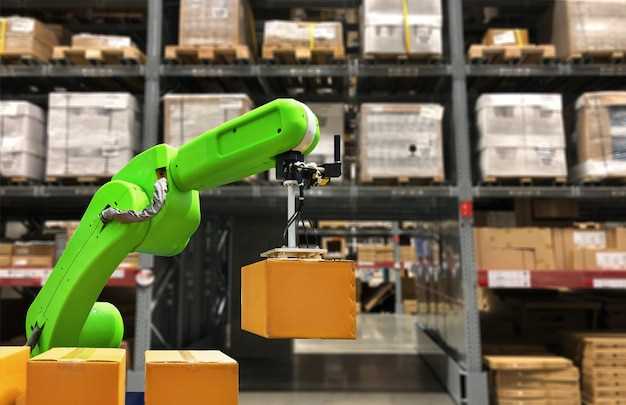 Warehouse Robotics – Automating Fulfillment for Faster, Safer Warehouses">

Start with a compact fleet of autonomous mobile robots in high-throughput zones to accelerate fulfillment, delivering substantial gains in speed and safety. This automation reduces manual travel, helping workers stay focused on higher-value tasks while the system collects real-time data to inform daily decisions.
The robots perform a defined function: they collect items from shelves, confirm SKUs, and guide pickers through the floor without creating congestion. Through a centralized control layer, managers see task status, bottlenecks, and energy use, enabling faster decisions than manual scheduling alone. The approach maintains a wide scope of operations and sets the stage for scaling.
In practical terms, pilots show a substantial lift in throughput across a wide footprint: automated shuttles move products from receiving to put-away and then to picking zones with reduced travel time by 25–40% and error rates down 15–20%. The likely ROI appears within 12–18 months when integration includes a change management plan and staff training. To support action, addverbs in task labels clarifies actions for operators and systems alike.
To ramp safely, pair the tech with clear safety controls: secure zones, geo-fenced paths, and automated stop rules. Ασφάλεια and auditability matter for executives tracking performance and protecting workers. Use a staged rollout: a two-week pilot, followed by 90 days of validation, then sitewide deployment to maintain service levels while keeping staff engaged. Next steps include expanding to additional zones and processes to sustain momentum.
Beyond speed, automation shapes how a business plans for peak seasons and new product introductions. The approach standardizes processes, collects consistent data, and supports decisions with a single platform spanning inbound, put-away, and outbound tasks. This wide strategy benefits workers across roles and helps leadership control costs while maintaining service levels, guiding the next steps with confidence rather than reaction.
Practical applications shaping fulfillment workflows
Start with modular pick-and-pack cells and a lightweight task broker that assigns action to human workers and robot partners in real time, delivering a substantial lift in output and reducing walk time across orders by 20–35% within the first two sprints, with numbers confirming the improvement.
Track numbers such as pick rate, dwell time, and error rate to fuel a rules engine and practical strategies that prioritize orders by urgency, pack complexity, and stock availability, creating learning loops that improve routing and slotting decisions daily.
Provide valuable guidance to teams, including clear action items, by translating analytics into simple directives; dashboards present insights that teams can act on, revealing substantial capacity gains and new capabilities across sites.
Design processes that are modular and scalable, with seamlessly integrated automation into ERP and WMS, so capabilities transform workflows without disrupting human labor; this approach supports scalability as volumes rise.
Develop break points playbooks for exception handling, ensuring human and automated systems perform reliably; include error handling, quality checks, and escalation actions to keep output steady and processes efficient.
Enable continuous learning by capturing data across supply, receiving, picking, packing, and shipping; share insights with cross-functional teams to accelerate guidance and solidify numbers, turning data into action and becoming more autonomous.
Impact on picking density and order accuracy
Invest in integrated lidar-assisted picking systems to boost density and accuracy across diverse environments within warehouses.
Robotics, designed for working alongside human workers, dramatically increase picking density by optimizing routes and reducing handling time. In controlled pilots, density rose 30-50% and order accuracy reached 99.9-99.98% with integrated verification steps. These gains depend on product mix, shelf spacing, and the robustness of decision-making algorithms.
Robots designed for working within dynamic environments must be paired with sensors and software that assess paths in real time. This integration reduces backtracking and raises throughput, particularly for high-SKU mixes.
- Integrated sensing and lidar mapping cut travel distances by 20-35%, especially in narrow aisles and high-density racking.
- Diverse product handling: end-effectors designed to grip varied shapes, sizes, and packaging while minimizing product damage.
- Decision-making: real-time data alongside WMS informs the pick sequence, reducing backtracking and enabling faster order completion; cycles improve 5-15%.
- Handling and risks: item verification before placement reduces mis-picks; use barcode or vision checks to catch errors before final packing, lowering returns and customer dissatisfaction.
- Process alignment: integrate robotics into existing processes so robots pick from the same stock locations as human pickers; ensures consistency and reduces handling steps.
- Within customer fulfilment: faster processing improves SLA adherence; combine with batch picking to handle multiple orders efficiently.
Challenges include calibration, lighting variations, and fluctuating product densities. To assess impact, run a 4-6 week pilot in a single zone, then compare with baseline data on order-level accuracy and density. Made improvements require ongoing maintenance and staff training on lidar-driven maps and decision rules; rather than a fixed system, design for scalable upgrades and regular data reviews.
Total cost of ownership: equipment, maintenance, and integration
Next, involve finance, operations, and IT in a detailed 3-year TCO baseline that itemizes equipment, maintenance, and integration costs, then track projected savings in throughput, accuracy, and safety. This baseline supports coordination across warehouses and processes and helps avoid scope creep. Recognizing variability in supplier terms, lock in a standardized scope for hardware, software, and services.
Equipment costs fall into three bands: robotic arms typically $25k-$100k per unit; autonomous mobile robots $40k-$120k; end-of-arm tooling $5k-$25k. Add installation and commissioning of $15k-$50k per workcell, plus any integration layer to connect with existing controls and WMS/TMS.
Maintenance costs usually run 5-15% of equipment value per year, covering spare parts, firmware updates, and remote diagnostics. Build a maintenance plan with defined spare-part levels and guaranteed response times to minimize impact on output during faults.
Integration expenses often account for data interfaces, API work, and coordination with enterprise software. Typical ranges: $20k-$100k depending on data models and customization. Ensure standard interfaces and documented schemas, and cite источник benchmarking data to guide procurement and vendor selection.
Energy and training: estimate energy use at 1-3 kW per robot, yielding annual energy costs of $500-$2,000 per unit. Include training and upskilling costs: $2k-$10k per technician, plus cross-training for flexible shifts.
Downtime and anticipated gains: downtime reduction of 20-40% over three years is common with robust maintenance and seamless software updates, translating into substantial output gains and faster payback.
Example scenario: a 100,000 sq ft facility with 20 robotic arms and 10 AMRs yields equipment costs around $2.2-$3.2M; three-year maintenance $0.25-$0.75M; integration $0.3-$0.8M; energy and training $0.2-$0.4M; total TCO around $2.95-$4.95M; ROI from throughput uplift typically 15-25% over the period.
To curb TCO, pursue modular, scalable hardware, standardized interfaces, flexible service contracts, and vendor-managed services. Build a centralized telemetry platform to collect real-time KPIs and support seamless output optimization. Develop internal robotic expertise to handle routine function maintenance, enabling faster response times and coordinated operations. Ensure spare-parts availability and clear escalation paths to accelerate fixes while expanding fleets as needed, becoming more competitive as you scale in a controlled way.
Safety benefits: risk reduction and ergonomic improvements
Adopt an artificial risk-assessment-driven automation layer to assess tasks and transform workflow, significantly reducing ergonomic strain for pickers and elevating safety.
Automated grip and lifting tools, guided by integration with the human team, enhance the picker experience by taking on awkward postures across each cycle and reducing peak loads.
Integration across sortation and processing tasks distributes risk across diverse roles and machinery, whether you run a single site or a multi-location network; this approach supports scale.
Data from facilities that adopt this approach show processing-time gains and significantly lower ergonomic stress; even small changes compound as you expand automation.
Once you identify high-risk motions, implement targeted ergonomic improvements such as adjustable height stations, powered assist devices, and improved trolleys; each change reduces the workload.
To realize these gains, establish a safety lead and a practical risk assessment tool, train teams, and monitor impact with a simple dashboard; perhaps schedule quarterly reviews to refine the approach and keep experience positive.
Data and control integration: syncing with WMS, ERP, and PLCs
Implement a unified API gateway to connect WMS, ERP, and PLCs, enabling real-time processing across the workflow.
This evolving, highly scalable integration layer minimizes data silos, shortens processing cycles, and improves interaction across systems.
According to standardized data models, you can remove duplicates, align command and handling, and accelerate decision-making across year-by-year operations.
The investment pays off through total savings and a scalable path that supports managing variety of orders and assets.
This shift dramatically reduces manual handling and speeds the command chain.
In the industry, the method supports total gains and faster fulfillment cycles.
To assess readiness, map data flows, define event producers, and set up a governance process that removes bottlenecks.
| Όψη | WMS | ERP | ΑΠΕ | Όφελος |
|---|---|---|---|---|
| Δεδομένα συμβάντων | Κατάσταση αποθέματος, κυκλοφορίες κυμάτων | Παραγγελίες, τιμολόγηση, ζήτηση | Κατάσταση μηχανής, ενδείξεις αισθητήρων | Συντονισμένες εντολές, ταχύτερος χειρισμός |
| Στόχος καθυστέρησης | 100-250 χιλιοστά του δευτερολέπτου | 1-2 δ | Κάτω από 50 ms για χειριστήρια | Μειωμένοι χρόνοι αναμονής |
| Κάτοχος διεπαφής | IT/Αυτοματισμός | Λειτουργίες/Οικονομικά | Έλεγχος ομάδας προμηθευτή/PLC | Σαφής λογοδοσία |
| Μορφή δεδομένων | Πρότυπα JSON/XML | Σχήματα ERP, κύρια δεδομένα | OPC-UA/MQTT | Ομαλότερη επεξεργασία |
| Ασφάλεια | Διακριτικά, κρυπτογράφηση | RBAC, έλεγχος | Στρώματα ασφαλείας ISA/IEC | Μειωμένος κίνδυνος |
Με αυτήν την αρχιτεκτονική, διασφαλίζετε μια κλιμακούμενη, μακροπρόθεσμη επένδυση που αποδίδει εξοικονομήσεις από έτος σε έτος, ενώ χειρίζεστε μια ποικιλία παραγγελιών και προφίλ εξοπλισμού.
Από πιλοτικό σε κλίμακα: σχεδιασμός, ανάπτυξη και διαχείριση αλλαγών
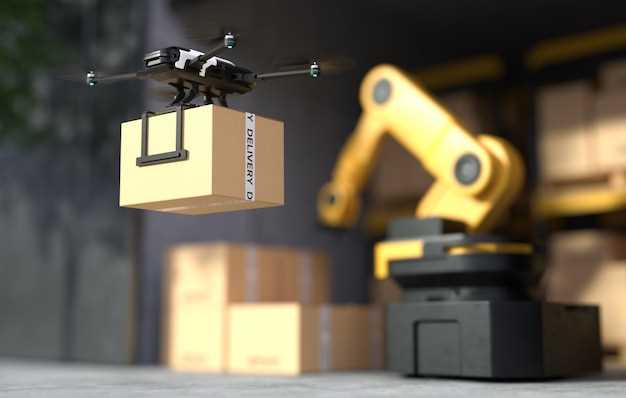
Recommendation: Ξεκινήστε ένα πιλοτικό πρόγραμμα μίας ζώνης και θέστε ορόσημα έγκρισης/απόρριψης μετά από τέσσερις εβδομάδες και, στη συνέχεια, επεκταθείτε σε μετρημένα κύματα για να διατηρήσετε τον έλεγχο.
Σχεδιασμός με χρήση ενός αρθρωτού σχεδίου ανάπτυξης που μπορεί να αναπαραχθεί σε όλες τις τοποθεσίες. Καθορισμός εξελιγμένων διαμορφώσεων για κάθε εγκατάσταση, καθιέρωση ορόσημων ανάπτυξης και δημιουργία ενός σαφούς κύκλου διακυβέρνησης για τη διατήρηση της ευθυγράμμισης των ενδιαφερομένων μερών. Με μια αρθρωτή στοίβα ρομποτικής, οι αναπτύξεις μπορούν να επαναληφθούν σε όλες τις τοποθεσίες με μειωμένο κίνδυνο και το σύστημα μπορεί να προσαρμοστεί στην κυμαινόμενη ζήτηση. Αυτό οδηγεί σε σημαντικά υψηλότερη απόδοση και αξιοπιστία σε όλο το δίκτυο.
Εφαρμογή σε στάδια: ξεκινήστε με μία ζώνη και στη συνέχεια επεκταθείτε σε άλλες χρησιμοποιώντας προκαθορισμένη αλληλουχία και ελέγχους παράδοσης. Κάθε τοποθεσία θα πρέπει να ορίσει τους κανόνες τοποθέτησης και τη λογική δρομολόγησης, διατηρώντας παράλληλα τις τυπικές διεπαφές με το σύστημα ελέγχου αποθήκης. Αυτή η προσέγγιση προσφέρει στις ομάδες σαφήνεια και μειώνει τον χρόνο διακοπής λειτουργίας κατά τις μεταβάσεις.
Διαχείριση αλλαγών απαιτεί ένα σαφές σχέδιο: καθιερώστε ένα πρόγραμμα επικοινωνίας, ένα εκπαιδευτικό μάθημα και ένα κεντρικό εγχειρίδιο. Δημοσιεύστε εσωτερικές ενημερώσεις για να μοιραστείτε τα διδάγματα που αντλήθηκαν και να παρέχετε πρακτική εξάσκηση με εργασίες διαλογής, συσκευασίας και χειρισμού. Ορίστε πρωταθλητές στο χώρο εργασίας που μπορούν να απαντήσουν σε ερωτήσεις και να καθοδηγήσουν τους χειριστές στις νέες ροές εργασίας. Παρακολουθήστε τα ποσοστά υιοθέτησης και προσαρμόστε το βάθος της εκπαίδευσης για να διατηρήσετε τις ομάδες σίγουρες καθώς οι ρόλοι εξελίσσονται.
Μετρήσεις και διακυβέρνηση: καθορίστε ένα σύνολο KPI – αντικείμενα που μετακινούνται ανά ώρα, ποσοστό συλλογής, ποσοστό σφαλμάτων και χρόνος καλής λειτουργίας του εξοπλισμού. Χρησιμοποιήστε έναν πίνακα ελέγχου για να παρακολουθείτε την απόδοση σε πραγματικό χρόνο και να ενεργοποιείτε διορθωτικές ενέργειες. Δημιουργήστε μια ισχυρή διαδρομή κλιμάκωσης για αστοχίες και μια διαφανή περιοδικότητα αναθεώρησης, ώστε οι ηγέτες να προσαρμόζουν τις προσεγγίσεις και να διατηρούν τη δυναμική προς την κλιμάκωση.
Διαχείριση κινδύνων και αρχιτεκτονική: διατηρείτε μητρώο κινδύνων που να καλύπτει την ασφάλεια, τη συντήρηση, τους κυβερνοκινδύνους και την ακεραιότητα των δεδομένων. Εφαρμόστε μια προσέγγιση βάσει δεδομένων για τον εντοπισμό πιθανών σημείων αστοχίας και προσθέστε πλεονασμούς πριν επηρεάσουν τις αποστολές. Δημιουργήστε μια αρθρωτή αρχιτεκτονική που να μπορεί να προσαρμοστεί σε νέα μεγέθη προϊόντων και συσκευασίας, διασφαλίζοντας μια ομαλή μετάβαση στις διαμορφώσεις και τις χωρητικότητες καθώς αυξάνεται η ζήτηση.
Βιομηχανικές εκτιμήσεις: στην εκπλήρωση κατασκευαστικών αναγκών, οι τυπικές διεπαφές και τα κοινά μοντέλα δεδομένων επιταχύνουν την ενσωμάτωση και μειώνουν τις τριβές με τους προμηθευτές. Αυτή η ευθυγράμμιση μειώνει τον χρόνο ενσωμάτωσης και επιταχύνει τις αναπτύξεις σε πολλαπλές τοποθεσίες. Δημοσιεύστε εσωτερικές ενημερώσεις και μελέτες περιπτώσεων για να τονίσετε τι λειτουργεί στις διαμορφώσεις σταδίων και τι χρειάζεται τροποποιήσεις στις προσεγγίσεις δρομολόγησης για να παραμείνετε ανταγωνιστικοί στον κλάδο.