Descargar la aplicación


Autor
El auge del nomadismo digital está transformando la industria de viajes, ofreciendo una gran oportunidad para quienes se adaptan. Los nómadas digitales buscan destinos aptos para el trabajo con riqueza cultural, y satisfacer estas necesidades posicionará a tu negocio como una opción de confianza. Ahora es el momento de alinear tus servicios con esta tendencia creciente y aprovechar el creciente mercado de trabajadores remotos ansiosos por explorar el mundo.

Delivering Digital Transformation for Third-Party Logistics
Implement a vendor-neutral data integration layer within 90 days to synchronize WMS, TMS, ERP, and carrier systems. This creates real-time visibility across transport legs, warehouses, and last-mile partners, enabling faster response and reducing stockouts by up to 15%. Leverage digitalization to unify data silos where data flows from suppliers, carriers, and customers into a single analytics layer. A clear API-first strategy lets many partners exchange events without bespoke integrations, shortening onboarding to under four weeks for key vendors and reducing manual touches by greater than 40%. We focus on exploring trends in automation, data sharing, and collaborative planning. By creating

Best Procurement Cost Reduction Strategies for 2025
Begin with supplier consolidation across core categories to secure an 8-12% decrease in annual procurement spend by 2025. Build a shortlist of 15-20 suppliers based on benchmarks such as price, reliability, and lead time; compare internal data against external benchmarks to identify underperformers and release budget for strategic investments. Calculate the total cost of ownership (TCO) across categories using internal spend data. Add freight, duties, quality incidents, and obsolescence. Use a number- of adjustments to the supplier base to push performance, ensure contracts reflect realized savings, and set clear renewal windows. This provides the ultimate framework for negotiation.

5 Ways to Strengthen the Manufacturing Industry Supply Chain With EDI
Begin with a standardized EDI mapping across all providers to cut data-entry errors and boost timely order processing. This foundation enables seamlessly data exchange and the use of technologies to translate diverse formats into your ERP, reducing manual touchpoints. With clear mapping, you can assess issues before they cascade, ensuring accurately captured data and improving quality . This setup supports scale as you add new suppliers, delivering benefits across many part families and geographies. Invest in EDI-enabled visibility to track orders, shipments, and invoices in real time. This increases timeliness and reduces issues by surfacing exceptions early, so teams can respond within

The 11 Most Common IT Processes Automated with RPA
Start with a quick, concrete recommendation: automate your time-consuming IT tasks now, beginning with front-office requests to cut cycle time and reduce delays. The logic is simple: move routine actions into a repeatable flow so teams exchange data without manual handoffs, generating faster results and a clearer status for stakeholders. To gain traction, map the 11 most common IT processes to RPA workflows, then pilot one high-impact area. The platform detects issues early, carries data across systems, and generates traceable logs that keep requests moving smoothly. Begin with order processing, data entry, and password resets to demonstrate quick wins. As you scale, uncover specifics of
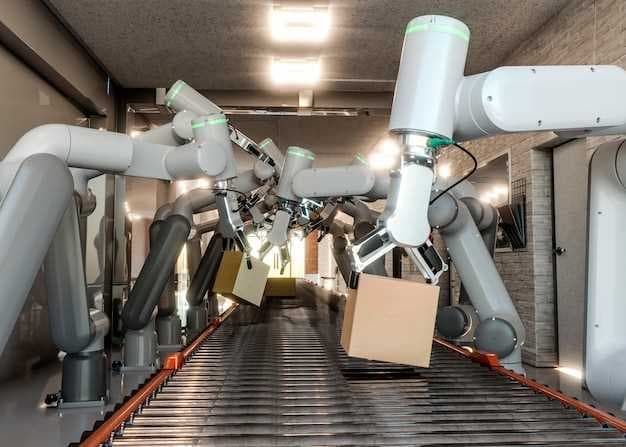
Flexibility as Strategy - How Adaptive AMR Robots Build Material Handling Resilience
Recommendation: implement adaptive AMR robots with modular routing and interchangeable gripper modules to reconfigure the warehouse workflow in minutes, strengthening warehouse automation across changing layouts. This approach keeps material movement steady when demand or layout shifts occur, reducing downtime and the need for manual rerouting by technicians. Testing protocols at a controlled site and then in a live warehouse setting illuminate where gains occur. Track metrics such as cycle time, pick rate, error rate, and resources allocation. In this phase, technicians observe a reduced manual handling load, and some tasks shift from human labor to robotic assistance. The data should show

20 Best Logistics KPIs &
Recommendation: Publish weekly scorecards for each operation with owner, target, and trend. Use real-time dashboards today to replace paper reports, improving oversight for the stakeholder and the manager, and speeding informed decisions. Align KPIs with surrounding demand, shortages, and loading performance. Track sales impact and customer service through a concise set of indicators. Build libraries of benchmarks, including bang-jensen references, so teams compare against proven baselines rather than guessing. Keep the data in a centralized library and ensure accessibility for all decision-makers. Assign data ownership to a single manager and create a lightweight paperless process. Replace

Will AI Have Rights? Balancing Technology and Human Rights in an Evolving World
Recommendation: Establish a collaborative, rights-based framework and implement transparent ethics audits to guide innovations toward human dignity, without stifling creativity or best practices. To address complexities and unknown risks, governments and the private sector must adopt a shared, collaborative approach that includes broad recruitment of voices from technology, law, ethics, civil society, and affected communities. This approach must attract best practitioners, enhance ethics, and set guardrails that keep creativity within ethical boundaries while safeguarding human rights. In this article, we outline concrete steps: first, codify AI accountability with auditable decisions;

Shippers Claim Class I Railroads Fines Are Unfair, Illogical, and Arbitrary
Adopt a standardized, auditable procedure for fines now to ensure penalties match actual violations and align with statutorily defined oversight. The fact is that many claims center on accessorial charges that appear unfair when the record lacks a transparent link to the cited conduct; implement clear notice, a defined appeal window, and a requirement to show how the penalty upholds safety and local operations. Focus on penalties arising from down shipments and unused capacity, and design a framework that avoids exerting interference with operations and restores trust when an error is found. Publish clear metrics and allow independent review to curb accessorial penalties that appear

6 Reasons to Modernize Your Warehouse with Android Devices - Boost Efficiency, Accuracy, and ROI
Upgrade your warehouse with Android devices now to cut order processing times and boost accuracy. Choose tc2x and ta24 handhelds, pair with a simple cloud dashboard, and you’ll see tangible wins in order throughput rate . With their rugged builds, these devices handle all-day use and keep data synchronized across the team. This is a clear move that your staff will recognize as a real improvement in performance. Android devices enable various workflows on the floor–from picking to replenishment–while maintaining security and compliance. They replace older scanners that require frequent maintenance ; the result is faster pick rate and fewer errors. Asset tracking becomes transparent: each

Kiva Systems Acquired at a Very Steep Price - What It Means for Amazon Robotics
Recommendation: Build a full automated flow on kivas with lifting modules that can customize retrieval for different orders, reduce manual handling, and accelerate loads across office operations. Looking into the future, many fulfillment centers will need solutions that reduce cycle times and errors. Kiva-based cells deliver a smart , automated flow that coordinates lift and retrieval, turning routine picks into hands -free operations and lowering risk to loads across the line. In practice, teams should map current needs, pilot a handful of kiva units, and measure reductions in touch time. This approach supports both typical office-to-warehouse moves and complex multi-order flows, looking

Data Streaming in Healthcare and Pharma - Use Cases and Insights from Cardinal Health
To start now, move from batch reporting to a streaming data fabric around Cardinal Health's network that ingests signals from suppliers, warehouses, labs, and EHR/LIMS feeds. This presence of live data, which provides immediate visibility, lets a small operations team detect anomalies within seconds, trigger actionable alerts, and keep the right people informed. Those signals help align inventory, manufacturing, and clinical workflows in a single, coherent view. Over years of operations, those teams have learned that real-time signals reduce delays in responding to stockouts, temperature excursions, or QA issues. They will appreciate the predictable throughput and reduced variance in

Top 7 Capacity Planning Tools to Optimize Your Resources - A Comprehensive Guide
Recommendation : Use an automation-driven capacity planning tool that track their resources and costs. Look for a solution with monthly dashboards and a simple UI, plus the ability to export data in usdfrom formats to simplify budgeting for managers and a broker. This doesnt require a big IT project and would quickly deliver actionable insights. It also considers how it handles onboarding for teams. When evaluating options, consider the disadvantages of each tool: data lock-in, integration friction, and limited scenario modeling. Also assess which integrations are supported and whether they come with prebuilt connectors. Ensure the tool can connect to your existing processes and keep fixed
