Descargar la aplicación


Autor
El auge del nomadismo digital está transformando la industria de viajes, ofreciendo una gran oportunidad para quienes se adaptan. Los nómadas digitales buscan destinos aptos para el trabajo con riqueza cultural, y satisfacer estas necesidades posicionará a tu negocio como una opción de confianza. Ahora es el momento de alinear tus servicios con esta tendencia creciente y aprovechar el creciente mercado de trabajadores remotos ansiosos por explorar el mundo.

Grasshopper Now Integrates with Hub Group - Seamless Logistics
Start with real-time visibility: connect Grasshopper with Hub Group now to reduce transit times and boost customer confidence across groceries and e-commerce orders. Using this combined approach, you gain a single-source view of shipments, enabling proactive decisions and faster exception handling. The solution fuses Hub Group's network with Grasshopper's crowdsourced , driven routing, streamlines scheduling, pick-up, and delivery processes. This offering connects carriers, shippers, and warehouses in a shared brand context, reducing handoffs and driving reliability across routes. In practice, the integration boosts the industry by delivering faster groceries and e-commerce fulfillment.
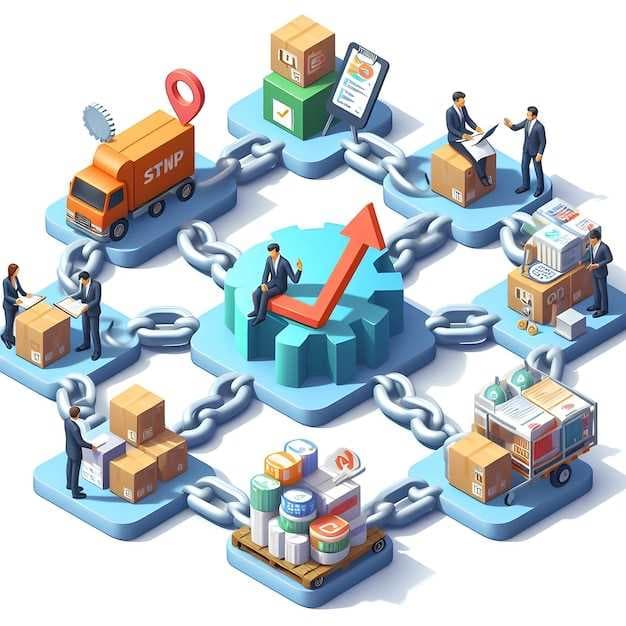
Supply Chain Agility - 6 Proven Strategies to Improve Agility
Embed demand sensing across your network today to cut inefficiencies and raise service levels. Real-time insight on customer orders helps you align production, distribution, and inventory. Start with a simple pilot in a major product family, measure the impact on lead time and fill rate, and learn what works before scaling. This approach creates opportunities to adjust plans at the instance when events unfold, rather than after the fact, helping your team stay able to respond under pressure. Beyond demand sensing, six proven strategies frame a practical path to rising agility. First, embed cross-functional data sharing and human collaboration into your planning loop; second, track

The State of the LTL Market in 2025 - Trends, Forecasts, and Key Insights
Recommendation: Deploy real-time visibility across every shipment using a single cloud platform that works with your systems and carrier data. This quick change reduces cost and detention, improves compliance , and speeds onboarding for new products across many customers. Market dynamics show that many shippers now rely on real-time routing, lane consolidation, and close monitoring of charging needs for mixed fleets. Carriers with integrated data across systems and depot budgets report higher equipment utilization and fewer empty miles; petrol usage stays stable while charging reduces emissions for long-haul moves. Forecasts for 2025 estimate single-digit growth in several regions, with

The Impact of COVID-19 on Supply Chains - A Systematic Review and Future Research Directions
Invest in diversified supplier networks to strengthen capacities against COVID-19 shocks. This article synthesizes evidence from journals across fields, offering concrete guidance for managers and policymakers. For example, lead times in electronics and automotive sectors lengthened by 40–60% in 2020–21, while payment terms tightened by 10–25% to preserve liquidity, and procurement shifted online to maintain operations. Using a data-driven approach, the review collates findings from 68 articles across 21 journals, spanning manufacturing, healthcare, retail, and logistics. The evidence reveals regional disparities and inequality in resilience between large firms and smaller suppliers. The

WMS - A Comprehensive Guide to Warehouse Management Systems
Recommendation: Build a WMS with real-time stock visibility, barcode scanning, and seamless ERP integration to cut stockouts and lift service levels. This setup eliminates data mismatches that slow cycles, reducing errors and speeding picking, packing, and shipping. Having a modular architecture allows you to scale and adapt quickly. A well-structured WMS splits into core functions and optional services, facilitates targeted upgrades and minimizes downtime without disrupting operations. Most deployments benefit from cloud-native components that support continuous improvement with minimal disruption. Key functions include inbound receiving, putaway, cycle counting, picking, packing,

Tackling Port Congestion - Essential Insights for Global Trade
Adopt a shared information platform linking shippers, ports, customs, and trucking partners to synchronize schedules and cut dwell time. Use levers such as pre-booked berths, staged vessel calls, and controlled gate queues to reduce bottlenecks. Track imports and align inventory across warehouses and the house of distribution to prevent skewed stock levels that stall loading windows. Monitor data in real time to respond to changes in vessel arrivals and commodity mix. There has been a surge in demand from Asia, with china accounting for a large share of new volumes. The most audible signal is longer container dwell times at key hubs, however, the effect can be softened by early planning and

The Future of Freight Forwarding - How CargoWise Is Shaping the Industry
Replace manual data entry with an integrated platform that enables real-time visibility across all stakeholders. This specific move addresses intricate chains in freight workflows, putting the customer at the center and accelerating execution where it matters most. By embracing enabling technologies, teams unlock a cleaner data backbone that feeds actionable insights into every decision. Adoption hinges on a phased plan: map data touchpoints, standardize data models, and integrate carrier systems so information flows seamlessly across containers and shipments. This integrated approach reduces manual intervention, optimize transportation planning, and yields higher predictability. With

Next-Gen WMS - Technologies Driving Warehouse Operations
Recommendation: deploy a modular, cloud-native WMS that is flexible and ergonomic for an employee team, offering frontier-level analytics and real-time visibility. Ensure the system is equipped with automation-friendly interfaces so they can shorten cycle times and improve accuracy, creating a solid foundation for scalable growth. Within the warehouse, an architecture of providing real-time data connects RFID tags, BLE beacons, mobile terminals, and sensors to drive decision-making at the operator level. It can route tasks to the line with minimal handoffs, allowing operators to focus on high-value picks, reducing travel time by 20–30% and improving inventory accuracy to the 99.5% range in

The Importance of a Warehouse Management System for Top Operators
Install a modern Warehouse Management System now to enable scalability, meet current requirements, and stabilize operations across all warehouse sites. For the main operators, the benefit sits in standardized processes and a clear logic behind each pick, pack, and ship. A WMS shifts teams from manual, error-prone routines to automated workflows, cutting shelf handling waste and reducing discrepancies. In practice, batch picking can shorten travel distance by up to 25% in multi-zone facilities, while synchronized wave planning lowers idle time by about 15%. Reality shows that mobile devices and voice-enabled interfaces empower skilled workers, allowing them to act with agility , maintaining

Supply Chain Visibility (SCV) - An Introduction
First , standardize data collection and deploy an automated SCV dashboard that enables real-time visibility into traffic, orders, and inventory across suppliers and transport partners. Create an ethical data-sharing framework that respects data rights and supports cross-border compliance. idcs (IDCs) coordinate data across ERP, WMS, and TMS ecosystems, automatically aligning signals and improving data quality by 20-35% according to industry reviews. This integration increasingly enables cross-functional teams to respond faster and reduce blind spots across the network. Professionals in procurement, logistics, and analytics leverage these insights to anticipate disruptions, preventing

15 Key Benefits of Fleet Telematics
Begin with a plan : implement fleet telematics to cut fuel spend, reduce idle time, and improve on-time deliveries. Define concrete tasks , assign owners, and set milestones to keep work focused on measurable outcomes. In day-to-day operation , telematics provide real-time location, engine status, and driver behavior data, letting you map needs and allocate resources more detailed baseline and target improvements in fuel efficiency, maintenance, and safety. For cost-sensitive fleets, focus on quick wins: cut fuel spend through idling reductions, optimize routes, and automate maintenance alerts to avoid costly downtime. Those steps frequently yield returns within weeks and reduce risk of

Database for Water Supply Systems Aiming at Hydro Energy Efficiency Using R and EPANET
Recommendation: Design and deploy a centralized relational database to store water-supply network data, EPANET input files, hydraulic and energy performance metrics, and R-based analysis results. The schema should be modular, with separate domains for hydraulic topology, energy indicators, and water quality data, enabling specific queries and repeatable procedures that can be reused across sites. This approach, therefore, optimizes data integrity and speeds up simulation -driven decision making without duplicating records. In practice, model design should be designed to capture network topology, pump curves, reservoir levels, energy costs, and flow patterns. Include tables for nodes, links,
