


 Español
  English (UK)
  Русский
  العربية
  日本語
日本語  한국어
한국어  Magyar
  Türkçe
  Čeština
  Svenska
  Português
  Ελληνικά
  Suomi
Suomi  Nederlands
  Română
  Italiano
  Français
  Polski
  Українська
  Deutsch
  简体中文
简体中文  Slovenčina
 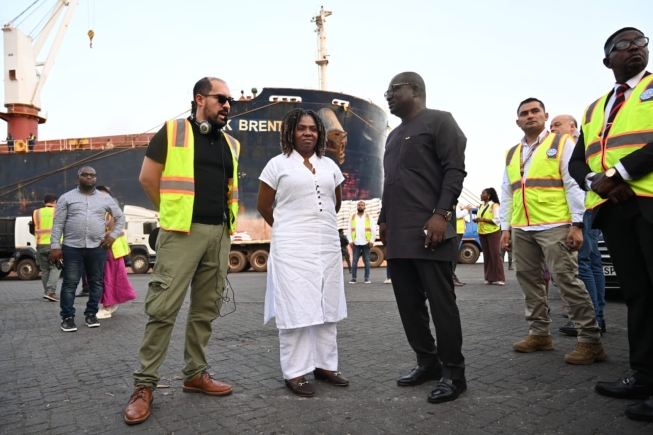 Colombia and Ghana Advance Plans for a Direct Maritime Route to Strengthen Trade Relations and Logistics">

A New Maritime Link on the Horizon
Colombia has expressed a clear intention to establish a direct shipping route connecting its ports to Ghana, aiming to deepen trade and investment flows between Latin America and West Africa. Such a route would open fresh avenues for commerce, potentially reshaping supply chains and boosting regional economies on both sides.
Strategic Port Cooperation and Economic Goals
The proposal involves coordinating between one of Colombia’s two principal ports and key Ghanaian seaports, emphasizing the potential for expanded trade volumes, improved logistics, and stronger economic partnerships. Formalizing this collaboration with a Memorandum of Understanding is under discussion, which would set the framework for joint efforts in port development and maritime operations.
On December 12, 2025, a high-level Colombian delegation, led by Vice President Francia Elena Márquez Mina, visited the Ghana Ports and Harbours Authority to explore investment prospects and solidify economic ties. The delegation met with management at the Port of Tema, an essential gateway handling significant freight for the region, underlining the importance of operational knowledge sharing.
Driving Trade Through Geographical Advantage
The geographic feasibility of this direct route promises to be a game-changer, reducing transit times and circumventing complicated indirect routes common in international freight. Colombia’s strategic location on the Atlantic coast, combined with Ghana’s well-positioned ports, creates a natural corridor to facilitate efficient cargo movement.
Memorandum of Understanding: A Blueprint for Cooperation
The envisioned formal agreement aims to enhance port infrastructure, streamline logistics processes, and boost maritime trade. This could lead to improved handling of goods such as containers and pallets, which are vital components of international supply chains involving bulky or heavy freight.
Ghana’s Role as a Regional Maritime Hub
Port officials in Ghana are enthusiastic about the proposal, welcoming opportunities for capacity building and knowledge exchange. Ghana’s ports serve as crucial entry points not only for the country but also for neighboring landlocked nations such as Burkina Faso, Mali, and Niger. A direct shipping route would allow Colombian exporters and importers to access these wider markets through Ghana’s logistic networks.
- Exchange programs between Ghanaian and Colombian ports to boost skills development
- Enhanced port infrastructure to support increased cargo throughput
- Improved potential for passenger vessel services strengthening bilateral tourism
Looking Beyond Cargo: Tourism and Passenger Transport
Beyond freight, officials discussed prospects for passenger vessels that could stimulate tourism growth, creating more dynamic interactions between the two countries. Such developments would require robust logistics frameworks to support both goods and people efficiently.
Historical Maritime Paths Reimagined
This initiative also holds symbolic value, aiming to transform old maritime routes—ones historically linked to less favorable pasts—into modern channels for sustainable trade and shared prosperity. The vision is to leverage these routes for mutual benefit and economic upliftment, reconnecting Colombia and Ghana through commerce.
| Aspecto | Beneficios potenciales |
|---|---|
| Trade Volume | Increase through direct shipments facilitating easier cargo flow |
| Eficiencia Logística | Reduced transit times and cost savings on freight handling |
| Impacto Económico Regional | Access to landlocked markets and new economic opportunities |
| Port Cooperation | Skill exchange and infrastructure development |
| Tourism | Enhancement through passenger vessel services |
Why This Matters for Global Logistics
Although the direct maritime link may not immediately shake global supply chains at the highest level, it represents significant progress regionally. For logistics professionals, this development signals the importance of strengthening intercontinental partnerships and upgrading port systems to meet growing demand for reliable, efficient freight and cargo movement.
This new corridor has the potential to streamline shipping routes that are currently indirect or congested, leading to more predictable delivery schedules and reduced costs — essential factors in today’s competitive shipping and forwarding markets. Here’s where platforms like GetTransport.com really come into play, offering affordable and flexible cargo transport options that align perfectly with new trade opportunities.
Personal Experience, Reviews, and Making Smart Choices
While expert reviews and detailed reports provide valuable insight into such trade developments, nothing beats experiencing these changes firsthand. GetTransport.com empowers users to navigate the complexities of international cargo transport with competitive pricing and a broad selection of shipping options. Whether planning a relocation, moving bulky goods, or arranging freight shipments, the platform offers transparency and convenience to help avoid costly missteps and delays.
By utilizing GetTransport.com, shippers can leverage global connectivity to secure reliable, cost-effective logistics solutions tailored to their needs—be it office moves, home relocations, vehicle transport, or large freight hauling. Book now at GetTransport.com to tap into these advantages.
Resumiéndolo todo
The planned maritime route between Colombia and Ghana represents a promising step toward invigorating bilateral trade, enhancing logistical efficiency, and fostering economic growth in important regions of Latin America and West Africa. This initiative underscores the growing reliance on effective port infrastructure and international partnerships to power global freight and shipping networks.
For freight forwarders, couriers, and logistics experts, the development is a reminder to stay agile as new routes emerge that could affect distribution patterns and shipment timelines. GetTransport.com stands ready to support these evolving needs by offering a versatile platform for arranging global transport, making it easier than ever to manage cargo and ensure smooth delivery, whether for pallets, parcels, bulky items, or complex relocation projects.
In sum, the Colombia-Ghana shipping initiative highlights how modern logistics is shaped not only by technology but also through meaningful collaboration across borders—connecting countries, markets, and people in more direct, efficient ways.