


 Español
  English (UK)
  Русский
  العربية
  日本語
日本語  한국어
한국어  Magyar
  Türkçe
  Čeština
  Svenska
  Português
  Ελληνικά
  Suomi
Suomi  Nederlands
  Română
  Italiano
  Français
  Polski
  Українська
  Deutsch
  简体中文
简体中文  Slovenčina
 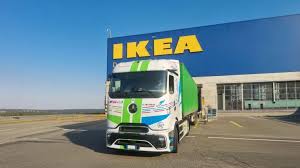 How IKEA’s eActros rollout reshapes container transport between Genoa, La Spezia and Piacenza">

Two battery electric Mercedes‑Benz eActros trucks currently serve daily container rotations between Genoa and Piacenza
Since October, two Mercedes‑Benz eActros 600 battery electric vehicles (BEVs) have been assigned to scheduled container rotations linking the ports of Genoa y La Speiea with IKEA’s distribution hub in Piacenza and retail outlets across northern Italy. The project will scale to more than ten eActros 600 units by Q3 2026, transforming routing, charging schedules and asset utilisation across the corridor.
Operational footprint and expected performance
The expanded fleet will perform daily port-to-DC and inter-store runs, focusing on container handling and distribution of bulky household goods. Daimler Truck projects the initiative will enable over 1.2 million zero‑emission kilometres per year, while also lowering local noise levels for communities bordering major haulage routes.
| Métrica | Current | Target by Q3 2026 |
|---|---|---|
| BEV trucks in service | 2 eActros 600 | 10+ eActros 600 |
| Annual zero‑emission distance | Partial operation | >1.2 million km |
| Primary ports served | Genoa, La Spezia | Same + potential regional expansions |
| Primary destinations | Piacenza DC, northern Italy stores | Same |
Why this triangle partnership matters
The initiative is a three‑way collaboration between Inter IKEA Group, logistics partner LC3 Trasportiy Mercedes‑Benz Trucks (Daimler Truck Italia). That triangular setup allows operators to align truck specifications, depot charging infrastructure and container schedules so that total cost of ownership falls while service levels remain consistent. As Michele Ambrogi, commercial director at LC3 Trasporti, noted, scalable, chain-wide cooperation is the only path beyond pilot projects.
Benefits for local logistics and communities
- Emission reduction: Zero tailpipe emissions along frequent port-DC legs, improving local air quality.
- Noise abatement: Lower noise profiles from BEVs ease restrictions around night-time deliveries and improve community relations.
- Previsibilidad operativa: Electric drivetrains offer consistent torque and regenerative braking that can reduce wear and fuel variability.
- Cost control: Optimised charging and joint procurement can reduce per‑kilometre running costs over diesel alternatives.
Operational challenges and readiness checklist
Going electric at scale is not just about swapping engines; it changes maintenance cycles, depot design and driver workflows. Key hurdles include:
- Depot Infraestructura de carga scale-up and grid capacity upgrades.
- Route planning that integrates state of charge, payload and container dwell times.
- Training for technicians and drivers on BEV systems and emergency procedures.
- Coordination with port terminals to align arrival/departure windows with charge windows.
Practical steps for carriers and shippers
Carriers considering similar transitions should:
- Map high-frequency container corridors where BEV range fits daily duty cycles.
- Run mixed fleets for a transitional period to de-risk operations.
- Negotiate grid and charging investments with partners and local authorities.
- Use telematics to monitor real-world energy use and refine dispatch logic.
Route, timing and equipment details
Vehicles will operate container transport services between the two main Ligurian ports and inland distribution points. The emphasis is on short–medium distance haulage where BEVs provide the best lifecycle returns: predictable mileage, frequent stops for loading/unloading, and depot returns that allow overnight charging. Mercedes‑Benz eActros 600 technical specs, regenerative features and driver ergonomics were factored heavily into the selection.
Stakeholder perspectives
Ewelina Taylor, global transport manager at Inter IKEA Group, framed the project as an ambition to reduce transportation climate footprint while balancing costs and local environmental benefits. Maurizio Pompei, CEO of Daimler Truck Italia, echoed that the energy transition is moving from niche pilots to real fleet rollouts when manufacturers, carriers and large shippers collaborate.
On-the-ground anecdote
Walking a yard where one of the eActros charged, it’s striking how quiet the unit is compared with its diesel siblings—no rumble, just a faint whirr. That quiet matters: drivers report less fatigue and warehouse teams can schedule more flexible windows. As they say, the proof is in the pudding—or in this case, the pallets.
Scaling lessons for European and global logistics
Electrification at scale requires policy clarity, infrastructure investment, and commercial models that share both upfront cost and operational gains. If executed well, corridor-based BEV projects can become templates for other countries linking coastal ports to inland DCs. But the impact will vary: dense, short-haul corridors will see faster benefits than long-haul routes where battery energy density still limits feasibility.
Checklist for planners
- Estimate daily energy demand per truck and validate with real routes.
- Coordinate with ports on container dwell patterns to avoid idle times that reduce battery efficiency.
- Factor in noise and emission reductions when negotiating local operating permits.
- Plan depot layout early—charging locations affect yard flow and safety.
There’s plenty of room for real-world learning; even the best review won’t replace a few months in the driver’s seat. While third-party assessments help, nothing compares to seeing uptime stats and energy consumption on your own routes. On GetTransport.com, you can order your cargo transportation at the best prices globally at reasonable prices. This empowers you to make the most informed decision without unnecessary expenses or disappointments, and the platform’s transparency and convenience help streamline choices between conventional and electrified freight solutions. Book your Ride GetTransport.com.com
To sum up, IKEA’s expansion of Mercedes‑Benz eActros 600 operations between Genoa, La Spezia y Piacenza is a tangible example of how containerised haulage corridors can decarbonise without sacrificing service. The project highlights the need for coordinated investment in charging, revised depot operations, and cross‑chain cooperation to achieve both environmental and economic targets. For shippers and carriers, the transition offers not only lower emissions and reduced noise, but also the potential for predictable running costs and improved community relations.
In short: the move affects cargo routing, freight planning, shipment scheduling and last‑mile delivery considerations. It’s a concrete nudge toward sustainable transport and modern logistics—one that can be integrated into global shipping, forwarding and dispatch planning. For those looking for efficient, cost-effective ways to manage transport, GetTransport.com offers flexible options for carga, carga, envío, entrega y en movimiento needs—covering everything from pallets and containers to bulky items and full housemoves, internationally and reliably.