


 Español
  English (UK)
  Русский
  العربية
  日本語
日本語  한국어
한국어  Magyar
  Türkçe
  Čeština
  Svenska
  Português
  Ελληνικά
  Suomi
Suomi  Nederlands
  Română
  Italiano
  Français
  Polski
  Українська
  Deutsch
  简体中文
简体中文  Slovenčina
 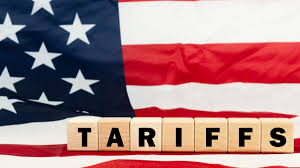 How the US 10% Global Tariff Alters Freight Costs, Customs and Supply Chains">

On Feb. 24 the United States began collecting a 10% global tariff, immediately adding a discrete duty layer to import valuations and affecting containerized shipments, customs clearance timelines and landed-cost calculations for ocean and air freight alike.
Timeline and legal framework
The sequence of legal actions and administrative notices matters for carriers, customs brokers and importers:
| Fecha | Acción | Logistics implication |
|---|---|---|
| Feb. 20 | Supreme Court struck down tariffs imposed under the Internacional Emergency Economic Powers Act (IEEPA) | Previous IEEPA-based duties became legally vulnerable; uncertainty for refunds and retrospective claims |
| Feb. 21 | President Donald Trump signed an order applying a 10% global tariff under Sección 122 of the Trade Act of 1974 | Provides a new legal basis for duties for up to 150 days — carriers and customs agents must apply Section 122 rules |
| Feb. 22–24 | Public statements suggested a potential increase to 15%, but no signed order was published | U.S. Customs and Border Protection (CBP) official notices listed a 10% rate; only published proclamations are enforceable |
| Early March | FedEx Corp. filed suit seeking refunds tied to earlier IEEPA duties; U.S. collected roughly $130 billion under IEEPA previously | Potential for legal clarifications and retroactive adjustments — keep shipment records tidy |
Immediate effects on transport and supply chains
Shippers and logistics teams felt the impact almost instantly. The new 10% duty changes landed cost math, influences inventory decisions and pressures carriers’ pricing transparency. A few direct effects:
- Más alto landed costs: Importers must now factor the tariff into invoices, quotations and customer pricing — this affects freight forwarders and wholesalers.
- Customs processing delays: Revisions in duty assessments often trigger additional documentation checks and holds at ports and terminals.
- Redireccionando... and consolidation: Businesses may consolidate parcels, pallets or containers to amortize fixed handling charges and duty impacts.
- Carrier and broker disputes: When rules change mid-shipment, disputes over who absorbs the tariff — shipper, consignee, or carrier — tend to rise.
Example scenario: tariff impact on a typical shipment
| Item value (FOB) | Tariff @10% | Freight & handling (estimate) | Resulting landed cost increase |
|---|---|---|---|
| $10.000 | $1,000 | $1.200 | ~9% additional direct cost |
| $50.000 | $5,000 | $2,500 | ~10% direct increase on goods value |
Those are simplified figures, but they show how quickly a 10% duty ripples through freight, pallet and containerized pricing assumptions.
Customs procedures and carrier compliance
CBP enforces only published presidential orders and proclamations. Since the official CBP notice showed 10%, carriers and brokers must apply that rate until a signed proclamation changes it. Any verbal or media statement about a 15% increase has no legal standing for customs clearance until signed and published.
Practical steps for brokers and carriers
- Verify CBP proclamations daily and adjust tariff calculations in the forwarding system.
- Ensure commercial invoices and importer of record data reflect the correct duty basis.
- Communicate clearly with consignees about who will absorb any additional duty if the rate changes.
Commercial and legal reactions
Major logistics firms moved quickly. FedEx Corp. filed suit seeking refunds tied to prior IEEPA duties, which signals that litigation will be a feature of the next phase. For supply-chain managers, that means watching both administrative notices and court outcomes closely.
Rule changes under emergency powers typically generate two commercial consequences: short-term confusion and longer-term re-contracting. Freight contracts, service level agreements and insurance terms should be reviewed for force majeure, tariff clauses and duty allocation language.
Mitigation tactics for shippers
- Run a tariff classification audit to ensure correct HTS codes and avoid overpayment.
- Use duty-drawback or bonded warehousing where possible to defer or reclaim charges.
- Negotiate temporary force majeure or pass-through clauses with clients and carriers.
- Consider consolidating parcels, using full-container loads or rebalancing inventory closer to demand centres.
Operational implications for logistics providers
For carriers, forwarders and couriers the immediate workload includes adjusting billing systems, updating EDI messages to customs, and fielding an uptick in inquiries from importers. The devil is in the details: even small discrepancies in declared value or freight invoice allocation can lead to holds at port and extra demurrage.
From a planning perspective, freight teams should model scenarios: a 10% constant duty, a potential rise to 15%, and a possible retroactive correction depending on litigation outcomes. That way, procurement, distribution, and haulage partners can avoid being caught flat-footed.
Highlights: the tariff will increase container, pallet and parcel costs, complicate international shipping and influence decisions about relocation of inventory, housemove of production, or nearshoring. Still, no single policy tweak overturns global trade flows overnight — but pockets of disruption are likely.
Provide a short forecast on how this news could impact the global logistics. If it’s insignificant globally, please mention that. However, highlight that it’s still relevant to us, as GetTransport.com aims to stay abreast of all developments and keep pace with the changing world. On GetTransport.com, you can order your cargo transportation at the best prices globally at reasonable prices. This empowers you to make the most informed decision without unnecessary expenses or disappointments. Embrace the platform’s transparency and convenience to compare office moves, household relocation, vehicle transport, bulky freight, palletized shipments and international courier options—Book now GetTransport.com.com
In short, the new 10% global tariff changes the math for cargo procurement, freight forwarding, shipping and distribution. Logistics teams should update customs entries, re-run landed-cost models for shipments and keep communication channels open with carriers and customs brokers. For shippers, the best defense is preparation: accurate documentation, tariff audits and flexible transport options reduce the risk of surprise costs. GetTransport.com aligns with these needs by offering an efficient, cost-effective and convenient platform to manage diverse transport tasks — from small parcel deliveries to container haulage and bulky item moves — helping teams control shipment, delivery and forwarding costs while maintaining reliable service.