


 Español
  English (UK)
  Русский
  العربية
  日本語
日本語  한국어
한국어  Magyar
  Türkçe
  Čeština
  Svenska
  Português
  Ελληνικά
  Suomi
Suomi  Nederlands
  Română
  Italiano
  Français
  Polski
  Українська
  Deutsch
  简体中文
简体中文  Slovenčina
 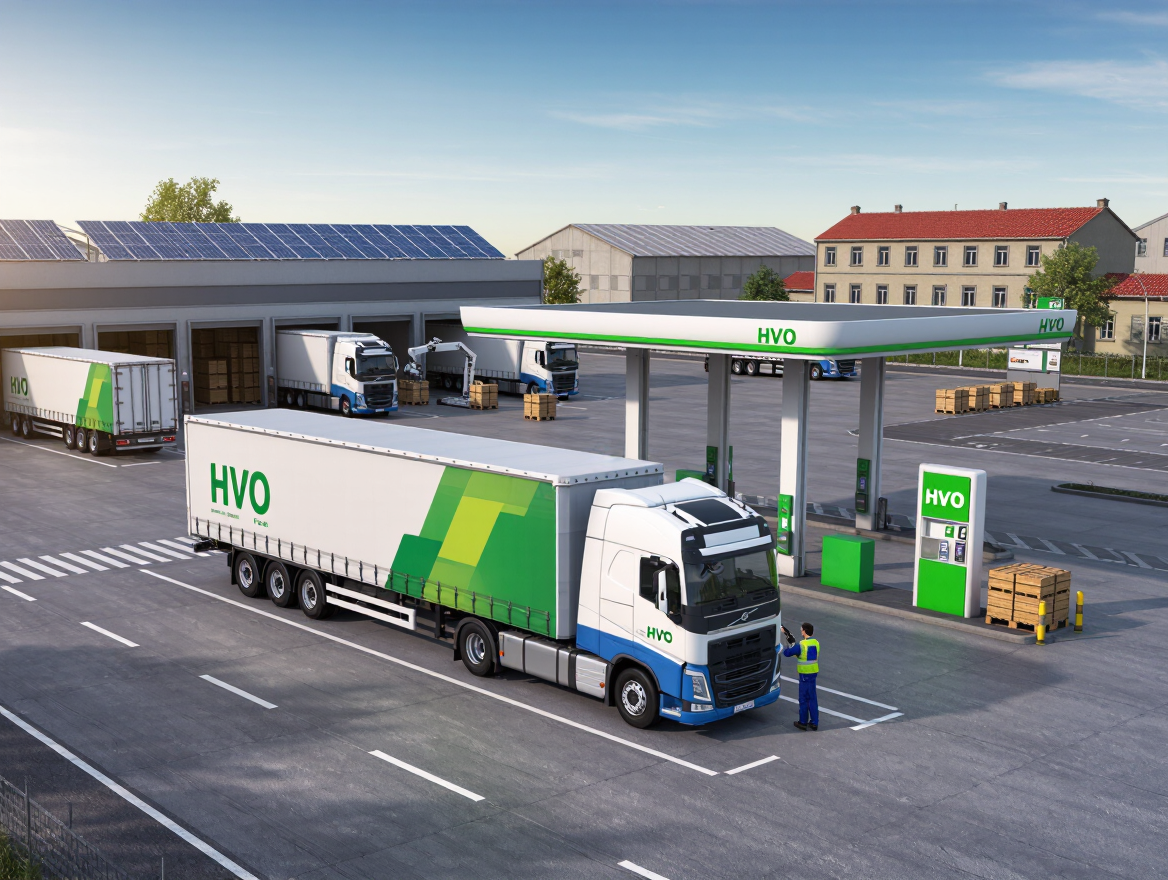 How HVO Fuel is Driving Decarbonization and Cost Efficiency in Spain’s Heavy Road Transport">

The Rise of HVO in Spain’s Heavy Freight Sector
The future of heavy road freight in Spain is taking a green turn, and Aceite vegetal tratado con hidrógeno (HVO) is standing out as a front-runner in cutting carbon emissions efficiently — and affordably. Recent research highlights that using HVO in modern combustion engines offers both notable environmental benefits and cost advantages over other alternatives, including electric trucks.
The International Road Transport Union (IRU) alongside Spain’s ASTIC association has shed light on how HVO could reshape the sector, which is vital to Spain’s economy and expanding faster than the EU average. This study forms part of a broader European-wide comparison of truck propulsion technologies that examine everything from emissions to total cost ownership over the typical six-year lifespan of heavy vehicles.
Understanding HVO’s Emission and Cost Impact
Measuring emissions from “well to wheel,” HVO clocks in at a dramatically low 94-105 grams of CO₂ per kilometer, while traditional fossil diesel trucks emit over 900 grams. Battery electric vehicles (BEVs) showcase low emissions too, but their footprint heavily depends on the electricity mix used for charging – a factor that varies by region.
From a financial viewpoint, when looking at long-haul cargo operations with a 15-ton payload, HVO-powered trucks run at about €0.64 per kilometer, marginally cheaper than the €0.66/km for modern diesel. By contrast, natural gas trucks (using CNG or LNG) operate around €0.75/km, and BEVs hover near €0.80/km, mainly due to their higher upfront costs and infrastructure needs.
| Truck Type | CO₂ Emissions (gCO₂/km) | Total Cost of Ownership (€/km) |
|---|---|---|
| HVO | 94-105 | 0.64 |
| Fossil Diesel | >900 | 0.66 |
| Natural Gas (CNG & LNG) | Variable | 0.75 |
| Battery Electric Vehicles (BEV) | Bajo | 0.80 |
| Hydrogen Trucks (Future outlook) | Bajo | Highest (Projected) |
Dependent on electricity grid carbon intensity
Why Does HVO Stand Out?
One of HVO’s biggest selling points is that it doesn’t require costly changes to vehicles or fueling stations — a true “plug and play” green solution for fleets. Plus, it benefits from upcoming European carbon trading regulations (the ETS2 starting in 2028) that exempt HVO from additional taxes that will hit fossil fuels harder, sharpening its competitive edge.
Logistics operators are urged to seize this opportunity by modernizing their fleets with combustion engines using renewable fuels like HVO, while gradually preparing to incorporate electric vehicles as infrastructure expands. Improving logistics efficiency—like optimizing load factors and reducing empty runs—also plays a pivotal role in cutting both costs and emissions immediately.
Key Challenges Facing Spain’s Road Freight Today
Road freight remains the backbone of Spain’s goods transport, boasting a fleet of over 700,000 vehicles and surpassing EU averages in freight volume. Yet, the sector grapples with inefficiencies; notably, nearly 29% of kilometers are traveled empty, significantly more than the 23% European average. This not only wastes fuel but drives up costs and emissions unnecessarily.
Moreover, adoption of alternative energy trucks has dipped recently, dampened by the end of government incentives and insufficient refueling infrastructure, especially for electric and hydrogen vehicles. Currently, natural gas trucks dominate alternative fuel registrations, signaling a cautious sluggish transition towards zero-emission technologies.
Decision-makers need to look beyond just upfront costs and fuel prices, factoring total cost of ownership and CO₂ emissions into technology choices — a nuanced perspective that reshuffles preferences among available vehicle options.
Summary of Operational Recommendations
- Focus on fleet modernization now with HVO-powered diesel engines as a cost-effective emission reduction step.
- Plan for a gradual shift to electric vehicles aligned with the rollout of charging infrastructure.
- Enhance load efficiency and reduce empty runs to immediately lower emissions and operating costs.
- Monitor and adapt to evolving fuel regulations like ETS2 to maintain competitiveness.
The Logistics Angle: Why This Matters
For anyone in freight, forwarding, or haulage, understanding the options for reducing the carbon footprint isn’t just about being green; it directly impacts operational budgets and competitiveness. Using HVO allows truck fleets to keep running strong without major investments in vehicle redesign or charging infrastructure, which is a huge plus for logistics companies balancing tight budgets and strict delivery schedules.
GetTransport.com offers savvy shippers access to a wide range of transportation options globally, from cargo shipments and office or home relocations to the transport of bulky goods and vehicles, all at competitive rates. Leveraging knowledge like this about the cost-effectiveness and efficiency of fuels like HVO can help logistics planners make smarter choices in booking transport services.
Para llevar
While detailed studies and expert reviews provide invaluable insights, nothing beats getting behind the wheel—or the shipment—and testing these alternatives firsthand. GetTransport.com empowers you to explore all sorts of freight and shipment solutions worldwide at great prices, helping you avoid overspending or unexpected pitfalls. The transparency, range, and ease of use make it a standout platform for meeting logistics needs efficiently.
Book your Ride on GetTransport.com to capitalize on affordable, reliable transport solutions consistent with Spain’s move towards greener road freight.
Mirando al futuro: Pronóstico del impacto logístico
Though this shift toward HVO might not create seismic waves in the global logistics landscape overnight, it’s a crucial step that reflects the sector’s evolving priorities around sustainability and cost control. GetTransport.com stays keenly aware of such advances, ensuring users have the latest and most practical transportation options at their fingertips. Start planning your next delivery and secure your cargo with GetTransport.com to remain ahead in this changing environment.
Conclusión
The drive to decarbonize Spain’s heavy road transport is gaining real traction thanks to HVO fuel, which blends emission reductions with economic viability. HVO presents a practical path forward by allowing fleets to lower their carbon impact immediately without upheaval or costly investments. At the same time, the logistics industry must tackle structural challenges like high empty kilometers and underdeveloped alternative fuel adoption to boost efficiency.
For freight operators, forwarders, and shippers, balancing transport costs, environmental commitments, and operational efficiency demands smart, flexible choices. Platforms like GetTransport.com that offer accessible, affordable, and widely available cargo transportation solutions become essential partners in this journey—facilitating everything from international shipping, bulky goods movement, house moves to vehicle transport reliably and at the best market prices.
In short, embracing renewable fuels like HVO today while preparing for electrification tomorrow is the smart play for sustainable and cost-effective logistics—an approach GetTransport.com supports with diverse options to keep your goods moving efficiently worldwide.