



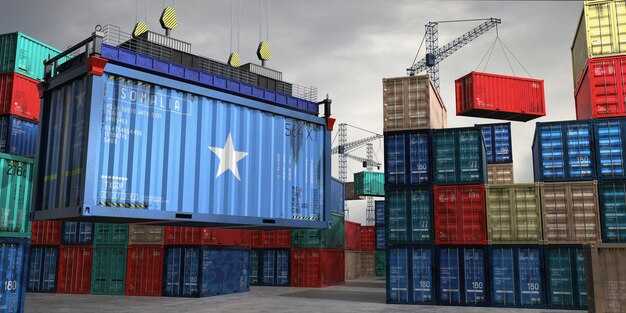
Implement a tiered daily dwell fee and a strict penalties schedule now. Begin with $75 per container per day after a 3-day grace period, then escalate to $125 after day 5 and $200 after day 7. This plan will make the cost of holding vessels in yards visible to owners and stakeholders, and shifts the pressure toward the last mile so trains can take action and maintain schedule. Keep a week-long horizon and cap for extreme cases to protect small owners.
Publish a joint rules framework to distinguish permitted storage from lingering, with a statement of liable parties. As announced by the envoy, the joint framework will cover facilities and yards, set penalties per day beyond thresholds, and offer credits when dwell times improve. They will present clear metrics that port teams and carriers can act on.
Update weekly dashboards that show the number of containers lingering, charges accrued, and penalties billed. This statement supports owners and terminal teams to act quickly and serve the wider supply chain, reducing the risk of a shortage as yards fill. The policy embeds a gene of accountability into port operations, and the data improve fluidity across vessels, trucks, and trains.
To keep the process practical, ports will coordinate with shippers, freight forwarders, and inland depots. For lingering containers, charges apply regardless of cargo class, and penalties escalate if the carrier does not respond within the stated window. The plan uses stepping increments to escalate costs if dwell times persist, and credits are available if week-targets are met; a single truck can push or relieve pressure depending on timing.
Bottom line: implement the tiered fee and joint rules now, publish announced commitments, and monitor the fluidity indicators weekly. This approach serves facilities and owners, reduces last-mile friction, and keeps vessels and trains moving in a predictable rhythm. Start with a pilot in one yard to validate the numbers before scaling to all SoCal ports.
SoCal Ports and Lingering Containers: Fees, Penalties, and Compliance

Make the policy crystal clear: begin charging for lingering containers after a 3-day free grace, with a rising penalty schedule that scales with dwell times. Lingering dwells beyond the grace window drive penalty assessments and push shipments toward earlier release. This approach helps yards and trucking operations stay efficient on busy days and reduces weekend backlogs.
Publish a simple, public schedule in terms these include: after 3 days, storage fees begin; approximately $25 per container per day after day 3; after 7 days, penalties escalate; after 14 days, shipments may be diverted at the port's option. This transparency helps shippers plan and reduces disputes during peak times.
Implement a single set of terms across the southern California ports to avoid mixed signals for their envoy and trucking partners. Include clear instructions for how to release goods from yards, and require electronic documentation within 24 hours after arrival. Conduct weekly audits and publish a compliance scorecard. These actions will help standardize operations and improve overall throughput, and they are feasible with existing terminal systems.
In angeles area ports such as Los Angeles, the plan began mid-october with tighter gate procedures and automated alerts. Ships will face penalties if dwells exceed the free window. Weekend volumes will receive targeted management to keep gates moving. These actions, coordinated through the envoy, will be supported by seroka and will help cut queue times across the ships and trucking network.
To come next, adjust the enforcement cadence, consider fee adjustments, and extend a free pickup window on weekends to ease difficult times. Maintain a transparent dashboard so that shippers, yards, and trucking partners can track progress and measure the impact of these terms. The envoy and seroka will continue to coordinate, and these updates will improve compliance across the angeles ports.
Definition of Lingering Containers and Dwell Time Metrics
Set the baseline dwell time at 72 hours for standard goods, with escalation to 96 hours for reefers and high-value shipments, and apply penalties to carriers for containers lingering beyond these thresholds. In socal, announce this rule citywide on the west coast; seroka teams will coordinate immediate removal and helping carriers resolve bottlenecks, left to local operations to implement smoothly.
Lingering containers are those that remain in terminal yards after the dwell threshold. Dwell time is the elapsed interval from vessel discharge or gate-in to gate-out removal. For precision, measure dwell as the timestamp difference between the first yard log and the final gate-out. This measure will enhance velocity, improve visibility across fleets, and support carriers as goods move toward final destinations.
Cadence and analytics: compute median and 75th percentile dwell times per terminal, per carrier, and per vessel; use a real-time yard system, collect data hourly, and feed dashboards for local and socal management. Set automated alerts at 24, 48, and 72 hours; when a threshold breaches, trigger notices to the responsible carrier and initiate removal actions to reduce the lingering backlog. Compare metrics across city terminals like the west coast gateways to maintain consistent terms.
Penalties and collected funds: charge a daily fee after threshold, with a flexible band such as $40–$120 per container per day, adjusted by container type and peak demand. Collected funds will support removal operations, including labor, chassis, trucks, and intermodal trains, to speed clearance. Publish the schedule and decisions so carriers understand the terms and can plan their removal windows.
Implementation steps: align with socal port authorities and local terminals; provide a shared dashboard for city and west coast stakeholders; require importers and freight forwarders to submit removal plans within 24 hours of notice; offer free temporary holding for urgent shipments to prevent supply disruption, then make removal mandatory after threshold. This approach makes the process predictable, free up space, and support long-term capacity in SoCal ports.
Daily Fee Structure: How Charges Accrue for Lingering Containers
Begin with a 3‑day grace period, then apply tiered daily charges to lingering containers to accelerate move and reduce backlog.
Next, align the rate structure with yard costs and carrier deadlines. The goal is to expedite container flow while supporting brokers, yards, and government agencies at the port. Said officials expect clear rules that begin at the gate and move through the yard to the vessel, with invoice dates identifying when charges accrue.
- Grace period: 3 days from the date of gate‑in or last verified movement; containers that remain beyond this window begin accruing fees.
- Tier 1 (Days 4–6): 35 USD per container per day to encourage rapid movement and reduce the backlog.
- Tier 2 (Days 7–9): 70 USD per container per day; results include measurable velocity gains as ships and vessels depart more on schedule.
- Tier 3 (Day 10+): 120 USD per container per day; this level targets the most difficult cases and reinforces timely cargo handling.
- Cap and exceptions: A per‑container cap of 1,000 USD per voyage provides predictability. Temporary exemptions apply for humanitarian cargo and government vessels; decisions follow an established date for review and adjustment.
- Invoicing and payment: Charges are billed to the broker or consignee; payment is due within 15 days of the date of invoice. Late payments incur a 1.5% monthly interest charge.
Example: A 40‑foot container arrives January 1 and remains until January 12. Days 4–6 incur 3 × 35 = 105 USD; Days 7–9 incur 3 × 70 = 210 USD; Days 10–12 incur 3 × 120 = 360 USD. Total before exemptions: 675 USD. Such a calculation demonstrates how the policy drives next steps and keeps cargo moving toward the vessel, reducing the backlog and improving results across yards.
The framework supports a coordinated effort across the nation. Port authorities said the approach aligns with broader government work to accelerate cargo velocity and move goods throughout the supply chain. This policy begins at the gate, continues through the yard, and culminates in the water, where vessels prepare to depart. It also strengthens the relationship with brokers, who can anticipate charges and prepare the correct date for payment, making the process smoother for all parties involved.
Implementation plan emphasizes clear communication and data support. Start with a two‑week notification window, publish the rate table, and share the calculation method with carriers and brokers. The aim is to create predictable costs that support backlog reduction and avoid disruptive shocks to cargo flow. Results from the pilot should guide annual reviews and potential adjustments to rates, caps, and exemptions to keep the program effective and fair for the entire supply chain.
To maintain momentum, provide ongoing guidance for yards and government agencies. The program is designed to come across as practical, with a simple formula that can be applied consistently across facilities. When applied correctly, the daily fee structure helps expedite cargo move, sustain port operations, and keep the supply chain resilient from pandemic disruptions to everyday demand, ensuring services stay reliable for importers, exporters, and brokers alike.
Penalties, Payment Timelines, and Penalty Caps for Ocean Carriers
Begin by instituting a fixed 14-day payment window for all charges; penalties charged after the deadline drive prompt compliance and reduce backlogs.
Payment timelines and penalties: Invoices issued at west coast ports, including the SoCal corridor, follow net 14 days from the invoice date. If unpaid by day 15, penalties of 0.5% per day accrue on the outstanding balance, capped at 15% of the invoiced amount per occurrence. Weekend days count toward the 14-day window, and payment processing may occur on the next business day, so the clock remains predictable for those handling exports and supply chains. Maintain running totals in the dashboard to track overdue accounts and adjust actions as needed.
Penalty caps and scope: Cap penalties at 15% of the invoiced amount per occurrence. For persistent delays tied to container dwells or sitting backlogs across the ports, apply a weekly cap of 4% of the invoiced amount, creating a four-week range to limit exposure while maintaining deterrence. The policy covers all west coast corridors and those backlogs that linger, ensuring fairness for carriers and shippers alike.
Implementation and governance: Publish the policy, align IT systems to flag overdue invoices, and train staff at the ports. Use a permit-based requirement for carriers to participate in the program. mario will oversee the rollout with port authorities and carrier representatives to ensure consistent application. This action supports the economy by moving vessels efficiently and keeps the work flowing for compliant operators with predictable cash flow.
Monitoring and measurement: Track days outstanding, penalties collected, container dwells at the docks, and backlogs moving toward resolution. To dive into data, use a range of metrics to guide adjustments, and keep the four-week window in view as you begin to tighten compliance across shipping chains.
Compliance Steps for Carriers and Terminal Operators

Implement a 48-hour free dwell window and apply escalating per-day penalties to carriers for containers that linger beyond the window, with immediate invoicing after thresholds and clear dispute rules.
Adopt wide, standardized data exchanges across the cargo chain and port systems to track dwell time, with exports and imports fed in real time, according to ostergaard. Data alignment helps all parties see the same numbers and reduces backlogs, boosting efficiency across the angeles corridor.
Establish a joint actions framework that assigns clear responsibilities to carriers and terminal operators, with defined escalation paths and timely notices. These actions help reduce sitting on lanes; left items stack up and escalate backlogs. Together, we can move goods through the chains efficiently.
For carriers, implement pre-arrival notifications, verify collected charges before pickup, and reserve space through appointment slots. Immediate checks at gate-in prevent containers from entering the yard until fees are settled, saving labor and avoiding fines.
Terminal operators should optimize yard layout, automate dwell monitors, and trigger penalties when dwell time exceeds thresholds. Use an escalation matrix that flags cargo and triggers notifications to the owning carrier, with the goal of keeping trains, trucks, and goods moving on schedule.
Fees collected for lingering containers go into backlog-reduction programs, funding this effort to clear backlogs faster. These programs are helping reduce congestion by financing yard equipment upgrades and staffing. Track metrics like backlogs, average dwell time, and the share of goods released within 24 hours to demonstrate progress to stakeholders.
Publish weekly news updates for customers and drivers, highlighting improvements across the angeles corridor and sharing last results, with immediate next steps to keep everyone aligned and engaged.
This framework is making news among shippers and terminal teams, as they see fewer delays and more predictable schedules when acting together.
Maintain a continuous improvement loop: quarterly reviews, training for front-line staff, and open forums with cargo owners and trucking partners to keep actions aligned and reduce backlogs day by day.
Exemptions, Disputes, and Data Reporting Requirements
Adopt a three-tier exemptions framework and a three-business-day disputes window to reduce backlog caused by lingering containers and to sustain fluidity throughout West Coast ports and across the ocean corridor. Integrate Seroka analytics with port operations and coordinate with Cordero next steps to move rapid decisions, while ensuring truck lanes serve compliant loads and maintain velocity.
Exemptions remove unnecessary charges where risk or delay is outside carrier control. Three clear categories guide the process: safety, security, and environmental risk; weather, port congestion, or force majeure; and perishable or time-sensitive cargo with validated storage. According to port policy, exemptions apply when conditions are documented and verified. Carriers should accept exemption status and continue to serve customers while backlog is reduced. This approach helps seroka data flows across the west and across the ocean, relaxing congestion and preserving predictable times for imports and exports.
Disputes follow a fast, transparent path designed to restore momentum quickly. File a dispute within three business days of the announced charge; the port authority will review within three days and issue a decision on a rapid timeline to continue move activity. If needed, escalate to mediation within seven days. This rapid cadence helps reduce backlog and restore velocity to the movement of containers, with decisions announced to all stakeholders to support coordination next steps across the region.
Data reporting requirements align governance with on-time accountability. According to the framework, each charge and exemption must be logged with fields such as container_id, carrier, port_of_entry, timestamp, exemption_applied, charge_amount, penalty_amount, dispute_id, status, and final decision. Data should be submitted daily and aggregated weekly to inform next steps and cross-port coordination. Standardized feeds across ports support real-time dashboards, helping west coast authorities and traders monitor move velocity and adjust operations across the ocean corridor.
| Aspect | Requirements | Notes |
|---|---|---|
| Exemptions | three-tier framework; defined categories; automatic application rules; carrier acceptance | aims to reduce backlog and keep truck lanes flowing; supports coordinated relief across ports |
| Disputes | three business-day window to file; three-day review; rapid decision; mediation within seven days if needed | accelerates velocity of moves; announcements should be clear to all parties |
| Data Reporting | standard fields (container_id, carrier, port_of_entry, timestamp, exemption_applied, charge_amount, penalty_amount, dispute_id, status, decision); daily submissions; weekly aggregation | ensures transparency and facilitates coordination next steps across west ports |