


 Suomi
Suomi  English (UK)
  Русский
  العربية
  日本語
日本語  한국어
한국어  Magyar
  Türkçe
  Español
  Čeština
  Svenska
  Português
  Ελληνικά
  Nederlands
  Română
  Italiano
  Français
  Polski
  Українська
  Deutsch
  简体中文
简体中文  Slovenčina

Start with a concrete recommendation: audit your customer queries and map them to AI-enabled actions in your sähköinen kaupankäynti setup. Deploy a focused pilot in search and product recommendations to lift conversions, with clearly defined metrics and a path to scale. During peak times, expect measurable gains in click-through rates and average order value when data quality is strong; these improvements are realized when the pilot is deployed and monitored. These steps also help you prove value quickly before expanding to other areas.
Across ympäristöt–online shop, mobile app, and in-store kiosks–AI unlocks consistent, relevant experiences. Use generative models to craft fresh product descriptions, dynamic banners, and personalized recommendations, refreshed automatically from tuotu data and real-time context. These tactics also help you convert earlier shopper interest into action by aligning what’s shown with what matters most.
On the operational side, AI boosts efficiency with demand forecasting, replenishment, and price optimization. Start by identifying a narrow use case, then extend to restocking and dynamic pricing in cycles. Use real-time dashboards, set guardrails, and poista bottlenecks with automation. A practical path: stage the rollout in one region, measure impact, then expand to others.
AI in Retail: 10 Real-World Examples and 8 In-store Robots
Start now: implement AI‑driven demand forecasting and click-and-collect optimization to lift profitability by aligning the assortment with forecasted demand, cutting stockouts, and reducing lines during peak hours.
- Demand forecasting and assortment optimization: AI analyzes historical sales, promotions, and seasonality to set the right mix for each location. Stores with precision planning reduce stockouts by 25–40% and improve storage utilization, boosting turnover and profitability.
- Dynamic pricing and promotions: Real‑time price signals and personalized offers maximize margin on high‑velocity items while clearing slow sellers. Retailers report higher conversion and lower markdown costs across channels.
- Personalization and recommendations: AI‑driven engines surface relevant products in apps, kiosks, and displays, increasing average order value and conversion rates. Consumers receive tailored offers that feel timely and contextual.
- In‑store search and product discovery: Visual search, voice assistants, and intelligent signage guide shoppers to the right aisles and storage locations, shortening decision time and improving satisfaction.
- Click‑and‑collect orchestration: AI coordinates inventory, staffing, and pickup routing to minimize wait times and accelerate fulfillment. Shoppers experience rapid, smooth pickup, reducing queue lengths and improving loyalty.
- Inventory visibility and planogram compliance: Automated checks confirm shelf placement and price accuracy across locations. Clear gaps are closed quickly, ensuring high‑quality assortment presentation and reduced shrink.
- Store layout and space optimization: AI analyzes heat, dwell time, and path data to refine aisle widths, product adjacency, and endcap positioning. Stores gain more effective space use and higher margin items gain prominence.
- Logistics and cross‑store transfers: Algorithms optimize transfers between stores and e‑commerce fulfillment centers, cutting transit times and storage costs while meeting consumer delivery windows.
- Loss prevention and anomaly detection: Real‑time video and sensor analytics flag unusual patterns, enabling proactive intervention and reducing shrink and fraud in high‑risk zones.
- Workforce planning and hours optimization: AI forecasts demand by hour and adjusts shifts, improving service levels while controlling labor costs and overtime in peak periods.
8 In-store Robots
- Shelf‑scanning robot for planogram compliance and storage checks: verifies product placement, pricing, and stock levels across aisles with arm‑length reach and rapid scans.
- Customer‑assist robot: answers product questions, guides shoppers to locations, and suggests high‑value items, enhancing engagement and conversion for busy stores.
- Robot cashier or checkout companion: handles lightweight bagging, queue management, and payment prompts to reduce lines and free humans for complex tasks.
- Inventory counting robot: performs rapid stock takes, updates storage records, and flags discrepancies for quick resolution, keeping locations aligned with the system.
- Restocking robot with robotic arms: transports items from backrooms to shelves, places items with precision, and helps maintain an attractive, high‑availability assortment.
- Cleaning and maintenance robot: autonomously handles floor cleaning and facility checks, supporting store cleanliness without interrupting shoppers’ flow.
- Returns processing robot: scans, sorts, and routes returned items to storage or clearance channels, shortening the reverse logistics cycle.
- In‑store delivery and micro‑fulfillment bot: retrieves items from storage and delivers to pickup points or scan‑to‑collect kiosks, accelerating fulfillment in crowded locations.
10 Real-World AI in Retail Examples That Boost Sales, Personalization, and In-Store Operations
Enable real-time AI-powered personalization and inventory optimization to lift sales by 8–15% in the next 90 days. Integrate loyalty data, online behavior, and in-store signals to deliver context-aware offers at the point of sale, while automated replenishment reduces shortage risk and fulfillment delays.
Generative AI creates tailored product bundles and cross-sell prompts based on purchase history and current intent, delivering recommendations within search lines and at checkout. In pilots, bundles increased average order value by 12–18% and boosted conversion on high-margin items, a result observed in much of the field.
Humanoid kiosks and store assistants guide customers, answer questions, and collect feedback without long queues. Enable spanish language support to improve accessibility and reduce onboarding time, boosting satisfaction scores by 15–20% in pilot stores.
Visual search and AR overlays help shoppers navigate aisles and compare alternatives in real time. Shoppers can scan a product and instantly see similar items, guiding them across 1,000 square meters of floor space and increasing add-to-cart rates.
Intelligent demand forecasting aligns stock with real-time needs across channels, cutting shortages by 15–25% during peak seasons and enabling more accurate replenishment through all stores.
Real-time price optimization uses demand signals, supply costs, and competitive data to adjust offers across alternate channels. Trials show a 2–6% uplift in gross margin and reduced discount leakage, even in volatile markets.
Automate shelf execution, pricing updates, and planogram compliance with computer vision and sensors. The automation reduces manual labor on production lines and delivers 98% shelf-compliance and faster price updates.
Geopolitical risk intelligence informs procurement and pricing across international lines, helping buyers adapt to sanctions, trade barriers, and currency shocks. Teams act on alerts in real time to adjust sourcing, stock levels, and lead times through trusted suppliers.
Fulfillment optimization for omni-channel orders uses AI to route to the nearest pickup point, manage curbside experiences, and synchronize with warehouse fulfillment. This reduces handling times by 12–20% and improves customer satisfaction by accelerating pickup and returns.
Walk-through store analytics track customer movement and dwell times to inform layout changes and product placement. Shifting space to high-margin categories can lift sales per square foot by 10–15% and improve overall store throughput through better flow.
Real-Time Personalization: AI-Driven Recommendations and Offers
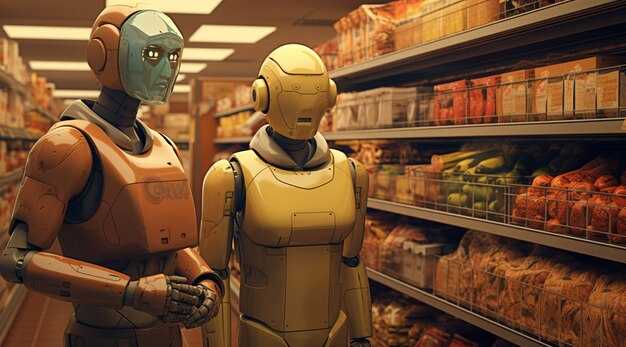
Enable real-time recommendations at the point of interaction to determine the best next product for each shopper in your shop, using orders, cart contents, and recent visits to surface a focused pick and a time-limited offer. Tailor this to locations–online shoppers see digital prompts; in-store customers receive shelf nudges or QR codes–while linking to associated products already viewed. This approach reduces decision fatigue and accelerates conversions while keeping the shopping experience smooth.
Define success metrics: lift in orders, higher average order value, and a larger share of repeat visits. Run A/B tests comparing real-time recommendations with a static catalog, analyzing by times of day, category, and shopper profile to quantify impact. Frame the effort around value, applications, and purposes: cross-sell when stock is abundant, promote a broader assortment, and push location-specific deals that reflect inventory and demand; for retail businesses, this deployment clearly helps.
Deliver context-aware suggestions that support both online and offline channels: when a customer adds to cart, present bundles that enhance value and reduce abandoned items, and highlight accessories associated with the main product. Use signals to avoid misplaced recommendations and to keep relevance across locations and devices. Increasingly accurate models learn from each interaction, so the offers become more precise over time.
Improve store operations with real-time prompts that help workers locate items, reduce misplaced stock, and ensure associated products sit close to each other in locations. Use AI-driven cues to guide stocking, shelf labeling, and customer flow, which reduces wait times and increases throughput.
Deployment planning: integrate with POS, e-commerce, and loyalty systems; lean on robotics-enabled touchpoints for on-floor recommendations; define the deployment process with phased pilots, feedback loops, and privacy guardrails. In-store pilots allow learning at times and scale across locations and channels, generating measurable value and ready for broader rollout. Also, this approach might become a standard practice across retail.
AI-Based Pricing: Dynamic Discounts and Margin Optimization
Deploy an AI pricing engine that automatically adjusts discounts for jerseys and other fast-moving items, using intelligent pricing models to keep base margins intact while responding to demand in near real time. This technology helps you become more agile in promotional planning.
Connect the engine to your point-of-sale and inventory system so price changes flow to floors and the online layout. This technology unifies data sources and speeds decision-making, improving operational efficiency, and suggesting pricing paths for new campaigns.
Use a three-tier rule: base price, adaptive discounts up to 12% during peak demand, and a temporary surge path when stock is above target. Ingest weather signals and event calendars to trigger alternate price paths that maximize sell-through without eroding margin. Robotic data gathering speeds input, while manual overrides safeguard exceptions. This approach helps teams become more agile rather than clinging to traditional methods.
Guardrails protect margins and customer trust. Include a rollback option and risk flags when elasticity estimates diverge from observed results. If injury to margins would occur, pause the discount and re-evaluate. Retail teams face volatility; define ways to monitor and control exposure to price wars and customer backlash.
Whether you deploy in a pilot across select stores or across all floors, implement a staged deployment. Consider ways to integrate with the existing layout and workflow, promoting speed and streamlining deployment.
| Scenario | Kohde | Base Price | Discount | New Price | Expected Margin Change | Huomautukset |
|---|---|---|---|---|---|---|
| High-Demand Jerseys | Jerseys | 59.99 | 12% | 52.79 | +2.5% | Event-driven peak; deployed in selected floors |
| Overstocked Jerseys | Jerseys | 59.99 | 18% | 49.19 | -1,5% | Alternate path with guardrails |
| Weather-Driven Outerwear | Jackets | 89.99 | 8% | 82.99 | +1.2% | Weather impact; POS reflects changes |
Inventory Visibility: AI Forecasting and Replenishment with Computer Vision
Implement AI-driven forecasting and replenishment now by deploying computer vision to monitor shelves and stock in real time, enabling you to act before stockouts occur.
This approach gives you consistent visibility across areas such as front shelves, backroom stock, and cross-store replenishment, allowing you to optimize assortment and shopping experiences for customers.
If youre rolling out across stores, dashboards converge imaging, sales, and inventory signals in real time, delivering a unified view of stock and demand.
Cameras and edge devices capture shelf scans, while computer vision analyzes stock levels, placements, and movement, suggesting replenishment needs at the product level and across stores.
Forecasts feed a rapid, iterative process that links demand signals to replenishment actions, improving fulfillment accuracy and reducing time-to-restock for the customer.
Stage by stage, you can tighten control over inventory, adapting quickly to promotions, seasonal spikes, and new assortments without overstocking.
Generative models can propose alternative placements or substitutions that preserve availability while respecting planograms, making the assortment more resilient.
Robotics-enabled scanning and camera rigs provide continuous coverage, reducing manual checks and enabling you leverage data for smarter decisions.
To implement successfully, start with high-impact areas where stockouts hit shopping experience and quickly scale to other zones as forecasts stabilize.
Key reasons to invest include improved fulfillment accuracy, lower markdown risk, faster inventory turns, and stronger competitive positioning.
Track metrics such as forecast accuracy, service level, stock-out duration, and fill rate to quantify ROI and guide continuous improvement in the future.
This approach reduces much guesswork, aligning replenishment with actual consumer demand and translating data into faster, more reliable restocking.
In-Store Robots: 8 Robots for Customer Help, Shelf Scanning, and Checkout Support
Install an 8-robot fleet in-store within 60 days to cover customer help, shelf scanning, and checkout support. The result is faster help, precise shelf data, and quicker checkouts, delivering profits and stronger loyalty signals across the shop.
- HelpHub H1 – Role: Customer help desk and information concierge. Capabilities include natural-language queries, product location, loyalty enrollment, and escalations to human associates. Here, shoppers receive instant directions, stock information, and promotions. Deployment occurs near the front of the shop or service desk, with storage for spare batteries and docking stations. Impact: average assistance time drops by 40–50%, loyalty sign-ups rise by double digits, and throughput improves during peak hours, because real-time responses reduce friction and improve the customer experience.
- AisleScout AS-1 – Role: Shelf scanning and data accuracy. Capabilities include image-based stock checks, mispriced item detection, and planogram alignment. The robot feeds processing data to the digital shelf and pushes alerts to associates. Deployed along main aisles with a compact dock in the backroom storage. Impact: stockouts drop 20–30%, pricing accuracy increases to 98–99%, and the forecast becomes more reliable for weekly demand planning, helping those responsible for replenishment react faster.
- CheckoutGenie CG-1 – Role: Checkout support and queue management. Capabilities include guiding customers to the next available lane, assisting with self-checkout scans, and resolving payment disputes with a touch-screen interface. Deployed near registers; supports seamless integration with the POS. Impact: average queue time down 15–25%, checkout error rates fall, and staff can reallocate to advisory tasks, delivering smoother throughput during busy periods.
- Replenisher RX-4 – Role: Shelf replenishment and restocking. Capabilities include robotic arms for placing items, weight-based checks, and location updates to the inventory system. Deployed with a dedicated storage bay for bulk items and a path to the most active shelves. Impact: replenishment lead times shorten by 30–40%, backroom storage space is used more efficiently, and expensive stockouts are avoided, because the robot tends to the shelves when human workers are unavailable.
- InventoryEye IE-2 – Role: Inventory counting and discrepancy detection. Capabilities include 3D counting, barcode verification, and automatic exception flags. Uses processing power to reconcile counts with the store’s inventory system. Deployed in sections with high SKU variety; yields a compact data lake for daily reconciliation. Impact: shrink reduction improves profits by reducing write-offs, and data quality supports more accurate demand forecasts, especially during volatile weeks.
- QueuePilot QP-1 – Role: Front-end queue optimization and shopper guidance. Capabilities include dynamic lane routing, wait-time estimates, and proactive guidance via kiosk screens or a mobile app. Deployed at store entrances and near popular departments. Impact: perceived wait times drop, dwell time increases in relevant zones, and staff focus shifts to upsell opportunities with highly engaged customers.
- ReturnsAssistant RA-3 – Role: Returns processing and self-service help. Capabilities include item verification, receipt matching, and rapid disposition guidance. Deployed by the returns desk with a small footprint in the storage area for processed goods. Impact: returns cycle time decreases, refunds go through faster, and customers feel supported by a consistent, realman-like experience that echoes the human team.
- MobileAssist MA-1 – Rooli: Lattiatasolla liikkuva apuri henkilökunnalle ja asiakkaille. Osaa ohjata henkilökuntaa tehtäviin, paikantaa tuotteita ja avustaa myynninedistämisessä myymälän puolella. Käytössä pyörillä varustettuna, lataustelakka varastossa. Vaikutus: tehtävien kattavuus laajenee, toimintojen käsittelystä tulee joustavampaa ja myymälähenkilökunta saa aikaa keskittyä monimutkaisiin kyselyihin, mikä parantaa myymälän yleistä tehokkuutta.
Kahdeksan robotin yhdistelmä vahvistaa häiriönsietokykyä sään aiheuttamia häiriöitä ja toimitusketjuihin vaikuttavia geopoliittisia muutoksia vastaan, koska robottilaivasto tarjoaa jatkuvaa myymälätukea ja datavetoista näkyvyyttä. Käyttöönoton hyödyt kasvavat, kun myymälä laajentaa digitaalisia signaalejaan, mikä parantaa ennusteiden tarkkuutta ja mahdollistaa kohdennetut kampanjat, jotka lisäävät uskollisuutta ja voittoja. Nämä hyödyt saadaan reaaliaikaisesta ostajien vuorovaikutuksen, varastotietojen ja kassavirtojen käsittelystä, mikä tuottaa mitattavia parannuksia asiakastyytyväisyyteen ja myymälän suorituskykyyn. Käyttöönotto suunnitelmassa tulisi kartoittaa jokainen robotti tietyille alueille selkeällä varastointi- ja latausstrategialla sujuvan toiminnan ja skaalautuvan kasvun varmistamiseksi.
Kassa ja myymälävarkauksien ehkäisy: tekoälyä hyödyntävä kassajärjestelmä ja jononhallinta
Toteuta tekoälyllä tehostettu kassajärjestelmä reaaliaikaisella käsittelyllä, laskennalla ja hävikinestovaroituksilla kaikilla kassalinjoilla, jotta voidaan lyhentää tapahtumakohtaista aikaa ja vähentää hävikkiä tyypillisessä supermarketissa. Keskity alueisiin, kuten pikakassat, palvelutiskit ja itsepalvelukassat, tehon maksimoimiseksi; esimerkkipilotit osoittavat käsittelyajan kassaa kohden putoavan 90 sekunnista 70–75 sekuntiin, samalla kun laskennan tarkkuus paranee myyntipisteessä. Lähestymistapa tukee pakkausoptimointia ohjaamalla pussitusjärjestystä ja ehdottamalla, milloin raskaat tuotteet kannattaa reitittää ruuhkien välttämiseksi, mikä auttaa henkilökuntaa ylläpitämään sujuvaa virtausta ruuhka-aikoina. Toteuttaminen vaiheittain antaa jälleenmyyjille mahdollisuuden vahvistaa hyödyt ennen laajempaa käyttöönottoa ja mahdollistaa paljon helpomman skaalautumisen, mikä parantaa kilpailukykyä. Tämä tehon lisäys tarkoittaa suurempia ostoskoreja ja enemmän myyntiä tunnissa. Nämä toimenpiteet luovat sujuvampia kassakokemuksia asiakkaille.
Jononhallinnan hallinta hyödyntää kameroita ja edge-tekoälyä arvioidakseen odotusaikoja kasvonilmeistä ja ihmisjoukon tiheydestä, mikä mahdollistaa nopeammat kaistamääritykset ja sujuvoittaa ostosvirtaa. Robotit voivat auttaa pakkaamisessa liukuhihnan päässä, jolloin kassatyöntekijät voivat käsitellä poikkeuksia ja ylläpitää palvelutasoa. Tämä järjestely voi mahdollisesti vähentää huipputuntien henkilöstötarvetta ja luoda vahvemman kilpailuaseman vähittäiskauppiaille vilkkailla markkinoilla.
Vaihe 1 keskittyy yhteen myymälään tai pariin kassalinjaan tarkkuuden ja henkilöstön omaksumisen testaamiseksi. Vaihe 2 laajenee pikakassoille ja itsepalvelukassoille integroituen olemassa oleviin kassajärjestelmiin ja maksupäätteisiin. Vaihe 3 skaalautuu koko verkkoon keskitettyjen kojetaulujen avulla, jotka seuraavat käsittelyaikoja, laskentatarkkuutta ja tappionestoilmoituksia. Annettujen tietojen, raja-arvojen ja selkeän muutosjohtamissuunnitelman avulla jälleenmyyjät voivat yhdenmukaistaa koulutuksen ja ylläpidon säilyttäen samalla asiakkaiden luottamuksen ja tietosuojan.
Keskeisiä seurattavia mittareita ovat keskimääräinen aika per kassatapahtuma, manuaalisesti käsittelemättömien tapahtumien osuus ja pakkausautomaation määrä. Esimerkkitulos: käsittelynopeus nousee 60:stä 72:een tapahtumaan tunnissa per linja; pakkaustarkkuus paranee; tappioiden estotapahtumat vähenevät merkittävästi. Turvallisen käyttöönoton varmistamiseksi ota käyttöön yksityisyys ensin -periaatteella toimivat valvontatoiminnot ja tarjoa mahdollisuus kieltäytyä videopohjaisesta jonon analytiikasta julkisilla alueilla asiakkaille, jotka eivät halua siihen osallistua.