


 Suomi
Suomi  English (UK)
  Русский
  العربية
  日本語
日本語  한국어
한국어  Magyar
  Türkçe
  Español
  Čeština
  Svenska
  Português
  Ελληνικά
  Nederlands
  Română
  Italiano
  Français
  Polski
  Українська
  Deutsch
  简体中文
简体中文  Slovenčina

Begin diversifying supply chains today to leverage growth in new trade hubs. Onboard regional suppliers, transport partners, and warehousing networks to spread risk and take advantage of local incentives. This needed shift can deliver much resilience and enable flexible quantities as volumes rise, especially when ports offer faster clearance and favorable terms.
Develop structured engagement with suppliers, using a clear playbook of SLAs, onboard steps, and quarterly reviews. Regularly understand risk exposure, transit times, and quality metrics, and push every partner toward excellence in execution.
Invest in optimization tools to map networks, optimize routes, and balance inventory across hubs. This involves an efficient model that reduces overstock and underutilized capacity, and could raise fill rates while lowering transportation costs.
Data-driven guidance supports decision making. Diversifying the supplier base could cut disruption risk and could improve fill rates. Track quantities moved monthly and aim to build a diversified mix across at least three regional hubs within 90 days.
Implement in three phases: map, onboard, optimize. In the first 30 days, catalog current suppliers and identify two to three potential regional alternatives per category. In days 31–60, onboard selected partners and establish SLAs with clear quality and delivery targets. In days 61–90, run a 3-week pilot across prioritized quantities and measure performance to scale.
Identify critical components and map regional supplier nodes for new hubs
Identify critical components and map regional supplier nodes for new hubs using a structured baseline and onboard suppliers into an electronic catalog to enable feedback loops and gain efficiency over time.
Structured approach to component identification and node mapping
- Identify critical components for each hub by different product families and required logistics; assign owners and produce a structured map that includes supplier locations, capacity, lead times, and risk indicators; call out the kodiak region as a pilot node.
- Develop an electronic registry of supplier nodes with fields for location, lead time, capacity, and risks; ensure transparent access for teams and partners; update regularly to reflect capacity changes and new certifications.
- Onboard suppliers with clear required data feeds and training; use feedback loops to improve data quality and drive efficiency across the network.
- Embrace smart, easy-to-use data sharing practices that support compliance and create a shared view of performance metrics; keep poor data out of the map and replace it quickly.
- Plan time-based reviews to monitor progress and measure gain in efficiency; link functions across procurement, logistics, and supplier management for holistic visibility.
Onboarding, monitoring, and risk management
- Establish a managed, transparent monitoring routine to track supplier performance, risks, and compliance events; set escalation paths and reset procedures for data anomalies.
- Regularly solicit feedback from suppliers and internal teams; use insights to improve onboarding, data accuracy, and response times.
- Use time stamps and electronic records to support audit trails and fast decision-making across hubs, including the kodiak pilot.
- Maintain supporting documentation and dashboards that are easy to interpret for cross-functional groups; this helps maintain alignment across different regions and functions.
Establish modular sourcing with standardized interfaces for rapid hub integration
Adopt modular sourcing with standardized interfaces to enable rapid hub integration. Define a core set of interfaces for purchase orders, receipts, and shipments, and expose them through a lightweight API layer. Use a common data model for orders, line items, receipts, and events, and publish a catalog so manufacturers can build adapters quickly. Build middleware that translates between ERP, WMS, and TMS systems, and deploy event-driven messaging to capture real-time status across hubs. For todays supply chain needs, this approach streamlines data flow and reduces manually entered tasks.
Streamline collaboration across the network by co-developing the interfaces with manufacturers and logistics partners. The standardized interface set becomes powerful and innovative, allowing rapid hub onboarding and reducing the time from contract to shipments. Infrastructure choices should support long-term growth, with modular components that can be replaced or upgraded without disrupting ongoing operations. Focus on secondary hubs to extend reach and increase resilience during disruptions.
Take a phased approach with a 12-week pilot across three hubs and six manufacturers. Use a centralized integration layer to connect ERP, WMS, and TMS, then measure time-to-onboard, data accuracy, and event coverage. Target a 60% reduction in manually entered data, a 40% faster receipt processing, and increasing on-time shipments by 20% in the initial cycle.
Disasters test the architecture; modular interfaces decouple processes so receipts and shipments stay visible even if a site faces disruption. This resilience keeps store inventory aligned, supports rapid recovery, and reduces data reconciliation time after events, while enabling a comprehensive collection of status updates and increasing confidence among partners.
| Interface Type | Standardi | Needed Actions | KPIs |
|---|---|---|---|
| Orders | API (JSON) | Define schema, publish catalog, build adapters | Onboard time, error rate |
| Receipts | EDI/XML | Align with PO, automate receipt capture, reconcile | Receipt accuracy, cycle time |
| Lähetykset | Event-driven | Implement tracking events, integrate TMS | On-time shipments, visibility |
Implement real-time demand visibility and pull-based planning across hubs
Implement real-time demand visibility across hubs with a pull-based planning system that activates replenishment only when signals exceed safety thresholds. Build a unified data fabric across networks of hubs connecting manufacturing sites, distribution centers, and outbound carriers, with standardized documentation so teams speak a single language, enabling faster collaboration and decisions. This advance improves responsiveness and reduces cycle times across the network.
Collect data from every node: inbound orders, inventory levels, on-order commitments, transit ETA, and demand signals from POS or promotions. Integrate these inputs into a live dashboard that flags gaps by SKU, region, and customer segment. todays bottlenecks show up as delayed replenishment, so set cadence to 5 minutes for top 20% SKUs and 30 minutes for others during peak periods.
Pull-based planning across hubs reduces poor service levels and accelerates outbound flow. Define clear thresholds per SKU class, region, and channel, and assess performance monthly to adjust. Theyre signals should be actionable, guiding teams to act on exceptions rather than chase averages. Ensuring data quality requires routine validation, reconciliation with documentation, and compliance checks to avoid misaligned orders.
Implementation plan: pilot across two hubs, including china, once metrics meet targets, accelerate rollout to remaining hubs within the quarter. The integrated model should deliver improvement in forecast accuracy and reduce safety stock by 10–25%, while improving major service metrics. Focus on collaboration across teams, integrate ERP, WMS, and TMS data, and maintain dokumentaatio of decisions and changes to support compliance. Build a role-based governance that assigns primary owners for demand signals, supply commitments, and outbound scheduling, ensuring accountability and faster pull päätöksiä.
Set up dual sourcing and lean safety stock rules with clear trigger points
Implement a two-supplier model for main critical items and set lean safety stock with explicit trigger points. Onboard suppliers through a quick registration process, capture capacity, lead times, and quality metrics, then align pricing and delivery windows across the entire organization. This reduces single-source risk for wholesalers and retailers, improves resilience, and helps you operate with fewer delays.
Define trigger points that align with your demand pattern and delivery cadence. Reorder Point (ROP) equals Demand during Lead Time plus Safety Stock, with two tiers: a hard trigger for main components and a soft trigger for items with flexible service levels. Use forecast variance and lead time variability to size safety stock, and embed this logic in a lean dashboard so each organization unit can see when to pull stock from the backup supplier.
Adopt a pull-based replenishment for the backup path to protect customers without overstocking. When a trigger fires, orders route to the backup supplier, while the primary supplier works on replenishment to reduce order delays. This approach keeps the entire network responsive and helps you deliver consistently in the retail channel, even when disruptions occur in one node of the chain.
Use algorithms to adjust safety stock dynamically, factoring in forecast accuracy, supplier performance, and seasonal variability. Run assessments monthly to refine MOQs, order frequencies, and batch sizes, making safety stock more streamlined across main items and special projects. The goal is to minimize stockouts while keeping working capital in check, particularly for high-memanding SKUs in the entire catalog.
Assign clear responsibilities across the main procurement team, with defined functions for registration, monitoring, and escalation. Establish a cross-functional workflow that makes it easy to switch suppliers or reroute orders when delays arise, while keeping the organization aligned on cost, quality, and service levels. This structure supports making faster decisions and keeping the customer at the center of every step.
Trigger points and supplier onboarding
Start with a concise list of main items that carry the highest risk of stockouts. For each item, document lead times, minimum order quantities, and tolerance for delay. Create a registration folder for each supplier, including capacity, certifications, past performance, and risk indicators. Assessments should be conducted quarterly, with a formal go/no-go on backup sourcing for items with volatile demand. If a primary supplier misses two consecutive deliveries, the system automatically activates the wholesalers and the backup path, ensuring the entire retail network stays in continuous operation.
Keep the setup lean by tying trigger thresholds to actual delivery events and repair cycles for spare parts. When delays occur, the pull mechanism shifts order flow to the secondary source, while repairs teams coordinate with distributors to expedite replacements. This creates a smooth cycle of delivery to customers and reduces wait times across the network.
Operational rhythms and performance metrics
Establish a weekly rhythm of checks on ROP, SS, and lead time data, with a monthly review of forecast accuracy and supplier performance. Use a streamlined set of metrics: on-time delivery, fill rate, stock-out days, backorder levels, and total cost of ownership across main suppliers. Track the impact on customer satisfaction, especially for high-frequency orders in the retail channel, and report improvements to the organization, noting where delays were eliminated or mitigated.
Set targets for each KPI: aim for at least 97% on-time delivery for critical SKUs, a maximum 1.5% stock-out rate, and a 2–4% reduction in safety stock over the next two quarters. Integrate supplier data into a unified view so youre able to compare outcomes across organizations and adjust the dual sourcing plan accordingly. This approach ensures the main sourcing strategy remains aligned with customer needs, drives efficiency, and supports faster repairs and replacements when required.
Develop a fast onboarding playbook for new hubs: compliance, customs, and IT readiness

Launch a 4-week onboarding sprint with a dedicated hub owner for compliance, customs, and IT readiness, backed by a cross-functional core team to drive structured progress. Define stage gates: 0–7 days for governance and data lineage, 8–14 days for compliance and licensing, 15–21 days for customs classifications and tariff rules, 22–28 days for IT integrations and outbound readiness. Build a just-in-time data feed between ERP, WMS, and customs platforms, and map three components: regulatory controls, data standards, and IT adapters. Thankfully, this setup reduces risk, helps teams face regulatory demands, leads to faster onboarding, and enables a clear, repeatable path to achieve gains in momentum and time-to-value.
Stage-driven onboarding playbook
Stage 1 – Compliance readiness: gather licenses, permits, and attestations; complete a compact compliance matrix; verify supplier onboarding data; capture origin claims, product specs, and labeling requirements. Integrate sustainability reporting and data privacy; confirm governance decisions with legal and finance. Coordinate with marketing to align labeling and product claims. This stage reduces risk and keeps the hub compliant as demands rise, while delivering practical solutions.
Stage 2 – Customs readiness: define HS classifications, origin rules, tariff schemes, and required declarations; set up a tariff watchlist; connect the customs module to ERP and WMS; implement forecasting of inbound and outbound volumes to tune staffing and cut cycle times; ensure minimum documentation to avoid delays; ensure outbound docs support smooth clearance.
Stage 3 – IT readiness: implement ERP integration, EDI feeds, and a straightforward, easy-to-use set of API adapters; map data fields across vendors and carriers; set up role-based access, audit logs, and backup plans; test outbound shipment labels, ASNs, and customs declarations in a staging environment; confirm data quality targets and reduce mismatch rates. This works well with outbound partners and e-commerce channels.
Mittarit, hallinta ja jatkuva kehittäminen
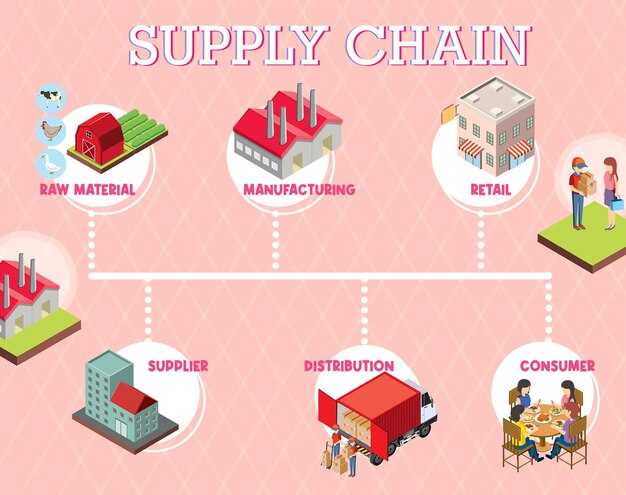
Track progress with a six-week cadence dashboard: onboarding cycle time, data quality rate, approval latency, and error rate in declarations. Forecasts show a significant gain in hub throughput when compliance, IT, and operations collaborate; use a structured scoring for each stage: readiness, completeness, test results, and go-live. This setup tackles fragmentation and demands, enabling managing teams to work together. By reducing rework and duplication, the hub gains sustainability benefits and improved outbound performance. Carriers and suppliers report smoother collaboration and lower costs per shipment, supporting next-stage expansion.