



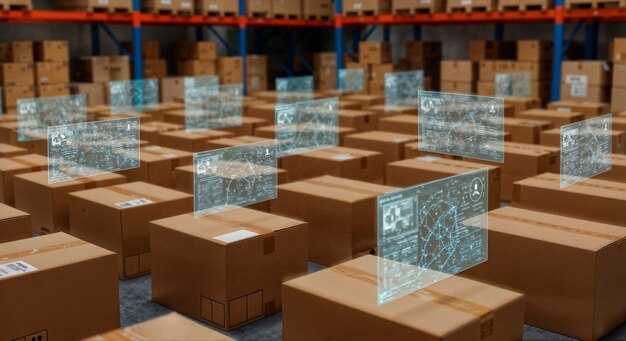
Start with a six- to twelve-month pilot in a high-density urban warehouse to verify a 20–35% opex reduction and quicker order cycle times. If you want to prove value quickly, install 1–3 robotic pick modules and a compact mezzanine conveyor, then measure health of the system and labor cost per unit to build a credible business case that can be replicated.
There are several ways to structure micro-fulfillment: leading zones, batch pick, and compact processing lines. Align your layout with strategic goals: serving dense urban customers, reducing opex, and maintaining careful stock accuracy. A digital WMS integration enables real-time visibility and continues inventory updates, even with limited SKUs.
To keep operations competitive, track key metrics: cycle time, order accuracy, and opex per fulfilled unit. Use a digital dashboard to surface root causes and compile a health index of the fulfillment line, including maintenance needs and device uptime. This helps you adjust management practices quickly and move from pilot to scale.
Choosing the right technology stack matters. Start with leading vendors offering modular pick modules, automatic storage retrieval, and high-density racking. Ensure health checks, remote care of equipment, and predictable opex are included in the contract. Build a plan that continues to deliver service-level improvements as capacity grows.
For financial planning, quantify capex-to-revenue impact and schedule. The aim is to maintain a lean health management approach: monitor energy use, heat, and equipment health. A digital twin can simulate changes before installation, helping you carefully assess opex and capex tradeoffs. If capacity is limited, stage expansion to then lock in gains before adding more lines.
Plan for workforce integration: upskill operators, reallocate labor to higher-value tasks, and maintain a competitive edge as demand grows. Document safety protocols and health standards to reassure workers and customers.
In short, start small, then scale to high-density networks with strategic automation that continues to improve accuracy and speed. By focusing on management of opex, you’ll keep fulfillment competitive and ready for surge periods.
The Exotec Approach to Micro-Fulfillment Automation
Start today by deploying Exotec skypod in your high-velocity locations to accelerate receiving and processing while cutting labor by 30-50% and shrinking footprint by up to 60%. Case studies across multiple industry players report 2-3x throughput and 40-50% labor savings, with accuracy around 99%.
Using a modular rack network and intelligent robots, the Exotec approach relies on live data to synchronize receiving, put-away, and processing. their skypod units shuttle items to ergonomic pick stations, letting operators complete orders from multiple streams in parallel. they rely on real-time signals to optimize sequencing across chains, reducing idle time and boosting throughput across locations.
For operators, the value comes from changing demand patterns. Using a single control plane, you can spin up new skypod bays and relocate them to new locations as demand shifts. This flexibility is appealing for korean retailers expanding abroad, or for any brand that wants to keep chains of fulfillment tight as product assortments evolve.
What to consider is a key consideration when evaluating a move to micro-fulfillment: floor height, ceiling clearance, power redundancy, network reliability, and WMS integration. Risk analyses should quantify peak volumes and replenishment timing. Jumping into automation pays off with a phased rollout that preserves change management and operator training.
The impact on the industry is tangible: faster delivery, reduced error, and a more resilient supply chain that becomes the backbone for omnichannel. By jumping into a skypod-led model, retailers gain better control over inventory in near-customer locations and shorten order-to-cash cycles. This revolutionizing approach supports continuous improvement across receiving, processing, and packing, and reduces operational risk while increasing throughput.
In practice, this approach supports rapid ROI for networks with multiple locations spread across borders, including korean hubs that connect to regional warehouses. Operators note high uptime, streamlined maintenance, and clear KPIs tracked live. The result: a robust, scalable framework where processing becomes predictable and stock visibility stays accurate across chains.
What next: map your locations, run a pilot in two sites, and track KPIs like throughput, picking accuracy, and space utilization to validate ROI today.
Define order profiles, service levels, and SKU mix for micro-fulfillment

Start by defining three order profiles: rapid fulfillment for online orders of fast-moving items with tight time windows, local fulfillment for nearby customers, and scheduled replenishment for bulk or planned purchases. Set service levels by zone based on distance, capacity, and stock availability to meet customer expectations without unnecessary overhead. Use a data-driven approach to forecast lead times and verify accuracy; that helps manage stockouts and increased confidence in delivery promises. Place high-velocity SKUs in the closest nodes to reduce travel time and improve the customer feel of reliability; thats how placement decisions drive performance. The solution should reflect the need to balance speed, cost, and inventory risk in a dynamic environment.
Define SKU mix per micro-fulfillment site: categorize SKUs into fast-moving, mid, and slow movers; allocate more shelf space and packing density to fast-moving items and keep a packed footprint that minimizes handling overhead. Coordinate with manufactures to align allocations with production calendars and supplier constraints, and update weekly based on demand signals. Use close-in stock for urgent orders and reserve a small temporary buffer to cover spikes; this increases service levels across profiles.
Measurement and governance: build a dashboard tracking accuracy by profile, increased fill rate, stockouts, and on-time delivery; monitor overhead by site; track SKU-level performance and overall throughput; navigating seasonal spikes and promotions with data-driven what-if scenarios. Use these insights to refine the SKU mix and profile definitions, ensuring that the plan keeps online commitments well within reach.
Implementation steps: launching a controlled pilot at a single site helps validate profile definitions, placements, and safety stock levels. Run the pilot for 4–6 weeks, then iterate based on observed performance, and decide on phased rollout across additional locations. This approach leads to faster, more reliable meeting of demand while keeping overhead manageable and enabling manufactures to respond quickly to market signals.
Outline Exotec platform components: robots, pods, and software
Start with a quick assessment of your fast-moving SKUs and map them to Exotec robots, pods, and software to optimize location footprints and delivery outcomes. Choose the option that best aligns with current volumes and shifting demand. Build such a plan as a blueprint for scalable deployment across multiple sites.
Robots deploy a diverse fleet that moves quickly between picking zones and packing docks. Having mobile units and mapped lanes reduces cross-traffic and speeds up task completion. Use current site data to calibrate robot reach, duty cycles, and pod compatibility across several zones, so you can scale without overhauling the floor plan.
Pods are modular, stored storage bays that travel with the robot network, enabling rapid reconfiguration as product mixes shift. The design minimizes wasted travel by keeping high-demand SKUs closer to the pick faces, reducing travel distance and footprints. A well-tuned pod layout supports faster delivery and longer equipment life.
Software orchestrates the operation with real-time scheduling, route planning, and insights dashboards. It converts location data into actionable steps, flags underutilized pods, and highlights bottlenecks before they appear on the floor. With this guide, you can tune rules, automate replenishment, and align maintenance with your current rhythm, while steering toward sustainable energy use.
Several innovative strategies help you extract more value from the platform. Dynamic pod reallocation lets you move stored items toward rising demand, while mobile-robot routing reduces idle time. For Korean operations, tailor labeling, packaging, and pick paths to maximize speed and reliability. These moves leave smaller footprints and support a faster rise in throughput across locations.
Across locations, schedule and monitor the factors that influence performance: stored volumes, shift patterns, and delivery windows. Insights from the software help you refine options, choose the right pod density, and ensure sustainable operations without sacrificing speed.
Design rack layouts and pick paths to maximize throughput

Only high-turnover SKUs belong in A-zones within 2-3 m of the pick face; reserve outer zones for diverse, slower-moving SKUs. Use dense, space-saving rack configurations to maximize space without creating congestion at pick faces. Map accurate shelves to current demand signals so that spots align with seasonal shifts. Such placement reduces search time and improves throughput by 15-25% in many micro-fulfillment sites. Think in cycles: plan, test, and refine to keep results moving.
Adopt a linear or serpentine pick path across a single corridor where possible, minimizing cross-aisle travel. Implement wave picking for multiple orders to consolidate trips; this helps maintain a steady flow during peak hours. Giants in e-commerce apply this approach to sustain service levels, and eleclerc benchmarks show that aligning placement with pick paths reduces non-value trips and raises throughput in line with current trends.
Integrating RFID, vision systems, and mobile picks keeps systems aligned with inventory. Use dynamic slotting to adjust spots as trends shift; perishable goods get priority in temperature-controlled zones, reducing spoilage and waste. Aim for near-perfect alignment between shelf placement and pick paths, and let these technologies think in real time to improve accuracy for mixed, fast-moving assortments.
Placement for perishable items stays near the loading dock to minimize handling; define dedicated spots and keep temperature-sensitive SKUs in their own zones. Rotate stock to reflect shelf-life data and current demand, reducing out-of-stock risk and backroom congestion. This approach supports reduced travel and maintains smooth flows in multiple shifts.
Think in cycles: measure travel distance, pick density, error rate, and slotting accuracy. Conduct weekly exchanges of data between warehouse control systems and supplier feeds to capture current trends and adjust placement accordingly. A disciplined cadence helps sustain throughput, while space and spots stay aligned with demand signals.
Streamline automated picking, packing, and parcel routing processes
Implement a data-driven platform that unites automated picking, packing, and parcel routing across the network of centers to cut handling time, maximize SLAs, and improve every order's accuracy.
Three strategies drive action: slot fast-moving stock near packing zones; organize batch-picking to reduce touches; reallocate stock across located centers with optimized parcel routes.
To serve people and employees, align roles with a clear workflow and provide intuitive interfaces that stay in sync with the data-driven signals from scanners and sensors.
Feel confident in the capability, as the action is reinforced by a digital feedback loop that gives real-time visibility of stock, orders, and parcel paths, helping managers know where to intervene and stay ahead of exceptions in real time.
Dark data audits reveal hidden bottlenecks, while dashboards show how to adjust stock and routing to sustain fast-moving throughput across the industry.
We measure throughput, pick accuracy, on-time parcel delivery, and SLA compliance, with a focus on sustainable routing that reduces miles and energy use.
Keep located items visible and accessible with a smart WMS that handles inbound stock, put-away, and picking with minimal touches. Empower employees with clear responsibilities and quick action paths so they can serve customers reliably.
These capabilities create new ways to manage stock, orders, and the workforce across the network.
| Action | Impact / KPI | Owner |
|---|---|---|
| Slot fast-moving stock near packing zones | Pick time reduced 20-35%; stock accuracy >99% | Fulfillment Ops |
| Unified parcel routing across centers | On-time delivery 98.5%; average transit time -12% | Logistics Platform |
| Data-driven exception handling | Exception rate -40%; SLA compliance +8 points | Analytics |
Enable seamless system integration with WMS, ERP, and OMS
Adopt a unified integration layer that connects WMS, ERP, and OMS through a standard data model and event-driven updates. This action fixes inefficiencies across work in warehouses, aligning inventory, orders, and fulfillment with the pace of modern shoppers.
By implementing a unified protocol, you reduce time-to-value and move toward real-time synchronization. Still, the gains translate into higher accuracy and faster processing across chains of warehouses, enabling faster door-to-door visibility and shorter turnarounds. For the organization, this means significant capital efficiency and premium service for shoppers.
- Standardize data schemas for orders, inventory, shipments, and returns to ensure consistent processing across systems.
- Implement an event-driven integration that supports real-time updates via APIs and webhooks to move changes instantly between WMS, ERP, and OMS.
- Use an API gateway or middleware with built-in idempotency, retries, and reconciliation to reduce duplicate work and data drift.
- Adopt a single source of truth for inventory and orders to prevent stockouts and backorders across chains of warehouses.
- Set measurable targets: real-time or sub-2-second updates for critical events; daily batched sync for others to balance cost and speed.
In practice, these steps support emerging micro-fulfillment networks. The integration layer helps store-level and regional warehouses coordinate action, enabling faster picks, smarter routing, and premium service options for shoppers. It also helps reduce processing delays at dock and door transitions, improving door-to-door visibility and customer satisfaction.
- Data governance: define a common data dictionary, owner responsibilities, and reconciliation rules to ensure organization-wide alignment.
- Technical readiness: assess current versions of WMS, ERP, and OMS; identify gaps in API coverage and plan upgrades if needed.
- Security and compliance: implement role-based access, encryption in transit, and audit trails for processing.
- Implementation timeline: target 6–12 weeks for a minimal viable integration, with 3–4 months for full coverage across all nodes.
- Cost and ROI: expect 20–30% reductions in manual reconciliations and 15–25% faster processing, with payback within 9–12 months in mid-size organizations.
Here is a practical example: a network of 15 warehouses achieved a 28% reduction in order cycle time and a 22% drop in inventory write-offs after deploying real-time OMS triggers and WMS-ERP reconciliation. Capital investments in middleware paid for themselves within the first year, while customer satisfaction scores rose due to faster, more reliable processing.