


 Suomi
Suomi  English (UK)
  Русский
  العربية
  日本語
日本語  한국어
한국어  Magyar
  Türkçe
  Español
  Čeština
  Svenska
  Português
  Ελληνικά
  Nederlands
  Română
  Italiano
  Français
  Polski
  Українська
  Deutsch
  简体中文
简体中文  Slovenčina
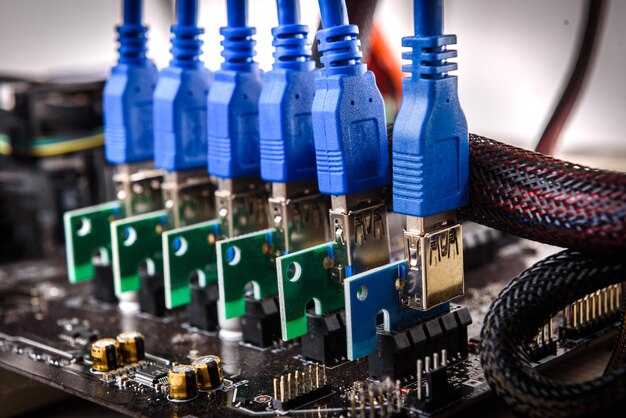
Start with a concrete audit: map every device, jack, and link in your plant to quantify data needs, then choose a backbone that supports them. When you have this view, businesses can plan for real-world intralog operations and avoid surprises during busy shifts. operator teams say that clean cabling, labeled jacks, and well-defined segments reduce maintenance, while sähköinen kaupankäynti integrations in logistics floors demand predictable latency and robust security. That approach keeps your teollisuus moving and fortifies applications across the line.
For the core network, align your choice with applications and equipment: for robots and motion control, select a standard offering deterministic timing; for intralog or warehouse automation, TSN-enabled Ethernet helps synchronize data flows across devices. In the real-world context, different standards cover distinct ecosystems, so consider which vendor support, availability of jacks and modules, and the ease of remote management. Also, plan for future growth in teollisuus domains where applications demand higher throughput and tighter budgets.
Key metrics to baseline in a pilot: target cycle times of 1–2 ms for motion or pick-and-place loops, and 5–15 ms for supervisory data paths; uplinks of 100 Mbps up to 1 Gbps handle most intralog and sähköinen kaupankäynti bursts. Deploy redundant paths with ring or star-topologies, then test jitter and packet loss under simulated peak loads. Operators will benefit from dashboards that show link utilization, latency, and error rates in real time.
Security and maintenance matter: enable port security, firmware control, and regular updates to minimize attack surface across the plant floor. Use VLAN segmentation and access control to keep critical operations isolated, and document that connections between control panels and downstream devices. Intralog environments often rely on reliable power and hot-swappable supplies; ensure them have proper power redundancy and status alerts.
Plan a staged migration: start with a dedicated zone, then roll out to the entire line as you validate performance improvements for operator teams, machines, and robots. Have your teams review each change against real-world scenarios and measure impact on businesses across the teollisuus, including customer-facing processes like sähköinen kaupankäynti order handling. This approach lets you avoid disruption while expanding your network’s capabilities and ensuring resilient operations for today’s demanding environments.
Industrial Ethernet: A Practical Guide to Industrial Networking Standards; How cobots are changing the nature of fulfillment
Recommendation: start a 60-day cobot pilot in intralog tasks such as bin picking and packing; deploy two cobots to take 40% of repetitive handling in shipments and to make operations easier, aiming for 25% greater throughput with a 35% drop in handling errors; track metrics weekly and adjust task assignments.
Use a staged introduction that keeps workers involved; easier adoption happens when the introduction of cobots is framed as support, not replacement. Define a collaborative space with sensors and safety features so equipment and humans can share work zones, with them becoming integral teammates.
Connect cobots to Industrial Ethernet standards to ensure data flows across wide networks; this makes data exchange easier and effectively pulls intralog data into your ERP and WMS in real time, achieving greater visibility and value from existing equipment and turning cobots into a practical tool.
Risks and mitigation: address safety, data privacy, and process drift; because safety controls must be validated, create ways to monitor issues and to manage the transition; assign a cross-functional team to manage changes, and be prepared to pivot if issues arise.
Gamification and training: use gamification to improve onboarding and ongoing skills; narayan notes how bite-sized simulations improve recall; involve operators in scenario play and give them tasks that stretch beyond routine spaces; use smaller modules to incrementally build competence and encourage them to take calculated risks.
How to measure impact: track intralog value through shipments per hour, defect rate, and equipment utilization; keep the word ‘collaboration’ in policy and training; escalate issues quickly; plan to scale cobots into other zones and new space types after the initial pilots prove ROI, extending benefits beyond public spaces and into more specialized space.
Practical roadmap for selecting and implementing industrial Ethernet in modern manufacturing
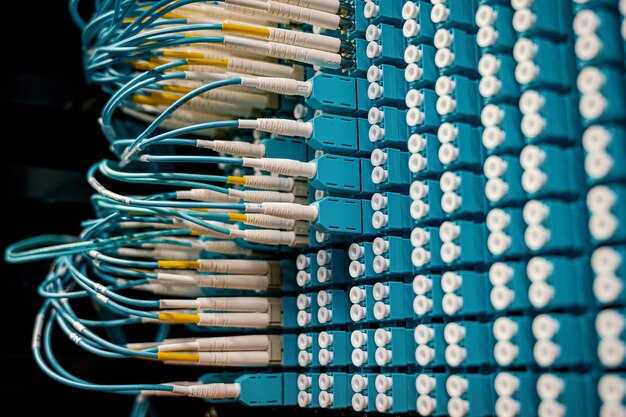
clear recommendation: deploy a TSN-enabled industrial Ethernet backbone across the factory, start with a pilot on the most critical line, and scale across the plant while maintaining productivity. This phased approach makes the migration predictable and reduces risk during rollout. Historically, outages were costly; pandemic-era disruptions reinforced the need for a resilient backbone. The role of edge components is central: they collect data, support detection, and enable innovations that easily improve performance across manufacturing environments. Assign navin to oversee the pilot line and prepare a cross-functional team that will own later expansions across facilities. Cutting costs and time to value remains a guiding objective as you move away from legacy fieldbuses toward a unified standard that serves products from multiple manufacturers.
The word ‘word’ here means little without concrete metrics, so set explicit targets for latency, jitter, and throughput. For critical loops, aim for end-to-end latency in the 0.5–2 ms range and jitter under 100 μs where motion control is involved. Plan for 100 Mbps to 1 Gbps per segment, with scalable trunk links to support growth and product lines. Use TSN to provide deterministic behavior while keeping the design simple enough to be managed by a single team. This focus helps manufacturers across sites to perform consistently while maintaining uptime and safety.
- Objective and assessment: Identify which lines require deterministic timing and which can tolerate standard Ethernet. Catalog heavy I/O points and map them into a unified backbone. Define key performance indicators (KPIs) such as cycle time, latency, and packet loss. Include notes on which products and components are in scope and how you will measure improvements across facilities.
- Architecture and protocol selection: Evaluate TSN versus legacy fieldbuses, and choose topology (star, ring, or hybrid) with redundancy (PRP/RPR where available). Decide which Industrial Ethernet variants to support (EtherNet/IP, Profinet, EtherCAT, SERCOS) based on device support and roadmaps. This choice reduces issues later and clarifies maintenance across manufacturers’ equipment.
- Pilot design and cutover planning: Pick one heavy, high-value line for the pilot and define cutover criteria. Run parallel networks during the pilot to compare performance and avoid disruption; once done, roll out in phases to adjacent lines and plants. The plan should be simple to follow and easier to communicate across teams, while keeping safety and production goals intact.
- Infrastructure and components: Specify switches with TSN support, reliable NICs, hardened cables, and enclosure layouts that minimize interference. Plan for per-line VLANs and QoS, plus physical redundancy where needed. Document every component and its role to simplify maintenance and future upgrades.
- Security and lifecycle management: Implement network segmentation, secure access, and a fixed firmware upgrade cadence. Establish a clear incident response workflow and monitor for anomalies with lightweight detectors. A disciplined approach reduces risk and keeps line pilots running smoothly while protecting products and IP.
- Data, detection, and intelligence: Instrument latency, jitter, utilization, and error rates; centralize dashboards and enable manufacturing intelligence that informs decisions in real time. Use detection to spot anomalies early and trigger automated responses where feasible, so operators can focus on productivity improvements rather than firefighting.
- Migration governance and ownership: Create a phased rollout plan with defined owners and milestones. Include navin and other site leads in governance meetings, ensure cross-site documentation, and align on training needs. A clear governance structure enables quicker decisions and smoother scaling across sites.
- Measurement, optimization, and continuous rollout: After each phase, compare results to targets, adjust configurations, and document lessons learned. Track productivity gains, downtime reductions, and line throughput improvements; iterate to bring more lines into deterministic operation and extend the backbone into new product families.
Final considerations: the selected solution must support detection and diagnostics across components, scale with innovations, and stay affordable over time. Start with a concrete plan and move every piece of the network into a single, manageable fabric. By easily coordinating across lines and products, you can lead the transition with confidence and reduce harder retrofit decisions later. The network then serves as a backbone for manufacturing intelligence, enabling faster decisions and higher productivity across products and production lines.
Selecting the Right Industrial Ethernet Standard for Your Plant (EtherNet/IP, PROFINET, EtherCAT, Sercos III)
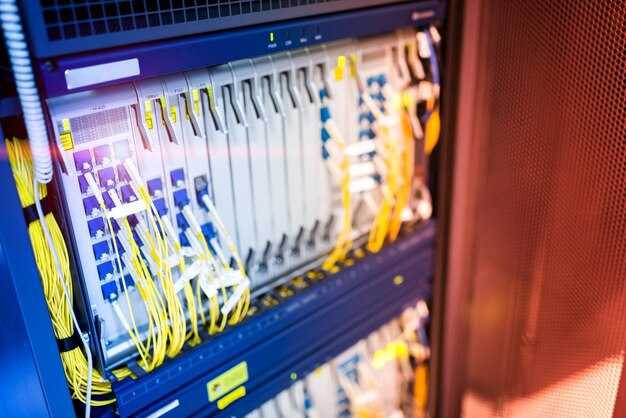
EtherCAT is the best starting point for most intralog operations, offering fast, deterministic timing and high I/O density that can shrink cycle times and boost productivity across a wide range of machines.
To tailor the choice to your factory, map your key priorities: machine performance, vendor support, and integration with existing programs and controls. Below is a practical guide to four leading standards, with concrete guidance you can apply in your planning and pilot projects.
-
EtherCAT
- Deterministic cycle times down to 12.5 µs in compact I/O layouts; scalable to thousands of nodes along a single line, which helps reduce wiring and cabling costs.
- Line topology and on-the-fly processing keep CPU loads low and allow quick updates for robotics and tend ing automated tasks on the factory floor.
- Best fit for high-density I/O, small-footprint controllers, and intralog workflows that demand tight synchronization between conveyors, robots, and CNCs.
- Key benefits include reduced tedious setup in motion-heavy machines and a broader ability to support collaborative components across a single network.
-
PROFINET
- RT cycles commonly in the 1–8 ms range; IRT variants provide sub-millisecond timing when hardware and TSN features align, enabling tighter motion and multi-machine coordination.
- Broad vendor ecosystem and strong integration with IT/OT tools, making it a good part of a wide factory architecture where you need robust cross-plant support and quick diagnostics.
- Excellent for plants aligned with European standards, multi-line production, and large communities of machines from multiple suppliers.
- Supports scalable topologies, easy commissioning, and good time synchronization for distributed I/O and servos, which helps maintain productivity with less operator intervention.
-
EtherNet/IP
- Update rates around 1–10 ms on standard I/O networks; CIP Sync provides time alignment across devices for coordinated machine actions and enterprise-level planning.
- Strong attraction for plants with Rockwell automation heritage and existing Ethernet-based IT systems, enabling smoother data exchange between control layers and enterprise software.
- Wide device ecosystem supports a broad range of components, from sensors to drives, reducing time-to-prototyping and enabling rapid program rollout in intralog and yard operations.
- Well-suited for projects that prioritize quick integration with established control cabinets and that require practical, proven performance with good support time.
-
Sercos III
- Deterministic cycle times from 31.25 µs upward, delivering precise motion for multi-axis drives and high-accuracy robotics, which translates into smoother operation and less tuning effort.
- Strong fit for servo-centric lines and applications where a dedicated real-time Ethernet backbone improves machine responsiveness and predictability.
- Robust for complex automation tasks that require tight coordination between drives, feedback devices, and end-effectors, reducing the need for manual rework.
- Useful when upgrading existing servo networks or designing new machines with a clear path to scalable, collaborative control across manufacturing cells.
Decision checklist to apply in pilot and deployment stages: assess cycle-time demands, node density, and topology constraints; verify vendor support and existing equipment compatibility; evaluate time synchronization needs and the ability to integrate with enterprise systems; plan a staged migration that minimizes downtime and protects part, machine, and factory operations.
Intralog goals guide the selection: for smaller lines with heavy robotics and tending tasks, EtherCAT or Sercos III often deliver the fastest, most reliable results; for wide plant networks with mixed equipment, PROFINET or EtherNet/IP provides broad support and easier scaling. Training programs for workers and maintenance staff should focus on real-time concepts, network diagnostics, and simple troubleshooting workflows to maximize productivity and reduce tedious troubleshooting time.
Ultimately, the most effective path combines a primary standard tailored to the dominant application (motion, I/O density, and timing) with optional secondary support for legacy equipment or cross-vendor compatibility, ensuring the factory stays responsive to changing production demands and community needs.
Designing a Scalable Network Topology: Ring, Star, and Linear Architectures
Start with a hybrid topology blueprint that blends ring, star, and linear spans to balance redundancy, centralized control, and scalable reach, being clear about the drivers and environments where each segment can perform under season loads.
Ring topology delivers quick failover and deterministic timing, ideal for robot cells and other safety-critical operations. Use dual rings or a single ring with bypass to handle maintenance. Keep end-to-end latency under 5 ms for intra-ring traffic and restore from a fault under 20–50 ms with fast-spanning protocols. Typical ring supports 24–48 nodes per segment, depending on switch port counts and fiber distance, which drive reliability and predictable operations. These design choices help ensure ring remains robust under load and in those environments where uptime matters.
Star topology centers on a reliable core switch or stack, with field devices attached in cabinets. Plan for VLANs and QoS to isolate traffic and reduce collision domains. Benefit: predictable performance and easier fault isolation. To avoid a single-point collapse, deploy redundant core devices and hot-swappable power, and use multiple aggregation layers for scale. For networks with hundreds of devices, design with modular growth in mind so employees on the plant floor can monitor and manage connectivity with minimal disruption. Here, the central hub becomes a focal point for network visibility, alarms, and quick response to issues. These considerations translate into a straightforward expansion path while keeping operators, maintenance, and automation teams collaborative and aligned.
Linear topology offers straightforward wiring and low hardware cost for short runs, but watch for cumulative latency and reduced fault isolation. Keep segment length within copper limits of roughly 100–200 m and extend with fiber or repeaters to tens or hundreds of meters as needed. Use distributed I/O to break long chains and maintain deterministic cycle times. For conveyor lines and sensor arrays, linear spans provide clean data paths with minimal switch hops, enabling quick, predictable updates in real time.
To implement a scalable design, map each topology to its role and plan a phased rollout. Take a collaborative approach with cross-functional teams that include operators, electricians, and automation engineers. Assign a clear role to each segment and document protection switching rules, time synchronization, and network policy. In environments where humans work alongside robot cells, plan for safe distancing and safely proceed with upgrades. The word collaborative appears here to emphasize teamwork and alignment, while these things – device counts, protocol needs, and environmental constraints – drive the layout decisions.
Performance targets for the topology should be defined early. Use a hierarchical ring-star-linear mix with a 1 Gbps backbone at minimum and 10 Gbps links where needed. For latency budgets, aim for sub-5 ms for local control and sub-20 ms for wider sections. Implement IEEE 1588 PTP for precision time and enable QoS policies to prioritize control traffic. Document the data flows, device roles, and growth plan so that those operations can be implemented quickly by employees when environments change. Here, clear data-flow maps help guide installers and ensure plans stay adaptable as workloads grow.
Achieving Deterministic Performance: Real-Time Capabilities, QoS, and TSN
Start by locking deterministic planning at the edge: enable time-aware scheduling for critical control loops, set a 1 ms cycle, and reserve roughly 40% of uplink bandwidth for such streams. This quick improvement helps businesses and smaller manufacturers keep performance predictable, even when other traffic becomes unstable. Such focus reduces jitter and ensures robots perform reliably on real-world production lines.
Use IEEE 802.1AS (gPTP) to distribute a shared time base across all devices, keeping sync to sub-microseconds. Deploy TSN-enabled switches that support time-aware gates and deterministic queues so control applications meet their deadlines. With multi-vendor networks, validated conformance matters; источник navin notes real-world interoperability as a core requirement that helps teams ship reliable systems.
Define QoS with 2–4 classes: critical control frames get the highest attention, periodic safety messages stay deterministic, and a best-effort class handles non-critical data. Apply strict priority or time-aware shapers so control streams never starve. Focus on simpler, smaller flows rather than large bursts; this reduces queue contention and helps real-world applications perform reliably. For robotics programs, target sub-millisecond end-to-end latency with jitter under tens of microseconds in typical plant rooms.
Scale the plan: run a three-phase rollout, lab validation, one-line pilot, then full production. In sept field trials, these budgets held under practical plant conditions. For such pilots, collect metrics on latency, jitter, and reliability to show ROI for businesses and amazons alike. Walk the line during testing to reveal bottlenecks and tune gating accordingly; these steps make teams quicker at adapting to change and ensure robots perform consistently. The test will take three weeks.
Network Redundancy and Reliability: PRP, RPR, and Redundant Links
Deploy PRP in the core production network today to achieve zero-time recovery on redundant paths, keeping robots moving in busy warehouses when a link or node fails. This combination of dual paths and seamless delivery targets yields reliability across generation cycles, reducing risks and protecting production targets, helping workers stay productive in automating environments.
PRP uses two independent, identical networks and a frame forwarding scheme that delivers every packet on both paths. If one path drops, the other path continues without a break in service, so control loops, motion commands, and data logging stay uninterrupted in automated lines and warehousing operations.
RPR offers fast ring recovery with a simpler deployment in large plants. It leverages a resilient ring topology to bypass faulty segments quickly, so production lines stay hot with minimal reconfiguration. This approach suits facilities that require steady throughput across multiple zones while maintaining manageable wiring and maintenance overhead.
Pair redundant links with diverse paths, separate power, and distinct switch stacks to avoid common mode failures. This means you avoid a single point of fault, and you can orchestrate automatic rerouting when a link degrades. Keep health checks, alarms, and baseline performance in place so traffic shifts smoothly without disrupting work and order flows.
Gamification and targeted programs with workers help keep system health in check. Use dashboards, daily checklists, and automated tests to generate a steady stream of improvement ideas. Place monitors in the control room and on the shop floor today to empower teams to respond quickly when instability appears.
| Tekniikka | What it delivers | Deployment tips | Ideal use cases |
|---|---|---|---|
| PRP | Zero-time failover on dual paths; data stays in flight; no network-wide reconfiguration | Use PRP-capable switches, wire two identical networks, regularly test with end-to-end loops; document path availability | Critical production lines, robots in busy warehouses, high-demand control loops |
| RPR | Deterministic recovery on a ring; scalable for large facilities; fast bypass of faults | Implement in a ring with a clear fault management policy; align with vendor-supported mechanisms; monitor ring utilization | Regional control networks, large plants, campus-style facilities |
| Redundant links | Layered resilience across devices and paths; reduces single-point failures | Separate power supplies, diverse network paths, non-overlapping switch stacks; automate health checks | HMI servers, PLC networks, data collection points, production control cabinets |
Cybersecurity for Industrial Networks: Segmentation, Access Control, and Secure Remote Access
Implement a practical segmentation plan today: establish three security zones–enterprise IT, OT networks, and a restricted DMZ for control devices–and enforce least-privilege access between them. Define features for each component and enforce policy-based conduits through firewalls, industrial switches, and gateways. This approach reduces blast radius if a device or application is compromised and makes monitoring more precise.
Assign every operator account to a defined function, enforce MFA, and apply strict time-of-day and device posture checks before granting access to critical systems. Using centralized identity governance helps manage permissions across locations in the industry and chains of devices in different sites, enabling genuine collaboration between operators and IT teams. This setup would also support audits and reduce the risk of credential misuse.
Secure remote access with a Zero Trust mindset: continuous verification, not a single VPN tunnel. Use jump hosts, encrypted tunnels, and device authentication. Log every session and revoke access promptly when a device leaves the network. Automating session monitoring helps detect odd patterns and respond safely, preserving production continuity.
Maintain an ongoing program for asset inventory, patching, and configuration management across systems and applications. Run regular vulnerability scans and threat intelligence feeds, and tending to issues before they halt production. Train workers to recognize phishing and social engineering; ensure every operator understands change control. Through collaboration with IT and OT teams, align security controls with production windows and business priorities, and reduce downtime while protecting businesses.
Industry-specific considerations matter: healthcare, manufacturing, energy, and logistics rely on real-time data and uninterrupted control. In healthcare, isolate clinical devices and patient data from enterprise systems while keeping essential clinical applications responsive. Map locations of devices across chains of suppliers and facilities, and apply segmentation rules that minimize cross-domain risk.
Governance and performance reviews shape long-term resilience. Define metrics to monitor detection, response, and audit outcomes. Appoint a responsible owner such as odwyer to oversee changes in segmentation, access controls, and secure remote access; ensure feedback from workers leads to practical improvements and keeps the system aligned with business needs.