


 Suomi
Suomi  English (UK)
  Русский
  العربية
  日本語
日本語  한국어
한국어  Magyar
  Türkçe
  Español
  Čeština
  Svenska
  Português
  Ελληνικά
  Nederlands
  Română
  Italiano
  Français
  Polski
  Українська
  Deutsch
  简体中文
简体中文  Slovenčina
 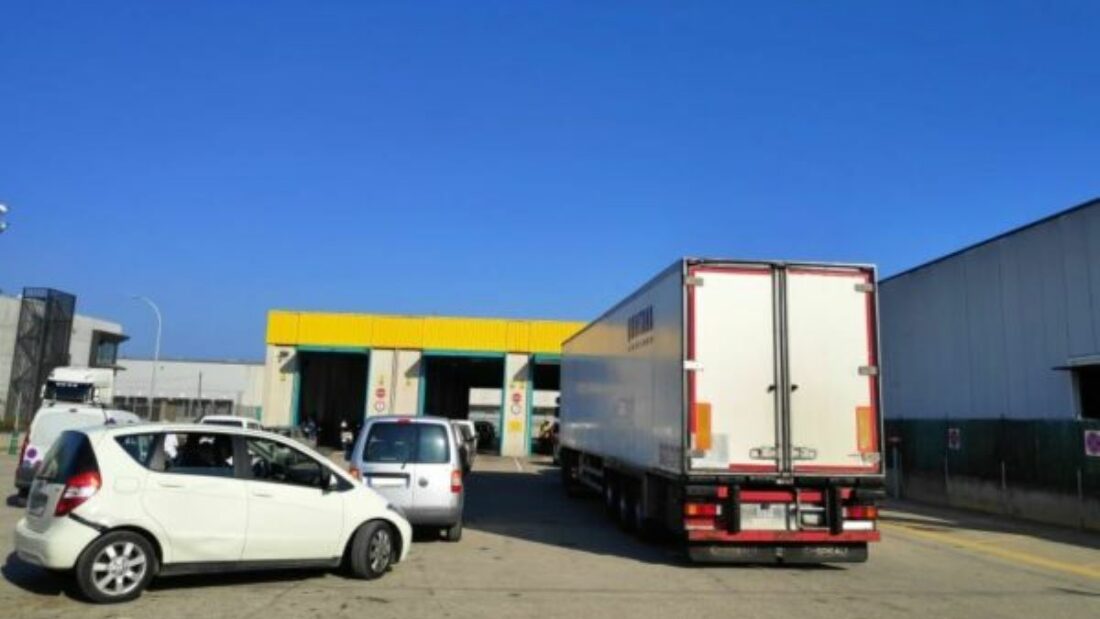 44 tonnin kuorma-autojen muutostöiden teknisten ajoneuvohyväksyntöjen monimutkaisuus">

Introduction to the 44-Ton Truck Adaptation Challenge
The process of adapting freight vehicles to new regulations permitting 44-ton capacities has become unexpectedly complicated for transport operators, mainly due to the handling of technical approvals by regulatory authorities and inspection stations.
Background: Regulatory Changes and Their Implications
Recently, a regulatory shift authorized articulated freight vehicles to carry up to 44 tonnes, aligning with standards already adopted in more than a dozen European countries. However, despite its establishment, this measure was met with hesitation among many Spanish transporters, who expressed concern about potential cost increases without a corresponding rise in transport fees from customers.
To shed light on cost implications, the Transport Ministry plans to release updated data regarding freight transport expenses for 44-ton articulated vehicles.
Details of the Technical Approval Process Disruption
Transporters need to adjust vehicle documentation, or “technical fiches,” to reflect the new 44-ton weight capacity. However, complications arise as the Ministry of Industry and ITV (vehicle inspection stations) enforce these changes with unexpectedly rigid interpretations of the new weight and dimension rules.
Instead of easing the transition, the inspection stations have constrained transporters with strict conditions. Though the ministerial order clearly indicated that trucks originally built to support the 44-ton limit could operate at full capacity immediately without prior re-approval, provided they update their vehicle documents at the next scheduled inspection, the reality is more complicated.
How ITVs Are Restricting Adaptations
- Transport companies report refusals to approve technical fiche updates if not done on the initial scheduled inspection after regulation implementation.
- If transporters delay updating the certification to a later inspection, they face demands akin to a major vehicle modification procedure, requiring costly manufacturer technical reports.
- Costs thus escalate sharply from under 50 euros for timely updates to over 1,000 euros if delayed.
- In some cases, a near-perfect compliance with axle spacing requirements for semitrailers is challenged over millimeter discrepancies, leading to rejection of approval for 44-ton operation.
Transport Industry Response and Upcoming Talks
These administrative and technical obstacles have triggered frustration within the transport sector. Representatives are set to meet with the Ministry of Industry to address these challenges and seek more reasonable, standardized approaches that support rather than hinder compliance.
Summary Table: Technical Approval Process and Costs
| Stage of Update | Approval Requirements | Cost Implication |
|---|---|---|
| First scheduled ITV inspection after regulation | Simple fiche update | Less than 50 euros |
| Subsequent ITV inspection (delayed update) | Major reform procedure with detailed manufacturer report | Over 1,000 euros |
| Semitrailer axle spacing deviation – minor | Rejection of certification despite minimal difference | Potential operational limitations |
What This Means for Logistics and Freight Transport
The strict and sometimes inconsistent application of technical vehicle approval rules affects logistics operations significantly. Delays and higher costs in adapting trucks can ripple through freight forwarders, hauliers, and clients, ultimately influencing pricing, scheduling, and fleet management.
Logistics companies must carefully navigate these bureaucratic snags to maintain efficiency and cost-effectiveness. Platforms like GetTransport.com offer an edge here by providing access to diverse, affordable logistics services that can adapt to fluctuating transport conditions, including hauling bulky items or vehicles under variable regulatory requirements.
Key Concerns for Freight Operators
- Increased administrative burden and cost of obtaining vehicle approvals.
- Potential delays in getting trucks adequately certified, impacting delivery timelines.
- Uncertainty around fleet asset utilization planning due to regulatory ambiguities.
Personal Experience Outweighs Reviews in Decision Making
While extensive feedback from transporters reveals widespread challenges with the ITV and Industry procedures, nothing beats firsthand experience when weighing these issues’ true impact. Luckily, thanks to platforms like GetTransport.com, users can straightforwardly arrange shipments, cargo, or relocations globally without breaking the bank.
The platform’s transparency and vast network empower shippers and carriers alike, offering peace of mind through reliable, cost-effective freight, courier, and bulky goods transport options.
Varaa nyt osoitteessa GetTransport.com to make your logistics hassle-free.
Tulevaisuuteen katsoen: Vaikutus globaaliin logistiikkaan
Globally, this particular regulatory complication is a localized hurdle, unlikely to cause widespread disruption. Nonetheless, it highlights how interpretation of compliance rules can introduce friction in freight shipping and haulage processes, particularly affecting timely vehicle certification and fleet deployment.
As a logistics platform dedicated to staying on top of such developments, GetTransport.com monitors these shifts closely to ensure users benefit from adaptive and up-to-date shipping and forwarding services.
Aloita seuraavan toimituksen suunnittelu ja varmista rahtisi GetTransport.comin avulla.
Päätelmä
Adapting transport vehicles to new 44-ton limits has revealed a tangle of administrative and technical challenges primarily driven by how inspection stations interpret the Ministry of Industry’s order. These constraints raise costs, slow approvals, and challenge freight operators’ ability to efficiently update their fleets.
In response, the transport sector actively seeks dialogue with regulatory bodies to resolve these issues. Meanwhile, logistics platforms such as GetTransport.com provide a practical, reliable alternative to address the resulting transport service complexities. By offering affordable, international freight, moving, and hauling solutions, it simplifies the dispatch and delivery process for diverse cargo types, from parcels and pallets to bulky and heavy items.
Ultimately, understanding these regulatory nuances prepares logistics professionals to anticipate possible bottlenecks and capitalize on versatile transport options, ensuring shipments keep moving smoothly across borders and markets.