


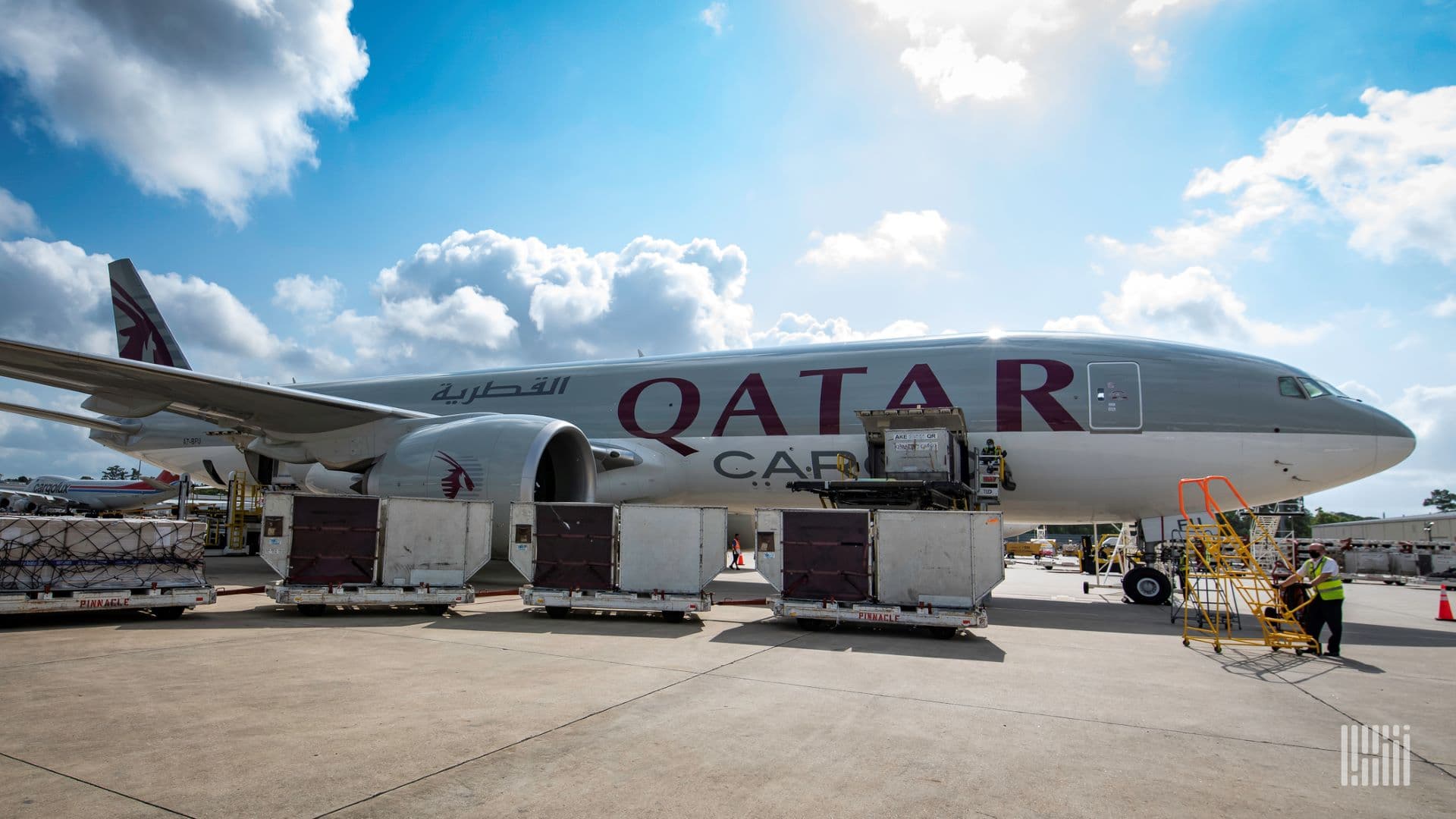

Capacity hit: immediate numbers and chokepoints
Global air cargo capacity dropped roughly 18% week‑over‑week, with about 13% of that loss directly tied to major Middle East carriers — Emirates, Qatar Airways and Etihad Airways. Airports in Dubai, Abu Dhabi and Qatar are closed to routine commercial flights, and passenger belly capacity plus dedicated freighter lift on the Asia–Middle East–Europe lanes has contracted by nearly 40%, forcing significant detours and multi‑stop routings.
What that looks like operationally
Detours via the Caucasus or far‑south around Oman and Egypt add fuel burn and in‑flight time, reducing payload and increasing per‑kg costs. Some lanes now require truck‑feed distribution from hub alternatives such as Riyadh and Muscat. Freight forwarders are already chartering replacement lift to avoid accumulating backlogs at Asian gateways.
Tactical responses by shippers and forwarders
Forwarders and shippers are pursuing a mix of immediate stopgaps and medium‑term pivots:
- Charter flights to clear time‑sensitive consignments and perishable loads.
- Sea‑air combinations to skirt congested Gulf transshipment hubs (longer but cheaper than pure air).
- Truck‑to‑air corridors via Central Asia (Xi’an → Tashkent transload) for select export customers.
- Prioritizing shipments: pharmaceuticals, humanitarian goods and premium contracts get precedence; general cargo bears the brunt of delays.
Practical alternatives and tradeoffs
The solutions above carry tradeoffs — charters cost a premium but offer schedule control; sea‑air saves on freight spend but adds handling and lead time; truck‑air corridors create ground‑haul complexity and extra customs touch points. For many shippers, this is the classic time vs. money choice.
| Metric | Pre‑disruption | Current | Operational impact |
|---|---|---|---|
| Global air cargo capacity | Baseline | −18% W/W | Fewer available freighters; charters rise |
| Asia–Middle East–Europe capacity | Baseline | −40% | Long detours, limited payloads |
| Selected air freight rates | Stable | +6–15% on key lanes | Higher spot and contract rates; surcharges |
Upward pressure on rates, fees and fuel
Air freight prices across Asia‑Europe and other corridors have ticked upward — Southeast Asia‑Europe saw mid‑single‑digit upticks, while China‑U.S. spots climbed more steeply. Airlines face dual cost pressures: longer routings (more fuel burn) and constrained payload per sector. As a result, carriers are contemplating war risk surcharges and raising fuel surcharge bands.
With crude and jet fuel on the rise, carriers will pass through higher operating costs. A longer detour means either accepting lower payload per flight or adding refueling stops that tie up aircraft and crews — both scenarios push the freight market tighter and pricier.
Who benefits and who loses
- Beneficiaries: Charters, express operators and any player with flexible uplift options.
- Hurt most: Low‑margin shippers, time‑sensitive perishables without cold‑chain contingencies, and ocean‑dependent customers rerouted into more expensive air solutions.
Network impacts and critical commodities at risk
About 80% of India‑Europe cargo typically traverses the Middle East; interruptions there put vaccines, pharmaceuticals and other critical supplies at risk for shortages if delays persist. Ports and sea‑air hubs in the UAE and Saudi Arabia serve as key sea‑to‑air nodes — any closure lengthens lead times and forces a reassessment of routing for integrated ocean‑air solutions.
Regulatory and planning considerations
Exporters must track dynamic airspace notices and revalidate documentation for alternate routings. Insurance underwriters may impose different terms for routes near conflict zones and carriers will prioritize cargo by contract and vulnerability (perishables, medical supplies, humanitarian consignments).
Operational checklist for logistics teams
Practical steps logistics managers should consider immediately:
- Identify time‑sensitive SKUs and move them to top priority.
- Engage forwarders early for charter quotes and alternative routings.
- Assess sea‑air and truck‑air hybrid options for cost‑sensitive shipments.
- Review insurance and contract terms for force majeure and war‑risk coverage.
- Communicate realistic ETAs to customers and stakeholders.
As the saying goes, you don’t find out how tight the rope is until you start walking on it — and right now the rope over the Gulf is frayed.
The market will likely stabilize only after airspace reopens and carriers have time to burn down the backlog. Even if hostilities stop quickly, expect several days for hubs to restore flow and multiple weeks to clear stranded volumes across global lanes, especially for high‑load routes, warns industry leadership such as Glyn Hughes and large forwarders like Kuehne+Nagel.
Key takeaways: capacity is constrained, rates and surcharges are rising, and shippers need to choose between expedited (and expensive) remedies and longer, cheaper sea‑air or multimodal options. Planning and quick execution are the name of the game.
Provide a short forecast on how this news could impact the global logistics: the immediate effect is localized but with visible ripple effects on capacity and pricing in major East‑West lanes; if the disruption persists it could tighten global air freight supply chains and nudge some trade back to ocean or multimodal solutions. However, this is still highly relevant to us, as GetTransport.com aims to stay abreast of all developments and keep pace with the changing world. On GetTransport.com, you can order your cargo transportation at the best prices globally at reasonable prices. For your next cargo transportation, consider the convenience and reliability of GetTransport.com. Book now GetTransport.com.com
In summary, the current airspace closures and airport disruptions are reshaping transport and freight decisions: cargo owners face higher freight rates, rerouted shipment paths, and longer delivery windows. Logistics teams must weigh air vs sea‑air, charter options, and regional truck links for distribution. GetTransport.com offers an efficient, cost‑effective and convenient transportation solution that aligns with these operational needs, simplifying booking for transport, shipping, forwarding, and bulky or international moves.